Colossians: Think Biblically | 3-15-2020

Photo Cred: (1) | Updated: 4-10-2020

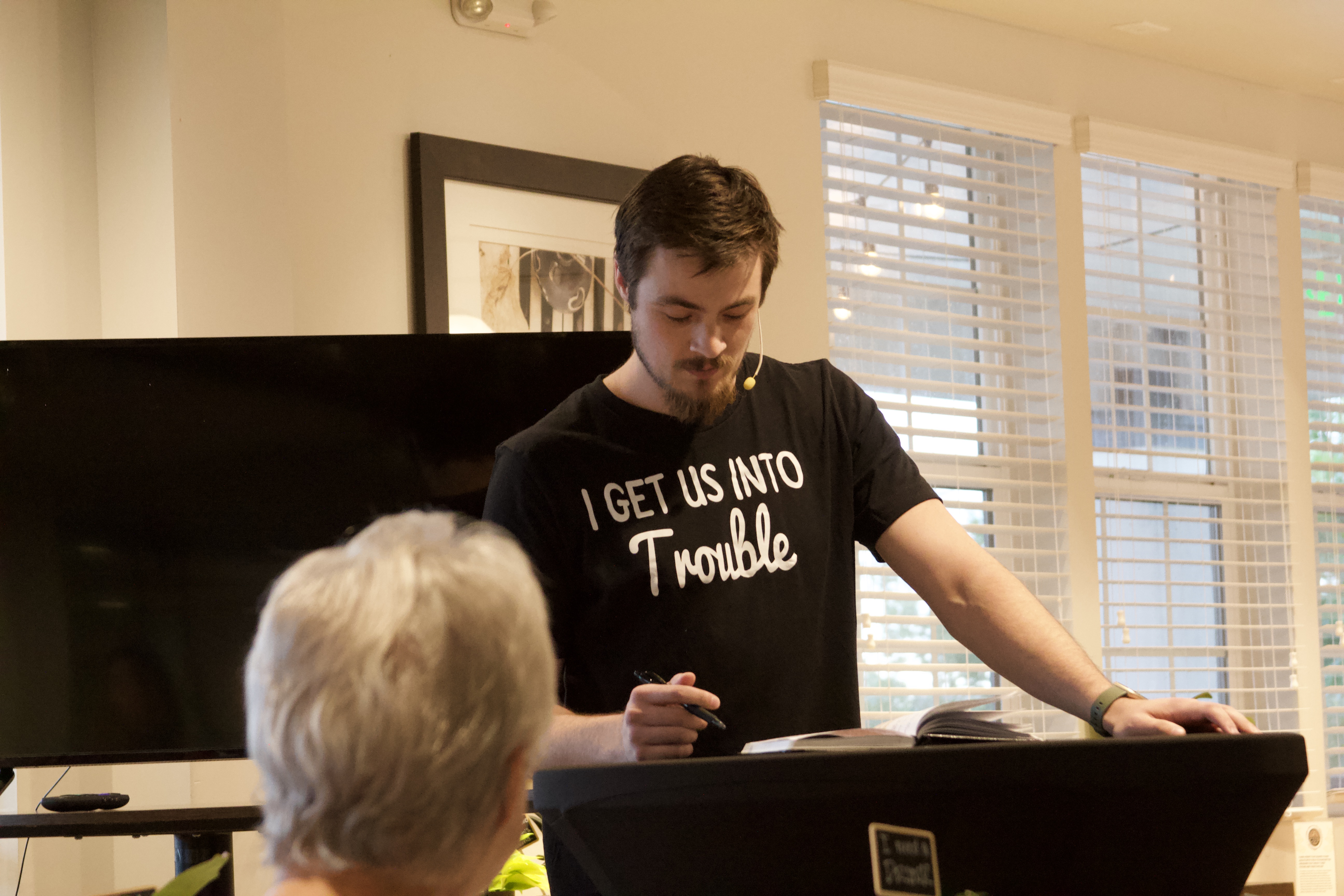
[This was a sermon I gave to the youth group at my local church when serving there as a youth leader. It was about 25 minutes and was focused on helping students understand how to think biblically. This was apart of a series of sermons given during the Unshakable 2019 winter camp for our church’s youth group.]

Intro

During this weekend we are going to learn what it means to have an unshakable faith and tonight is all about how to think biblically. How to have a worldview that is able to withstand all the worries we have about our world. What I mean by thinking biblically is thinking the way Jesus thought.

Throughout his ministry, Jesus was constantly pointing everyone he talked to back to the Word of God. During that time this would have just been the Old Testament, which is the first half of your Bible. Now the Word of God is the whole Bible: Old and New Testament.

Needless to say, no matter what situation Jesus found himself in he always thought biblically. Everything Jesus did and thought was aimed at obeying God the Father. How can we purpose in our minds to do the same and obey Jesus? Tonight, we’ll learn how to do just that as we read part of a letter written by Paul the Apostle.

In the book of Colossians we read:

“Therefore as you have received Christ Jesus the Lord, so walk in Him, having been firmly rooted and now being built up in Him and established in your faith, just as you were instructed, and overflowing with gratitude. See to it that no one takes you captive through philosophy and empty deception, according to the tradition of men, according to the elementary principles of the world, rather than according to Christ (2).”

After this, Paul then goes into a whole bunch of stuff that can distract us and reminds us to stay focused on Christ. He ends this section of the letter when he says:

“Therefore if you have been raised up with Christ, keep seeking the things above, where Christ is, seated at the right hand of God. Set your mind on the things above, not on the things that are on earth. For you have died and your life is hidden with Christ in God (3).”

Now from these two passages, we can gather three main takeaways on how to think biblically. How to think like Jesus thought in spite of the world around Him. To think biblically is to keep walking, to wise up, and to wake up. By learning how to train yourself to think this way, you will add the first brick of many to your unshakable faith. Let’s learn the first way, which is to keep walking.

Keep Walking (v. 6 – 7)

Most people remember when they first met God. Those of us who have had this encounter can either remember the exact moment or even the feeling we had when we encountered God personally for the first time. I know for me it was more of a connecting the dots over time than a specific moment.

You probably have a similar situation where you either in an instant felt the presence of God immediately or discovered Him slowly over time. However that went down for you, that was just the beginning. This first step in your walk with God was just the key cornerstone in what could one day be an unshakable faith.

You may have even had mentors or youth pastors who showed you how to live the Christian life. But in spite of all of that excitement, life happened. Things changed and you changed along with it. For some of us, we stopped walking with God.

In verses 6-7, Paul reminds us about this very common problem of walking away because of all that is happening in our lives. The first way that we can think biblically is to get our heads in the game and keep walking with God. To endure the attacks that we get hit with and to keep going as Christians.

During my last Strongman comp, I did the most difficult lift of my entire life: a 450lbs. axle bar deadlift for 4 reps. It was brutal. My body was aching from the overhead pressing event where I tweaked a muscle in my lower back, I almost blacked out with each new rep, and was just stupid tired.

But the worst part of the lift was the mental game. I was wrestling with my thoughts. “Should I give up? Is this too difficult? Why try when I’m competing with an active duty captain in the U.S. Army and another guy who is qualified for Strongman Nationals?” I was this close to giving up, yet I exceeded my limits and kept going in the competition.

[Ironically enough, I never shared this strongman example when I preached this sermon. At the very last second, I changed examples. Literally when it was time to share this example during the message, I chose not to and instead shared about a conversation I had with my Granddad about college. Not sure why, but it seemed like the right move at the moment.]

Like that day when I could have given up, we too must keep walking in our faith with God. Remembering why God’s grace leads to our gratitude. Enjoying life with Him and growing in our knowledge of God as we learn from others much wiser than us. Speaking of wisdom, let’s look at the second way that we can dedicate our minds to thinking biblically and that means we need to wise up.

Wise Up (v. 8)

In verse 8 of chapter 2, we read of another threat to thinking biblically and that is the distortions of truth that the world offers. The way that the world tries to find the truth is like taking a picture with a broken lense. They have the right desire, but will never get the ideal result. Like us before we knew God, they are just looking at the big picture the wrong way. Everything is distorted without God who brings all things into focus when we draw near to Him.

With this in mind, we need to wise up and be careful of all of the stuff that is out there. These days, everything is trying to get your attention. Everyone is desperate for you to give them your time. According to a YouTube press release, about “one billion hours [of video content is] watched daily” on their platform (4). There is a battle for your mind and to fight it, you have to think biblically.

Now this verse isn’t saying that all knowledge outside of the Bible is bad or evil. I mean, how would you learn about Algebra if not for the Muslim mathematician Muhammad ibn Musa al-Khwarizmi who invented it? Without his work, we wouldn’t have Algebra and you wouldn’t hate math. So like 1 Thessalonians 5:21-22 says, “But examine everything carefully; hold fast to that which is good; abstain from every form of evil.” Until proven true, take everything with a grain of salt. You’ll know if something is the truth when it has been tested and proven to be true. This is the second way that we can think biblically.

Wake Up (v. 1 – 3)

The final way to think biblically is to wake up. We need to wake up and realize our main reason for being Christian in the first place. We are here to know God and make God known. The Gospel is the wake up call of the world and we are the messengers.

We’re not here to get caught up in the nonsense of what is being fought over today. We have to stay focused and remember that we have a mission from up above. We have a task at hand and that is to tell others what God has done, is doing, and will do through us as Christians. We need to focus on Jesus in our life on the daily and then when that’s dialed in, show others how to do the same.

[Here I added more in my sermon journal where I wrote “show, then tell.” For the uninitiated, to show then tell is a film idea. The idea that a picture can say a thousand words and our examples in how we live do the same. Don’t remember the exact wordage, but that was the concept.]

Conclusion

To wrap up, we need to think biblically if we want an unshakable faith. We must keep walking, wise up, and wake up to keep our mind focused on God. Until the whole world hears the good news of Jesus, our mission is loud and clear. Think about it and we’ll talk in our small groups in a minute. Let’s pray.

This was a really stressful weekend because it was my first time co-running a winter camp with another leader named Sierra. We worked all day running the camp the whole weekend and by the time came for me to share my sermon, I was quite exhausted. I wasn’t as tired as last year’s winter camp, but a different type of tired because everyone came to us with their problems versus last year where we just solved problems that were there.

Anyways, I was scrambling to write the outline in my sermon journal as the worship team was doing their set before it was my time to preach. I think the sermon was fairly straightforward and had little hiccups. It went as planned for the most part. The concept for this whole sermon series I outlined as far back as August of 2018 at a leader retreat, so the main ideas had been in my mind for months by the time I shared this message. Then again, I’ve always been a clutch preacher who is changing things at the very last second pretty normally, so take that as you will. With that, Godspeed and Jesus bless.

Footnotes

  1. https://www.pexels.com/
  2. Colossians 2:6-8
  3. Colossians 3:1-3
  4. https://www.youtube.com/yt/about/press/

The Laws of the Kingdom: Love God + Love Others | 2-20-2019

Photo Cred: (1) | Updated: 4-8-2020

[This was a sermon I gave to the youth group at my local church when serving there as a youth leader. It was about 25 minutes and was focused on helping students understand the kingdom of God. This too was parallel to our church’s main series as well.]

Intro

For the last several weeks, we have been talking about our identity and role in the kingdom of God. This study has included life with Jesus, how to worship in the Spirit, and last week when Andrew taught about the works of the Father. This week we’ll talk about the laws of the kingdom of God and what it looks like to obey these laws in our own life.

In every kingdom, there is a set of laws. Every country, nation, and tribe has a list of rules that they live by and which make them distinct from all other places. In the movie Black Panther, also known as the Live-Action Lion King, the nation of Wakanda has a series of laws and rules that they live by as a country. One of those laws is that anyone that is in the bloodline of the royal family can challenge the current king for the throne. Another law is that they are an isolationist country, which means that they do not aid in foreign affairs and/or help other countries around the world. They choose to isolate themselves and avoid conflict.

Laws of the Kingdom

Just like Wakanda and every other nation, the kingdom of God has laws too. Unlike all of these other countries though, the kingdom of God only has two laws. Let’s turn to Matthew 22:36-39 to see what those laws are in the kingdom of God.

[After reading Matthew 22:36-39] So this lawyer guy shows up and is like, “Jesus, my dude. What is the most important law in the kingdom of God?” To which Jesus responds pretty point blank with to love God and to love others. The two laws of the kingdom of God are to love God with everything you’ve got (i.e. body, mind; soul) and to love others equally to the way that you treat yourself.

Reactive Love vs. Proactive Love

Another way to think about these two laws is that to love God is reactive, while to love others is proactive. When we know God, we know His love and this love is awesome. It gives us meaning, purpose, and value as one-of-a-kind creations made to change the world. This love of God is beautiful and life-changing. It’s amazing what God has given us! In response to this love of God, we can really only react with gratitude.

Like I said last time, God’s grace leads to our gratitude. This gratitude is evident when we react in prayer, reading the Bible, and worship. These are all ways that we react to God’s love. In response to God’s love, we react with loving gratitude.

To love others is proactive. We proactively love others. We do this by befriending our enemies, helping the homeless, serving at church, and so on. In short, God’s active love moves us to a reactive love, which then motivates us to a place of proactive love for others. We love God with our heart, mind, and soul because of His love for us.

Let’s recap what we just covered before we move onto the next idea. God’s active love moves us to reactive love, which then motivates us to a place of proactive love. We love God because he first loved us and just like the Golden Rule, we love others the way we want to be loved. How does this look in real life? What does love in action look like?

Love In Action

Back in 5th grade, I had a friend who was gay that was bullied constantly by our classmate Dennon. Now Dennon was a big kid and he was an angry one too who bullied all the kids at school, especially my friend for being gay. This bugged me a lot in 5th grade and I didn’t know how to help my friend. I remember that I asked God how I could help my friend and God told me to become Dennon’s friend. God told me to love my enemy.

So after a lot of hesitation, I made an attempt at school to be friends with Dennon. He pushed me away and made fun of me. I went back to God and asked for another way to help my bullied friend that night in prayer. God gave me the same response: love your enemy.

I tried again, but this time I did things differently. I sat next to him at lunch for the first time and the same thing happened. Dennon made fun of me and my bullied friend as soon as we got there at the lunch table. Back then, I had a shorter fuse and would blurt things out in a way to get back at people.

When Dennon bullied us, I responded back with a witty one-liner that was supposed to hurt his feelings. Instead, it did the opposite! He instantly started laughing so hard he started crying and before you knew it, everyone at that table was the best of friends. Even to this day, Dennon is one of my oldest friends and when we can find the time we hang out to this day. By choosing to love my enemy, I made a new friend. By following the laws of the kingdom, I saw what life is like in obedience to Jesus.

Evident Love

Still confused on how reactive love and proactive love works in your life? No worries! Let’s look at what Paul the Apostle writes in the book of Galatians. Here in Galatians 5:22-23, Paul writes about how Christians bear the fruit of the Holy Spirit and how this is directly related to the laws of the kingdom of God. Basically, how we know that someone is a Christian versus someone who is not a Christian. We judge them by their fruit. That fruit is love, joy, peace, patience, kindness, goodness, faithfulness, gentleness, and self-control.

Now there’s two main ways to understand this fruit of the Holy Spirit as Christians. The first way is to think that because the fruit of the Spirit is singular and not plural, then the fruit of the Spirit should be thought of as an all-or-nothing sort of situation. You either have all of it or none of it. The other way we can understand the fruit of the Spirit is to think that everything listed is in chronological order or from first to last. So from God we get love. From love we get joy. From joy we get peace and on and on it goes down the line.

Outro

Either way, you will know if someone is Christian by their love. You will see the fruit of the Spirit in their life. To live by the laws of the kingdom is to love God and to love others. Let’s pray.

If you couldn’t tell or were unaware, this sermon was extremely rushed. When compared to the last sermon, Worship in the Spirit, this one was missing some key details. Not enough research was done during the prep stage, didn’t practice at all, and the message suffers from this lack on self control to get it done right.

Given the circumstances, it’s why the sermon is filled with a lot of stories, yet not a lot of Scripture and zero quotes from others. When doing the work of God, do it well and don’t waste the opportunity that God has given you to display the gifts you have to share for the benefit of others. They are and never were your gifts to waste in the first place. You represent God, so represent him with excellence. With that, Godspeed and Jesus bless.

Footnotes

  1. https://www.pexels.com/


Worship in the Spirit | 1-30-2019

Photo Cred: (1) | Updated: 4-5-2020

[This was a sermon I gave to the youth group at my local church when serving there as a youth leader. It was about 25 minutes and was focused on helping students understand worship in a series that paralleled our church’s series at the time. This was apart of a series on life with God that we did as a youth ministry, which again was similar to our church’s same series.]

Intro

Throughout this series, we have been exploring what it means to have life with God. Andrew and David talked about our identity in God, Dan talked last week about walking with God, and today we will talk about what it means to worship God in the Spirit. To worship in the Spirit is a combination of three things: obedience, reverence, and wonder.

But why should we worship God in the first place? Pastor A.W. Tozer puts it this way, 

“We are born to worship, and if we are not worshiping God in the beauty of His holiness, we have missed the reason for being born. Worship is a delightful, awesome, humbling, wonderful experience, which we can have in varying degrees, but if you have all those, you can live in the middle of it (2).”

Basically, worship is ingrained in our DNA. It’s just part of who we are as humans. As people who bear the image of God and represent Him here on Earth, we were made to worship. Think of it this way: true worship is a lifelong thank you to God. Or better yet, worship is the expression of love itself.

Just like two people in a relationship, they obviously love each other. But their actions and words validate their love for each other. As Voddie Baucham puts it, “love is an act of the will.” Love is proven by our worship. What we worship reveals what we actually love.

One way or another, we all worship something. Some people worship money, while others worship their sexuality. Bottom line: everyone worships something or someone.

Now worship in the Spirit is not some mystical force that compels us to do crazy or weird stuff. To worship in the Spirit is to honor God by the power of the Holy Spirit. The personal Holy Spirit gives us the ability to worship God in the first place. He guides us through the three main ways we worship God: obedience, reverence, and wonder. Let’s start with the first reason: obedience.

Obedience

We can worship God with our obedience. This can be anything from obeying our parents to obeying our teachers at school. It even means obeying the law and rules given by our government. Romans 13:1b says that “there is no authority except from God, and those which exist are established by God.” Our obedience is one way to worship God by loving those who have authority in our lives.

David and Paul Watson write that “it appears that God spells love o-b-e-y (3).” To obey the authority around us is to demonstrate how much we actually love God. We worship with obedience because God is king.

Reverence

One more way we can worship God is with reverence. The word reverence is just another way of saying admiration or respect. We can worship God by admiring or respecting Him because He is goodness personified. Asaph, a worship leader during the reign of King David once said “But as for me, the nearness of God is my good; I have made the Lord God my refuge, That I may tell of all Your works (4).” Whether it is in the beauty of Creation or the joys of friendship, every work of God is good because He is good.

Just by the fact that God sent Jesus to die on the cross for us is enough reason to respect Him. God’s grace leads to our gratitude. God is worthy of our worship because He is good. He is perfect and He is love. To worship in the Spirit is to constantly admire what God has done for us and who He is on a personal level. We worship with reverence because God is good.

Wonder

Finally, the third way that we can worship God in the Spirit is with wonder. Why with wonder? Because God is mysterious. If we knew everything about God, then He wouldn’t be God. In the book of Isaiah we read “For My thoughts are not your thoughts, Nor are your ways My ways,” declares the Lord. “For as the heavens are higher than the earth, So are My ways higher than your ways And My thoughts than your thoughts (5).” God is worthy of worship because He is greater than us.

One way that God is greater than us, but is also mysterious would be His triune nature. What is God’s triune nature? It is the fact that God is one being, but three persons. [In my sermon journal I wrote “volunteer joke” right after this section, but I literally don’t remember what that joke was about. If anything, the joke was strategically placed to break the tension and refocus the students on the principle that I’m trying to teach, which is the doctrine of the Trinity. Humor is always a great tool to help others learn.]

What does that mean? I don’t know! But that’s the point. Because I don’t know how that all works, I can have full confidence that this must be God. Joe Rigney wrote that the “Trinity is the heart of the Christian religion, the great mystery that makes all other mysteries understandable (6).” In other words, I cannot explain to you how light actually works. But I can show you how light changes everything in sight. We worship with wonder because God is mysterious.

Outro

To wrap up, worship in the Spirit is the combination of obedience, reverence, and wonder. We obey God’s authority, revere God’s goodness, and wonder at God’s mysterious nature. True worship is made up of all three of these things. Let’s pray.

This sermon I think was a big improvement overall compared to my last two sermons. Those being Created In Christ: Three I’s in the Pursuit of You and The Armor of God message, which was 10 days before this one. The biggest improvements being the rehearsal process and a refined structure, plus the fact that I used a sermon journal.

It was my first time translating a message to a different audience, yet I think it went well. By simplifying my process, I think the main idea came across clearer than previous sermons. On a side note, I remember loving the prep and research for this message too. A solid sermon and it was really fun to share this one with the youth group. With that, Godspeed and Jesus bless.

Footnotes

  1. https://www.pexels.com/
  2. The Purpose of Man: Designed To Worship, P. 118
  3. Contagious Disciple Making, P. 45
  4. Psalm 73:28
  5. Isaiah 55:8-9
  6. The Things of Earth (P. 35)

Created In Christ: Three I’s in the Pursuit of You | 12-5-2018

Photo Cred: (1) | Updated: 4-3-2020

[This was a sermon I gave to the youth group at my local church when serving there as a youth leader. It was about 25 minutes and was focused on helping students find their identity in Jesus.]

Intro

We are lost. America’s latest generation is completely hopeless. According to the Center of Disease Control, the average life expectancy in America has gone down for the third year in a row.

This is due to drug overdoses like what has been seen in the opioid epidemic which has caused over 70,000 deaths, along with suicide rates rising over 10% from last year. “We’re seeing the drop in life expectancy not because we’re hitting a cap [for lifespans of] people in their 80s. We’re seeing a drop in life expectancy because people are dying in their 20s [and] 30s” says Kathryn McHugh of Harvard Medical School quoted in an article by NPR (2). Some researchers believe this epidemic to be from a state of hopelessness caused by the social shifts in the U.S.

What social shifts? Anxiety, depression, immigration, political tension, and school shootings just to name a few. The problem? We don’t know who we are, where we belong, or why we are here.

So how do we figure out who we are, where we belong, and why we are here? We must look at three I’s in the pursuit of you: identity, ideology, and infatuation. We’ll briefly look at all three, but tonight we will focus primarily on identity in Jesus as a new creation.

Identity

Speaking of which, the first of the three I’s in the pursuit of you is identity. What do I mean by that? Put simply, identity is who you are individually as a person. Think specific character traits, hobbies, and interests. It also includes how you present yourself to others whether in person or online on your social media.

Ideology

The second I in the pursuit of you is ideology. This is who you are within a group or a collection of people who share the same ideas and worldview. It could be as simple as DC and Marvel to something more complex like Democrats and Republicans. Even the dweebs who voted for Fortnite as the Game of the Year over Red Dead Redemption II. Still salty about that by the way. It’s a photo-realistic western in an open-world experience! Anyways, it’s whatever. Bottom line: we all have our own cultures and ideologies that we follow.

Infatuation

The final I in the pursuit of you is infatuation. Essentially, what you worship or what you base everything else off of in your life. Now this is going to be what drives you or motivates a lot of your decisions. A personal philosophy, if you will. It’s the passion of fighting for equality, the close-knit relationships with others, or even something as basic as sports.

It’s your starting point and from your infatuation, you find an ideology. From there, you begin to find who you are and develop an identity. Everyone associates with something, belongs somewhere, and worships someone. Who we are, who we’re with, and what we worship are the three things that make you, you. But what does God say about who you were, are, and will be in the future? Let’s look.

Who You Were

In the book of Romans, we’ll see how Paul describes who you were before you found your identity in Jesus to the Christians at that time. [After reading Romans 1:18-25] Now based off of what we just read, what were these people like before they had a personal relationship with Jesus? Hopeless and lost without knowing Jesus personally.

[At this point I did my own rendition of the “the chair’ sermon illustration and it was inspired most by Frank Peretti’s version (3). I don’t remember how I went about the illustration exactly or what I said because I don’t practice stories in my sermons. I improv all examples and illustrations because it comes cross more authentically in-person versus rehearsed. The point of this illustration was to help convey the main crux of the message: finding identity in Christ. In my notes, I only had this sentence as the ending: before we know God, we too are hopeless and lost in our journey of self-discovery.]

Who You Are

Since we’ve gone over who you were, let’s examine who you are now. This can be broken into two main sections: spiritually and practically. For the spiritual aspect of who you are, we find that summed up in the letter of 2 Corinthians. [After reading 2 Corinthians 5:17] Again, Romans 8:24-25 reminds us that “in hope we have been saved” and that we are to persevere in our life with God. Through that perseverance, we will enjoy God even more as He guides us in life.

In short, we are rebooted and get to have a fresh start, which Paul points out in Galatians 2:20. [These two sentences and really the ending were added last-minute for a student that was battling mental health issues. Might not necessarily make sense in the continuity of the message, but needed to be said for them.] You are loved and not a mistake. God is changing us into a masterpiece.

From the practical standpoint, we can see what this looks like in Psalm 1 and I’d encourage you to read that this week. Here in this relationship with God we find our new sense of identity, ideology, and infatuation. What does that really look like though? This is the breakdown. Our new identity is to be known by God, our new ideology is to make God known, and our new infatuation is to be known by God.

Who You Will Be

Lastly, let’s end reading Revelation 21:5-8. [After reading Revelation 21:5-8] Right now in Jesus you get to know who you are, where you belong, and what is worth worshiping. Being a new creation is something we get to enjoy now, but will fully understand later. Let’s pray and go to our small groups.

This was a fun sermon to preach, but does suffer from being overly stuffed with content that could’ve been streamlined with some strategic edits. This was also when I used to write out my sermons and memorize them, which was crazy in retrospect. Now I have transitioned to using a sermon journal for all of my messages. That started in January of 2019 when I shared my version of the Armor of God passage in Ephesians with the Sunday middle school group. With that, Godspeed and Jesus bless.

Footnotes

  1. https://www.pexels.com/
  2. https://www.npr.org/2018/11/29/671844884/u-s-life-expectancy-drops-amid-disturbing-rise-in-overdoses-and-suicides
  3. https://www.youtube.com/watch?v=Ny3GBVbh8hg

1 John: The God Shaped Hole | 10-22-2018

The God Shaped Hole

Photo Cred: (1) | Updated: 10-5-2019

[This was a short sermon that I gave to the middle school students at my local church for Sunday School. It was about 10 minutes long and was focused on 1 John 5:12.]

People are a lot like donuts. No really, just think about a donut for a minute. It looks good on the outside and they are delicious, but they have this large hole in the center.

The God Shaped Hole

Like a donut, we look good on the outside and on the inside have this hole in our hearts that needs to be filled. What is this hole though? This hole in our hearts is the fact that we do everything we can to look good on social media, fit in at school, find friendships, and whatever else it takes to feel like we belong somewhere. These are all nice things, but they are not why we are here.

We’re tired of being alone, feeling empty, and not knowing where we belong. King Solomon once said that “[God] has also set eternity in their heart” and this basically means that we were made for something greater than what the world has to offer. This is what a lot of people call the God shaped hole: feeling empty without some ultimate purpose in life from God.

Do Less, God Did The Rest

When God made everything, he made Adam and Eve. They were the first humans, for the purpose of having a relationship with them. God gave them the options to either accept or reject him and they rejected him which brought sin into the world. Ever since Adam and Eve sinned, we have had this emptiness and no real idea of where we belong. Since then, we have been trying everything besides turning to God to fill the God shaped hole.

This problem is a lot like a kite in the sky. A kite only flies when there is tension in the string. If the kite’s string is cut, it falls to the ground. But if the kite has tension, then the kite can soar as high as the kite flyer wants it to go. By trying to fill this void with everything else except God, we end up empty-handed and not feeling whole like a kite that cuts its own string.

His Sacrifice Secures Our Eternal Life

1 John 5:12 says that “He who has the Son has the life; he who does not have the Son of God does not have the life.” A normal donut might be empty, but a cream-filled donut is full! In God, we can be full of life too by being in a healthy relationship with him.

Remember that God made everything good. We made everything bad by rejecting Him. We accepted everything the world had to offer, yet denied what Jesus offers us. But Jesus has made and will make everything better. Now we need to turn away from all that stuff we thought would give us life and trust in God with our life.

We have gotten so busy trying to live without God that we have forgotten that we need God, in order to truly live. We just need to accept where we have failed and embrace what God has given us. That being a family to belong to and a purpose to our life.

It’s not my favorite sermon I’ve preached, but the students seemed to enjoy it. With that, Godspeed and Jesus bless.

Footnotes

  1. Free stock photos · Pexels

Luke: The Thorns of Life | 3-17-2018

Photo Cred: Unsplash| Updated: 5/27/2019

So in the first segment in this series on sermons, I’d like to go back and revisit sermons that I have preached in the past, in order to learn from them through self-reflection. The preparation, the prayer, the delivery, and so on for each sermon that I have given to better not only myself but possibly you as well. By learning from the past we can do better in the future and that includes improving our ability to preach.

I’d like to share a sermon that I preached in mid-March of 2018 and breakdown the process of creating that sermon. It was called The Thorns of Life and dealt with the parable of the sower as told in the Gospel of Luke. My sermon was based on Luke 8:7 and 8:14, which was about the thorn-filled soil.

Getting Started

This sermon was given to about 80 students at StudentLife‘s winter camp (i.e. The Growdown) and it was roughly 25 minutes long. I began to prepare for this sermon on February 26th, which was just over a month out from the Growdown retreat and I was pretty rusty since the last sermon that I taught was 3 years ago. Typically, I can start prepping and praying through a sermon within a week’s time, but because it had been so long I started extremely early. There was also the added pressure of this being our first winter camp as a youth group, so I didn’t want to let the other leaders or the students with a sermon that sucked.

Before I even began to work on my sermon, the four teachers (David Margosian, John Lewis, Andrew Morrison, and myself) for that retreat met up a few times to discuss the theme and pray about what we should teach through for that winter camp. Eventually, we all felt led to teach on the parable of the sower in the Gospel of Luke for various reasons. John had just taught it to his youth group, while Andrew and David did this theme years ago as the original Growdown winter camp. We figured that this year we should go with this theme to keep things simple.

After the theme was decided upon, we went our separate ways to prepare. Since I was rusty, Andrew reviewed my outline over gmail twice to help me stay on track for the retreat. He aided in keeping my sermon the right length for a 20 to 30 minute teaching.

When I actually started, I read the text and prayed a lot about the theme for my teaching. What was going to be the main idea to explore and share with the students? What did they need to hear that afternoon on March 17th, 2018?

The Text, the Title, and the Elevator Pitch


This slideshow requires JavaScript.

Anytime I prepare to teach, I always look for three things first: a basic understanding of the text, a title, and an elevator pitch. To determine the basic understanding of the text you need to comprehend the context. To accomplish this, read past the given text.

For this teaching, I wanted to pinpoint the big picture. When it was reported to Jesus that his Mother and Brothers were trying to get to him through the crowd listening to Him teach, He replies that “My mother and my brothers are those who hear the word of God and do it (1).” Elsewhere, we get more clarity from Jesus when He says to His disciples, “If you love me, you will keep my commandments (2).” The basic understanding of this text was identifying the true believer.

If we are true believers in Christ, then we will naturally obey him. David and Paul Watson put it perfectly when they wrote that “it appears that God spells love o-b-e-y (3).” The seed that falls on the good soil is the true believer because they obey God.

From there, I asked the opposite question: who does not obey God and why? The text I was given focused on the thorn-filled soil. What happens when we are pricked by a thorn? We are distracted by the pain. This was the basic crux for my sermon.

For my title, I took that basic understanding and distilled it. Making it brief and to the point. For me, the title has to be the main theme of the teaching. It must be the anchor that I can refer back to over and over in the sermon. So I called it “The Thorns of Life.”

Lastly, an elevator pitch is a one sentence description of a story. My elevator pitch was my basic understanding of the text summarized. That being that the thorns of life are the distractions of life. Next, I got into the bulk of sermon prep. Analogies, cross references, exegesis, research, and all that other good stuff. That’s usually my favorite part of the process.

Once my outline was complete, I moved onto revisions and verbal practice. This was roughly two weeks out from the retreat and I was really afraid it was going to flop. During this time I mostly prayed and would practice maybe a dozen times before finally delivering my sermon. I found that prayer would calm me, so I prayed before I practiced verbally delivering it.

The Day of and the Delivery

When we all left for the Growdown, I barely ate. During that Friday and Saturday I only had two meals. When I get nervous, I can’t eat because I get really sick to my stomach.

Had a long day of winter camp stuff and trying to run everything as a leader, so when it finally came to preaching I had about an hour and a half to get prepped one last time. As worship was closing, my anxiety and nervousness just kept increasing. Prayed a lot of little prayers inwardly. Too afraid I was going to forget something, I poured over my outline making last-minute changes and rehearsed a few more times.

Andrew came down and prayed over me. It helped reassure me that this teaching was put on my heart by God, so I didn’t have to rely on my own ability or talent because the Holy Spirit would guide me. Worship ended and I waited a minute intentionally before heading up. I told Jason Best, the worship pastor, that I wanted there to be an awkward moment of silence before I enter the room to set the tone.

This little stunt played into my theme of being distracted. Also, I wore a pink morph suit and did some goofy stuff to distract the students before telling the story of my best friend Zach’s car accident. This was all in the hopes of using body language, humor, and other visual cues to reinforce the effect that a good distraction can have on someone not paying attention.

The silly sermon illustrations went okay. Some landed, some hit an abrupt thud. As a public speaker, you’ll know when what you did worked or didn’t.

I think of the 25 minutes I spent, 5 to 10 minutes should have been used better. I started strong, but felt I wasted the opportunity for a strong ending. I ended up cutting out the Value of Time segment completely because I knew from practice it probably wouldn’t make the cut. I liked it, but it wasn’t necessary for this audience.

Had some obvious slip-ups and an over reliance on my outline, yet I felt positive about the delivery afterward. The students got a kick out of my ridiculous introduction and the call to action seemed to stick that night during the altar call, which resulted in praying with a student named Abe for almost an hour as we cried our eyes out before God. That was the highlight of the teaching for me: seeing a young man run back to God that night.

Overall, loved the time I spent on this teaching and it gave me confidence to return to preaching. Next time, I’ll share my sermon on Exodus from May 3rd, 2018. With that, Godspeed and Jesus bless.

Footnotes

  1. Luke 8:21b
  2. John 14:15
  3. Contagious Disciple Making: Leading Others on a Journey of Discovery, P. 45