John: The Shepherd and His Sheep | 8-16-26

Updated: 8/16/2026

Sermon Prep

This was a tough month for me. Work ever since being diagnosed with MS in May hasn’t quite felt the same because I don’t feel the same. Feel the need to take a nap like nothing else and lack a lot of the drive that has gotten me this point in my life. More mentally foggy than ever and on top of that my work quota became even tougher to achieve. Very stressful season and yet still had to preach this Sunday sermon.

In fact, this year so far has felt a bit foggy and it’s harder for me to remember it because its flown by so fast. Feel like I blinked and months just disappeared from my memory. Then again, it could be that since my health scare in late February and the other medical problems my family has had this year it hasn’t necessarily felt like a smell the roses sort of year and more of a remembering that there’s roses to smell once you slow down a bit.

But God knows I need to slow down, so in his perfect timing he assigned me to teach this section of scripture in mid-August when there’s plenty of other things I’d rather get done. Do even more at my high velocity job that’s just getting busier, finish my long-gestating book, manage my home, stay connected to community and family, along with numerous other things I cared about more than God. Just being honest here and that blur of unmet expectations just weighs on me like a gargantuan boulder of responsibilities most days. Life’s busy and I allowed it to get that way.

Then again, at the beginning of the month it was slow and good. My Glory and I celebrated our golden anniversary in southern Colorado which was a much needed break from it all. Those two days really helped me catch my breath for a bit and be in the right place spiritually to share this message like I did last week. I didn’t dedicate as much time as I’d prefer, but at this point I’ve taught almost a hundred sermons and the workflow is so much easier to enter and exit in a timely fashion when focused on the task at hand. Certain rabbit holes just aren’t worth the extra research required.

In any event, the prep was not so much rushed as it was delayed largely on my recent and uncharacteristic lack of time management lately. Usually, I have these built out and nearly complete with a week to spare. This one was in that shape by late Friday night, so that I could properly enjoy Sabbath with my family. Not my greatest prep but efficient enough to get the job done, while spinning the rest of my life’s plates. With that, here’s the YouTube recording of this message and the notes below:

Sermon Notes

Intro

  • Story of Mr. Garcia whistling so loud his son Sam heard him almost a mile away.

Main Point

  • The sheep know their shepherd because they hear the Word and listen to him.

The Shepherd and His Sheep | John 10 (NRSVue)

[1] “Very truly, I tell you, anyone who does not enter the sheepfold by the gate but climbs in by another way is a thief and a bandit. [2] The one who enters by the gate is the shepherd of the sheep. [3] The gatekeeper opens the gate for him, and the sheep hear his voice. He calls his own sheep by name and leads them out. [4] When he has brought out all his own, he goes ahead of them, and the sheep follow him because they know his voice. [5] They will not follow a stranger, but they will run from him because they do not know the voice of strangers.” [6] Jesus used this figure of speech with them, but they did not understand what he was saying to them. [7] So again Jesus said to them, “Very truly, I tell you, I am the gate for the sheep. [8] All who came before me are thieves and bandits, but the sheep did not listen to them. [9] I am the gate. Whoever enters by me will be saved and will come in and go out and find pasture. [10] The thief comes only to steal and kill and destroy. I came that they may have life and have it abundantly. [11] “I am the good shepherd. The good shepherd lays down his life for the sheep. [12] The hired hand, who is not the shepherd and does not own the sheep, sees the wolf coming and leaves the sheep and runs away, and the wolf snatches them and scatters them. [13] The hired hand runs away because a hired hand does not care for the sheep. [14] I am the good shepherd. I know my own, and my own know me, [15] just as the Father knows me, and I know the Father. And I lay down my life for the sheep. [16] I have other sheep that do not belong to this fold. I must bring them also, and they will listen to my voice. So there will be one flock, one shepherd. [17] For this reason the Father loves me, because I lay down my life in order to take it up again. [18] No one takes it from me, but I lay it down of my own accord. I have power to lay it down, and I have power to take it up again. I have received this command from my Father.” [19] Again the Jews were divided because of these words. [20] Many of them were saying, “He has a demon and is out of his mind. Why listen to him?” [21] Others were saying, “These are not the words of one who has a demon. Can a demon open the eyes of the blind?

  • The shepherd symbolized the OT ANE concept of “a royal caretaker of God’s people.” – NIV Study Bible (2011)
    • God is the Shepherd of Israel, while Israel’s leaders were false shepherds.
      • Pastor = shepherd in Latin, so Israel’s leaders were false pastors.
  • 2 of 7 “I am” statements: the sheepgate (John 10:1-10) and shepherd (John 10:11-18).
  • The sheepfold Jesus mentions would’ve been a courtyard in front of a house (John 10:1).
    • Different flocks were separated in sheepfold; gatekeeper is here for story sake.
    • The “other sheep” that join the flock are Gentile/non-Jewish Christians.
  • Throughout this text, Jesus alludes to his atonement for our sin (John 10:11, 17-18).
    • Jesus is our substitute, inviting us to participate in his victory over death and sin.
  • The hired hand had every reason to go, yet the shepherd had to stay (John 10:12-13).
  • The Jews reference the man born blind who was healed right before this (John 10:21).

[22] At that time the Festival of the Dedication took place in Jerusalem. It was winter, [23] and Jesus was walking in the temple, in the portico of Solomon. [24] So the Jews gathered around him and said to him, “How long will you keep us in suspense? If you are the Messiah, tell us plainly.” [25] Jesus answered, “I have told you, and you do not believe. The works that I do in my Father’s name testify to me, [26] but you do not believe because you do not belong to my sheep. [27] My sheep hear my voice. I know them, and they follow me. [28] I give them eternal life, and they will never perish. No one will snatch them out of my hand. [29] My Father, in regard to what he has given me, is greater than all, and no one can snatch them out of the Father’s hand. [30] The Father and I are one.” [31] The Jews took up stones again to stone him. [32] Jesus replied, “I have shown you many good works from the Father. For which of these are you going to stone me?” [33] The Jews answered, “It is not for a good work that we are going to stone you but for blasphemy, because you, though only a human, are making yourself God.” [34] Jesus answered, “Is it not written in your law, ‘I said, you are gods’? [35] If those to whom the word of God came were called ‘gods’—and the scripture cannot be annulled— [36] can you say that the one whom the Father has sanctified and sent into the world is blaspheming because I said, ‘I am God’s Son’? [37] If I am not doing the works of my Father, then do not believe me. [38] But if I do them, even though you do not believe me, believe the works, so that you may know and understand that the Father is in me and I am in the Father.” [39] Then they tried to arrest him again, but he escaped from their hands.

  • Festival of Dedication = Hanukkah (winter); warmer in the portico (John 10:22-23).
    • Pastors (i.e. Israel’s leaders) were honored during this Festival of Lights.
  • God’s people are the sheep, whether Gentile or Jewish which he saves (John 10:25-29).
  • Clear Messianic claim given God is not human and he’s one being (John 10:30-33).
    • Under the Mosaic Law, claiming to be God was blasphemy (Leviticus 24:16).
    • Jews began preparing the judgment for blasphemy, which was the death penalty.
  • Jesus appeals to Psalm 82:6 doubling down on his fully divine nature (John 10:34-38).
    • He claimed that he’s Lord of the divine council and greater than the sons of God.
  • Jesus escaped easily because he didn’t stand out looking unremarkable (John 10:39).
  • Many believed what Jesus did and said because of John the Baptist (John 10:40-42).

Why It Matters

  • We sheep know the shepherd because we hear the Word himself and listen to him.
    • As you walk the Way, God’s voice will be easier to discern over your own.

Power Text

[3] For the Lord is a great God and a great King above all gods. [4] In his hand are the depths of the earth; the heights of the mountains are his also. [5] The sea is his, for he made it, and the dry land, which his hands have formed. [6] O come, let us worship and bow down; let us kneel before the Lord, our Maker! [7] For he is our God, and we are the people of his pasture and the sheep of his hand. O that today you would listen to his voice! – Psalm 95:3-7 (NRSVue)

Outro

  • Do you hear the Word? Do you “believe the works” and listen to the shepherd?

Final Thoughts

Like I usually tell the fellow teachers at church, my method and style of sermons leaves a lot of unknowns baked into the final product. I don’t quite know what I’m going to say or what the Holy Spirit himself will guide me to emphasize until the sermon has been shared. Will I go off on tangents or stick to the broad bullet points? To be honest, I’m never quite too sure until I’m there in the moment. I try to let the Lord lead and just see what happens with the congregation.

This style preference keeps my messages in particular somewhat unpredictable and improvisational without going off the rails entirely either. It’s not perfect and sometimes it sucks because the material deserved a different approach more suited to it. Regardless, I think in this case under these circumstances it was a fine message with lots of fun moments sprinkled throughout I never considered mentioning in the prep stage. With that, Godspeed and Jesus bless.


John: The Light Exposes Darkness | 7-19-2026

Updated: 7/19/2026

Sermon Prep

When we first began choosing what series to do next and how we would divvy up each section of our John outline, I chose this sermon first out of any of them. At the time, I had recently worked on a section of one of my books that would deal with errors in the Bible and this is one of those key texts when looking at textual discrepancies. For the book I’m Lord willing going to publish this Fall, it won’t be in there but a future book that takes more time to wrestle through those tough texts. Given my great interest in the textual criticism of it all, I made sure to grab dibs on that section and prepared for weeks.

I think absorbing the text over a long period of time and researching well in advance can sometimes hinder a message because it’s overcooked, but I think here it helped. I finished like I always aim to do the Monday before church and then sit on it before taking one final stab late Saturday night. Finishing the message ahead of time I think just respects the process given all the teachers we have now, there’s much less excuse to not have it ready in my opinion. Anyways here’s my sermon notes below and the picture above is from the week prior when my Dad was in town for a brief layover.

Sermon Notes

Intro

  • Growing up, I went home when streetlights lit up. No matter what, porchlight was on.

Main Point

  • Jesus is the light of the world who exposes and expels darkness in every corner of life.

The Light Exposes Darkness | John 7:53-8:30 (NRSVue)

  • Everyone went home, while Jesus went to Mount of Olives (John 7:53-8:1).

[2] Early in the morning he came again to the temple. All the people came to him, and he sat down and began to teach them. [3] The scribes and the Pharisees brought a woman who had been caught in adultery, and, making her stand before all of them, [4] they said to him, “Teacher, this woman was caught in the very act of committing adultery. [5] Now in the law Moses commanded us to stone such women. Now what do you say?” [6] They said this to test him, so that they might have some charge to bring against him. Jesus bent down and wrote with his finger on the ground. [7] When they kept on questioning him, he straightened up and said to them, “Let anyone among you who is without sin be the first to throw a stone at her.” [8] And once again he bent down and wrote on the ground. [9] When they heard it, they went away, one by one, beginning with the elders, and Jesus was left alone with the woman standing before him. [10] Jesus straightened up and said to her, “Woman, where are they? Has no one condemned you?” [11] She said, “No one, sir.” And Jesus said, “Neither do I condemn you. Go your way, and from now on do not sin again.

  • Interrupts John 7-8. → Floating passage =  belongs in Luke, John, or independent story.
    • Oral tradition mid-1st century, 1st/2nd century allusions; Latin Vulgate.
  • Mosaic moral impurities include idolatry, sexual immorality, and murder. (John 8:3-4).
    • These make a person impure and the land, requiring exile (Leviticus 18:24-28).
      • For adultery, the death penalty of both parties was the purifying remedy.

Therefore, exile is not only the dreaded consequence of moral impurity polluting the land, but this time away from the land is also the ultimate purifying agent for not only Israel as a community… but also the land itself. After sufficient time has passed, then Israel will be able to inhabit the land once more… When society is so polluted from moral impurity, the entire “system” of sacrifice is rendered ineffectual and only exile can be expected.”– Andrew Remington Rillera

  • Sacrifice can’t remove moral sins from land and adulterers couldn’t remove their guilt.
  • Only Jesus’ shed blood on creation could defeat death and purify the land soaked in sin.
    • Jewish-Roman War and Second Temple destruction sent Jews in an exile.
    • To this day, Jesus’ resurrection power is slowly purifying and redeeming creation.
  • The Pharisees misquoted Mosaic Law, in order to set up their trap for Jesus (John 8:5).
    • They only bring the woman and don’t mention that the man should be stoned.
  • Some see Jeremiah 17:13 fulfilled here as what Jesus writes on the ground (John 8:6-9).
  • Did she previously commit adultery? Was she framed, guilty, or set-up? (John 8:10-11).

[12] Again Jesus spoke to them, saying, “I am the light of the world. Whoever follows me will never walk in darkness but will have the light of life.” [13] Then the Pharisees said to him, “You are testifying on your own behalf; your testimony is not valid.” [14] Jesus answered, “Even if I testify on my own behalf, my testimony is valid because I know where I have come from and where I am going, but you do not know where I come from or where I am going. [15] You judge by human standards; I judge no one. [16] Yet even if I do judge, my judgment is valid, for it is not I alone who judge but I and the Father who sent me. [17] In your law it is written that the testimony of two witnesses is valid. [18] I testify on my own behalf, and the Father who sent me testifies on my behalf.” [19] Then they said to him, “Where is your Father?” Jesus answered, “You know neither me nor my Father. If you knew me, you would know my Father also.” [20] He spoke these words while he was teaching in the treasury of the temple, but no one arrested him, because his hour had not yet come. [21] Again he said to them, “I am going away, and you will search for me, but you will die in your sin. Where I am going, you cannot come.” [22] Then the Jews said, “Is he going to kill himself? Is that what he means by saying, ‘Where I am going, you cannot come’?” [23] He said to them, “You are from below, I am from above; you are from this world, I am not from this world. [24] I told you that you would die in your sins, for you will die in your sins unless you believe that I am he.” [25] They said to him, “Who are you?” Jesus said to them, “Why do I speak to you at all? [26] I have much to say about you and much to condemn, but the one who sent me is true, and I declare to the world what I have heard from him.” [27] They did not understand that he was speaking to them about the Father. [28] So Jesus said, “When you have lifted up the Son of Man, then you will realize that I am he and that I do nothing on my own, but I speak these things as the Father instructed me. [29] And the one who sent me is with me; he has not left me alone, for I always do what is pleasing to him.”

  • Jesus is responding to when Pharisees were talking to each other (John 7:45-52 → 8:12).
    • Lighting of the candelabra in the court of women during the Feast of Tabernacles.
  • Two witnesses referenced in Numbers 35:30, Deuteronomy 17:6, + 19:15-19 (John 8:17).
  • Alludes to his eventual ascension to Heaven and that he’s the Messiah (John 8:21-25).
  • Jesus foreshadows his crucifixion and the reveal of God’s triune nature (John 8:28-29).
  • Educated elite didn’t get it, yet many people still believed what Jesus said (John 8:30).

Why It Matters

  • Jesus exposed and expelled darkness in the scribes + Pharisees, along with the woman.
    • If we’re honest with ourselves, even now we still deal with the dark sometimes.
      • Jesus as the light of the world, can expel and expose any kind of darkness.

Power Text

[8] Do not rejoice over me, my enemies; when I fall, I shall rise; when I sit in darkness, the Lord will be a light to me. [9] I must bear the indignation of the Lord because I have sinned against him, until he takes my side and executes judgment for me. He will bring me out to the light; I shall see his vindication.”

  • Israel is personified as an unfaithful spouse who acknowledges guilt and exile.
    • Jesus not only exposes and expels the darkness of enemies but us as well.
      • No matter how far we’ve drifted into the dark, confession brings us home.

Outro

  • Salvation is about coming home.” – Stephen Dempster. The light is here. We don’t need to be out past dark.
    • Are you going to disobey and stay out past dark or go back home to the light?

Final Thoughts

On this one when it came to delivering the message, I switched up some parts that differs from what’s on the notes. The biggest change was deciding to read John 7:45-52 with John 8:12-30 as one long section like it appears in the original manuscripts. I think it was a bold choice, but a helpful one for everyone following along. With the Pericope Adulterae interrupting the original text, I think it helped to see what it looks like as one large section.

I also decided against one story and chose a different one involving when I lost a nail riding a bike down a steep path in the neighborhood growing up. That was another great change that tied into my sermon better than the other story I had planned. That other story just didn’t seem to tie it altogether like the bike story did.

The Table Talks were decent, but didn’t go very deep. I think my table only became comfortable after 20-25 minutes of talking, which by that point church was pretty much over. I didn’t mention it in my message, but during the small group discussion I mentioned a fringe theory that the scribes and Pharisees had access to the woman caught in adultery because one of them was committing adultery. I don’t subscribe to it, but it’s an interesting theory nonetheless.

My delivery was really solid as well and people afterwards seemed to resonate with it too. Didn’t feel any nerves, so that was nice for a change too. With that, Godspeed and Jesus bless.
Loving Day | Bradford Ruiz-Austin

Photo Cred: (1) | Updated: 6-17-2026

This is a substack my brother-in-law, Bradford Ruiz-Austin, wrote and I figured it would be cool to add here too. We originally talked a few months ago about having him post on my blog and this topic came up for both of us in different ways. This is his take on the concept of multi-cultural marriage. Below are all of his thoughts, but I did edit some sentences for grammar only. With that, here’s his post:

Multi-cultural marriage in God’s intended multi-cultural church. On Loving Day, Shephelah and the work God has always intended for his people.

For he is our peace, who made both groups one and tore down the dividing wall of hostility.” (Ephesians 2:14 CSB)

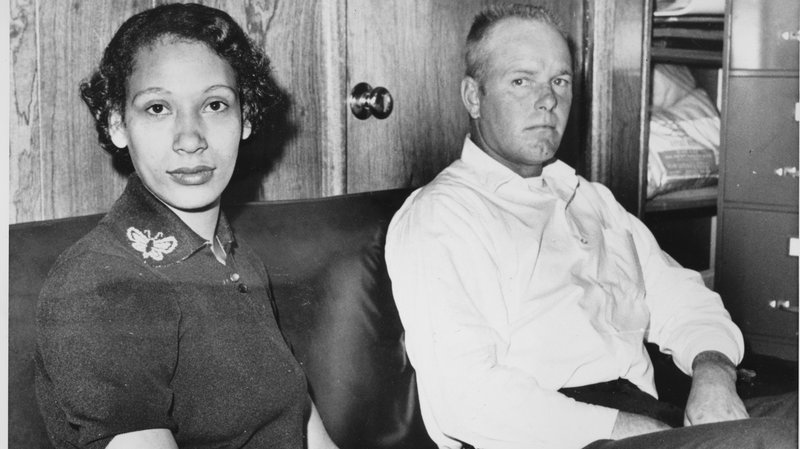
This year I celebrate 10 years of marriage. And for the unfamiliar, today is Loving Day, a national holiday marked as the celebration of the 1967 US Supreme Court decision in the case of Loving v. Virginia to allow Richard Perry Loving, a white male, to marry Mildred Delores Jeter, an African and Native American woman, striking down laws banning interracial marriage throughout the whole country. I’m a millennial, a young one at that, 1967 is well before my birth year.

My paternal grandparents were married in 1963, my grandfather an American citizen, stationed in the Philippines, he met and married my grandmother, a Filipino woman. Until this ruling, depending on where they moved in the States at the time, it could’ve been seen as illegal, with every possibility to lead to their arrest, just like the Lovings had to face.

And so I celebrate that 59 years ago, somebody was willing to fight for them, for all of us, so that today I could be married to the love of my life. And that we’re celebrating 10 years of marital bliss, in no small part, thanks to their efforts. My wife and I are an interracial couple, a multicultural marriage (and yes, our kids are beautiful).

In the first testament (the Old Testament as many would call it), this was also “illegal”. It was a sin for the people of God, the Israelites, to marry a foreign person (see Deuteronomy 7 (yes, I know I gave you a specific chapter unlike usual if you’re used to reading my stuff, you’re welcome)), but (for the “Bereans” in the room) that was a different scenario. It had nothing to do with race or ethnicity, it was about religious and cultural purity to their laws. Yet even in its “frowned upon” state, it occurs multiple times in the OT, in a beautiful way. Moses and Zipporah, Rahab and Salmon, Ruth and Boaz.

These are some key figures we’re probably all familiar with (well you might not know Salmon off the top of your head, but you’ve probably heard how both Rahab and Ruth, foreign women to the Israelites, end up in the lineage of the Christ, Jesus). Think back to the story of Ruth. Not in the stereo-typical women’s conference way, but in the ground- breaking-faithfulness-and-boldness way. Ruth abandoned her family and tradition in pursuit of what she discovered to be true: the God of Israel, the community of her family even just of her mother-in-law. A multicultural marriage in a culture that would have likely quickly cast them out if they weren’t all busy “doing what was right in their own eyes” in those times.

Besides the fact that we’re separated by thousands of miles and years, Ruth feels so different because I can’t even manage to leave behind the things I know I don’t need anymore, let alone everything. Over the past 10 years, I’ve had a hard enough time letting go of some of the things I’ve culturally grown up with that I don’t even see the need for (or possibly agree with). For example, my family of origin, especially my extended family, have always had a tendency to passionately argue about topics they agree on. They could be saying the same thing, sometimes even the same way, and take turns back and forth yelling about it. That’s just how my family runs. It’s in our blood, it’s the culture of who we are.

Now don’t get me wrong, I love my parents, and there are plenty of things to appreciate them for, and to carry on. And (just like all of us) there are things I should throw off. The truth is, sometimes I still find myself raising my voice or talking more intensely about something I entirely agree with my wife about. I get that from my mom’s side. But more often I find that while my wife and I did grow up in different cultures, we have so much more (and are consistently adding more daily/weekly/monthly/yearly) in common, than we did in our “separate” cultural identities. There’s a shared space that I wasn’t originally aware of, and I found its roots all the way back in the allocation of the land to the Israelites:

Resume your journey and go to the hill country of the Amorites and their neighbors in the Arabah, the hill country, the Judean foothills, the Negev and the sea coast — to the land of the Canaanites and to Lebanon as far as the great river, the Euphrates River. See, I have set the land before you. Enter and take possession of the land the LORD swore to give to your ancestors Abraham, Isaac, and Jacob and their future descendants.’” (Deuteronomy 1:7-8 CSB)

If you didn’t find it there, don’t worry, I’ve only within the past year or two learned about it, because it doesn’t sound that exciting all on its own. But it’s one of my favorite biblical truths I’ve recently encountered: להָפֵשְּהַ, Shephelah. Translated here as “the Judean Foothills“. Geography doesn’t usually fascinate me, but in this case it does.

If you still don’t quite get it, that’s okay. But this Shephelah (the Judean Foothills) has become such a beautiful picture to me because I’ve come to see how it’s a geographical example of the reality that God always intended for the world, with all of its various cultures and peoples, to worship him together.

So now that we’re oriented, the thing that is so beautiful to me about the Shephelah is that the highway from Egypt to Assyria passes through the promised land, right in this spot. Two ancient super powers of culture and prestige, them best way to get from one to another was to travel through a land with a people unlike any of the others. In a polytheistic world, they were a monotheistic culture. In a world of getting ahead, they were looking out for one another. They were a light to the world, a “city” set on the (foot)hills. And you can see Babylon off to the East as well; the image of the Shephelah seems to persist through the rise and fall of every empire, regime change, and oppressive culture throughout the whole history of the Bible.

This was no mistake; it was divinely ordained intentionally. The Shephelah was a calling, it wasn’t just a location. It was a calling to serve the one true God, it was a calling to love your neighbor as yourself, it was a calling to care for the foreigner, the orphan, the widow, and to show others how to do the same. It was a calling to have the same law for the Israelite and the immigrant alike.

God directly placed his people in the middle of the path, in the one spot, that every empire from North to South and East to West had to walk through. It was a geographical mission statement. And Ruth, the Moabitess, and Boaz the Israelite, a descendant of Judah, meet in this exact geography, both spiritually and physically. And they live the mission statement.

Boaz had no need to fulfill the role of kinsmen-redeemer for Ruth, it wasn’t of direct benefit to him. In fact, we know from their story, that it was potentially jeopardizing to his own lineage, that’s why he even has the opportunity in the first place. But this man knew his calling. He lived on mission enough to recognize the widow(s) that were right there beside him, and that he had the capacity to do something about it. So he made a way for them.

Then consider Ruth, who had no need to leave behind everything to follow her mother-in-law (I’d insert a stereotypical mother-in-law joke here, but I’ve got nothing. I’m glad to have her in my life and for who she is!). By all accounts, she wasn’t even tied into this new family all that deeply by time or blood. Trauma bonded? Sure. But that wasn’t enough to keep Orpah around (who, by the way, was no less important than Ruth. She listened to exactly what her mother-in-law asked of her, and left weeping, honoring her by her obedience to the plain request as it was given to her).

No, Ruth also understood the mission. She caught the vision. The opportunity for something greater by merging, adding, learning, living together in this new community. One formed by faith, not just by blood. A wall of reasons not to be with each other, a law that even forbade it; they saw in each other something more than the trials they’d faced already or would ahead of them.

It’s not documented, but I’m sure they had arguments, whether they were yelling about things they actually agreed with each other on (again, guilty as charged!), or quietly giving each other the cold shoulder when they didn’t align. Whether they had passions about where they came from, what they had been given that they wanted to pass down to their children, or not to force their children to experience, they each had a past.

Two histories, two cultures. Made one in the divine covenant of marriage. The walls had come down between them, they had the opportunity to become something new. Parts of this culture, bits of that upbringing, centralized in one new marriage. The multicultural marriage that eventually led to David, eventually led to Jesus: a blessing to all the world. A picture to me today.

They didn’t erase their history, they combined it. They didn’t lose their identities, they found it. They saw the grand design. And a chance to השם קידוש, (Kiddush Hashem: “hallow the name“). And in some strange way, separated in time, place, and circumstance, my marriage has the same opportunity. Not the same people groups, but sharing the same purpose. It was always God’s intentional design for Israel, and is still his intended design for his people in his church, to be multicultural. Every tribe, every tongue, every nation.

So happy 10th Loving Day to you, my wonderful wife, Rachel. May our marriage this year continue to grow in the ways you already see the world, an opportunity to love the needy around us, an opportunity to serve God in faithfulness. And may it be so for you too, my fellow Christian.

I love having others write on my blog and share their own thoughts. Even though this is my blog, it’s fun to have guests come along and show new insights in life and theology. Thanks again Brad for posting and here’s to many more years of multi-cultural marriage! With that, Godspeed and Jesus bless.

John: Weddings and Wells | 5-31-2026

Updated: 6/6/2026

Sermon Prep

When I prepped this message, I was on medical leave from 4/13 through 5/25 and had a lot of prep time. The reason I was on leave was because I was being diagnosed for what would eventually be diagnosed as MS (i.e. Multiple Sclerosis) on 5/8 after weeks of various tests and meeting with specialists. With that, beyond appreciating extra family time and de-stressing I worked on this sermon throughout that leave. With that, I did a lot more research than I typically would for a sermon.

Given this is one of the most well known stories of Jesus by the general public, I focused on the wedding aspect of this message. This aspect of John 4 largely originates with Lyle Eslinger and Robert Alter who I relied on for this teaching, along with many others as well. I’ve also heard some say the betrothal-type scene is actually John 2-4, which I made sure to mention when I preached. On that note, here’s the notes below and the YouTube recording:

Sermon Notes

Intro

  • There’s nothing quite like wedding portraits (Slide 1). Then annual family pics (Slide 2).

Main Point

  • In this wedding portrait of Jesus, he gives living water to all who believe in him as Lord.

Jesus Gives Living Water | John 4 (NRSVue)

[1] Now when Jesus learned that the Pharisees had heard, “Jesus is making and baptizing more disciples than John” [2] (although it was not Jesus himself but his disciples who baptized), [3] he left Judea and started back to Galilee. [4] But he had to go through Samaria. [5] So he came to a Samaritan city called Sychar, near the plot of ground that Jacob had given to his son Joseph. [6] Jacob’s well was there, and Jesus, tired out by his journey, was sitting by the well. It was about noon. [7] A Samaritan woman came to draw water, and Jesus said to her, “Give me a drink.” [8] (His disciples had gone to the city to buy food.) [9] The Samaritan woman said to him, “How is it that you, a Jew, ask a drink of me, a woman of Samaria?” (Jews do not share things in common with Samaritans.) [10] Jesus answered her, “If you knew the gift of God and who it is that is saying to you, ‘Give me a drink,’ you would have asked him, and he would have given you living water.” [11] The woman said to him, “Sir, you have no bucket, and the well is deep. Where do you get that living water? [12] Are you greater than our ancestor Jacob, who gave us the well and with his sons and his flocks drank from it?” [13] Jesus said to her, “Everyone who drinks of this water will be thirsty again, [14] but those who drink of the water that I will give them will never be thirsty. The water that I will give will become in them a spring of water gushing up to eternal life.” [15] The woman said to him, “Sir, give me this water, so that I may never be thirsty or have to keep coming here to draw water.” [16] Jesus said to her, “Go, call your husband, and come back.” [17] The woman answered him, “I have no husband.” Jesus said to her, “You are right in saying, ‘I have no husband,’ [18] for you have had five husbands, and the one you have now is not your husband. What you have said is true!” [19] The woman said to him, “Sir, I see that you are a prophet. [20] Our ancestors worshiped on this mountain, but you say that the place where people must worship is in Jerusalem.” [21] Jesus said to her, “Woman, believe me, the hour is coming when you will worship the Father neither on this mountain nor in Jerusalem. [22] You worship what you do not know; we worship what we know, for salvation is from the Jews. [23] But the hour is coming and is now here when the true worshipers will worship the Father in spirit and truth, for the Father seeks such as these to worship him. [24] God is spirit, and those who worship him must worship in spirit and truth.” [25] The woman said to him, “I know that Messiah is coming” (who is called Christ). “When he comes, he will proclaim all things to us.” [26] Jesus said to her, “I am he, the one who is speaking to you.” 

  • Jesus had to go through Samaria out of divine necessity for greater mission (John 4:4).
    • Typically Jews went around Samaria believing that Samaritans were unclean.
  • Jacob’s Well isn’t in the Bible, but Sychar was gifted to Joseph which had it (John 4:5-6).
  • There is a double entendre (i.e. two meanings) at play for these 5 husbands (John 4:18).
    • Assyrians brought 5 Baals (husbands) into Samaria causing covenant infidelity.
  • Jesus sidesteps mountain debate declaring worship is where God dwells (John 4:20).

[27] Just then his disciples came. They were astonished that he was speaking with a woman, but no one said, “What do you want?” or, “Why are you speaking with her?” [28] Then the woman left her water jar and went back to the city. She said to the people, [29] “Come and see a man who told me everything I have ever done! He cannot be the Messiah, can he?” [30] They left the city and were on their way to him. [31] Meanwhile the disciples were urging him, “Rabbi, eat something.” [32] But he said to them, “I have food to eat that you do not know about.” [33] So the disciples said to one another, “Surely no one has brought him something to eat?” [34] Jesus said to them, “My food is to do the will of him who sent me and to complete his work. [35] Do you not say, ‘Four months more, then comes the harvest’? But I tell you, look around you, and see how the fields are ripe for harvesting. [36] The reaper is already receiving wages and is gathering fruit for eternal life, so that sower and reaper may rejoice together. [37] For here the saying holds true, ‘One sows and another reaps.’ [38] I sent you to reap that for which you did not labor. Others have labored, and you have entered into their labor.” [39] Many Samaritans from that city believed in him because of the woman’s testimony, “He told me everything I have ever done.” [40] So when the Samaritans came to him, they asked him to stay with them, and he stayed there two days. [41] And many more believed because of his word. [42] They said to the woman, “It is no longer because of what you said that we believe, for we have heard for ourselves, and we know that this is truly the Savior of the world.”

  • Jesus paraphrases Amos 9:11-15 to disciples; Isaiah 55 prophecy fulfilled (John 4:27-38).
  • In spite of Jesus’ Jerusalem trips, the Samaritans know Jesus as Messiah (John 4:39-44).
    • Samaritans accepted the Torah, so Messiah is modeled after Moses not David.
      • Therefore, they received Jesus as Messiah (Read Deuteronomy 18:15-22).
  • Jesus goes to Galilee and is welcomed because of the first sign (John 2:23 → John 4:45).
  • In Cana, a royal official begs Jesus to heal his son who was going to die (John 4:46-47).

[48] Then Jesus said to him, “Unless you see signs and wonders you will not believe.” [49] The official said to him, “Sir, come down before my little boy dies.” [50] Jesus said to him, “Go; your son will live.” The man believed the word that Jesus spoke to him and started on his way.

  • After inquiring about son; he “believed, along with his whole household.” (John 4:53).
    • Samaritans and the household believed based on Jesus’ own word over wonders.

Why It Matters

  • John 4 follows betrothal type-scene found in Genesis 24, 29, and Exodus 2 (meet cute).
    • Bridegroom travels to a foreign land encountering a woman at a well. Water is drawn and the woman runs home to tell family, ending with betrothal/marriage.
    • Genesis/Exodus: well meeting → journey → wedding feast. John 2-4 reverses it.
  • The bridegroom is Jesus (John 3:29); the bride is covenant people (Hosea 2 + Ezekiel 16).
  • Torah covenants → Jesus is now “the mediator of a new covenant” (Hebrews 12:24).
    • This new covenant decontaminates and washes away sin giving us a fresh start.

Power Text

“[Acts 10:47] Can anyone withhold the water for baptizing these people who have received the Holy Spirit just as we have?”… [1 Corinthians 12:13] For in the one Spirit we were all baptized into one body—Jews or Greeks, slaves or free—and we were all made to drink of one Spirit.

  • This living water is received by the Spirit dwelling in us, then followed by water baptism.
    • For baptized believers, the Spirit’s well of eternal life is a gift that can’t dry up.

Outro

  • Is Jesus the best man or the bridegroom? Just an honorable man or husband and Lord?

Final Thoughts

This message in spite of my thorugh prep, didn’t turn out the way I wanted. It was an okay message, but we had lots of sound issues which really bothered me in the moment. Because I was annoyed already, the message delivery wasn’t at my best because of the distraction.

In general, the first half was rough and got better as I went along during this sermon. The table talks were better than the message, which was good but I was still discouraged during that too. Mostly because the whole betrothal type-scene many disregarded altogether. I think the strong medication I had begun taking the Friday before this Sunday may have affected my preaching too. I just couldn’t think straight as I shared this sermon.

Even today as I write this blog I’m feeling a lot more fatigue throughout the day. It’s an unfortunate diagnosis and thing to deal with, but there’s no point in asking why me. The better question is what now? What does God have planned for me now that I have this MS diagnosis? I don’t know what’s next, but I know the God who does. With that, Godspeed and Jesus bless.

John: Let There Be Light | 4-12-26

Photo Cred: (1) | Updated: 5/18/2026

Sermon Prep

This message I delivered the day before my short term medical leave started. Felt incredibly prepared and consider it one of my best. One of these days I’ll do my best sermons as a separate blogpost, but that’s for another day. I also treated this as an overview of John, as well as a sermon on John 1:1-5 so played double-duty here too. For now, here’s the YouTube recording and my notes below.

Sermon Notes

Opening Prayer

  • Father God, lead us this morning as we search the scriptures. Thank you for your Son whose sacrifice is our salvation. Dwell with us, Holy Spirit, as you teach us today. Amen.

Intro

  • Famous film prologues = Dune: Part Two, The Lord of the Rings, The World’s End, and UP.
    • A prologue is like an abstract or movie trailer that hints at a greater story.

Main Point

  • John wrote to comfort others by reaffirming the personal union of Christ (enfleshment).
    • That he’s an earthly human and God eternal, not just a teacher. → Why comfort?

Context of John’s Gospel

  • Background: Written in Ephesus, Asia Minor around 90 CE to the Greco-Roman world.
  • Who: John w/ Prochorus (Tradition) vs John w/ Johannine collaboration (Scholarship).

Peter turned and saw the disciple whom Jesus loved following them; he was the one who had reclined next to Jesus at the supper… This is the disciple who is testifying to these things and has written them, and we know that his testimony is true.” (John 21:20a, 24)

John, the disciple of our Lord, who also had leaned upon his breast, did himself publish a Gospel during his residence at Ephesus in Asia.” – Irenaeus, Adversus Haereses [Against Heresies], 3.1.1. Discipled by Polycarp who was discipled by John.

  • John was the eyewitness at the least and at most the author, yet he had additional help. 
  • Before John’s Gospel, others attempted to write down the Apostles’ testimony of Jesus.

Since many have undertaken to compile a narrative about the events that have been fulfilled among us, just as they were handed on to us by those who from the beginning were eyewitnesses and servants of the word, I, too, decided, as one having a grasp of everything from the start, to write a well-ordered account for you, most excellent Theophilus, so that you may have a firm grasp of the words in which you have been instructed.” (Luke 1:1-4)

→ Show Timeline Slide

  • Nero persecuted the early church causing communal disruption and martyrdom.
    • Great Fire (Rome), Jewish-Roman War (Syria); Second Temple (Jerusalem).
      • Disruptions inspired Christians to write Synoptics before Apostles all died.
  • When John wrote his Gospel, he was the last Apostle with Christians looking to him now.
    • Most likely written to comfort Diaspora Christians and Jews post-Second Temple.
      • With heresy rising and Christians/Jews heartbroken, they needed hope.

Structure of John’s Gospel

  • Themes: 7 “I am” statements, belief, witness, Jerusalem, life/light, love, and the signs.
    • Structured by 3 Passovers, so 3 years of Jesus’ ministry (John 1-5, 6-10; 11-21).
    • The midpoint of John’s Gospel is the resurrection of Lazarus, the greatest sign.
  • John’s Gospel shares 8-10% with the Synoptic Gospels, making it independent by design.

Now Jesus did many other signs in the presence of his disciples that are not written in this book. But these are written so that you may continue to believe that Jesus is the Messiah, the Son of God, and that through believing you may have life in his name.” (John 20:30-31)

  • John is meant to be read meditatively multiple times, not fully understood in one sitting.

What John wants you to do is not gain the maximum amount of info about Jesus. What he wants you to do is sit with these handful of carefully crafted portraits of Jesus.” – Tim Mackie

Let There Be Light | John 1:1-5 (NRSVue)

In the beginning was the Word, and the Word was with God, and the Word was God. He was in the beginning with God. All things came into being through him, and without him not one thing came into being. What has come into being in him was life, and the life was the light of all people. The light shines in the darkness, and the darkness did not overtake it.

  • There’s a lot of influences in John’s Gospel, but Genesis stands out most in John 1:1-5.
    • In the beginning” (Dynamic) vs “When God began to create” (Formal).
    • Genesis 1:1-5 (creation),  John 1:1-5 (creator); 1 John 1:1-5 (created in Christ).
  • The Word in Koine Greek is logos, which was a well-known term in gnosticism/Stoicism.

commonly used as an expression for the way God or the gods self-disclosed and communicated with humanity… But it was nevertheless an unprecedented step forward to equate the logos (or any other key background concept such as Wisdom or Torah) with a God-man.” – Craig L. Blomberg, A New Testament Theology (Waco, TX: Baylor University Press, 2018), 585. See Sirach 4:12, 24:8-9 and Wisdom of Solomon 7:22-30, 8:5, 9:1-9 for more on how Jesus dwells among us as Torah/Wisdom.

  • The Word is Jesus the Son and he is with the Father and Spirit in a tri-unity (John 1:1-2).
    • God the Son shares the same essence with God the Father and God the Spirit.
    • These three persons are one God who have intimate belonging to each other.
    • Yet God the Son is personally distinct from God the Father and God the Spirit.
  • John argues Jesus is our covenant mediator since he’s the creator of all things (John 1:3).

John views creation as the first, inaugural act of salvation history and bases his account of Jesus’ coming into the world on this primal act… everything was made through the Word, and, conversely, that nothing was made apart from the Word.” – Andreas J. Köstenberger, A Theology of John’s Gospel and Letters: The Word, the Christ, the Son of God (Grand Rapids, MI: Zondervan, 2009), 179–80.

  • For Christians/Jews post-Second Temple, knowing Jesus as creator is comforting.
  • Some Bibles put “eternal life” instead of “life” by itself, given it’s implied (John 1:4).
  • Darkness and light motif alludes to the Qumran War Scroll from the Essenes (John 1:5).
    • Cosmic dualism (darkness vs light) is the ANE concept of two spirits theology.
      • Judaism has yetzer hara and yetzer hatov (i.e. evil and good impulse).
        • This concept is radically changed subverting expectations.

The word translated comprehend [or “overtake”] means both “understand” and “overcome.” Thus, darkness can never overpower the light of Christ, nor can it understand the way of love.” –  The Orthodox Study Bible, ed. Peter A. Gillquist (Nashville: Thomas Nelson, 2008), 1421.

Why It Matters

  • What kind of story are we entering? A comforting story for people who need Christ.
    • A.W. Tozer describes John’s Gospel as mystical and personal, yet not theological.
      • Like the initial audience, we too need a comforting story in today’s chaos.

Power Text

For with you is the fountain of life; in your light we see light.” (Psalm 36:9)

  • Jesus doesn’t just illuminate lives causing shadows to shrink, but he is the light of life.

Again Jesus spoke to them, saying, “I am the light of the world. Whoever follows me will never walk in darkness but will have the light of life.”” (John 8:12)

Outro

  • In your darkest night, let there be light. Find comfort in Jesus Christ and his eternal life.

Final Thoughts

Very engaging, yet fun message. Used the new pulpit for the first time because Joseph Morrison broke the old one. The new sound system Nate set-up in school worked great for the first time outside of one funny burst of noise. Very well received overall, but I did feel like I stuttered more than normal. With that, Godspeed and Jesus bless.

Footnotes

  1. https://denverseminary.edu/giving/focused-giving/dr-craig-l-blomberg-endowed-chair-of-new-testament/

Genesis: Our Father’s Blessing | 3-15-26

Photo Cred: (1) | Updated: 5/18/2026

Sermon Prep

I shared this message after our annual family vacation, but had prepped the vast majority of it weeks ahead of time. I did add and tweak a lot Saturday night after returning from vacation that enhanced the message, but about 80% was already done if not more before vacation. Given the subject matter, I think this was a well-oiled machine of a message by the time I got up there to teach. On that note, here are my notes down below and the YouTube recording here.

Sermon Notes

Opening Prayer

  • Father God, lead us this morning as we search the scriptures. Thank you for your Son whose sacrifice is our salvation. Dwell with us, Holy Spirit, as you teach us today. Amen.

Intro

  • Conversation with Grandad in 2021 and how he reacted to what Papa said about him.

Main Point

  • The words of our fathers can define our futures whether we want them to or not.
    • We’ve all been defined by our dads, but in Christ we have a new destiny.

Our Father’s Blessing | Genesis 48-49:28 (NRSVue)

  • Joseph hears Jacob is ill and takes his sons to him to be blessed (Genesis 48:1-2).
  • God blessed Jacob at Luz and said he would be fruitful in Canaan (Genesis 48:3-4).

[5] Therefore your two sons, who were born to you in the land of Egypt before I came to you in Egypt, are now mine; Ephraim and Manasseh shall be mine, just as Reuben and Simeon are. [6] As for the offspring born to you after them, they shall be yours. They shall be recorded under the names of their brothers with regard to their inheritance.

  • Jacob adopts Joseph’s sons as direct heirs, so they become 2 of the 12 tribes of Israel.

[8] When Israel saw Joseph’s sons, he said, “Who are these?” [9] Joseph said to his father, “They are my sons, whom God has given me here.” And he said, “Bring them to me, please, that I may bless them.” [10] Now the eyes of Israel were dim with age, and he could not see well. So Joseph brought them near him, and he kissed them and embraced them. [11] Israel said to Joseph, “I did not expect to see your face, and here God has let me see your children also.” [12] Then Joseph removed them from his father’s knees, and he bowed himself with his face to the earth. [13] Joseph took them both, Ephraim in his right hand toward Israel’s left and Manasseh in his left hand toward Israel’s right, and brought them near him. [14] But Israel stretched out his right hand and laid it on the head of Ephraim, who was the younger, and his left hand on the head of Manasseh, crossing his hands, for Manasseh was the firstborn. [15] He blessed Joseph and said, “The God before whom my ancestors Abraham and Isaac walked, the God who has been my shepherd all my life to this day, [16] the angel who has redeemed me from all harm, bless the boys, and in them let my name be perpetuated and the name of my ancestors Abraham and Isaac, and let them grow into a multitude on the earth.” [17] When Joseph saw that his father laid his right hand on the head of Ephraim, it displeased him, so he took his father’s hand, to remove it from Ephraim’s head to Manasseh’s head. [18] Joseph said to his father, “Not so, my father! Since this one is the firstborn, put your right hand on his head.” [19] But his father refused and said, “I know, my son, I know; he also shall become a people, and he also shall be great. Nevertheless his younger brother shall be greater than he, and his offspring shall become a multitude of nations.” [20a] So he blessed them that day, saying, “By you Israel will invoke blessings, saying, ‘God make you like Ephraim and like Manasseh.’”

  • Jacob’s dim eyes links to Isaac having dim eyes blessing Esau and Jacob. He behaved deceptively as the youngest, but now Jacob publicly blesses Ephraim the youngest.
  • The right hand in the ANE represented a greater blessing. The firstborn son always got double the inheritance and led the extended family performing priest duties for them.
  • מַשְׁכִּיל / שִׂכֵּל (sikel/maskil) — “He guided his hands knowingly/wisely.” Jacob purposely crosses his arms to bless the younger Ephraim as an action of divine decree.
  • Manasseh (making to forget) and Ephraim’s (fruitful) names foreshadows their futures.
  • Jacob says God will return them home giving Joseph an extra portion (Genesis 48:21-22).
    • Shechem = shoulder/mountain ridge; City of Shechem. Also foreshadows Exodus.

[3] Reuben, you are my firstborn, my might and the first fruits of my vigor, excelling in rank and excelling in power. [4] Unstable as water, you shall no longer excel because you went up onto your father’s bed; then you defiled it—you went up onto my couch!

  • Reuben loses birthright since he slept with Bilhah after Rachel’s death (Genesis 35:22).

[8] Judah, your brothers shall praise you; your hand shall be on the neck of your enemies; your father’s sons shall bow down before you. [9] Judah is a lion’s whelp; from the prey, my son, you have gone up. He crouches down, he stretches out like a lion, like a lioness—who dares rouse him up? [10] The scepter shall not depart from Judah, nor the ruler’s staff from between his feet, until tribute comes to him, and the obedience of the peoples is his. [11] Binding his foal to the vine and his donkey’s colt to the choice vine, he washes his garments in wine and his robe in the blood of grapes; [12] his eyes are darker than wine and his teeth whiter than milk.

  • Jacob splits the birthright between Joseph, Judah; Levi (resources vs royalty vs religion).
  • Messianic prophecy that foreshadows the Son of God and Son of Man (Genesis 49:8-12).
    • Jesus is the blessing for the whole world (Genesis 12:3 → Galatians 3:16, 21-29).

[22] Joseph is a fruitful bough, a fruitful bough by a spring; his branches run over the wall. [23] The archers fiercely attacked him; they shot at him and pressed him hard. [24] Yet his bow remained taut, and his arms were made agile by the hands of the Mighty One of Jacob, by the name of the Shepherd, the Rock of Israel, [25] by the God of your father, who will help you, by the Almighty who will bless you with blessings of heaven above, blessings of the deep that lies beneath, blessings of the breasts and of the womb.[26] The blessings of your father are stronger than the blessings of the eternal mountains, the bounties of the everlasting hills; may they be on the head of Joseph, on the brow of him who was set apart from his brothers. [27] Benjamin is a ravenous wolf, in the morning devouring the prey and at evening dividing the spoil.

  • Benjamin’s blessing refers to King Saul, Mordecai; Paul for their all-in, wolf-like ferocity.
    • King Saul’s military might, Mordecai’s political prowess, and Paul’s pastoral reach. 

Why It Matters

  • The blessing Jacob gives to each of his sons as heirs is a tribal blessing oracle that not only describes their character, but foreshadows their own future and their tribe’s future.
    • As heirs of Christ, we now live in the reality of God’s grace and love for us.

Power Text

[4] But when the goodness and loving kindness of God our Savior appeared, [5] he saved us, not because of any works of righteousness that we had done, but according to his mercy, through the water of rebirth and renewal by the Holy Spirit. [6] This Spirit he poured out on us richly through Jesus Christ our Savior, [7] so that, having been justified by his grace, we might become heirs according to the hope of eternal life.” (Titus 3:4-7)

Outro

  • Christians have been grafted into God’s family and enjoy the whole world’s blessing.
    • In spite of our own failures and our fathers, in Christ our fate has changed.
  • How have your father’s words defined you? How are you defined by God the Father?

Final Thoughts

The reception was good and delivery was as well. I also ad-libbed some things I cut out from prior research I did on this text, which I think just made it better. Overall, some pretty good preaching and a solid sermon in my opinion. With that, Godspeed and Jesus bless.
Footnotes

  1. https://www.theguardian.com/world/2017/sep/20/campers-in-israel-warned-after-series-of-wolf-attacks

Genesis: Now You See Me | 3-1-26

Updated: 5/18/2026

Sermon Prep

I wrote this and the next Joseph sermon the Sunday through Tuesday after my last message. Wanted to feel prepared and not rushed this time around given that last couple sermons I was just under the gun trying to get them done. This sermon blitz I did I think made this message and the next one very polished since I got such a leg up on the writing.

What was also on my mind was my health, which led to me leaving work early in the afternoon on Wednesday due to hemisensory symptoms I had for over 24 hours prior. I looked up my symptoms on Claude before calling a nurse in-network who said I might be having a stroke, so she helped me look up the closest walk-in clinic. That night eventually brought me to the ER where those symptoms were identified as nerve inflammation. From there I met with my PCP who ordered MRIs later in the month as well.

That health episode, along with my wife and I considering a move to Texas was on my mind heavily leading up to this message. The Texas move was on our mind because we were planning our yearly visit and we know one day we will move, so to move somewhere that family lives just adds up. It’s not happening, but at the time it felt very real. Lastly, I finally decided to share my story of bitterness publicly for the first time outside of this blog and that weighed on me the most. I’ve always avoided it because I never really knew how to go about it and was afraid to open those forgiven wounds again. For this message I finally did and the notes for the message are below:

Sermon Notes

Opening Prayer

  • Father God, lead us this morning as we search the scriptures. Thank you for your Son whose sacrifice is our salvation. Dwell with us, Holy Spirit, as you teach us today. Amen.

Intro

  • Story of bitterness towards brother, then finding forgiveness years later.

Main Point

  • Reconciling broken relationships is a step in the spiritual journey we all must do.
    • God’s providence is more powerful than your past, which can be reconciled.

Now You See Me | Genesis 45:1-24 (NRSVue)

[1] Then Joseph could no longer control himself before all those who stood by him, and he cried out, “Send everyone away from me.” So no one stayed with him when Joseph made himself known to his brothers. [2] And he wept so loudly that the Egyptians heard it, and the household of Pharaoh heard it. [3] Joseph said to his brothers, “I am Joseph. Is my father still alive?” But his brothers could not answer him, so dismayed were they at his presence. [4] Then Joseph said to his brothers, “Come closer to me.” And they came closer. He said, “I am your brother, Joseph, whom you sold into Egypt. [5] And now do not be distressed or angry with yourselves because you sold me here, for God sent me before you to preserve life. [6] For the famine has been in the land these two years, and there are five more years in which there will be neither plowing nor harvest. [7] God sent me before you to preserve for you a remnant on earth and to keep alive for you many survivors. [8] So it was not you who sent me here but God; he has made me a father to Pharaoh and lord of all his house and ruler over all the land of Egypt. [9] Hurry and go up to my father and say to him, ‘Thus says your son Joseph, God has made me lord of all Egypt; come down to me; do not delay. [10] You shall settle in the land of Goshen, and you shall be near me, you and your children and your children’s children, as well as your flocks, your herds, and all that you have. [11] I will provide for you there, since there are five more years of famine to come, so that you and your household and all that you have will not come to poverty.’ [12] And now your eyes and the eyes of my brother Benjamin see that it is my own mouth that speaks to you. [13] You must tell my father how greatly I am honored in Egypt and all that you have seen. Hurry and bring my father down here.” [14] Then he fell upon his brother Benjamin’s neck and wept, while Benjamin wept upon his neck. [15] And he kissed all his brothers and wept upon them, and after that his brothers talked with him. [16] When the report was heard in Pharaoh’s house, “Joseph’s brothers have come,” Pharaoh and his servants were pleased. [17] Pharaoh said to Joseph, “Say to your brothers, ‘Do this: load your animals and go back to the land of Canaan. [18] Take your father and your households and come to me, so that I may give you the best of the land of Egypt, and you may enjoy the fat of the land.’ [19] You are further charged to say, ‘Do this: take wagons from the land of Egypt for your little ones and for your wives, and bring your father, and come. [20] Give no thought to your possessions, for the best of all the land of Egypt is yours.’ ” [21] The sons of Israel did so. Joseph gave them wagons according to the instruction of Pharaoh, and he gave them provisions for the journey. [22] To each one of them he gave a set of garments, but to Benjamin he gave three hundred pieces of silver and five sets of garments. [23] To his father he sent the following: ten donkeys loaded with the good things of Egypt and ten female donkeys loaded with grain, bread, and provision for his father on the journey. [24] Then he sent his brothers on their way, and as they were leaving he said to them, “Do not quarrel along the way.””

  • וְלֹֽא־יָכֹ֨ל יוֹסֵ֜ף לְהִתְאַפֵּ֗ק (Velo yakhol Yosef lehit’apek) – “Joseph could no longer control himself” in Hebrew reflects an emotional/physical empathetic response (Genesis 45:1).
  • The Ten react similarly to how people act when they see angels or God (Genesis 45:3).
    • See Daniel 10:15, Matthew 28:5, and Luke 1:12
  • גְּשׁוּ־נָ֥א אֵלַ֖י” (Geshu naelai) – “Come closer to me.” is used in covenant contexts like Deuteronomy 5:27 and parallels what Judah does in Genesis 44:18. In Matthew 11:28, Jesus uses a similar term in Koine Greek inviting all to “Come to me” (Genesis 45:4).
    • Egyptians considered Hebrews unclean and kept a physical distance from them.
    • Just as Judah crossed the distance for Benjamin, so Joseph does the same when he invites his brothers to come close. Given cultural norms, this was significant.
  • לְאָ֖ב לְפַרְעֹ֗ה (le’āv lephar’ōh)  – “a father to Pharaoh” refers to a vizier, which was someone that advised Pharoah with their wisdom and Pharaoh listened (Genesis 45:8).
    • Joseph has three roles, which again reiterates God’s divine completion in his life.
  • He gives Benjamin 5 sets of garments, which parallels 5 portions of food (Genesis 45:22).
    • In Judaism, the number 5 means divine protection and/or divine provision.
      • Also echoes to the tribe of Benjamin seen in Mordecai (Esther 2:5, 8:15).
      • Mordecai is a Benjamite given 5 sets of garments by the king.
      • Benjamin (son of my right hand) → Mordecai (i.e. man of the right hand).
    • Joseph giving Benjamin 300 pieces of silver contrasts with the Ten selling Joseph for only 20 pieces of silver in Genesis 37:28 and again tests if they’re still jealous.
  • “Do not quarrel along the way” is ironic given the events of Genesis 37 (Genesis 45:24).

Why It Matters

  • Just as God reconciles us to himself, so too we need to reconcile our broken past.
    • In Christ, we have the strength to overcome the brokenness of the past.

Power Text

[21] “You have heard that it was said to those of ancient times, ‘You shall not murder,’ and ‘whoever murders shall be liable to judgment.’ [22] But I say to you that if you are angry with a brother or sister, you will be liable to judgment, and if you insult a brother or sister, you will be liable to the council, and if you say, ‘You fool,’ you will be liable to the hell of fire. [23] So when you are offering your gift at the altar, if you remember that your brother or sister has something against you, [24] leave your gift there before the altar and go; first be reconciled to your brother or sister, and then come and offer your gift.” (Matthew 5:21-24)

  • True reconciliation doesn’t just include repentance, but repairing what’s been broken.

[2] All deeds are right in the sight of the doer, but the Lord weighs the heart. [3] To do righteousness and justice is more acceptable to the Lord than sacrifice.” (Proverbs 21:2-3)

  • God would rather have us make wrongs right, then pretend everything is peaceful.

Outro

  • What relationship is on the backburner? Who are you pretending isn’t there?
    • Cross the distance and go the extra mile in order to right past wrongs.
  • If Jesus was willing to cross the distance at one moment by dying on the cross for you when you deserved death, then you can do the same and right the wrongs of your past.

Final Thoughts

My best friend Andrew said it was a powerful message on forgiveness after the fact, but I didn’t like how I went about sharing the story of my brother and I. It didn’t come out right and in retrospect I just don’t think that story should’ve been made public. I even feel the same way about blogging about it today where a younger me used it as a way to forgive myself and work through that in written word, but that should’ve been done in a private journal not online. That post is still on my blog, but the damage has already been done at that point. By damage I mean, everyone knowing that story now from my community at least.

Because of how much I felt so nervous to share that story of my brother and I, the reception and delivery was okay. It ended up being so serious and the tone was quite dark. Again, I’m grateful it’s not recorded because I have regrets in telling that story openly. Not all of your testimony needs to be public knowledge. God knows who you were, who you are, and who you will be one day. Leave all of your heart and it’s heartache with him, then be wise with how and who you share your heart with on Earth. With that, Godspeed and Jesus bless.

Genesis: Dual Fates | 2-8-2026

Updated: 5/16/2026

Sermon Prep

I was like usual stressed by work, but this time it was due to changes that were effecting my peers and I. Those changes led to two of my close peers leaving the company altogether, along with some other peers as well. One of them quietly took a severance package, while the other crashed out during a 1:1 with our boss before quitting that day.

Regardless of how they left, we all hung out the Friday before this sermon with some friends from work. It was nice to have a pint with all of them and just hang out, which as a young Dad I just don’t do much of anymore. I’ve always been bad at socializing at work in general since I’m so focused on the work. Definitely need to make more time for building on work friendships.

I finished this sermon the day of preaching it. It was a little down to the wire, but it all worked out. Also my first time preaching with the blue light glasses I got from my Glory for Christmas, which was fun too. Down below are my notes and at this link is the YouTube recording.

Sermon Notes

Opening Prayer

  • Father God, lead us this morning as we search the scriptures. Thank you for your Son whose sacrifice is our salvation. Dwell with us, Holy Spirit, as you teach us today. Amen.

Intro

  • Landing the Staples job, losing it due to Covid layoff, and then having a greater career.

Main Point

  • You don’t achieve or earn God’s grace, but rather you accept and experience his grace.

Dual Fates | Genesis 40-41 (NRSVue)

[1] Some time after this, the cupbearer of the king of Egypt and his baker offended their lord the king of Egypt. [2] Pharaoh was angry with his two officers, the chief cupbearer and the chief baker, [3] and he put them in custody in the house of the captain of the guard, in the prison where Joseph was confined. [4] The captain of the guard charged Joseph with them, and he waited on them, and they continued for some time in custody. [5] One night they both dreamed—the cupbearer and the baker of the king of Egypt who were confined in the prison—each his own dream and each dream with its own meaning. [6] When Joseph came to them in the morning, he saw that they were troubled. [7] So he asked Pharaoh’s officers, who were with him in custody in his master’s house, “Why are your faces downcast today?” [8] They said to him, “We have had dreams, and there is no one to interpret them.” And Joseph said to them, “Do not interpretations belong to God? Please tell them to me.” [9] So the chief cupbearer told his dream to Joseph and said to him, “In my dream there was a vine before me, [10] and on the vine there were three branches. As soon as it budded, its blossoms came out, and the clusters ripened into grapes. [11] Pharaoh’s cup was in my hand, and I took the grapes and pressed them into Pharaoh’s cup and placed the cup in Pharaoh’s hand.” [12] Then Joseph said to him, “This is its interpretation: the three branches are three days; [13] within three days Pharaoh will lift up your head and restore you to your office, and you shall place Pharaoh’s cup in his hand, just as you used to do when you were his cupbearer. [14] But remember me when it is well with you; please do me the kindness to make mention of me to Pharaoh, and so get me out of this place. [15] For in fact I was stolen out of the land of the Hebrews, and here also I have done nothing that they should have put me into the dungeon.” [16] When the chief baker saw that the interpretation was favorable, he said to Joseph, “I also had a dream: there were three cake baskets on my head, [17] and in the uppermost basket there were all sorts of baked food for Pharaoh, but the birds were eating it out of the basket on my head.” [18] And Joseph answered, “This is its interpretation: the three baskets are three days; [19] within three days Pharaoh will lift up your head—from you!—and hang you on a pole, and the birds will eat the flesh from you.” [20] On the third day, which was Pharaoh’s birthday, he made a feast for all his servants and lifted up the head of the chief cupbearer and the head of the chief baker among his servants. [21] He restored the chief cupbearer to his cupbearing, and he placed the cup in Pharaoh’s hand, [22] but the chief baker he hanged, just as Joseph had interpreted to them. [23] Yet the chief cupbearer did not remember Joseph but forgot him.

  • In the OT, 2 means divine confirmation or divisive duality (cultures, dreams; prisoners).
  • Likewise, 3 means divine completion or a permanent pattern (time; the Rule of Three).

[1] After two whole years, Pharaoh dreamed that he was standing by the Nile, [2] and there came up out of the Nile seven sleek and fat cows, and they grazed in the reed grass. [3] Then seven other cows, ugly and thin, came up out of the Nile after them and stood by the other cows on the bank of the Nile. [4] The ugly and thin cows ate up the seven sleek and fat cows. And Pharaoh awoke. [5] Then he fell asleep and dreamed a second time; seven ears of grain, plump and good, were growing on one stalk. [6] Then seven ears, thin and blighted by the east wind, sprouted after them. [7] The thin ears swallowed up the seven plump and full ears. Pharaoh awoke, and it was a dream. [8] In the morning his spirit was troubled, so he sent and called for all the magicians of Egypt and all its wise men. Pharaoh told them his dreams, but there was no one who could interpret them to Pharaoh.

  • Chief cupbearer remembers faults and tells Pharaoh about Joseph (Genesis 41:9-13).
  • Pharaoh retells dreams to Joseph (Genesis 41:14-24) → Won’t be able to see prosperity.

[25] Then Joseph said to Pharaoh, “Pharaoh’s dreams are one and the same; God has revealed to Pharaoh what he is about to do. [26] The seven good cows are seven years, and the seven good ears are seven years; the dreams are one. [27] The seven lean and ugly cows that came up after them are seven years, as are the seven empty ears blighted by the east wind. They are seven years of famine. [28] It is as I told Pharaoh; God has shown to Pharaoh what he is about to do. [29] There will come seven years of great plenty throughout all the land of Egypt. [30] After them there will arise seven years of famine, and all the plenty will be forgotten in the land of Egypt; the famine will consume the land. [31] The plenty will no longer be known in the land because of the famine that will follow, for it will be very grievous. [32] And the doubling of Pharaoh’s dream means that the thing is fixed by God, and God will shortly bring it about. [33] Now therefore let Pharaoh select a man who is discerning and wise and set him over the land of Egypt. [34] Let Pharaoh proceed to appoint overseers over the land and take one-fifth of the produce of the land of Egypt during the seven plenteous years. [35] Let them gather all the food of these good years that are coming and lay up grain under the authority of Pharaoh for food in the cities, and let them keep it. [36] That food shall be a reserve for the land against the seven years of famine that are to befall the land of Egypt, so that the land may not perish… ””

  • There are 3 different dual dreams in this story (Genesis 37:5-11, 40:6-23, and 41:1-36).
  • Now 30, Joseph is restored and starts organizing the grain storage (Genesis 41:37-49).
    • He receives 3 things that reestablish his status in Egypt: a ring, robe, and chain.
    • Royal robes parallel his father’s favor and Pharaoh’s favor (Genesis 37:3, 41:42).
    • Also Joseph’s third ascension ends his suffering cycle (Pit → Prison → Palace).
  • Joseph’s sons: Manasseh = making to forget and Ephraim = fruitful (Genesis 41:50-52).
    • Joseph is able to forget his suffering and be fruitful, but he still needs to forgive.
  • Egyptians vs Hebrews, but this story starts with division and ends with a marriage union.

Why It Matters

  • The powerful will rise and fall, but God’s grace guides the ascent and descent of all of us.
    • Sometimes we’re brought low to learn and in humility we find the highs of life.

Power Text

the Lord gave, and the Lord has taken away; blessed be the name of the Lord.””  ( Job 1:21b)

Outro

  • Ultimately God is in control and he providentially chooses who is in charge.
    • We need to trust God’s prosperous plans and let go of our prideful plans.

Final Thoughts

Afterwards, the reception was very positive and led to great table talks. Pastor Andrew said that “the message really hit home” for a lot of people there. Given the past several months, it’s easy to see why for our community. I’m just glad that the message resonated and to be fair it was a great message in my opinion. With that said, Godspeed and Jesus bless.

Genesis: Game of Sons | 12-14-2025

Photo Cred: (1) | Updated: 5/16/2026

Sermon Prep

When it comes to my job, December is a whiplash of emotions. The first half is insanely busy trying to wrap the year up before the holidays hit and then the second half could not be more dead. I was also stressed about finishing the Joseph outline and gearing up for holiday travel, which didn’t help me either in prepping this sermon.

With all the end of year stresses, I just didn’t feel very prepared beforehand for this teaching even though it was done in time. I think the vibe this month was tense compared to all the heaviness of the Fall where everyone seemed to be going through something awful. That build up of emotions and nerve-racking situations can still have an effect on you even after those things are long gone.

The body keeps the score whether wins or losses. In spite of all that, the sermon was completed and turned out alright. Below is the notes and here is the YouTube recording:

Sermon Notes

Opening Prayer

  • Father God, lead us this morning as we search the scriptures. Thank you for your Son whose sacrifice is our salvation. Dwell with us, Holy Spirit, as you teach us today. Amen.

Intro

  • Story of love triangle in 3rd grade between Austin, Marissa, and I.

Main Point

  • Communities fracture under favoritism, while envy corrodes churches and families.

Game of Sons | Genesis 29:1-30:24 (NRSVue)

[1] Then Jacob went on his journey and came to the land of the people of the east.

  • Jacob traveled to Haran (i.e. Turkey) to escape Esau and found a well (Genesis 29:1-10).
    • Jacob’s mother Rebekah is from Haran, so these men were likely her relatives.
      • They’re waiting for Rachel to arrive with Laban’s flock to water the sheep.

[11] Then Jacob kissed Rachel and wept aloud. [12] And Jacob told Rachel that he was her father’s kinsman and that he was Rebekah’s son, and she ran and told her father. [13] When Laban heard the news about his sister’s son Jacob, he ran to meet him; he embraced him and kissed him and brought him to his house. Jacob told Laban all these things, [14] and Laban said to him, “Surely you are my bone and my flesh!” And he stayed with him a month. [15] Then Laban said to Jacob, “Because you are my kinsman, should you therefore serve me for nothing? Tell me, what shall your wages be?” [16] Now Laban had two daughters; the name of the elder was Leah, and the name of the younger was Rachel. [17] Leah’s eyes were weak, but Rachel was graceful and beautiful. [18] Jacob loved Rachel, so he said, “I will serve you seven years for your younger daughter Rachel.” [19] Laban said, “It is better that I give her to you than that I should give her to any other man; stay with me.” [20] So Jacob served seven years for Rachel, and they seemed to him but a few days because of his love for her.” 

  • Being a kinsman guaranteed Jacob was protected and had privileges (Genesis 29:12).
    • Explains why Jacob could negotiate wages. Also, traveling solo was risky and odd.
  • my bone and my flesh” is covenant language throughout OT (Genesis 2:23, Hosea 2:16).
  • Erebu marriage = when adopted heir (i.e. Jacob) marries adopter’s daughter (i.e. Laban).
  • Leah’s eyes refer to her subtle beauty, while Rachel had striking beauty (Genesis 29:17).
    • Given the culture and desert life, a woman’s eyes were their most visible feature.

[21] Then Jacob said to Laban, “Give me my wife that I may go in to her, for my time is completed.” [22] So Laban gathered together all the people of the place and made a feast. [23] But in the evening he took his daughter Leah and brought her to Jacob, and he went in to her. [24] (Laban gave his maid Zilpah to his daughter Leah to be her maid.) [25] When morning came, it was Leah! And Jacob said to Laban, “What is this you have done to me? Did I not serve with you for Rachel? Why then have you deceived me?” [26] Laban said, “This is not done in our country—giving the younger before the firstborn. [27] Complete the week of this one, and we will give you the other also in return for serving me another seven years.” [28] Jacob did so and completed her week; then Laban gave him his daughter Rachel as a wife. [29] (Laban gave his maid Bilhah to his daughter Rachel to be her maid.) [30] So Jacob went in to Rachel also, and he loved Rachel more than Leah. He served Laban for another seven years. [31] When the Lord saw that Leah was unloved, he opened her womb, but Rachel was barren.” 

  • A disguised Jacob deceived Isaac in the dark; now Jacob is deceived in the dark by Laban.
  • Leah’s sons have names that foreshadow Jacob’s deathbed blessing (Genesis 29:32-35).
    • Reuben (affliction), Simeon (hated), Levi (third son); Judah (I will praise the Lord).
    • Reuben, Simeon; Levi (disqualified) vs Judah in Genesis 49 (brothers shall praise).

[1] When Rachel saw that she bore Jacob no children, she envied her sister, and she said to Jacob, “Give me children, or I shall die!” [2] Jacob became very angry with Rachel and said, “Am I in the place of God, who has withheld from you the fruit of the womb?” [3] Then she said, “Here is my maid Bilhah; go in to her, that she may bear upon my knees and that I too may have children through her.” [4] So she gave him her maid Bilhah as a wife, and Jacob went in to her. [5] And Bilhah conceived and bore Jacob a son. [6] Then Rachel said, “God has judged me and has also heard my voice and given me a son”; therefore she named him Dan. [7] Rachel’s maid Bilhah conceived again and bore Jacob a second son. [8] Then Rachel said, “With mighty wrestlings I have wrestled with my sister and have prevailed,” so she named him Naphtali. [9] When Leah saw that she had ceased bearing children, she took her maid Zilpah and gave her to Jacob as a wife. [10] Then Leah’s maid Zilpah bore Jacob a son. [11] And Leah said, “Good fortune!” So she named him Gad. [12] Leah’s maid Zilpah bore Jacob a second son. [13] And Leah said, “Happy am I! For the women will call me happy,” so she named him Asher.

  • For ANE women, your status was derived from covenant connections to the patriarch.
    • Bearing sons for the patriarch guaranteed a greater status than those who didn’t.
  • Like Sarai in Genesis 16, Leah/Rachel use ANE law: slaves bear children for barren wives.

[14] In the days of wheat harvest Reuben went and found mandrakes in the field and brought them to his mother Leah. Then Rachel said to Leah, “Please give me some of your son’s mandrakes.” [15] But she said to her, “Is it a small matter that you have taken away my husband? Would you take away my son’s mandrakes also?” Rachel said, “Then he may lie with you tonight for your son’s mandrakes.” [16] When Jacob came from the field in the evening, Leah went out to meet him and said, “You must come in to me, for I have hired you with my son’s mandrakes.” So he lay with her that night. [17] And God heeded Leah, and she conceived and bore Jacob a fifth son. [18] Leah said, “God has given me my hire because I gave my maid to my husband,” so she named him Issachar. [19] And Leah conceived again, and she bore Jacob a sixth son. [20] Then Leah said, “God has endowed me with a good gift; now my husband will honor me, because I have borne him six sons,” so she named him Zebulun. [21] Afterwards she bore a daughter and named her Dinah. [22] Then God remembered Rachel, and God heeded her and opened her womb. [23] She conceived and bore a son and said, “God has taken away my reproach,” [24] and she named him Joseph, saying, “May the Lord add to me another son!”

  • Mandrakes = toxic plant with man-shaped roots used for fertility charms or love potions.
  • Leah and Rachel’s attitude towards God changes as they thank him for giving them sons.

Why It Matters

  • God still works through generational sin, family failures, and even sibling rivalries.
    • God sees the unloved. He chooses the least of these to do the greatest.

Power Text

God judged it better to bring good out of evil than not to permit any evil to exist.” – Augustine of Hippo, Enchiridion on Faith, Hope, and Love, §27, trans. J. F. Shaw, in Nicene and Post-Nicene Fathers, First Series, vol. 3, ed. Philip Schaff (Peabody, MA: Hendrickson Publishers, 1994), 245.

Outro

  • Identify the Leah-type in your life: someone unseen. Practice hearing vs hurting them.

Final Thoughts

The delivery was shaky, but okay. I was going to open my sermon with story about one of my brothers and I, but at the last second opted to tell a different story. That other story has much higher emotions, so I think those impacted how I delivered this message even though I didn’t tell it. In fact, I was nervous the whole lead up to this message because I was afraid to tell that story.

This sermon is solid though and even if I didn’t think my delivery ws good, the content was good. It flowed well notes-wise and I did what I was supposed to do: preach the word. With that, Godspeed and Jesus bless.

Footnotes

  1. https://en.wikipedia.org/wiki/Augustine_of_Hippo

Genesis: Share in our Sufferings | 11-16-2025

Updated: 5/15/2026

Sermon Prep

In the news at the time, the government shutdown from October through half of November in 2025. This historical shutdown which ended four days before this message impacted 40 million people depending on SNAP benefits to survive the tough economy. In those 43 days, we heard stories locally and nationally of people just trying nearly any means necessary to get food on the table without that essential government aid. It was a scary time for a lot of people both directly and indirectly impacted by this shutdown and the loss of benefits.

This backdrop also influenced how I wrote this sermon. Now yes, it effected the other previous sermons too in retrospect but consciously I was thinking about those 40 million people in need when I wrote this message. To struggle for 43 days and figure out how to feed your family during that time must’ve been beyond stressful for so many Americans. It really bothered me and our church did end up helping because we too noticed that societal strain in our community. But even still, we could only help so many compared to the gap not being met. There was a lot of hurt and worry in the Fall of 2025.

So when it came to this message I unlike most messages leaned a little into the political to drive home the application. To drive home that we who have plenty and we are well must be there for those who have little and have been hurt. I always struggle with what to or not to include politically because it honestly infects every corner of life now which is frustrating. It’s the new American religion to worship a politician over the person of Jesus. It’s embarrassing and I think my thoughts on that bled here into this here text. On that note, here’s the YouTube recording and the sermon notes:

Sermon Notes

Opening Prayer

  • Father God, lead us this morning as we search the scriptures. Thank you for your Son whose sacrifice is our salvation. Would you speak through me, in spite of me, and beyond me. Dwell with us, Holy Spirit, as you teach us today. In your name, amen.

Intro

  • Story of trying to take control in buying a home, yet finding a townhouse in the end.

Main Point

  • When we rush God’s plan and try to take control, someone always gets hurt.
    • Every spiritual scar tells a story, but Jesus shares in our suffering. 

Share in Our Sufferings | Genesis 16:1-14, 21:9-21 (NRSVue)

[1] Now Sarai, Abram’s wife, bore him no children. She had an Egyptian slave whose name was Hagar, [2] and Sarai said to Abram, “You see that the Lord has prevented me from bearing children; go in to my slave; it may be that I shall obtain children by her.” And Abram listened to the voice of Sarai. [3] So, after Abram had lived ten years in the land of Canaan, Sarai, Abram’s wife, took Hagar the Egyptian, her slave, and gave her to her husband Abram as a wife. [4] He went in to Hagar, and she conceived, and when she saw that she had conceived, she looked with contempt on her mistress. [5] Then Sarai said to Abram, “May the wrong done to me be on you! I gave my slave to your embrace, and when she saw that she had conceived, she looked on me with contempt. May the Lord judge between you and me!” [6] But Abram said to Sarai, “Your slave is in your power; do to her as you please.” Then Sarai dealt harshly with her, and she ran away from her. [7] The angel of the Lord found her by a spring of water in the wilderness, the spring on the way to Shur. [8] And he said, “Hagar, slave of Sarai, where have you come from and where are you going?” She said, “I am running away from my mistress Sarai.” [9] The angel of the Lord said to her, “Return to your mistress, and submit to her.” [10] The angel of the Lord also said to her, “I will so greatly multiply your offspring that they cannot be counted for multitude.” [11] And the angel of the Lord said to her, “Now you have conceived and shall bear a son; you shall call him Ishmael, for the Lord has given heed to your affliction. [12] He shall be a wild ass of a man, with his hand against everyone, and everyone’s hand against him, and he shall live at odds with all his kin.” [13] So she named the Lord who spoke to her, “You are El-roi,” for she said, “Have I really seen God and remained alive after seeing him?” [14] Therefore the well was called Beer-lahai-roi; it lies between Kadesh and Bered.

  • Hagar was potentially taken as a slave by Sarai when they were in Egypt (i.e. Genesis 12).
  • Sarai enacts a common ANE law where a slave bears children for the wife (Genesis 16:2).
  • Abram listening to Sarai parallels Adam listening to Eve instead of God (Genesis 16:3).
  • Ishmael means God hears; Muslims claim he is Muhammed’s ancestor (Genesis 16:11).
  • El-roi means the God who sees me and is the first time God is named (Genesis 16:13).

[9] But Sarah saw the son of Hagar the Egyptian, whom she had borne to Abraham, playing with her son Isaac. [10] So she said to Abraham, “Cast out this slave woman with her son, for the son of this slave woman shall not inherit along with my son Isaac.” [11] The matter was very distressing to Abraham on account of his son. [12] But God said to Abraham, “Do not be distressed because of the boy and because of your slave woman; whatever Sarah says to you, do as she tells you, for it is through Isaac that offspring shall be named for you. [13] As for the son of the slave woman, I will make a nation of him also, because he is your offspring.” [14] So Abraham rose early in the morning and took bread and a skin of water and gave it to Hagar, putting it on her shoulder, along with the child, and sent her away. And she departed and wandered about in the wilderness of Beer-sheba. [15] When the water in the skin was gone, she cast the child under one of the bushes. [16] Then she went and sat down opposite him a good way off, about the distance of a bowshot, for she said, “Do not let me look on the death of the child.” And as she sat opposite him, she lifted up her voice and wept. [17] And God heard the voice of the boy, and the angel of God called to Hagar from heaven and said to her, “What troubles you, Hagar? Do not be afraid, for God has heard the voice of the boy where he is. [18] Come, lift up the boy and hold him fast with your hand, for I will make a great nation of him.” [19] Then God opened her eyes, and she saw a well of water. She went and filled the skin with water and gave the boy a drink. [20] God was with the boy, and he grew up; he lived in the wilderness and became an expert with the bow. [21] He lived in the wilderness of Paran, and his mother got a wife for him from the land of Egypt.

  • Scholarship and Tradition agree that the “the angel of the Lord” in Genesis 16 is a Christophany, while “the angel of God” in Genesis 21 is just a messenger for God.
  • Hagar receives a similar promise to Abraham in that God will provide and make a nation.

Why It Matters

  • Abram and Sarai disobeyed, took control, and exploited Hagar creating generational sin.
    • Church hurt causes deep wounds that are real, but God is here for the hurting.

Power Text

[21] “You shall not wrong or oppress a resident alien, for you were aliens in the land of Egypt. [22] You shall not abuse any widow or orphan. [23] If you do abuse them, when they cry out to me, I will surely heed their cry; [24] my wrath will burn, and I will kill you with the sword” –  Exodus 22:21-24b (NRSVue)

  •  Under the Law, God commands Israel to defend the alien, powerless, and vulnerable.

[32] All the nations will be gathered before him, and he will separate people one from another as a shepherd separates the sheep from the goats, [33] and he will put the sheep at his right hand and the goats at the left… [40] And the king will answer [the right ones], ‘Truly I tell you, just as you did it to one of the least of these brothers and sisters of mine, you did it to me.’” – Matthew 25:32-33, 40 (NRSVue)

  • The final judgement is tied to good works towards the alien, powerless, and vulnerable.
    • Jesus not only has empathy for the hurting, but shares in their sufferings too.
      • He suffered physically on the cross, had sexual shame when the Romans publicly stripped him naked, and spiritual alienation from the Father.

Outro

[16] We know love by this, that he laid down his life for us—and we ought to lay down our lives for the brothers and sisters. [17] How does God’s love abide in anyone who has the world’s goods and sees a brother or sister in need and yet refuses help? [18] Little children, let us love not in word or speech but in deed and truth. –  1 John 3:16-18 (NRSVue)

  • Under God’s grace, right belief naturally compels us to right behavior as his Church.
    • If you carry church hurt, bring that to God who hears, loves, and sees you.
      • If you’ve wounded others, repent and help those you hurt to heal.

Final Thoughts

The picture for this blogpost ironically comes from our annul Friendsgiving we do as a church. As you can see by the time Thanksgiving week rolled around, our community was better than ever. There was laughter and joy again, which is always the best company to have around.

People were hesitant to talk during small groups after the message. I think the subject matter of church hurt, the current political climate, and just talking about suffering in general makes everyone uncomfortable. As we were packing up, I overhead one of our teachers question the sexual shame bit, which to be fair is a minority view.

There has been more recent scholarship from the likes of Brent Kinman, Jerome Neyrey, Marika Rose and Katie Edwards, along with others as well. At this time I had incorporated this concept into my own book and relied on work from David Tombs exclusively. I’m a bit on the fence with this specific concept, but I included it simply to challenge our congregation. If you only hear things you agree with, then are you really growing in Christ? Growth is uncomfortable and so too is learning when presented with new ideas.

As for the sermon, I thought I did well with the material overall. I was especially proud of how I included so many solid cross references for this sermon. With that said, Godspeed and Jesus bless.