John: Let There Be Light | 4-12-26

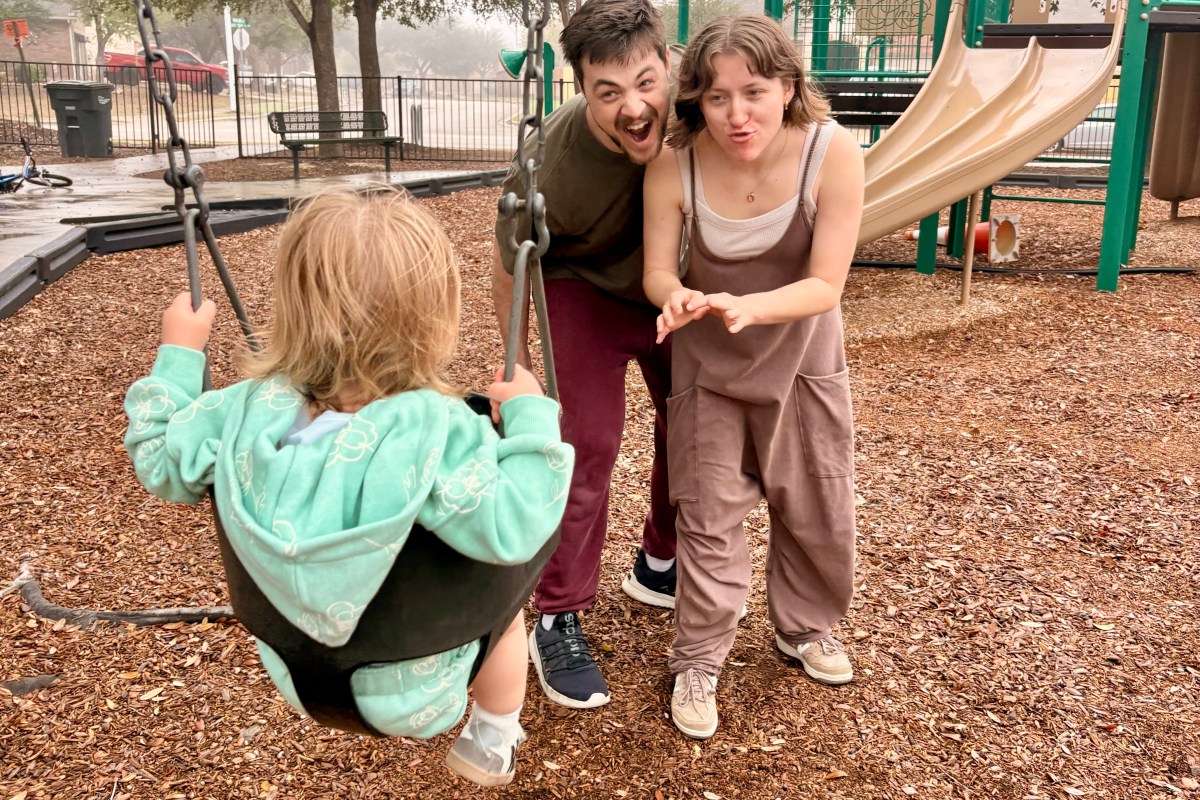
Photo Cred: (1) | Updated: 5/18/2026

Sermon Prep

This message I delivered the day before my short term medical leave started. Felt incredibly prepared and consider it one of my best. One of these days I’ll do my best sermons as a separate blogpost, but that’s for another day. I also treated this as an overview of John, as well as a sermon on John 1:1-5 so played double-duty here too. For now, here’s the YouTube recording and my notes below.

Sermon Notes

Opening Prayer

  • Father God, lead us this morning as we search the scriptures. Thank you for your Son whose sacrifice is our salvation. Dwell with us, Holy Spirit, as you teach us today. Amen.

Intro

  • Famous film prologues = Dune: Part Two, The Lord of the Rings, The World’s End, and UP.
    • A prologue is like an abstract or movie trailer that hints at a greater story.

Main Point

  • John wrote to comfort others by reaffirming the personal union of Christ (enfleshment).
    • That he’s an earthly human and God eternal, not just a teacher. → Why comfort?

Context of John’s Gospel

  • Background: Written in Ephesus, Asia Minor around 90 CE to the Greco-Roman world.
  • Who: John w/ Prochorus (Tradition) vs John w/ Johannine collaboration (Scholarship).

Peter turned and saw the disciple whom Jesus loved following them; he was the one who had reclined next to Jesus at the supper… This is the disciple who is testifying to these things and has written them, and we know that his testimony is true.” (John 21:20a, 24)

John, the disciple of our Lord, who also had leaned upon his breast, did himself publish a Gospel during his residence at Ephesus in Asia.” – Irenaeus, Adversus Haereses [Against Heresies], 3.1.1. Discipled by Polycarp who was discipled by John.

  • John was the eyewitness at the least and at most the author, yet he had additional help. 
  • Before John’s Gospel, others attempted to write down the Apostles’ testimony of Jesus.

Since many have undertaken to compile a narrative about the events that have been fulfilled among us, just as they were handed on to us by those who from the beginning were eyewitnesses and servants of the word, I, too, decided, as one having a grasp of everything from the start, to write a well-ordered account for you, most excellent Theophilus, so that you may have a firm grasp of the words in which you have been instructed.” (Luke 1:1-4)

→ Show Timeline Slide

  • Nero persecuted the early church causing communal disruption and martyrdom.
    • Great Fire (Rome), Jewish-Roman War (Syria); Second Temple (Jerusalem).
      • Disruptions inspired Christians to write Synoptics before Apostles all died.
  • When John wrote his Gospel, he was the last Apostle with Christians looking to him now.
    • Most likely written to comfort Diaspora Christians and Jews post-Second Temple.
      • With heresy rising and Christians/Jews heartbroken, they needed hope.

Structure of John’s Gospel

  • Themes: 7 “I am” statements, belief, witness, Jerusalem, life/light, love, and the signs.
    • Structured by 3 Passovers, so 3 years of Jesus’ ministry (John 1-5, 6-10; 11-21).
    • The midpoint of John’s Gospel is the resurrection of Lazarus, the greatest sign.
  • John’s Gospel shares 8-10% with the Synoptic Gospels, making it independent by design.

Now Jesus did many other signs in the presence of his disciples that are not written in this book. But these are written so that you may continue to believe that Jesus is the Messiah, the Son of God, and that through believing you may have life in his name.” (John 20:30-31)

  • John is meant to be read meditatively multiple times, not fully understood in one sitting.

What John wants you to do is not gain the maximum amount of info about Jesus. What he wants you to do is sit with these handful of carefully crafted portraits of Jesus.” – Tim Mackie

Let There Be Light | John 1:1-5 (NRSVue)

In the beginning was the Word, and the Word was with God, and the Word was God. He was in the beginning with God. All things came into being through him, and without him not one thing came into being. What has come into being in him was life, and the life was the light of all people. The light shines in the darkness, and the darkness did not overtake it.

  • There’s a lot of influences in John’s Gospel, but Genesis stands out most in John 1:1-5.
    • In the beginning” (Dynamic) vs “When God began to create” (Formal).
    • Genesis 1:1-5 (creation),  John 1:1-5 (creator); 1 John 1:1-5 (created in Christ).
  • The Word in Koine Greek is logos, which was a well-known term in gnosticism/Stoicism.

commonly used as an expression for the way God or the gods self-disclosed and communicated with humanity… But it was nevertheless an unprecedented step forward to equate the logos (or any other key background concept such as Wisdom or Torah) with a God-man.” – Craig L. Blomberg, A New Testament Theology (Waco, TX: Baylor University Press, 2018), 585. See Sirach 4:12, 24:8-9 and Wisdom of Solomon 7:22-30, 8:5, 9:1-9 for more on how Jesus dwells among us as Torah/Wisdom.

  • The Word is Jesus the Son and he is with the Father and Spirit in a tri-unity (John 1:1-2).
    • God the Son shares the same essence with God the Father and God the Spirit.
    • These three persons are one God who have intimate belonging to each other.
    • Yet God the Son is personally distinct from God the Father and God the Spirit.
  • John argues Jesus is our covenant mediator since he’s the creator of all things (John 1:3).

John views creation as the first, inaugural act of salvation history and bases his account of Jesus’ coming into the world on this primal act… everything was made through the Word, and, conversely, that nothing was made apart from the Word.” – Andreas J. Köstenberger, A Theology of John’s Gospel and Letters: The Word, the Christ, the Son of God (Grand Rapids, MI: Zondervan, 2009), 179–80.

  • For Christians/Jews post-Second Temple, knowing Jesus as creator is comforting.
  • Some Bibles put “eternal life” instead of “life” by itself, given it’s implied (John 1:4).
  • Darkness and light motif alludes to the Qumran War Scroll from the Essenes (John 1:5).
    • Cosmic dualism (darkness vs light) is the ANE concept of two spirits theology.
      • Judaism has yetzer hara and yetzer hatov (i.e. evil and good impulse).
        • This concept is radically changed subverting expectations.

The word translated comprehend [or “overtake”] means both “understand” and “overcome.” Thus, darkness can never overpower the light of Christ, nor can it understand the way of love.” –  The Orthodox Study Bible, ed. Peter A. Gillquist (Nashville: Thomas Nelson, 2008), 1421.

Why It Matters

  • What kind of story are we entering? A comforting story for people who need Christ.
    • A.W. Tozer describes John’s Gospel as mystical and personal, yet not theological.
      • Like the initial audience, we too need a comforting story in today’s chaos.

Power Text

For with you is the fountain of life; in your light we see light.” (Psalm 36:9)

  • Jesus doesn’t just illuminate lives causing shadows to shrink, but he is the light of life.

Again Jesus spoke to them, saying, “I am the light of the world. Whoever follows me will never walk in darkness but will have the light of life.”” (John 8:12)

Outro

  • In your darkest night, let there be light. Find comfort in Jesus Christ and his eternal life.

Final Thoughts

Very engaging, yet fun message. Used the new pulpit for the first time because Joseph Morrison broke the old one. The new sound system Nate set-up in school worked great for the first time outside of one funny burst of noise. Very well received overall, but I did feel like I stuttered more than normal. With that, Godspeed and Jesus bless.
Footnotes

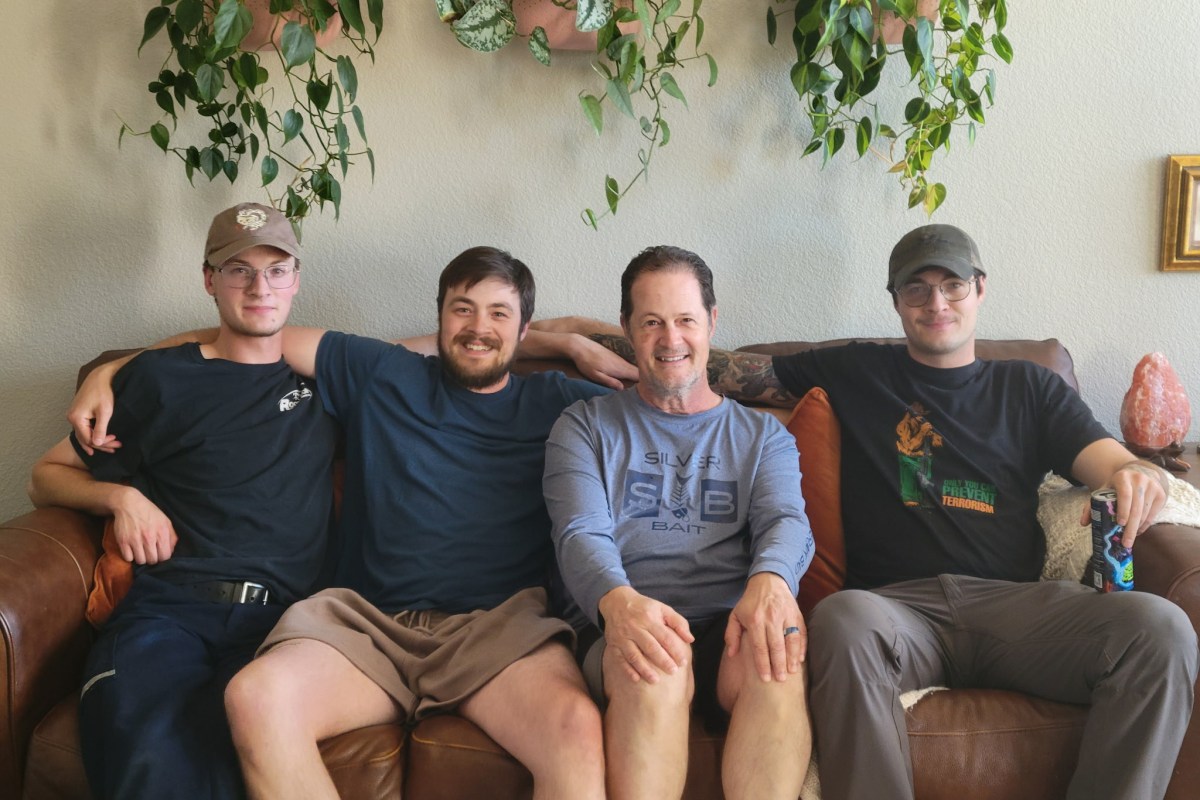
  1. https://denverseminary.edu/giving/focused-giving/dr-craig-l-blomberg-endowed-chair-of-new-testament/

Genesis: Our Father’s Blessing | 3-15-26

Photo Cred: (1) | Updated: 5/18/2026

Sermon Prep

I shared this message after our annual family vacation, but had prepped the vast majority of it weeks ahead of time. I did add and tweak a lot Saturday night after returning from vacation that enhanced the message, but about 80% was already done if not more before vacation. Given the subject matter, I think this was a well-oiled machine of a message by the time I got up there to teach. On that note, here are my notes down below and the YouTube recording here.

Sermon Notes

Opening Prayer

  • Father God, lead us this morning as we search the scriptures. Thank you for your Son whose sacrifice is our salvation. Dwell with us, Holy Spirit, as you teach us today. Amen.

Intro

  • Conversation with Grandad in 2021 and how he reacted to what Papa said about him.

Main Point

  • The words of our fathers can define our futures whether we want them to or not.
    • We’ve all been defined by our dads, but in Christ we have a new destiny.

Our Father’s Blessing | Genesis 48-49:28 (NRSVue)

  • Joseph hears Jacob is ill and takes his sons to him to be blessed (Genesis 48:1-2).
  • God blessed Jacob at Luz and said he would be fruitful in Canaan (Genesis 48:3-4).

[5] Therefore your two sons, who were born to you in the land of Egypt before I came to you in Egypt, are now mine; Ephraim and Manasseh shall be mine, just as Reuben and Simeon are. [6] As for the offspring born to you after them, they shall be yours. They shall be recorded under the names of their brothers with regard to their inheritance.

  • Jacob adopts Joseph’s sons as direct heirs, so they become 2 of the 12 tribes of Israel.

[8] When Israel saw Joseph’s sons, he said, “Who are these?” [9] Joseph said to his father, “They are my sons, whom God has given me here.” And he said, “Bring them to me, please, that I may bless them.” [10] Now the eyes of Israel were dim with age, and he could not see well. So Joseph brought them near him, and he kissed them and embraced them. [11] Israel said to Joseph, “I did not expect to see your face, and here God has let me see your children also.” [12] Then Joseph removed them from his father’s knees, and he bowed himself with his face to the earth. [13] Joseph took them both, Ephraim in his right hand toward Israel’s left and Manasseh in his left hand toward Israel’s right, and brought them near him. [14] But Israel stretched out his right hand and laid it on the head of Ephraim, who was the younger, and his left hand on the head of Manasseh, crossing his hands, for Manasseh was the firstborn. [15] He blessed Joseph and said, “The God before whom my ancestors Abraham and Isaac walked, the God who has been my shepherd all my life to this day, [16] the angel who has redeemed me from all harm, bless the boys, and in them let my name be perpetuated and the name of my ancestors Abraham and Isaac, and let them grow into a multitude on the earth.” [17] When Joseph saw that his father laid his right hand on the head of Ephraim, it displeased him, so he took his father’s hand, to remove it from Ephraim’s head to Manasseh’s head. [18] Joseph said to his father, “Not so, my father! Since this one is the firstborn, put your right hand on his head.” [19] But his father refused and said, “I know, my son, I know; he also shall become a people, and he also shall be great. Nevertheless his younger brother shall be greater than he, and his offspring shall become a multitude of nations.” [20a] So he blessed them that day, saying, “By you Israel will invoke blessings, saying, ‘God make you like Ephraim and like Manasseh.’”

  • Jacob’s dim eyes links to Isaac having dim eyes blessing Esau and Jacob. He behaved deceptively as the youngest, but now Jacob publicly blesses Ephraim the youngest.
  • The right hand in the ANE represented a greater blessing. The firstborn son always got double the inheritance and led the extended family performing priest duties for them.
  • מַשְׁכִּיל / שִׂכֵּל (sikel/maskil) — “He guided his hands knowingly/wisely.” Jacob purposely crosses his arms to bless the younger Ephraim as an action of divine decree.
  • Manasseh (making to forget) and Ephraim’s (fruitful) names foreshadows their futures.
  • Jacob says God will return them home giving Joseph an extra portion (Genesis 48:21-22).
    • Shechem = shoulder/mountain ridge; City of Shechem. Also foreshadows Exodus.

[3] Reuben, you are my firstborn, my might and the first fruits of my vigor, excelling in rank and excelling in power. [4] Unstable as water, you shall no longer excel because you went up onto your father’s bed; then you defiled it—you went up onto my couch!

  • Reuben loses birthright since he slept with Bilhah after Rachel’s death (Genesis 35:22).

[8] Judah, your brothers shall praise you; your hand shall be on the neck of your enemies; your father’s sons shall bow down before you. [9] Judah is a lion’s whelp; from the prey, my son, you have gone up. He crouches down, he stretches out like a lion, like a lioness—who dares rouse him up? [10] The scepter shall not depart from Judah, nor the ruler’s staff from between his feet, until tribute comes to him, and the obedience of the peoples is his. [11] Binding his foal to the vine and his donkey’s colt to the choice vine, he washes his garments in wine and his robe in the blood of grapes; [12] his eyes are darker than wine and his teeth whiter than milk.

  • Jacob splits the birthright between Joseph, Judah; Levi (resources vs royalty vs religion).
  • Messianic prophecy that foreshadows the Son of God and Son of Man (Genesis 49:8-12).
    • Jesus is the blessing for the whole world (Genesis 12:3 → Galatians 3:16, 21-29).

[22] Joseph is a fruitful bough, a fruitful bough by a spring; his branches run over the wall. [23] The archers fiercely attacked him; they shot at him and pressed him hard. [24] Yet his bow remained taut, and his arms were made agile by the hands of the Mighty One of Jacob, by the name of the Shepherd, the Rock of Israel, [25] by the God of your father, who will help you, by the Almighty who will bless you with blessings of heaven above, blessings of the deep that lies beneath, blessings of the breasts and of the womb.[26] The blessings of your father are stronger than the blessings of the eternal mountains, the bounties of the everlasting hills; may they be on the head of Joseph, on the brow of him who was set apart from his brothers. [27] Benjamin is a ravenous wolf, in the morning devouring the prey and at evening dividing the spoil.

  • Benjamin’s blessing refers to King Saul, Mordecai; Paul for their all-in, wolf-like ferocity.
    • King Saul’s military might, Mordecai’s political prowess, and Paul’s pastoral reach. 

Why It Matters

  • The blessing Jacob gives to each of his sons as heirs is a tribal blessing oracle that not only describes their character, but foreshadows their own future and their tribe’s future.
    • As heirs of Christ, we now live in the reality of God’s grace and love for us.

Power Text

[4] But when the goodness and loving kindness of God our Savior appeared, [5] he saved us, not because of any works of righteousness that we had done, but according to his mercy, through the water of rebirth and renewal by the Holy Spirit. [6] This Spirit he poured out on us richly through Jesus Christ our Savior, [7] so that, having been justified by his grace, we might become heirs according to the hope of eternal life.” (Titus 3:4-7)

Outro

  • Christians have been grafted into God’s family and enjoy the whole world’s blessing.
    • In spite of our own failures and our fathers, in Christ our fate has changed.
  • How have your father’s words defined you? How are you defined by God the Father?

Final Thoughts

The reception was good and delivery was as well. I also ad-libbed some things I cut out from prior research I did on this text, which I think just made it better. Overall, some pretty good preaching and a solid sermon in my opinion. With that, Godspeed and Jesus bless.

Footnotes

  1. https://www.theguardian.com/world/2017/sep/20/campers-in-israel-warned-after-series-of-wolf-attacks

Genesis: Now You See Me | 3-1-26

Updated: 5/18/2026

Sermon Prep

I wrote this and the next Joseph sermon the Sunday through Tuesday after my last message. Wanted to feel prepared and not rushed this time around given that last couple sermons I was just under the gun trying to get them done. This sermon blitz I did I think made this message and the next one very polished since I got such a leg up on the writing.

What was also on my mind was my health, which led to me leaving work early in the afternoon on Wednesday due to hemisensory symptoms I had for over 24 hours prior. I looked up my symptoms on Claude before calling a nurse in-network who said I might be having a stroke, so she helped me look up the closest walk-in clinic. That night eventually brought me to the ER where those symptoms were identified as nerve inflammation. From there I met with my PCP who ordered MRIs later in the month as well.

That health episode, along with my wife and I considering a move to Texas was on my mind heavily leading up to this message. The Texas move was on our mind because we were planning our yearly visit and we know one day we will move, so to move somewhere that family lives just adds up. It’s not happening, but at the time it felt very real. Lastly, I finally decided to share my story of bitterness publicly for the first time outside of this blog and that weighed on me the most. I’ve always avoided it because I never really knew how to go about it and was afraid to open those forgiven wounds again. For this message I finally did and the notes for the message are below:

Sermon Notes

Opening Prayer

  • Father God, lead us this morning as we search the scriptures. Thank you for your Son whose sacrifice is our salvation. Dwell with us, Holy Spirit, as you teach us today. Amen.

Intro

  • Story of bitterness towards brother, then finding forgiveness years later.

Main Point

  • Reconciling broken relationships is a step in the spiritual journey we all must do.
    • God’s providence is more powerful than your past, which can be reconciled.

Now You See Me | Genesis 45:1-24 (NRSVue)

[1] Then Joseph could no longer control himself before all those who stood by him, and he cried out, “Send everyone away from me.” So no one stayed with him when Joseph made himself known to his brothers. [2] And he wept so loudly that the Egyptians heard it, and the household of Pharaoh heard it. [3] Joseph said to his brothers, “I am Joseph. Is my father still alive?” But his brothers could not answer him, so dismayed were they at his presence. [4] Then Joseph said to his brothers, “Come closer to me.” And they came closer. He said, “I am your brother, Joseph, whom you sold into Egypt. [5] And now do not be distressed or angry with yourselves because you sold me here, for God sent me before you to preserve life. [6] For the famine has been in the land these two years, and there are five more years in which there will be neither plowing nor harvest. [7] God sent me before you to preserve for you a remnant on earth and to keep alive for you many survivors. [8] So it was not you who sent me here but God; he has made me a father to Pharaoh and lord of all his house and ruler over all the land of Egypt. [9] Hurry and go up to my father and say to him, ‘Thus says your son Joseph, God has made me lord of all Egypt; come down to me; do not delay. [10] You shall settle in the land of Goshen, and you shall be near me, you and your children and your children’s children, as well as your flocks, your herds, and all that you have. [11] I will provide for you there, since there are five more years of famine to come, so that you and your household and all that you have will not come to poverty.’ [12] And now your eyes and the eyes of my brother Benjamin see that it is my own mouth that speaks to you. [13] You must tell my father how greatly I am honored in Egypt and all that you have seen. Hurry and bring my father down here.” [14] Then he fell upon his brother Benjamin’s neck and wept, while Benjamin wept upon his neck. [15] And he kissed all his brothers and wept upon them, and after that his brothers talked with him. [16] When the report was heard in Pharaoh’s house, “Joseph’s brothers have come,” Pharaoh and his servants were pleased. [17] Pharaoh said to Joseph, “Say to your brothers, ‘Do this: load your animals and go back to the land of Canaan. [18] Take your father and your households and come to me, so that I may give you the best of the land of Egypt, and you may enjoy the fat of the land.’ [19] You are further charged to say, ‘Do this: take wagons from the land of Egypt for your little ones and for your wives, and bring your father, and come. [20] Give no thought to your possessions, for the best of all the land of Egypt is yours.’ ” [21] The sons of Israel did so. Joseph gave them wagons according to the instruction of Pharaoh, and he gave them provisions for the journey. [22] To each one of them he gave a set of garments, but to Benjamin he gave three hundred pieces of silver and five sets of garments. [23] To his father he sent the following: ten donkeys loaded with the good things of Egypt and ten female donkeys loaded with grain, bread, and provision for his father on the journey. [24] Then he sent his brothers on their way, and as they were leaving he said to them, “Do not quarrel along the way.””

  • וְלֹֽא־יָכֹ֨ל יוֹסֵ֜ף לְהִתְאַפֵּ֗ק (Velo yakhol Yosef lehit’apek) – “Joseph could no longer control himself” in Hebrew reflects an emotional/physical empathetic response (Genesis 45:1).
  • The Ten react similarly to how people act when they see angels or God (Genesis 45:3).
    • See Daniel 10:15, Matthew 28:5, and Luke 1:12
  • גְּשׁוּ־נָ֥א אֵלַ֖י” (Geshu naelai) – “Come closer to me.” is used in covenant contexts like Deuteronomy 5:27 and parallels what Judah does in Genesis 44:18. In Matthew 11:28, Jesus uses a similar term in Koine Greek inviting all to “Come to me” (Genesis 45:4).
    • Egyptians considered Hebrews unclean and kept a physical distance from them.
    • Just as Judah crossed the distance for Benjamin, so Joseph does the same when he invites his brothers to come close. Given cultural norms, this was significant.
  • לְאָ֖ב לְפַרְעֹ֗ה (le’āv lephar’ōh)  – “a father to Pharaoh” refers to a vizier, which was someone that advised Pharoah with their wisdom and Pharaoh listened (Genesis 45:8).
    • Joseph has three roles, which again reiterates God’s divine completion in his life.
  • He gives Benjamin 5 sets of garments, which parallels 5 portions of food (Genesis 45:22).
    • In Judaism, the number 5 means divine protection and/or divine provision.
      • Also echoes to the tribe of Benjamin seen in Mordecai (Esther 2:5, 8:15).
      • Mordecai is a Benjamite given 5 sets of garments by the king.
      • Benjamin (son of my right hand) → Mordecai (i.e. man of the right hand).
    • Joseph giving Benjamin 300 pieces of silver contrasts with the Ten selling Joseph for only 20 pieces of silver in Genesis 37:28 and again tests if they’re still jealous.
  • “Do not quarrel along the way” is ironic given the events of Genesis 37 (Genesis 45:24).

Why It Matters

  • Just as God reconciles us to himself, so too we need to reconcile our broken past.
    • In Christ, we have the strength to overcome the brokenness of the past.

Power Text

[21] “You have heard that it was said to those of ancient times, ‘You shall not murder,’ and ‘whoever murders shall be liable to judgment.’ [22] But I say to you that if you are angry with a brother or sister, you will be liable to judgment, and if you insult a brother or sister, you will be liable to the council, and if you say, ‘You fool,’ you will be liable to the hell of fire. [23] So when you are offering your gift at the altar, if you remember that your brother or sister has something against you, [24] leave your gift there before the altar and go; first be reconciled to your brother or sister, and then come and offer your gift.” (Matthew 5:21-24)

  • True reconciliation doesn’t just include repentance, but repairing what’s been broken.

[2] All deeds are right in the sight of the doer, but the Lord weighs the heart. [3] To do righteousness and justice is more acceptable to the Lord than sacrifice.” (Proverbs 21:2-3)

  • God would rather have us make wrongs right, then pretend everything is peaceful.

Outro

  • What relationship is on the backburner? Who are you pretending isn’t there?
    • Cross the distance and go the extra mile in order to right past wrongs.
  • If Jesus was willing to cross the distance at one moment by dying on the cross for you when you deserved death, then you can do the same and right the wrongs of your past.

Final Thoughts

My best friend Andrew said it was a powerful message on forgiveness after the fact, but I didn’t like how I went about sharing the story of my brother and I. It didn’t come out right and in retrospect I just don’t think that story should’ve been made public. I even feel the same way about blogging about it today where a younger me used it as a way to forgive myself and work through that in written word, but that should’ve been done in a private journal not online. That post is still on my blog, but the damage has already been done at that point. By damage I mean, everyone knowing that story now from my community at least.

Because of how much I felt so nervous to share that story of my brother and I, the reception and delivery was okay. It ended up being so serious and the tone was quite dark. Again, I’m grateful it’s not recorded because I have regrets in telling that story openly. Not all of your testimony needs to be public knowledge. God knows who you were, who you are, and who you will be one day. Leave all of your heart and it’s heartache with him, then be wise with how and who you share your heart with on Earth. With that, Godspeed and Jesus bless.
Genesis: Dual Fates | 2-8-2026

Updated: 5/16/2026

Sermon Prep

I was like usual stressed by work, but this time it was due to changes that were effecting my peers and I. Those changes led to two of my close peers leaving the company altogether, along with some other peers as well. One of them quietly took a severance package, while the other crashed out during a 1:1 with our boss before quitting that day.

Regardless of how they left, we all hung out the Friday before this sermon with some friends from work. It was nice to have a pint with all of them and just hang out, which as a young Dad I just don’t do much of anymore. I’ve always been bad at socializing at work in general since I’m so focused on the work. Definitely need to make more time for building on work friendships.

I finished this sermon the day of preaching it. It was a little down to the wire, but it all worked out. Also my first time preaching with the blue light glasses I got from my Glory for Christmas, which was fun too. Down below are my notes and at this link is the YouTube recording.

Sermon Notes

Opening Prayer

  • Father God, lead us this morning as we search the scriptures. Thank you for your Son whose sacrifice is our salvation. Dwell with us, Holy Spirit, as you teach us today. Amen.

Intro

  • Landing the Staples job, losing it due to Covid layoff, and then having a greater career.

Main Point

  • You don’t achieve or earn God’s grace, but rather you accept and experience his grace.

Dual Fates | Genesis 40-41 (NRSVue)

[1] Some time after this, the cupbearer of the king of Egypt and his baker offended their lord the king of Egypt. [2] Pharaoh was angry with his two officers, the chief cupbearer and the chief baker, [3] and he put them in custody in the house of the captain of the guard, in the prison where Joseph was confined. [4] The captain of the guard charged Joseph with them, and he waited on them, and they continued for some time in custody. [5] One night they both dreamed—the cupbearer and the baker of the king of Egypt who were confined in the prison—each his own dream and each dream with its own meaning. [6] When Joseph came to them in the morning, he saw that they were troubled. [7] So he asked Pharaoh’s officers, who were with him in custody in his master’s house, “Why are your faces downcast today?” [8] They said to him, “We have had dreams, and there is no one to interpret them.” And Joseph said to them, “Do not interpretations belong to God? Please tell them to me.” [9] So the chief cupbearer told his dream to Joseph and said to him, “In my dream there was a vine before me, [10] and on the vine there were three branches. As soon as it budded, its blossoms came out, and the clusters ripened into grapes. [11] Pharaoh’s cup was in my hand, and I took the grapes and pressed them into Pharaoh’s cup and placed the cup in Pharaoh’s hand.” [12] Then Joseph said to him, “This is its interpretation: the three branches are three days; [13] within three days Pharaoh will lift up your head and restore you to your office, and you shall place Pharaoh’s cup in his hand, just as you used to do when you were his cupbearer. [14] But remember me when it is well with you; please do me the kindness to make mention of me to Pharaoh, and so get me out of this place. [15] For in fact I was stolen out of the land of the Hebrews, and here also I have done nothing that they should have put me into the dungeon.” [16] When the chief baker saw that the interpretation was favorable, he said to Joseph, “I also had a dream: there were three cake baskets on my head, [17] and in the uppermost basket there were all sorts of baked food for Pharaoh, but the birds were eating it out of the basket on my head.” [18] And Joseph answered, “This is its interpretation: the three baskets are three days; [19] within three days Pharaoh will lift up your head—from you!—and hang you on a pole, and the birds will eat the flesh from you.” [20] On the third day, which was Pharaoh’s birthday, he made a feast for all his servants and lifted up the head of the chief cupbearer and the head of the chief baker among his servants. [21] He restored the chief cupbearer to his cupbearing, and he placed the cup in Pharaoh’s hand, [22] but the chief baker he hanged, just as Joseph had interpreted to them. [23] Yet the chief cupbearer did not remember Joseph but forgot him.

  • In the OT, 2 means divine confirmation or divisive duality (cultures, dreams; prisoners).
  • Likewise, 3 means divine completion or a permanent pattern (time; the Rule of Three).

[1] After two whole years, Pharaoh dreamed that he was standing by the Nile, [2] and there came up out of the Nile seven sleek and fat cows, and they grazed in the reed grass. [3] Then seven other cows, ugly and thin, came up out of the Nile after them and stood by the other cows on the bank of the Nile. [4] The ugly and thin cows ate up the seven sleek and fat cows. And Pharaoh awoke. [5] Then he fell asleep and dreamed a second time; seven ears of grain, plump and good, were growing on one stalk. [6] Then seven ears, thin and blighted by the east wind, sprouted after them. [7] The thin ears swallowed up the seven plump and full ears. Pharaoh awoke, and it was a dream. [8] In the morning his spirit was troubled, so he sent and called for all the magicians of Egypt and all its wise men. Pharaoh told them his dreams, but there was no one who could interpret them to Pharaoh.

  • Chief cupbearer remembers faults and tells Pharaoh about Joseph (Genesis 41:9-13).
  • Pharaoh retells dreams to Joseph (Genesis 41:14-24) → Won’t be able to see prosperity.

[25] Then Joseph said to Pharaoh, “Pharaoh’s dreams are one and the same; God has revealed to Pharaoh what he is about to do. [26] The seven good cows are seven years, and the seven good ears are seven years; the dreams are one. [27] The seven lean and ugly cows that came up after them are seven years, as are the seven empty ears blighted by the east wind. They are seven years of famine. [28] It is as I told Pharaoh; God has shown to Pharaoh what he is about to do. [29] There will come seven years of great plenty throughout all the land of Egypt. [30] After them there will arise seven years of famine, and all the plenty will be forgotten in the land of Egypt; the famine will consume the land. [31] The plenty will no longer be known in the land because of the famine that will follow, for it will be very grievous. [32] And the doubling of Pharaoh’s dream means that the thing is fixed by God, and God will shortly bring it about. [33] Now therefore let Pharaoh select a man who is discerning and wise and set him over the land of Egypt. [34] Let Pharaoh proceed to appoint overseers over the land and take one-fifth of the produce of the land of Egypt during the seven plenteous years. [35] Let them gather all the food of these good years that are coming and lay up grain under the authority of Pharaoh for food in the cities, and let them keep it. [36] That food shall be a reserve for the land against the seven years of famine that are to befall the land of Egypt, so that the land may not perish… ””

  • There are 3 different dual dreams in this story (Genesis 37:5-11, 40:6-23, and 41:1-36).
  • Now 30, Joseph is restored and starts organizing the grain storage (Genesis 41:37-49).
    • He receives 3 things that reestablish his status in Egypt: a ring, robe, and chain.
    • Royal robes parallel his father’s favor and Pharaoh’s favor (Genesis 37:3, 41:42).
    • Also Joseph’s third ascension ends his suffering cycle (Pit → Prison → Palace).
  • Joseph’s sons: Manasseh = making to forget and Ephraim = fruitful (Genesis 41:50-52).
    • Joseph is able to forget his suffering and be fruitful, but he still needs to forgive.
  • Egyptians vs Hebrews, but this story starts with division and ends with a marriage union.

Why It Matters

  • The powerful will rise and fall, but God’s grace guides the ascent and descent of all of us.
    • Sometimes we’re brought low to learn and in humility we find the highs of life.

Power Text

the Lord gave, and the Lord has taken away; blessed be the name of the Lord.””  ( Job 1:21b)

Outro

  • Ultimately God is in control and he providentially chooses who is in charge.
    • We need to trust God’s prosperous plans and let go of our prideful plans.

Final Thoughts

Afterwards, the reception was very positive and led to great table talks. Pastor Andrew said that “the message really hit home” for a lot of people there. Given the past several months, it’s easy to see why for our community. I’m just glad that the message resonated and to be fair it was a great message in my opinion. With that said, Godspeed and Jesus bless.

Genesis: Game of Sons | 12-14-2025

Photo Cred: (1) | Updated: 5/16/2026

Sermon Prep

When it comes to my job, December is a whiplash of emotions. The first half is insanely busy trying to wrap the year up before the holidays hit and then the second half could not be more dead. I was also stressed about finishing the Joseph outline and gearing up for holiday travel, which didn’t help me either in prepping this sermon.

With all the end of year stresses, I just didn’t feel very prepared beforehand for this teaching even though it was done in time. I think the vibe this month was tense compared to all the heaviness of the Fall where everyone seemed to be going through something awful. That build up of emotions and nerve-racking situations can still have an effect on you even after those things are long gone.

The body keeps the score whether wins or losses. In spite of all that, the sermon was completed and turned out alright. Below is the notes and here is the YouTube recording:

Sermon Notes

Opening Prayer

  • Father God, lead us this morning as we search the scriptures. Thank you for your Son whose sacrifice is our salvation. Dwell with us, Holy Spirit, as you teach us today. Amen.

Intro

  • Story of love triangle in 3rd grade between Austin, Marissa, and I.

Main Point

  • Communities fracture under favoritism, while envy corrodes churches and families.

Game of Sons | Genesis 29:1-30:24 (NRSVue)

[1] Then Jacob went on his journey and came to the land of the people of the east.

  • Jacob traveled to Haran (i.e. Turkey) to escape Esau and found a well (Genesis 29:1-10).
    • Jacob’s mother Rebekah is from Haran, so these men were likely her relatives.
      • They’re waiting for Rachel to arrive with Laban’s flock to water the sheep.

[11] Then Jacob kissed Rachel and wept aloud. [12] And Jacob told Rachel that he was her father’s kinsman and that he was Rebekah’s son, and she ran and told her father. [13] When Laban heard the news about his sister’s son Jacob, he ran to meet him; he embraced him and kissed him and brought him to his house. Jacob told Laban all these things, [14] and Laban said to him, “Surely you are my bone and my flesh!” And he stayed with him a month. [15] Then Laban said to Jacob, “Because you are my kinsman, should you therefore serve me for nothing? Tell me, what shall your wages be?” [16] Now Laban had two daughters; the name of the elder was Leah, and the name of the younger was Rachel. [17] Leah’s eyes were weak, but Rachel was graceful and beautiful. [18] Jacob loved Rachel, so he said, “I will serve you seven years for your younger daughter Rachel.” [19] Laban said, “It is better that I give her to you than that I should give her to any other man; stay with me.” [20] So Jacob served seven years for Rachel, and they seemed to him but a few days because of his love for her.” 

  • Being a kinsman guaranteed Jacob was protected and had privileges (Genesis 29:12).
    • Explains why Jacob could negotiate wages. Also, traveling solo was risky and odd.
  • my bone and my flesh” is covenant language throughout OT (Genesis 2:23, Hosea 2:16).
  • Erebu marriage = when adopted heir (i.e. Jacob) marries adopter’s daughter (i.e. Laban).
  • Leah’s eyes refer to her subtle beauty, while Rachel had striking beauty (Genesis 29:17).
    • Given the culture and desert life, a woman’s eyes were their most visible feature.

[21] Then Jacob said to Laban, “Give me my wife that I may go in to her, for my time is completed.” [22] So Laban gathered together all the people of the place and made a feast. [23] But in the evening he took his daughter Leah and brought her to Jacob, and he went in to her. [24] (Laban gave his maid Zilpah to his daughter Leah to be her maid.) [25] When morning came, it was Leah! And Jacob said to Laban, “What is this you have done to me? Did I not serve with you for Rachel? Why then have you deceived me?” [26] Laban said, “This is not done in our country—giving the younger before the firstborn. [27] Complete the week of this one, and we will give you the other also in return for serving me another seven years.” [28] Jacob did so and completed her week; then Laban gave him his daughter Rachel as a wife. [29] (Laban gave his maid Bilhah to his daughter Rachel to be her maid.) [30] So Jacob went in to Rachel also, and he loved Rachel more than Leah. He served Laban for another seven years. [31] When the Lord saw that Leah was unloved, he opened her womb, but Rachel was barren.” 

  • A disguised Jacob deceived Isaac in the dark; now Jacob is deceived in the dark by Laban.
  • Leah’s sons have names that foreshadow Jacob’s deathbed blessing (Genesis 29:32-35).
    • Reuben (affliction), Simeon (hated), Levi (third son); Judah (I will praise the Lord).
    • Reuben, Simeon; Levi (disqualified) vs Judah in Genesis 49 (brothers shall praise).

[1] When Rachel saw that she bore Jacob no children, she envied her sister, and she said to Jacob, “Give me children, or I shall die!” [2] Jacob became very angry with Rachel and said, “Am I in the place of God, who has withheld from you the fruit of the womb?” [3] Then she said, “Here is my maid Bilhah; go in to her, that she may bear upon my knees and that I too may have children through her.” [4] So she gave him her maid Bilhah as a wife, and Jacob went in to her. [5] And Bilhah conceived and bore Jacob a son. [6] Then Rachel said, “God has judged me and has also heard my voice and given me a son”; therefore she named him Dan. [7] Rachel’s maid Bilhah conceived again and bore Jacob a second son. [8] Then Rachel said, “With mighty wrestlings I have wrestled with my sister and have prevailed,” so she named him Naphtali. [9] When Leah saw that she had ceased bearing children, she took her maid Zilpah and gave her to Jacob as a wife. [10] Then Leah’s maid Zilpah bore Jacob a son. [11] And Leah said, “Good fortune!” So she named him Gad. [12] Leah’s maid Zilpah bore Jacob a second son. [13] And Leah said, “Happy am I! For the women will call me happy,” so she named him Asher.

  • For ANE women, your status was derived from covenant connections to the patriarch.
    • Bearing sons for the patriarch guaranteed a greater status than those who didn’t.
  • Like Sarai in Genesis 16, Leah/Rachel use ANE law: slaves bear children for barren wives.

[14] In the days of wheat harvest Reuben went and found mandrakes in the field and brought them to his mother Leah. Then Rachel said to Leah, “Please give me some of your son’s mandrakes.” [15] But she said to her, “Is it a small matter that you have taken away my husband? Would you take away my son’s mandrakes also?” Rachel said, “Then he may lie with you tonight for your son’s mandrakes.” [16] When Jacob came from the field in the evening, Leah went out to meet him and said, “You must come in to me, for I have hired you with my son’s mandrakes.” So he lay with her that night. [17] And God heeded Leah, and she conceived and bore Jacob a fifth son. [18] Leah said, “God has given me my hire because I gave my maid to my husband,” so she named him Issachar. [19] And Leah conceived again, and she bore Jacob a sixth son. [20] Then Leah said, “God has endowed me with a good gift; now my husband will honor me, because I have borne him six sons,” so she named him Zebulun. [21] Afterwards she bore a daughter and named her Dinah. [22] Then God remembered Rachel, and God heeded her and opened her womb. [23] She conceived and bore a son and said, “God has taken away my reproach,” [24] and she named him Joseph, saying, “May the Lord add to me another son!”

  • Mandrakes = toxic plant with man-shaped roots used for fertility charms or love potions.
  • Leah and Rachel’s attitude towards God changes as they thank him for giving them sons.

Why It Matters

  • God still works through generational sin, family failures, and even sibling rivalries.
    • God sees the unloved. He chooses the least of these to do the greatest.

Power Text

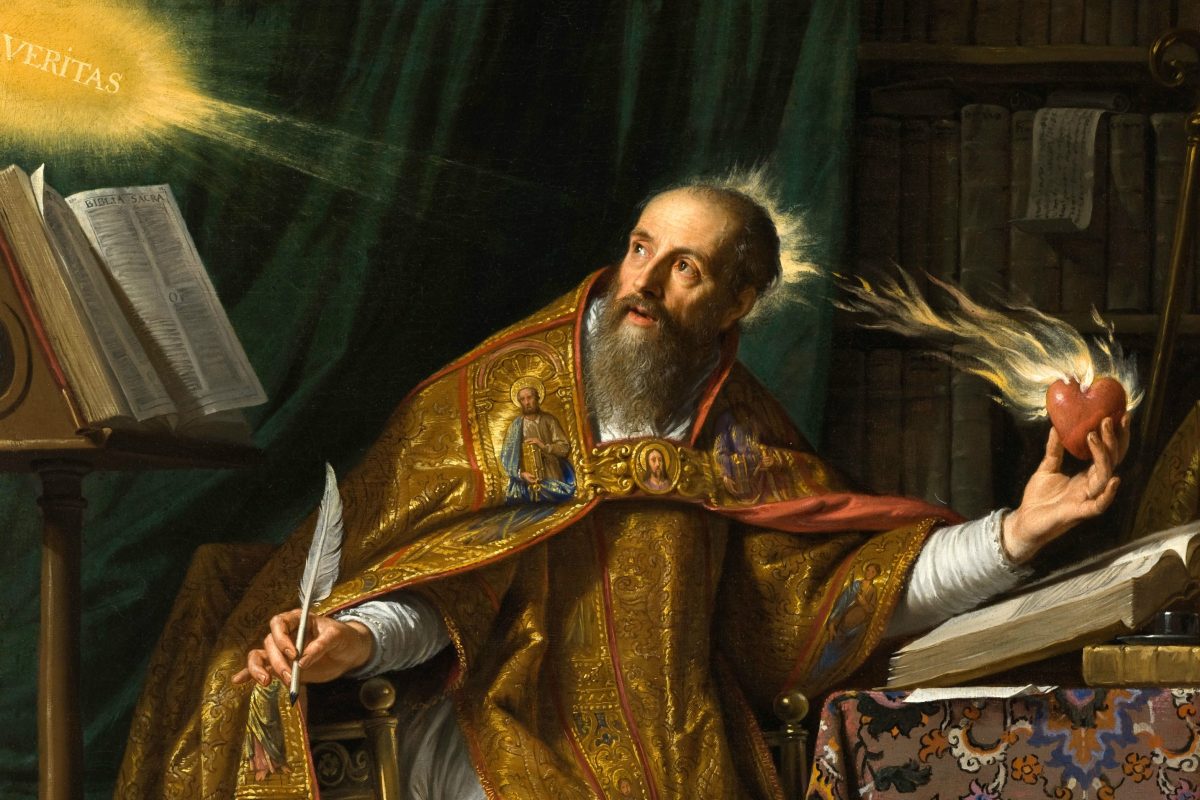
God judged it better to bring good out of evil than not to permit any evil to exist.” – Augustine of Hippo, Enchiridion on Faith, Hope, and Love, §27, trans. J. F. Shaw, in Nicene and Post-Nicene Fathers, First Series, vol. 3, ed. Philip Schaff (Peabody, MA: Hendrickson Publishers, 1994), 245.

Outro

  • Identify the Leah-type in your life: someone unseen. Practice hearing vs hurting them.

Final Thoughts

The delivery was shaky, but okay. I was going to open my sermon with story about one of my brothers and I, but at the last second opted to tell a different story. That other story has much higher emotions, so I think those impacted how I delivered this message even though I didn’t tell it. In fact, I was nervous the whole lead up to this message because I was afraid to tell that story.

This sermon is solid though and even if I didn’t think my delivery ws good, the content was good. It flowed well notes-wise and I did what I was supposed to do: preach the word. With that, Godspeed and Jesus bless.

Footnotes

  1. https://en.wikipedia.org/wiki/Augustine_of_Hippo

Genesis: Share in our Sufferings | 11-16-2025

Updated: 5/15/2026

Sermon Prep

In the news at the time, the government shutdown from October through half of November in 2025. This historical shutdown which ended four days before this message impacted 40 million people depending on SNAP benefits to survive the tough economy. In those 43 days, we heard stories locally and nationally of people just trying nearly any means necessary to get food on the table without that essential government aid. It was a scary time for a lot of people both directly and indirectly impacted by this shutdown and the loss of benefits.

This backdrop also influenced how I wrote this sermon. Now yes, it effected the other previous sermons too in retrospect but consciously I was thinking about those 40 million people in need when I wrote this message. To struggle for 43 days and figure out how to feed your family during that time must’ve been beyond stressful for so many Americans. It really bothered me and our church did end up helping because we too noticed that societal strain in our community. But even still, we could only help so many compared to the gap not being met. There was a lot of hurt and worry in the Fall of 2025.

So when it came to this message I unlike most messages leaned a little into the political to drive home the application. To drive home that we who have plenty and we are well must be there for those who have little and have been hurt. I always struggle with what to or not to include politically because it honestly infects every corner of life now which is frustrating. It’s the new American religion to worship a politician over the person of Jesus. It’s embarrassing and I think my thoughts on that bled here into this here text. On that note, here’s the YouTube recording and the sermon notes:

Sermon Notes

Opening Prayer

  • Father God, lead us this morning as we search the scriptures. Thank you for your Son whose sacrifice is our salvation. Would you speak through me, in spite of me, and beyond me. Dwell with us, Holy Spirit, as you teach us today. In your name, amen.

Intro

  • Story of trying to take control in buying a home, yet finding a townhouse in the end.

Main Point

  • When we rush God’s plan and try to take control, someone always gets hurt.
    • Every spiritual scar tells a story, but Jesus shares in our suffering. 

Share in Our Sufferings | Genesis 16:1-14, 21:9-21 (NRSVue)

[1] Now Sarai, Abram’s wife, bore him no children. She had an Egyptian slave whose name was Hagar, [2] and Sarai said to Abram, “You see that the Lord has prevented me from bearing children; go in to my slave; it may be that I shall obtain children by her.” And Abram listened to the voice of Sarai. [3] So, after Abram had lived ten years in the land of Canaan, Sarai, Abram’s wife, took Hagar the Egyptian, her slave, and gave her to her husband Abram as a wife. [4] He went in to Hagar, and she conceived, and when she saw that she had conceived, she looked with contempt on her mistress. [5] Then Sarai said to Abram, “May the wrong done to me be on you! I gave my slave to your embrace, and when she saw that she had conceived, she looked on me with contempt. May the Lord judge between you and me!” [6] But Abram said to Sarai, “Your slave is in your power; do to her as you please.” Then Sarai dealt harshly with her, and she ran away from her. [7] The angel of the Lord found her by a spring of water in the wilderness, the spring on the way to Shur. [8] And he said, “Hagar, slave of Sarai, where have you come from and where are you going?” She said, “I am running away from my mistress Sarai.” [9] The angel of the Lord said to her, “Return to your mistress, and submit to her.” [10] The angel of the Lord also said to her, “I will so greatly multiply your offspring that they cannot be counted for multitude.” [11] And the angel of the Lord said to her, “Now you have conceived and shall bear a son; you shall call him Ishmael, for the Lord has given heed to your affliction. [12] He shall be a wild ass of a man, with his hand against everyone, and everyone’s hand against him, and he shall live at odds with all his kin.” [13] So she named the Lord who spoke to her, “You are El-roi,” for she said, “Have I really seen God and remained alive after seeing him?” [14] Therefore the well was called Beer-lahai-roi; it lies between Kadesh and Bered.

  • Hagar was potentially taken as a slave by Sarai when they were in Egypt (i.e. Genesis 12).
  • Sarai enacts a common ANE law where a slave bears children for the wife (Genesis 16:2).
  • Abram listening to Sarai parallels Adam listening to Eve instead of God (Genesis 16:3).
  • Ishmael means God hears; Muslims claim he is Muhammed’s ancestor (Genesis 16:11).
  • El-roi means the God who sees me and is the first time God is named (Genesis 16:13).

[9] But Sarah saw the son of Hagar the Egyptian, whom she had borne to Abraham, playing with her son Isaac. [10] So she said to Abraham, “Cast out this slave woman with her son, for the son of this slave woman shall not inherit along with my son Isaac.” [11] The matter was very distressing to Abraham on account of his son. [12] But God said to Abraham, “Do not be distressed because of the boy and because of your slave woman; whatever Sarah says to you, do as she tells you, for it is through Isaac that offspring shall be named for you. [13] As for the son of the slave woman, I will make a nation of him also, because he is your offspring.” [14] So Abraham rose early in the morning and took bread and a skin of water and gave it to Hagar, putting it on her shoulder, along with the child, and sent her away. And she departed and wandered about in the wilderness of Beer-sheba. [15] When the water in the skin was gone, she cast the child under one of the bushes. [16] Then she went and sat down opposite him a good way off, about the distance of a bowshot, for she said, “Do not let me look on the death of the child.” And as she sat opposite him, she lifted up her voice and wept. [17] And God heard the voice of the boy, and the angel of God called to Hagar from heaven and said to her, “What troubles you, Hagar? Do not be afraid, for God has heard the voice of the boy where he is. [18] Come, lift up the boy and hold him fast with your hand, for I will make a great nation of him.” [19] Then God opened her eyes, and she saw a well of water. She went and filled the skin with water and gave the boy a drink. [20] God was with the boy, and he grew up; he lived in the wilderness and became an expert with the bow. [21] He lived in the wilderness of Paran, and his mother got a wife for him from the land of Egypt.

  • Scholarship and Tradition agree that the “the angel of the Lord” in Genesis 16 is a Christophany, while “the angel of God” in Genesis 21 is just a messenger for God.
  • Hagar receives a similar promise to Abraham in that God will provide and make a nation.

Why It Matters

  • Abram and Sarai disobeyed, took control, and exploited Hagar creating generational sin.
    • Church hurt causes deep wounds that are real, but God is here for the hurting.

Power Text

[21] “You shall not wrong or oppress a resident alien, for you were aliens in the land of Egypt. [22] You shall not abuse any widow or orphan. [23] If you do abuse them, when they cry out to me, I will surely heed their cry; [24] my wrath will burn, and I will kill you with the sword” –  Exodus 22:21-24b (NRSVue)

  •  Under the Law, God commands Israel to defend the alien, powerless, and vulnerable.

[32] All the nations will be gathered before him, and he will separate people one from another as a shepherd separates the sheep from the goats, [33] and he will put the sheep at his right hand and the goats at the left… [40] And the king will answer [the right ones], ‘Truly I tell you, just as you did it to one of the least of these brothers and sisters of mine, you did it to me.’” – Matthew 25:32-33, 40 (NRSVue)

  • The final judgement is tied to good works towards the alien, powerless, and vulnerable.
    • Jesus not only has empathy for the hurting, but shares in their sufferings too.
      • He suffered physically on the cross, had sexual shame when the Romans publicly stripped him naked, and spiritual alienation from the Father.

Outro

[16] We know love by this, that he laid down his life for us—and we ought to lay down our lives for the brothers and sisters. [17] How does God’s love abide in anyone who has the world’s goods and sees a brother or sister in need and yet refuses help? [18] Little children, let us love not in word or speech but in deed and truth. –  1 John 3:16-18 (NRSVue)

  • Under God’s grace, right belief naturally compels us to right behavior as his Church.
    • If you carry church hurt, bring that to God who hears, loves, and sees you.
      • If you’ve wounded others, repent and help those you hurt to heal.

Final Thoughts

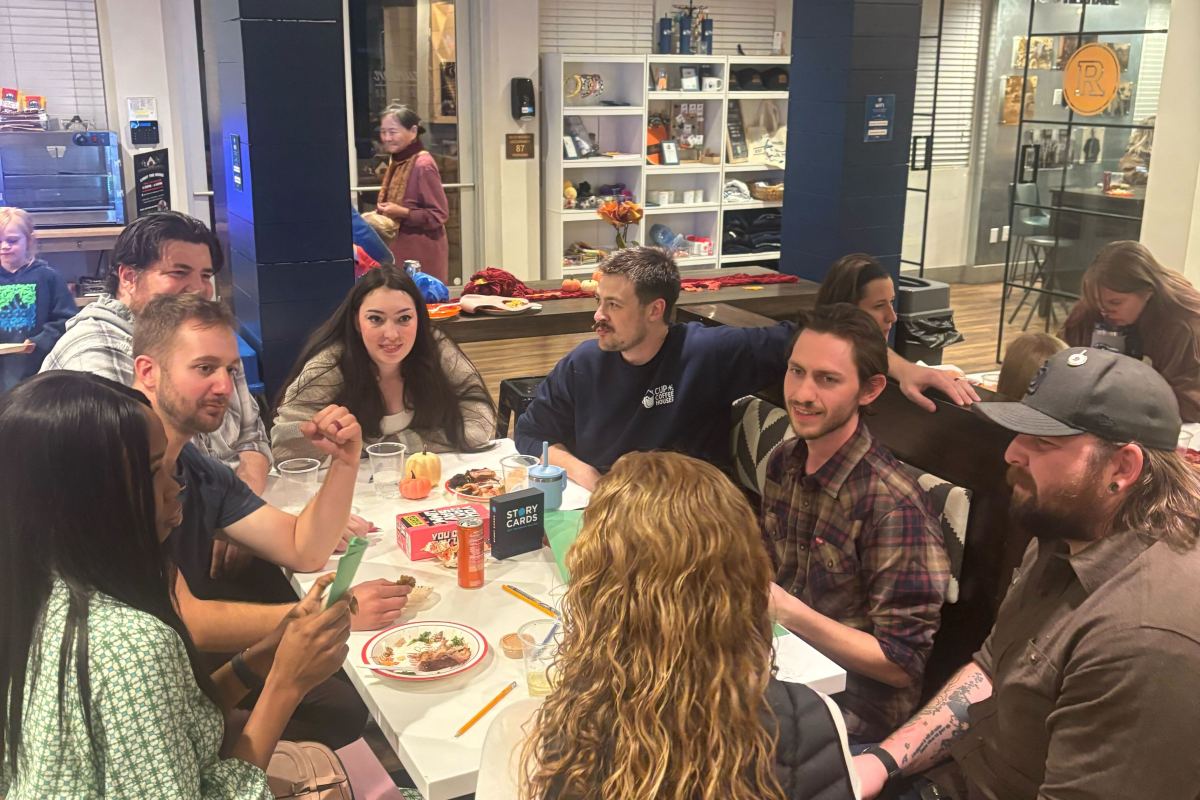
The picture for this blogpost ironically comes from our annul Friendsgiving we do as a church. As you can see by the time Thanksgiving week rolled around, our community was better than ever. There was laughter and joy again, which is always the best company to have around.

People were hesitant to talk during small groups after the message. I think the subject matter of church hurt, the current political climate, and just talking about suffering in general makes everyone uncomfortable. As we were packing up, I overhead one of our teachers question the sexual shame bit, which to be fair is a minority view.

There has been more recent scholarship from the likes of Brent Kinman, Jerome Neyrey, Marika Rose and Katie Edwards, along with others as well. At this time I had incorporated this concept into my own book and relied on work from David Tombs exclusively. I’m a bit on the fence with this specific concept, but I included it simply to challenge our congregation. If you only hear things you agree with, then are you really growing in Christ? Growth is uncomfortable and so too is learning when presented with new ideas.

As for the sermon, I thought I did well with the material overall. I was especially proud of how I included so many solid cross references for this sermon. With that said, Godspeed and Jesus bless.

Genesis: Covenant Confirmed | 11-9-25

Photo Cred: (1) | Updated: 5/14/2026

Sermon Prep

Unlike other sermons we did as a church, this was the first time I had a direct hand in shaping the series itself outside of working with the teaching team to outline said series. Typically Andrew, our lead pastor, outlines and shapes each series himself before running it by the teaching team to tweak. Given the Fall is incredibly busy, especially for him he assigned me to figure out the Joseph section while he mapped out the rest. Since Joseph is one of my favorite figures of the faith, I took on the arduous challenge gladly.

When it came to this teaching though, I didn’t have a lot a lot of prep time. I too was overwhelmed by Halloween Street planning and work, along with Joseph research so I feel like I dropped the ball a bit here getting this one ready. It all worked out, but preferably I like to dedicate the week leading up to a teaching to prep it and I just didn’t do that here. Anyways, here’s the YouTube recording and the notes below:

Sermon Notes

Opening Prayer

  • Father God, lead us this morning as we search the scriptures. Thank you for your Son whose sacrifice is our salvation. Would you speak through me, in spite of me, and beyond me. May you, Holy Spirit, dwell within us as you teach us today. Amen.

Intro

  • Dad promised we’d love Colorado and my family moved there becoming middle class.

Main Point

  • Faith is counted as righteousness because faith rests on God’s fidelity, not human ability.
    • Like Abram trusted God, we too are right with God when we trust his promises.

Covenant Confirmed | Genesis 14:21-15:21 (NRSVue)

[21] Then the king of Sodom said to Abram, “Give me the persons, but take the goods for yourself.” [22] But Abram said to the king of Sodom, “I have sworn to God Most High, maker of heaven and earth, [23] that I would not take a thread or a sandal strap or anything that is yours, so that you might not say, ‘I have made Abram rich.’ [24] I will take nothing but what the young men have eaten and the share of the men who went with me: Aner, Eshcol, and Mamre. Let them take their share.” [1] After these things the word of the Lord came to Abram in a vision, “Do not be afraid, Abram, I am your shield; your reward shall be very great.” [2] But Abram said, “O Lord God, what will you give me, for I continue childless, and the heir of my house is Eliezer of Damascus?” [3] And Abram said, “You have given me no offspring, so a slave born in my house is to be my heir.” [4] But the word of the Lord came to him, “This man shall not be your heir; no one but your very own issue shall be your heir.” [5] He brought him outside and said, “Look toward heaven and count the stars, if you are able to count them.” Then he said to him, “So shall your descendants be.” [6] And he believed the Lord, and the Lord reckoned it to him as righteousness. [7] Then he said to him, “I am the Lord who brought you from Ur of the Chaldeans, to give you this land to possess.” [8] But he said, “O Lord God, how am I to know that I shall possess it?” [9] He said to him, “Bring me a heifer three years old, a female goat three years old, a ram three years old, a turtledove, and a young pigeon.” [10] He brought him all these and cut them in two, laying each half over against the other, but he did not cut the birds in two. [11] And when birds of prey came down on the carcasses, Abram drove them away. [12] As the sun was going down, a deep sleep fell upon Abram, and a deep and terrifying darkness descended upon him. [13] Then the Lord said to Abram, “Know this for certain, that your offspring shall be aliens in a land that is not theirs and shall be slaves there, and they shall be oppressed for four hundred years, [14] but I will bring judgment on the nation that they serve, and afterward they shall come out with great possessions. [15] As for yourself, you shall go to your ancestors in peace; you shall be buried in a good old age. [16] And they shall come back here in the fourth generation, for the iniquity of the Amorites is not yet complete.” [17] When the sun had gone down and it was dark, a smoking fire pot and a flaming torch passed between these pieces. [18] On that day the Lord made a covenant with Abram, saying, “To your descendants I give this land, from the river of Egypt to the great river, the River Euphrates, [19] the land of the Kenites, the Kenizzites, the Kadmonites, [20] the Hittites, the Perizzites, the Rephaim, [21] the Amorites, the Canaanites, the Girgashites, and the Jebusites.”

  • Abram rejects spoils of the sword knowing that God is his shield (Genesis 14:21-15:6).
  • Abram’s deep sleep links to Adam when God acts, while humanity rests (Genesis 15:12).
  • Exodus prophecy ties Abram’s story to Israel’s bigger picture (Genesis 15:13–16).
  • God binds himself by way of a royal grant covenant cutting honor (Genesis 15:17-21).
    • Someone powerful gives an unconditional promise to someone powerless.

Genesis 15 provides an example of a covenant sealed by divine oath. The theophany-ritual described there symbolized the conditional selfmalediction that inheres in the swearing of oaths. To his promise to Abraham God added a second immutable thing. Passing between the slain and divided beasts beneath the threatening birds of prey, God invoked the curse of the oath upon himself should he prove false to it. That curse, so effectively portrayed by the combined ritual and natural features of the scene, was a common one among ancient treaty-curses… By undergoing this ritual God declared in effect that if he failed to fulfill the promises of the covenant, he was like these creatures to be slain and devoured as a feast for the fowls.” –  Meredith G. Kline, By Oath Consigned: A Reinterpretation of the Covenant Signs of Circumcision and Baptism (Grand Rapids, MI: William B. Eerdmans Publishing Company, 1968), 8. Available on meredithkline.com  

Why It Matters

  • Trust grows where promises hold. Therefore we lean on God’s fidelity, not our ability.

Power Text

[5] But to one who does not work but trusts him who justifies the ungodly, such faith is reckoned as righteousness… [13] For the promise that he would inherit the world did not come to Abraham or to his descendants through the law but through the righteousness of faith… [16] For this reason the promise depends on faith, in order that it may rest on grace… not only to the adherents of the law but also to those who share the faith of Abraham… [20] No distrust made him waver concerning the promise of God, but he grew strong in his faith as he gave glory to God, [21] being fully convinced that God was able to do what he had promised. [22] Therefore “it was reckoned to him as righteousness.” [23] Now the words, “it was reckoned to him,” were written not for his sake alone [24] but for ours also. It will be reckoned to us who believe in him who raised Jesus our Lord from the dead, [25] who was handed over for our trespasses and was raised for our justification.” –  Romans 4:5, 16, 20-25 (NRSVue)

  • Faith produces loyal obedience and justification is grounded in God’s promise, not merit.

[13] When God made a promise to Abraham, because he had no one greater by whom to swear, he swore by himself, [14] saying, “I will surely bless you and multiply you.” [15] And thus Abraham, having patiently endured, obtained the promise. [16] Humans, of course, swear by someone greater than themselves, and an oath given as confirmation puts an end to all dispute among them. [17] In the same way, when God desired to show even more clearly to the heirs of the promise the unchangeable character of his purpose, he guaranteed it by an oath, [18] so that through two unchangeable things, in which it is impossible that God would prove false, we who have taken refuge might be strongly encouraged to seize the hope set before us. [19] We have this hope, a sure and steadfast anchor of the soul, a hope that enters the inner shrine behind the curtain, [20] where Jesus, a forerunner on our behalf, has entered, having become a high priest forever according to the order of Melchizedek.” –  Hebrews 6:13-20 (NRSVue)

  • Assurance in God’s promises fuels our endurance in the faith. God’s oath anchors hope.

Outro

  • As a daily holy rhythm, rehearse one promise God has sworn and live from that place.
    • Treat God’s promises as the most concrete and real things about your future.

Final Thoughts

This ended up being a solid sermon and overall my sermons from this series I believe were on another level when compared to previous series because I had such a strong hand in shaping it. Especially the Joseph sermons I did I think worked particularly well. Combining my in-depth series research with typical weeklong sermon prep brought about some unique preaching work on my part I think.

As for this teaching it had some fun improv and off-the-cuff pivots I made mid-preaching. The most notable being the whole section on Luke 8 being ad-libbed. Also except for Eddie, everyone else didn’t get the Shaun of the Dead reference. As a Cornetto Trilogy fanatic, that made me so sad but it’s fine most people don’t appreciate the genius of those films. With that, Godspeed and Jesus bless.

Footnotes

  1. https://opc.org/today.html?history_id=431

Matthew: Finding Rest | 10-12-25

Updated: 5/13/2026

Sermon Prep

October 2025 was a much better month for my family, but still a struggle for the church at large. Like last year, we flew out my Mom from Texas to Colorado to see us for a small trip. This time it was to celebrate our daughter’s first birthday, which was really special.

Given my Dad and older brother flew out for different reasons in September, we felt bad that my mom missed out on seeing us here in Colorado. I love being able to bless her and do that, so I think longterm it might become an annual tradition for us to do that in the Fall for her.

As for our church, things were still difficult. After Heidi’s funeral, a couple from our church had an ER visit and surgery for their son, which really put them under financially. Also the father whose wife and kids ran away from him in September turned himself into a mental health facility. This was due to an intervention made by one of our pastors who spotted that he was debating suicide after a difficult conversation and brought him to the facility for help.

All this to say, the hard times continued and other members in our church wrestled with their own workloads in life as well. The mood was still heavy amongst us. With all of this stress, we needed rest.

That’s where this sermon came in where at the last minute once again this year I learned I was teaching Friday around 1pm before the Sunday I taught this message. It was another break in-between sermon series and the teaching schedule got scrambled, hence the sermon prep situation. Given everything going on, I was encouraged by one of our pastors to teach on something related to rest and trust.

That nudge reminded me of Matthew 11:28-29, which is famous for being the only text in the Bible where God describes his own heart. I also was reminded of J. P. Moreland’s underrated book, Finding Quiet, which inspired the title of this message for me. As I prayed all throughout Friday until late that night, I struggled to find a central theme that also properly exegeted that passage in Matthew.

The temptation for teachers is to pick an idea, then find a passage that may support it. Even worse, some teachers will go so far as to bend the Bible to fit said preconceived idea. When it comes to topical teachings, I’m aware of that easy temptation and try my best to veer away from texts I’m not familiar with because of that very trap.

Since I’ve taught this passage before in previous sermons, along with having read Gentle and Lowly by Dane C. Ortland, I was quite familiar with this for a teaching that needed to be ready quickly. It was a quick turnaround, but I did get the sermon done on time. Below are the notes from that teaching and here is the YouTube recording.

Sermon Notes

Opening Prayer

  • Father God, lead us this morning as we search the scriptures. Thank you for your Son whose sacrifice is our salvation. Would you speak through me, in spite of me, and beyond me. May you, Holy Spirit, dwell within us as you teach us today. Amen.

Intro

  • Explain how difficult the last month has been for Reunion Church at large.

Main Point

  • In Christ, we can find rest when we’re tired and strength when we’re ready to toil again.

Finding Rest | Matthew 11:28-12:13 (NRSVue)

[28] “Come to me, all you who are weary and are carrying heavy burdens, and I will give you rest. [29] Take my yoke upon you, and learn from me, for I am gentle and humble in heart, and you will find rest for your souls. [30] For my yoke is easy, and my burden is light.” [1] At that time Jesus went through the grain fields on the Sabbath; his disciples were hungry, and they began to pluck heads of grain and to eat. [2] When the Pharisees saw it, they said to him, “Look, your disciples are doing what is not lawful to do on the Sabbath.” [3] He said to them, “Have you not read what David did when he and his companions were hungry? [4] How he entered the house of God, and they ate the bread of the Presence, which it was not lawful for him or his companions to eat, but only for the priests? [5] Or have you not read in the law that on the Sabbath the priests in the temple break the Sabbath and yet are guiltless? [6] I tell you, something greater than the temple is here. [7] But if you had known what this means, ‘I desire mercy and not sacrifice,’ you would not have condemned the guiltless. [8] For the Son of Man is lord of the Sabbath.” [9] He left that place and entered their synagogue; [10] a man was there with a withered hand, and they asked him, “Is it lawful to cure on the Sabbath?” so that they might accuse him. [11] He said to them, “Suppose one of you has only one sheep and it falls into a pit on the Sabbath; will you not lay hold of it and lift it out? [12] How much more valuable is a human being than a sheep! So it is lawful to do good on the Sabbath.” [13] Then he said to the man, “Stretch out your hand.” He stretched it out, and it was restored, as sound as the other.

  • The Sabbath was the Jewish day of rest from Saturday evening to Sunday evening.
  • Jesus identifies Sirach 24:19-22, which describes Wisdom as himself (Matthew 11:28).
    • Augustine of Hippo, an African Church Father, agrees saying that “the Wisdom by which all things were made cannot itself have been made. It is eternal, as the Father is eternal; and this Wisdom is none other than the Son of God.” –  Augustine of Hippo, On the Trinity, 7.2–3, in Nicene and Post-Nicene Fathers, First Series, vol. 3, ed. Philip Schaff (Buffalo, NY: Christian Literature Publishing Co., 1887), 122.
  • The very center or essence of God is that he is gentle and lowly (Matthew 11:29).
    • God is open and available to all who need rest from the worries of this world.
      • A yoke was a wooden crosspiece for cattle to plow soil or carry goods.
        • God wants to carry your cares and give you rest (1 Peter 5:6-7).
  • Bread of the Presence was for priests, but communion is for Christians (Matthew 12:4).
    • Each Sabbath, 12 fresh loaves of bread were to be set on a table in the Holy Place (Ex 25:30; Lev 24:5-9). The old loaves were eaten by the priests.” –   NIV Study Bible, Fully Revised Edition (Grand Rapids; Zondervan, 2020), 1662, note on Matthew 12:4.
  • Quoting Hosea 6:6, Jesus proves he and his disciples are more obedient (Matthew 12:7). 
  • Claiming to have lordship over Law and Sabbath, Jesus implies he’s God (Matthew 12:8).
  • Jesus’ argument shows that humans are beyond just being animals (Matthew 12:12).

Why It Matters

  • It’s ok to take a break and rest while on the spiritual journey. Retreat is necessary.
  • Retreat in the context of the spiritual life is an extended time apart for the purpose of being with God and giving God our full and undivided attention” –  Ruth Haley Barton, Invitation to Retreat: The Gift and Necessity of Time Away with God (Downers Grove, IL: InterVarsity Press, 2018), 4

[1] Ahab told Jezebel all that Elijah had done and how he had killed all the prophets with the sword. [2] Then Jezebel sent a messenger to Elijah, saying, “So may the gods do to me and more also, if I do not make your life like the life of one of them by this time tomorrow.” [3] Then he was afraid; he got up and fled for his life and came to Beer-sheba, which belongs to Judah; he left his servant there. [4] But he himself went a day’s journey into the wilderness and came and sat down under a solitary broom tree. He asked that he might die, “It is enough; now, O Lord, take away my life, for I am no better than my ancestors.” [5] Then he lay down under the broom tree and fell asleep. Suddenly an angel touched him and said to him, “Get up and eat.” [6] He looked, and there at his head was a cake baked on hot stones and a jar of water. He ate and drank and lay down again. [7] The angel of the Lord came a second time, touched him, and said, “Get up and eat, or the journey will be too much for you.” [8] He got up and ate and drank; then he went in the strength of that food forty days and forty nights to Horeb the mount of God.” –  1 Kings 19:1-8 (NRSVue)

  • Sometimes the best thing for you to do is to eat, sleep, and trust God (1 Kings 19:5-8).
    • The bread and water is a foreshadow of Christian communion (1 Kings 19:6).
  • Our Sabbath rest is rooted in the reality of God’s grace and the work that he has done.

Power Text

  • But to rest and find strength in Christ when we Sabbath isn’t always solo, but communal.

[11] Therefore encourage one another and build up each other, as indeed you are doing. [12] But we appeal to you, brothers and sisters, to respect those who labor among you and have charge of you in the Lord and admonish you; [13] esteem them very highly in love because of their work. Be at peace among yourselves. [14] And we urge you, brothers and sisters, to admonish the idlers, encourage the fainthearted, help the weak, be patient with all of them.” –  1 Thessalonians 5:11-14 (NRSVue)

  • Just as the spiritual journey isn’t a path we walk alone, we don’t always retreat alone.

Outro

  • Today some of us are feeling defeated and exhausted by the weight of our own world.
    • For those of you that are in a low in life, find rest and strength in Jesus Christ.
    • For those of you that are at a highpoint, accompany and build up the lowly.
  • It’s okay to accept God’s invitation to retreat and renew our souls in his strength.
    • Just don’t allow a retreat to mold and sour into a spiritual resignation.
      • We may be temporarily tired, but we will toil and work again.

[36] When [Jesus] saw the crowds, he had compassion for them because they were harassed and helpless, like sheep without a shepherd. [37] Then he said to his disciples, “The harvest is plentiful, but the laborers are few; [38] therefore ask the Lord of the harvest to send out laborers into his harvest.”” –  Matthew 9:36-38 (NRSVue)

Final Thoughts

In spite of the circumstances that led to this message being produced in such a short window of time, the feedback was great. It seemed to resonate with a few people and was exactly what our church needed. I love how even in the mad dash of a situation like this one God can still use it for his means and ends.

We had our leader meeting afterwards and I heard even more good reception there too, which was nice. Lesson learned: when in doubt on how something might get done, trust God. With that, Godspeed and Jesus bless.

1 John: Love One Another | 9-28-25

Updated: 5/11/2026

Sermon Prep

September of 2025 was a brutal and horrible month all around in our community. One mom in our community ran away from her husband and took her kids without the husband knowing. Navigating that stressful family situation was already tough enough on it’s own. Earlier in the month, my older brother John flew out from Texas to Colorado to intervene on a friend who was potentially suicidal. That intervention of sorts did end up being productive and those two actually got to meet up with their old youth pastor, which was great on it’s own.

For me though and for our church immediately before this message one of our own passed away after shortly entering hospice care. Her name was Heidi Jean Foster and she was Julie’s daughter that for years fought cerebral palsy. She had decided on her own earlier in the month to skip another high-risk surgery and instead in her own words, “wanted to go home to run and see Jesus.

Given her condition, her mental cognition was similar to a 5 year old and yet she was 44 years old. Before her decision was made to go home to be with the Lord, it was difficult for loved ones and medical staff to know what to do for her because of this fact, along with increasingly complicated procedures to keep her alive. But to respect her decision the wonderful medical care team, her mom Julie, Bethany, her sisters, and myself mapped out what end of life care would look like for Heidi. It was my first time doing that side of pastoral ministry, but I believe we made the best decision in how Heidi’s hospice care would carry her to her last day.

Heidi was born on September 10th, 1981 and died on September 28th, 2025. She loved her unicorn stuffed animal, Jonathan from our church who visited often, and of course puzzles. She was loved and to this day is missed by our whole community.

As a pastor, it’s never easy losing one of your own and for me this loss was the same. Given she passed away early Sunday morning everyone on our core team now knew and that factored into how I taught this message. Returning to preaching after 2 months off was nice to go with an easier passage of scripture.

1 John 4 is fairly straightforward, so when I’m given a more directly applicable message I like to find a new way to teach it and details that bring out the richer meaning of the text. In this case, I drew on cross references on how to love one another and a couple study Bibles I have on hand. In the end, I think it shaped up well approaching it from this angle. Here’s the YouTube recording and the my notes below:

Sermon Notes

Opening Prayer

  • Father God, lead us this morning as we search the scriptures. Thank you for your Son whose sacrifice is our salvation. Would you speak through me, in spite of me, and beyond me. May you, Holy Spirit, dwell within us as you teach us today. Amen.

Intro

  • Story of older brother flying out to CO last week, so that he can see old, family friend and help him.

Main Point

  • We are most like Christ when we love one another just as Jesus loves each one of us.

Love One Another | 1 John 4 (NRSVue)

[1] Beloved, do not believe every spirit, but test the spirits to see whether they are from God, for many false prophets have gone out into the world. [2] By this you know the Spirit of God: every spirit that confesses that Jesus Christ has come in the flesh is from God, [3] and every spirit that does not confess Jesus is not from God. And this is the spirit of the antichrist, of which you have heard that it is coming, and now it is already in the world. [4] Little children, you are from God and have conquered them, for the one who is in you is greater than the one who is in the world. [5] They are from the world; therefore what they say is from the world, and the world listens to them. [6] We are from God. Whoever knows God listens to us, and whoever is not from God does not listen to us. From this we know the spirit of truth and the spirit of error. [7] Beloved, let us love one another, because love is from God; everyone who loves is born of God and knows God. [8] Whoever does not love does not know God, for God is love. [9] God’s love was revealed among us in this way: God sent his only Son into the world so that we might live through him. [10] In this is love, not that we loved God but that he loved us and sent his Son to be the atoning sacrifice for our sins. [11] Beloved, since God loved us so much, we also ought to love one another. [12] No one has ever seen God; if we love one another, God abides in us, and his love is perfected in us. [13] By this we know that we abide in him and he in us, because he has given us of his Spirit. [14] And we have seen and do testify that the Father has sent his Son as the Savior of the world. [15] God abides in those who confess that Jesus is the Son of God, and they abide in God. [16] So we have known and believe the love that God has for us. God is love, and those who abide in love abide in God, and God abides in them. [17] Love has been perfected among us in this: that we may have boldness on the day of judgment, because as he is, so are we in this world. [18] There is no fear in love, but perfect love casts out fear; for fear has to do with punishment, and whoever fears has not reached perfection in love. [19] We love because he first loved us. [20] Those who say, “I love God,” and hate a brother or sister are liars, for those who do not love a brother or sister, whom they have seen, cannot love God, whom they have not seen. [21] The commandment we have from him is this: those who love God must love their brothers and sisters also.

  • This chapter has two halves → 1 John 4:1-6 (spirits test) + 1 John 4:7-21 (Christian test).
    • John contrasts biblical love with cultural norms of conditional and reciprocal relationships common in John’s day and unfortunately we still experience today.
  • Spirits test is the confession that Jesus is fully God and fully man (i.e. hypostatic union).
    • Inspired by OT method of testing prophets in Deuteronomy 13:2-6 and 18:15-22.
    • Potentially modified the secessionist opponents’ own slogan as the spirits test.
      • John excludes the Gnostics, especially the Cerinthians, who taught that the divine Christ came upon the human Jesus at his baptism and then left him at the cross, so it was only the man Jesus who died.” –  NIV Study Bible, Fully Revised Edition (Grand Rapids; Zondervan, 2020), 2220, note on 1 John 4:2.
  • 1 John 1:5 (light), 4:7 (love), and 4:24 (spirit) are Johannine formulas describing God.
    • The term Johannine scholars use to refer to John’s theology and writing style.
  • 1 John 4:13 implicitly defends the idea that salvation can’t be lost because the Spirit of God makes a permanent dwelling with those who humbly trust him with their life.
    • μένομεν (menomen) = we abide/dwell/remain; the “we” is God and us mutually.
    • Our assurance of salvation is the gift of the Holy Spirit himself dwelling within us.
      • How can we know God lives in us? John gives a fourfold answer: (1) if we love one another (v. 12), (2) if we have been given His Spirit (v. 13), (3) if we can confess Jesus is the Son of God (v. 15), and (4) if we abide in the love of God (v. 16).” –  1 John 4:12-16 note, in The Orthodox Study Bible: Ancient Faith Edition (Nashville: Thomas Nelson, 2008), 1702.
      • All Christians behave like Christ, believe in Christ, and belong to Christ.

Why It Matters

  • God’s love is at its best and perfected when we love others as we’re told to do by God.

[34] I give you a new commandment, that you love one another. Just as I have loved you, you also should love one another. [35] By this everyone will know that you are my disciples, if you have love for one another.”” –  John 13:34-35 (NRSVue)

  • God might be invisible, yet he’s seen when we love one another as siblings in Christ.

[43] “You have heard that it was said, ‘You shall love your neighbor and hate your enemy.’ [44] But I say to you: Love your enemies and pray for those who persecute you, [45] so that you may be children of your Father in heaven, for he makes his sun rise on the evil and on the good and sends rain on the righteous and on the unrighteous.”” –  Matthew 5:43-45 (NRSVue)

  • Love is part of the greater litmus test of whether or not someone is a genuine Christian.
    • Just as we need to have right belief (orthodoxy), we also need to have right behavior (orthopraxy) and right belonging (orthokoinonia). This is the test.

Power Text

  • Behavior: “[10] For we are what he has made us, created in Christ Jesus for good works, which God prepared beforehand so that we may walk in them.” –  Ephesians 2:10 (NRSVue)
  • Belonging: “[24] And let us consider how to provoke one another to love and good deeds, [25] not neglecting to meet together, as is the habit of some, but encouraging one another, and all the more as you see the Day approaching.” –  Hebrews 10:24-25 (NRSVue)

Outro

  • The spiritual journey requires all of you and the whole self as you walk the way of Jesus.
    • We do as he did and live as he lived, which includes loving our friends and foes.
      • So be like Christ and love not just your own world, but the whole world.

Final Thoughts

Surprisingly give the background for this sermon, the delivery and day of had lots of laughs. It was actually one of my funnier sermons by happenstance and not intentionally on my part. Although, I was a dick the way I handled baby Penny grunting which made Azzy laugh. It was fun and we all laughed, but I handled it wrong and misread the situation from the pulpit. Given preaching feels like mere minutes and is such a blur I missed that whole context altogether. But we made things right after service.

The sermon was very well received once I sat down to do Table Talks. I think it was a great sermon, but very trying times as everyone in church seemed to be going through something in September. Like life in general, a church community has ebbs and flows too.

There’s highs and lows in the life of a church, which this month was a low for us all. That low would bleed into the fall with my next topical teaching, but we’ll cover that in the next sermon recap. With that, Godspeed and Jesus bless.
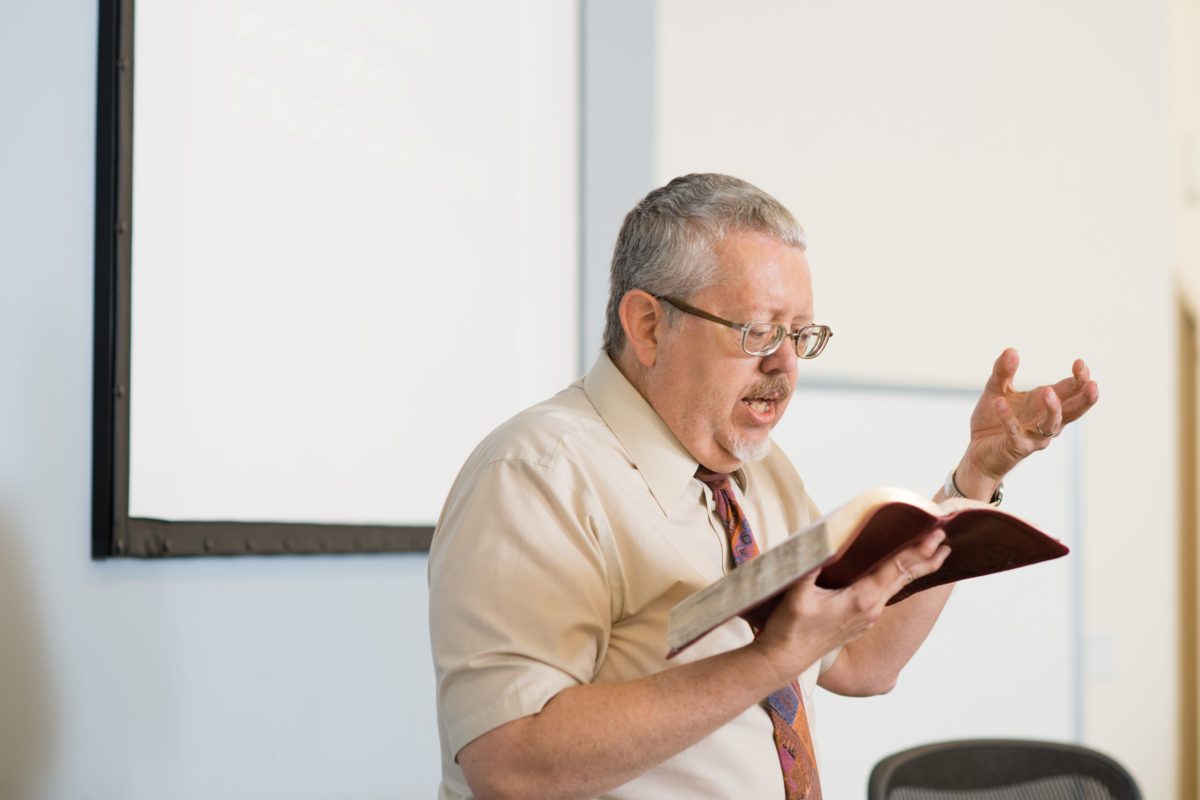
Simple Grace: Glorification | 7-27-2025

Updated: 5/8/2026

Sermon Prep

This was the third sermon in a row and I was feeling a bit exhausted from being so short-staffed while our team was out on the Taiwan mission trip. The tech once again wasting working and so only 18 minutes was recorded. I was just gassed from the month of July overall.

Work was going great, but overwhelming too as I was preparing to go on short-term medical leave for my upcoming hernia surgery in August. It was a lot and this flurry of things caught up to me on this message. On that note, here’s the YouTube recording warts and all, along with my message notes below:

Sermon Notes

Opening Prayer

  • Father God, lead us this morning as we search the scriptures. Thank you for your Son whose sacrifice is our salvation. Would you speak through me, in spite of me, and beyond me. May you, Holy Spirit, dwell within us as you teach us today. Amen.

Intro

  • Why I hate Subaru’s. When the coolant system set my car on fire and almost killed me.

Grace is the free, unearned and undeserved favor of God given through Jesus Christ that pardons sin, empowers righteousness, restores relationships, and transforms the entire person. A divine gift and an active presence that renews the soul.” – Andrew Morrison, Reunion Church

Main Point

  • Lately we’ve talked about the spiritual journey (justification, sanctification; glorification).
    • Today we’ll learn how grace is fueled by the power found in Jesus’ resurrection. 
  • God’s grace doesn’t just save you from sin, but resurrects you into a new life with him.

Grace and Resurrection | 1 Corinthians 15:10-14, 17-23, 42-49, 57-58 (NRSVue)

[10] But by the grace of God I am what I am, and his grace toward me has not been in vain. On the contrary, I worked harder than any of them, though it was not I but the grace of God that is with me. [11] Whether then it was I or they, so we proclaim and so you believed. [12] Now if Christ is proclaimed as raised from the dead, how can some of you say there is no resurrection of the dead? [13] If there is no resurrection of the dead, then Christ has not been raised, [14] and if Christ has not been raised, then our proclamation is in vain and your faith is in vain…

  • The Corinthians viewed their bodies and the physical at large as less than the spiritual.
  • Grace is the source of power for our good works and compels us to live like Christ.

[17] If Christ has not been raised, your faith is futile, and you are still in your sins. [18] Then those also who have died in Christ have perished. [19] If for this life only we have hoped in Christ, we are of all people most to be pitied. [20] But in fact Christ has been raised from the dead, the first fruits of those who have died. [21] For since death came through a human, the resurrection of the dead has also come through a human, [22] for as all die in Adam, so all will be made alive in Christ. [23] But each in its own order: Christ the first fruits, then at his coming those who belong to Christ…

  • No resurrection means no good news. Grace isn’t a vague comfort, but a cornerstone.
    • As Christians we believe in the bodily death, burial, and resurrection of Jesus.

[42] So it is with the resurrection of the dead. What is sown is perishable; what is raised is imperishable. [43] It is sown in dishonor; it is raised in glory. It is sown in weakness; it is raised in power. [44] It is sown a physical body; it is raised a spiritual body. If there is a physical body, there is also a spiritual body. [45] Thus it is written, “The first man, Adam, became a living being”; the last Adam became a life-giving spirit. [46] But it is not the spiritual that is first but the physical and then the spiritual. [47] The first man was from the earth, made of dust; the second man is from heaven. [48] As one of dust, so are those who are of the dust, and as one of heaven, so are those who are of heaven. [49] Just as we have borne the image of the one of dust, we will also bear the image of the one of heaven…

  • Grace empowers us as we’re made new now and anticipate what’s not yet in eternity.
    • In the same way, the Kingdom of God is both here now and not yet.

[57] But thanks be to God, who gives us the victory through our Lord Jesus Christ. [58] Therefore, my beloved brothers and sisters, be steadfast, immovable, always excelling in the work of the Lord because you know that in the Lord your labor is not in vain.

  • Grace emboldens us to persevere knowing that our good works are never in vain.
    • We’re no longer victims to sin, but victors through Jesus’ resurrection power.
      • Saved from sin, but still dealing with the damage of our sinful decisions.

Why It Matters

[7] But we have this treasure in clay jars, so that it may be made clear that this extraordinary power belongs to God and does not come from us. [8] We are afflicted in every way but not crushed, perplexed but not driven to despair, [9] persecuted but not forsaken, struck down but not destroyed, [10] always carrying around in the body the death of Jesus, so that the life of Jesus may also be made visible in our bodies. [11] For we who are living are always being handed over to death for Jesus’s sake, so that the life of Jesus may also be made visible in our mortal flesh. [12] So death is at work in us but life in you. [13] But just as we have the same spirit of faith that is in accordance with scripture—“I believed, and so I spoke”—we also believe, and therefore we also speak, [14] because we know that the one who raised Jesus will also raise us with Jesus and will present us with you in his presence. [15] Indeed, everything is for your sake, so that grace, when it has extended to more and more people, may increase thanksgiving, to the glory of God. [16] So we do not lose heart. Even though our outer nature is wasting away, our inner nature is being renewed day by day. [17] For our slight, momentary affliction is producing for us an eternal weight of glory beyond all measure, [18] because we look not at what can be seen but at what cannot be seen, for what can be seen is temporary, but what cannot be seen is eternal.” –  2 Corinthians 4:7-18 (NRSVue)

  • Without the physical resurrection of Jesus, the Christian faith is pointless and powerless.
    • Grace is a present power in weakness because the resurrection is active in us.

[14] For the love of Christ urges us on, because we are convinced that one has died for all; therefore all have died. [15] And he died for all, so that those who live might live no longer for themselves but for the one who for their sake died and was raised. [16] From now on, therefore, we regard no one from a human point of view; even though we once knew Christ from a human point of view, we no longer know him in that way. [17] So if anyone is in Christ, there is a new creation: everything old has passed away; look, new things have come into being!” –  2 Corinthians 5:14-17 (NRSVue)

  • The resurrection doesn’t just change our destiny, but rather it re-creates our identity.

Power Text

[1] What then are we to say? Should we continue in sin in order that grace may increase? [2] By no means! How can we who died to sin go on living in it? [3] Do you not know that all of us who were baptized into Christ Jesus were baptized into his death? [4] Therefore we were buried with him by baptism into death, so that, just as Christ was raised from the dead by the glory of the Father, so we also might walk in newness of life. [5] For if we have been united with him in a death like his, we will certainly be united with him in a resurrection like his.” – Romans 6:1-5 (NRSVue)

Outro

  • We were blind, but now we see. Lost, then found. Dead to sin, yet now alive in Christ.

Final Thoughts

I don’t look back at this message fondly. I just remember the end of a long month covering for people and working extra hard, which impacted the quality of this message. It wasn’t a prep problem, but a performance problem in that I just didn’t preach all that good in my opinion. To me, it felt like quoting big blocks of text with little to no explanation and none of it flowed very well.

After this crazy month, I took a well-earned break to write more of my book and didn’t preach again for about 2 months. I also stepped back from serving altogether since I had to be bed-ridden for the first part of my hernia surgery recovery. The picture for this one came from a family fishing day in late August and that day I was a lot more relaxed. With that, Godspeed and Jesus bless.