
1 Corinthians: A Resurrection Hope Part 1 | 5-25-2025

Updated: 5/1/2026

Sermon Prep

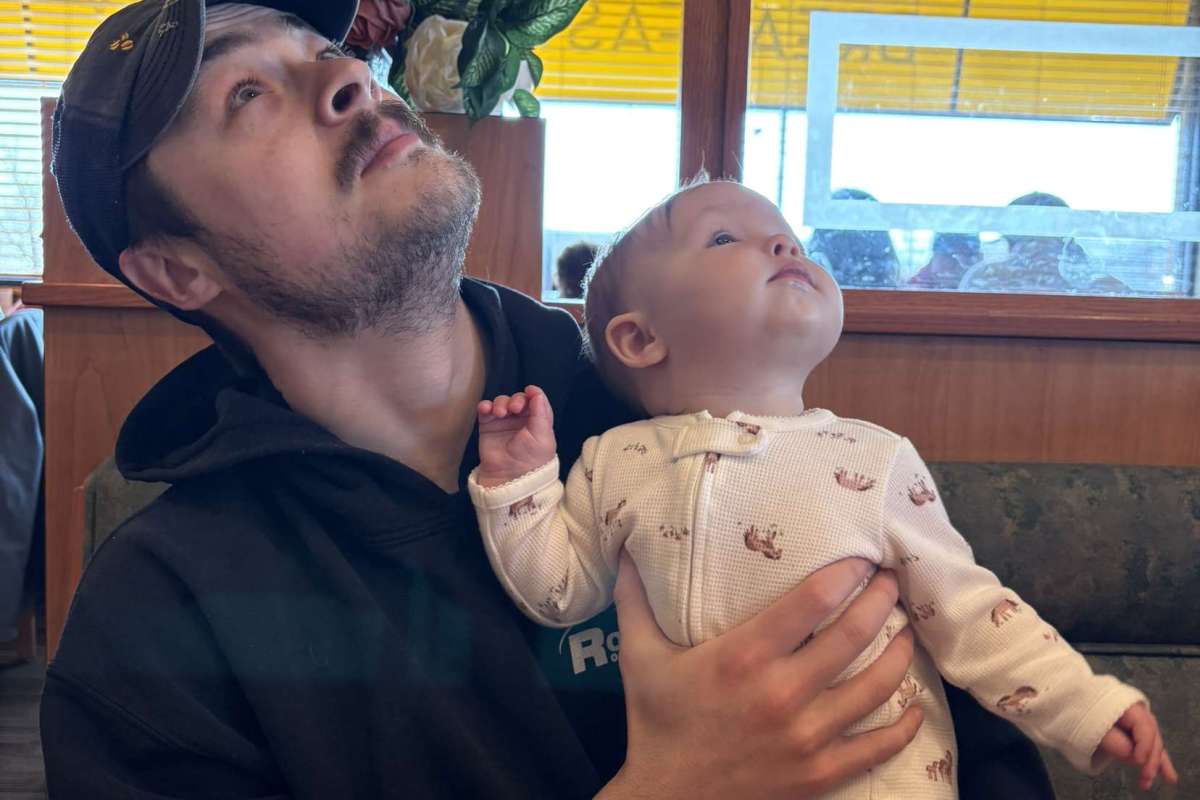
May 2025 was much more chill compared to April 2025. We had moved and been in our new place for a few weeks unpacking. We were out of our in-laws house on our own and my new role at my company was exciting to be doing something different. Life just made a lot more sense a year ago when we were freshly past the new changes on our plate. Above is a picture with two of my brothers who stopped by to see the new place shortly after the move.

Back to the message, it’s rare but does happen when doing sermon prep that a text necessitates a clean multi-part split. 1 Corinthians 15 is one of those texts that more than deserves space to learn from it and our leadership time decided just that. It’s different than when you’re preaching through a series and there’s overlap between chapters because in this case the content is the same. Both halves of this multi-parter are only about one thing: resurrection. The reason it justifies being a multi-parter is that there’s just so much to this text to cover adequately and that can’t be done well in one sermon. Heck, I could even see a church deciding to make this a 3 or 4 part mini series if they truly wanted to take their time. There’s just that much found within this extensive text.

Given life slowed down drastically after all the changes, I had most of May to navigate this 2-part teaching and didn’t feel any pressure to get it done in a timely manner. One of the few and far between opportunities where time was on my side. Like previous messages, my writing for my book and this 2-part sermon series had crossover so I felt even more prepared than normal to cover it too. Also, around this time we had difficulty with message recordings and this one just wasn’t recorded. Regardless, here’s the notes:

Sermon Notes

Opening Line

  • Why are you so happy and hopeful?

Intro

  • Story of presenting on the reliability of the Bible in college versus God’s Not Dead.

Main Point

  • 1 Corinthians 15 is the crescendo of Ch. 7-14 just as 1 Corinthians 6 was for chapters 1-5. 
  • There’s many things to hope for in life, but we have a resurrection hope in death.

A Resurrection Hope Part 1 | 1 Corinthians 15:1-34 (NRSVue)

[1] Now I want you to understand, brothers and sisters, the good news that I proclaimed to you, which you in turn received, in which also you stand, [2] through which also you are being saved, if you hold firmly to the message that I proclaimed to you—unless you have come to believe in vain. [3] For I handed on to you as of first importance what I in turn had received: that Christ died for our sins in accordance with the scriptures [4] and that he was buried and that he was raised on the third day in accordance with the scriptures [5] and that he appeared to Cephas, then to the twelve. [6] Then he appeared to more than five hundred brothers and sisters at one time, most of whom are still alive, though some have died. [7] Then he appeared to James, then to all the apostles. [8] Last of all, as to one untimely born, he appeared also to me. [9] For I am the least of the apostles, unfit to be called an apostle, because I persecuted the church of God. [10] But by the grace of God I am what I am, and his grace toward me has not been in vain. On the contrary, I worked harder than any of them, though it was not I but the grace of God that is with me. [11] Whether then it was I or they, so we proclaim and so you believed. [12] Now if Christ is proclaimed as raised from the dead, how can some of you say there is no resurrection of the dead? [13] If there is no resurrection of the dead, then Christ has not been raised, [14] and if Christ has not been raised, then our proclamation is in vain and your faith is in vain. [15] We are even found to be misrepresenting God, because we testified of God that he raised Christ—whom he did not raise if it is true that the dead are not raised. [16] For if the dead are not raised, then Christ has not been raised. [17] If Christ has not been raised, your faith is futile, and you are still in your sins. [18] Then those also who have died in Christ have perished. [19] If for this life only we have hoped in Christ, we are of all people most to be pitied. [20] But in fact Christ has been raised from the dead, the first fruits of those who have died. [21] For since death came through a human, the resurrection of the dead has also come through a human, [22] for as all die in Adam, so all will be made alive in Christ. [23] But each in its own order: Christ the first fruits, then at his coming those who belong to Christ. [24] Then comes the end, when he hands over the kingdom to God the Father, after he has destroyed every ruler and every authority and power. [25] For he must reign until he has put all his enemies under his feet. [26] The last enemy to be destroyed is death. [27] For “God has put all things in subjection under his feet.” But when it says, “All things are put in subjection,” it is plain that this does not include the one who put all things in subjection under him. [28] When all things are subjected to him, then the Son himself will also be subjected to the one who put all things in subjection under him, so that God may be all in all. [29] Otherwise, what will those people do who receive baptism on behalf of the dead? If the dead are not raised at all, why are people baptized on their behalf? [30] And why are we putting ourselves in danger every hour? [31] I die every day! That is as certain, brothers and sisters, as my boasting of you—a boast that I make in Christ Jesus our Lord. [32] If I fought with wild animals at Ephesus with a merely human perspective, what would I have gained by it? If the dead are not raised, “Let us eat and drink, for tomorrow we die.” [33] Do not be deceived: “Bad company ruins good morals.” [34] Sober up, as you rightly ought to, and sin no more, for some people have no knowledge of God. I say this to your shame.

  • Paul received the good news, which he then taught the Corinthians and they kept it.
    • To receive” indicates this was an oral tradition passed down to believers.
    • That tradition is the Corinthian Creed (1 Corinthians 15:3-5), dated to the 30s AD.
  • In the Greek “one untimely born” means an abortion, miscarriage, and/or premature birth. So Paul is using this potential insult as a metaphor for his abnormal apostolic call.
  • Paul’s resurrection argument is in contrast to misconceptions about Jesus and the Trinity.
    • Scripture Argument (1 Corinthian 15:3-4)
    • Apostolic Argument (1 Corinthians 15:5-7)
    • Logic Argument (1 Corinthians 15:12-19)
  • In the Old Testament, “the first fruits” were offered to God as foreshadows of future fruits (Exodus 23:16). Likewise, Jesus’ Resurrection is the first fruit of the resurrection of all believers (1 Corinthians 15:23).
  • The end is the consummation of the Kingdom when Christ’s lordship over all will be fulfilled and He will offer creation up to God the Father (see Rom 8:19-23, 32-39). Although the Son (Verse 28) shares the same divine nature and dignity as the Father, He is subject to the Father because only the Father is the source of divinity. God being all in all refers to the common lordship of the Trinity over all things” – Orthodox Study Bible
  • In regards to “baptism on behalf of the dead” (1 Corinthians 15:29), what’s most likely is:
    • The Corinthians were influenced by gnostics like Cerinthus or Marcion heretics.
    • There were unbaptised dead believers, so Corinthians got baptised for them.
  • Paul quotes Menander the Poet’s Thais (i.e. Pride & Prejudice BC) | 1 Corinthians 15:33
    • Great example of Paul using culture and scripture together to make a point.
  • Chapter 15 is like a mountain, in that it peaks at verse 34 and both sides build up to it.

Why It Matters

  • If there’s no resurrection, your faith in Jesus is hopeless yet we have a faith full of hope.

Power Text

  • Read 1 Peter 3:15b-17 (NRSVue)

[15b] Always be ready to make your defense to anyone who demands from you an accounting for the hope that is in you, [16] yet do it with gentleness and respect. Maintain a good conscience so that, when you are maligned, those who abuse you for your good conduct in Christ may be put to shame. [17] For it is better to suffer for doing good, if suffering should be God’s will, than to suffer for doing evil.

  • Be confident in the hope within you and live in the reality of Christ’s resurrection power.

Outro

Our hope is in the living and risen Jesus, so for us “living is Christ and dying is gain.” – Philippians 1:21 (NRSVue)

Final Thoughts

The reception to the message was warm, but nothing noteworthy. In fact, I thought I bombed when three new people walked out before Table Talks during my prayer ending the sermon. So it was encouraging when I got to those group discussions that everyone else seemed to like it. Looking back I still feel good about this one.

What was a standout moment was right before I got up to preach, my former disciple (and my favorite son in the faith) Josh visited by surprise. It was so cool to catch up and see that he now is a youth leader helping run the youth group at LifeGate Denver where I used to be serve as a youth leader in their youth group. Love that dude and really proud of him. God is going to continue to do great things in his life. With that, Godspeed and Jesus bless.

1 Corinthians: Live Free, Diet Hard | 3-30-2025

Updated: 4/30/2026

Sermon Prep

Coming off the heels of the last message, I was very intentional in my prep to shorten my sermons moving forward. To avoid getting lost in the sauce and keep the main thing the main thing. So when it came time to preach this message, I gave myself some unwritten rules. First, I used to allow my sermons to extend beyond 3 pages to fit whatever the topic was for that message, yet with this one I intentionally kept it to strictly 3 pages. I also limited myself to 1 quote from someone outside of the Bible and also cut down on the biblical cross references too.

To this day, I still follow these unwritten rules when teaching and so much so that I have it down to a science. For instance, I know that for every page of written text in my notes, that’s about 10 minutes of preaching material. I use the exact same sermon framework every single time which our teaching team calls the Reunion Standard. I think this has helped me more accurately measure the failure or success or a sermon versus before I taught at Reunion Church when I would loosely follow a 3-point public speaking structure I learned in college from my Public Speaking class.

Lastly, between this message and the last one we were finalizing moving out of my in-laws place and for the first time having our own space as a family. Our baby girl was almost 6 months and God orchestrated this beautiful new place for us to live once I finally decided to be open to renting again. Weird how when we humble ourselves, God almost always has something for us. Either way, here’s the YouTube recording and the notes for this message below:

Sermon Notes

Opening Line

  • PMCC Thrive small group with Adam, Elijah, and Jeanette.

Intro

  • Learned the importance of loving others in spite of knowledgeable differences.

Main Point

  • A conviction is a moral belief and personal preference with spiritual significance.
    • EX: drinking, fast food, movies, music, politics, religion, smoking; social media.
  • The convictions of your faith matter, but unity among Christians matters more.

Live Free, Diet Hard | 1 Corinthians 8 (NRSVue)

[1] Now concerning food sacrificed to idols: we know that “all of us possess knowledge.” Knowledge puffs up, but love builds up. [2] Anyone who claims to know something does not yet have the necessary knowledge, [3] but anyone who loves God is known by him. [4] Hence, as to the eating of food offered to idols, we know that “no idol in the world really exists” and that “there is no God but one.” [5] Indeed, even though there may be so-called gods in heaven or on earth—as in fact there are many gods and many lords— [6] yet for us there is one God, the Father, from whom are all things and for whom we exist, and one Lord, Jesus Christ, through whom are all things and through whom we exist. [7]  It is not everyone, however, who has this knowledge. Since some have become so accustomed to idols until now, they still think of the food they eat as food offered to an idol, and their conscience, being weak, is defiled. [8] “Food will not bring us close to God.” We are no worse off if we do not eat and no better off if we do. [9] But take care that this liberty of yours does not somehow become a stumbling block to the weak. [10] For if others see you, who possess knowledge, eating in the temple of an idol, might they not, since their conscience is weak, be encouraged to the point of eating food sacrificed to idols? [11] So by your knowledge the weak brother or sister for whom Christ died is destroyed. [12] But when you thus sin against brothers and sisters and wound their conscience when it is weak, you sin against Christ. [13] Therefore, if food is a cause of their falling, I will never again eat meat, so that I may not cause one of them to fall.

  • Food in this context wasn’t just a meal, but was often sacrificed to idols and pagan gods.
    • Civic, religious, and social gatherings were all connected in Corinthian culture.
      • Business, networking, politics, and religion were one and the same.
      • Feasts or parties were where you wanted to be seen, where you would make business deals with patrons, and even socialize with friends.
      • A patron was someone who helped clients financially and legally by way of their influence, power, and wealth. Clients had to prove their loyalty. 
  • Some knew it’s just food, but not all so love vs belittling them (1 Corinthians 8:1).
    • God knows all things, so there’s no need to be a know-it-all to weaker believers.
      • Don’t just know about God, but be known by him and remain in him.
  • In verses 1, 4, and 8 Paul uses Corinthian slogans to explain his argument.
    • Verse 4 combines one of these slogans and Scripture (i.e. Deuteronomy 6:4).
  • Early Christian Creed (1 Corinthians 8:6)
    • A creed is the rule of faith and the symbol of faith. This means a creed is both a set of beliefs affirmed aloud and an outward action that brings us together.
      • A modern example would be singing worship songs out loud at church.
  • The phrase “is destroyed” can be translated as “destroys himself,” which is an indirect middle implying that weaker Christians bear some responsibility (1 Corinthians 8:11).
    • If a weaker Christian struggles with alcohol, then why are they at a bar?
    • Read Proverbs 7:7-9 (NRSVue)

[7] and I saw among the simple ones, I observed among the youths, a young man without sense, [8] passing along the street near her corner, taking the road to her house [9] in the twilight, in the evening, at the time of night and darkness.

Why It Matters

  • Their conscience matters more than your convenience, so use wisdom with convictions.
  • Sacrificing freedoms can save faith for weaker Christians. It’s us for them, not versus.

Power Text

  • Read Romans 14:1-3, 15-21 (NRSVue)

[1] Welcome those who are weak in faith but not for the purpose of quarreling over opinions. [2] Some believe in eating anything, while the weak eat only vegetables. [3] Those who eat must not despise those who abstain, and those who abstain must not pass judgment on those who eat, for God has welcomed them… [15] If your brother or sister is distressed by what you eat, you are no longer walking in love. Do not let what you eat cause the ruin of one for whom Christ died. [16] So do not let your good be slandered. [17] For the kingdom of God is not food and drink but righteousness and peace and joy in the Holy Spirit. [18] The one who serves Christ in this way is acceptable to God and has human approval. [19] Let us then pursue what makes for peace and for mutual upbuilding. [20] Do not, for the sake of food, destroy the work of God. Everything is indeed clean, but it is wrong to make someone stumble by what you eat; [21] it is good not to eat meat or drink wine or do anything that makes your brother or sister stumble.

  • The strong-minded believed that those who thought they needed to observe food laws were weak-minded and looked down upon them as inferior for lacking knowledge.
  • There’s more to life than convictions, so build up the Christian who may be struggling.

Outro

  • Read Ephesians 4:1b-6 (NRSVue)

[1] I… beg you to walk in a manner worthy of the calling to which you have been called, [2] with all humility and gentleness, with patience, bearing with one another in love, [3] making every effort to maintain the unity of the Spirit in the bond of peace: [4] there is one body and one Spirit, just as you were called to the one hope of your calling, [5] one Lord, one faith, one baptism, [6] one God and Father of all, who is above all and through all and in all.

  • Let love guide your public decisions when exercising your convictions and rights.

embrace a mutual unity in things necessary; in things non necessary liberty; in all things charity.” – Marco’ Antonio de Dominis, Archbishop of Spalato, Croatia

Final Thoughts

In retrospect, the changes I implemented in my sermon prep turned out great. The message flowed well and the congregation resonated with it too. Although I did have a major blunder by mispronouncing Shema as schema which was corrected later that day by my father-in-law Kenny. He knows a lot more Hebrew then I do and my notes just autocorrected the word and I didn’t catch it, so that was embarrassing.

It also was a huge benefit to this message in particular that I had recently finished the chapter of my book on convictions, so I was very versed in this topic. Overall, it was received well and the Table Talks were good. With that, Godspeed and Jesus bless.

2 Samuel: Bathsheba and Uriah | 10-13-2024

Updated: 11/13/2024

Sermon Prep

I’ve never prepped for a sermon as much as I did for this latest message. Last one before taking a break and focusing on family bonding while on paternity leave. I really sunk my theological teeth into this final sermon of 2024. Not only did I prep over a month for this, but also studied so much that there were several key things left out. Here’s a few of the leftovers that didn’t make the cut, but not everything:

  • Could or did Bathsheba consent to sex?
    • Consent is a modern construct, so ANE people didn’t think that way.
    • What the king commanded was law (i.e. Nebuchadnezzar II in Daniel 1-4).
    • We need to be trauma-informed on tough topics for the needs of the neighborhood.
  • Does Uriah know that David slept with Bathsheba?
    • David’s guards who took Bathsheba could’ve known (2 Samuel 11:4, 9).
    • Uriah was by the gates where those very guards may have stood watch.
  • Is Uriah knowingly trying to shame David by not going home?
    • Uriah would’ve had to stone Bathsheba because of the Law.
    • Said no to king’s command and brings up sleeping with his wife, not David (2 Samuel 11:8-13).
  • After this worst episode, David named one of his sons in honor of Nathan (1 Chronicles 3:5).
    • This fact implies either friendship with or even respect for Nathan.

This was one of the few messages where I asked for a lot of feedback. A lot of deliberation on my part on what to include and what to shy away from. Given the sensitivity and the grey areas involved with this subject, we as a leadership team decided to just keep the main thing the main thing. David sinned and there’s a right way to repent.

Since we break off into small groups and sometimes with total strangers immediately after our messages, we’re very careful what we do teach about. Given that, it’d be unwise to let loose untrained leaders to guide groups focused on these sensitive subjects. There’s nothing worse then having someone unequipped address issues without the care and gentleness required to do so. Now here’s the notes I did use and the recorded message for this sermon.

Sermon Notes

Opening Line

  • Grew up watching whodunit detective dramas with my Mom (i.e Midsomer Murders).

Intro

  • Today we’re going to learn about a howcatchem → see crime, then solve the case.

Main Point

  • David’s worst episode is written as a minimal facts approach (i.e. the Corinthian Creed).
  • Sin has collateral consequences on others, but there’s a right way to correct the damage.

A King’s Crime

  • Read 2 Samuel 11:1-27a.
  • David should’ve been at war, but disobeyed and stayed home (2 Samuel 11:1, 12:26-32).
  • Bathsheba was either bathing at home or publicly at the Siloam Pool (2 Samuel 11:2).
    • Never told she’s naked or on the roof. Bathing at dusk/sunset was modest in ANE.
      • Too hot to bathe during the day; people walking by can’t see her.
  • Uriah was of the 30 mighty men and became an Israelite convert (2 Samuel 11:4, 23:39).
    • Eliam was also of the 30 mighty men; Uriah’s from Anatolia (Syria/Turkey).
  • He was loyal, so Uriah wouldn’t abandon Israel in their hour of need (2 Samuel 11:9-13).
    • Great display of covenant love for the king and the nation at large (2 Samuel 5:1).
  • Uriah unknowingly was the messenger of his own death sentence (2 Samuel 11:14-17).
    • He and a group of soldiers were unnecessarily slaughtered to cover up sin.

A King’s Correction

  • Read 2 Samuel 11:27b-12:23.
  • bat (בַּת) is daughter and also the beginning of Bathsheba’s name (2 Samuel 11:3, 12:3).
  • Nathan waited years for God’s timing before approaching David about his sin.
    • Once we prayerfully determine the right thing to do, we must still contemplate the right way to do it (240).” – Zack Eswine, Sensing Jesus
    • Nathan’s story and Bathsheba’s lament shows she loved Uriah (2 Samuel 12:1-4).
  • Absalom’s coup in David’s latter reign is prophesied here (2 Samuel 12:10-12, 16:22).
  • David had true repentance as he pleaded for God’s grace (2 Samuel 12:16-18, Psalm 51).
    • Accepted God’s will, even when he didn’t get his way (2 Samuel 12:20-23).

Why It Matters

  • David’s sin had collateral consequences: a wife was taken, a husband murdered, soldiers slaughtered, and a newborn died. In all, God was dishonored by David’s disobedience.
  • “David was self-deceived. Your greatest flaws, the habits of the heart that are killing you the most by definition, are the ones you don’t see.” – Timothy Keller, The Sinner Sermon
  • When we don’t repent, we deceive ourselves into thinking everything is under control.

Power Text

  • Read Psalm 51:1-11, 16-17.
  • Repentance is the changing of your ways and your will (i.e. body + soul → Acts 26:20b).

Outro

  • Read 1 John 1:6-10.
  • It’s better to examine yourself and confess your sin, then to get caught and exposed.
  • Repentance is the first step to being redeemed, restored, and reunited to God.

Final Thoughts

This was not only one of my greatest messages, but also one of my more technical in the precision that I said things as well. For context, we know people who have similar things to David in our community and we also know people who’s stories are related to Bathsheba or Uriah’s situation too. It’s a brutal balancing act to acknowledge the depravity of sin and that there’s hope for those who repent.

There’s no easy way to do both simultaneously, especially to a large public audience. That’s where trusting the Holy Spirit to provide exactly what to say is so important. It’s his word and I’m just a vessel to communicate his message. In this case, I think the message was clear and resonated with our congregation. With that, Godspeed and Jesus bless.