1 Corinthians: God the Builder | 2-9-2025

Photo Cred: (1) | Updated: 4/16/2026

Sermon Prep

A few weeks had passed since my first sermon back from paternity leave and I was right back into the swing of things. Work was dragging and my drive to be the best was start to wane a bit given I desperately wanted to get out of sales. I actually ended my paternity leave early, so that I could apply for a role in the Customer Success team.

But I didn’t get the job, so I was frustrated by that fact too. What bothered me even more was that there were other people who got the promotion onto that team before me in my department and were either decent in their roles or flat out bottom tier sales reps. Since I made President’s Club and was the best person in the department, that did get under my skin because I just assumed they’d pick me.

Yet that’s just part of the corporate game. It’s not a meritocracy, it’s a networkocracy where instead of what you know it’s who you know that gets you ahead in life. Can’t hate the player, but you can hate the corporate game. In this season, I really hated the game. Anyways, here’s the notes from that sermon below.

Sermon Notes

Opening Line

  • Story of going to gym again post-paternity leave.

Intro

  • Building off of Andrew’s message, Paul is putting the Corinthians in their place.

Main Point

  • Paul’s reminding them that they’re not the big picture, but a part of the big picture.
  • By God’s grand design, the church is built different than the world.

Temple Talk | 1 Corinthians 3:16-23 (NRSVue)

[16] Do you not know that you are God’s temple and that God’s Spirit dwells in you? [17] If anyone destroys God’s temple, God will destroy that person. For God’s temple is holy, and you are that temple. [18] Do not deceive yourselves. If you think that you are wise in this age, you should become fools so that you may become wise. [19] For the wisdom of this world is foolishness with God. For it is written, “He catches the wise in their craftiness,” [20] and again, “The Lord knows the thoughts of the wise, that they are futile.” [21] So let no one boast about people. For all things are yours, [22] whether Paul or Apollos or Cephas or the world or life or death or the present or the future—all are yours, [23] and you are Christ’s, and Christ is God’s.

  • Verses 16 thru 17 is a plural you, but verses 18 thru 23 is singular.
  • The ANE had a different idea of idols than the Greeks/Romans (1 Corinthians 3:16-17).
    • Read Genesis 2:7-8, 15 (NRSVue)
  • [7] then the Lord God formed man from the dust of the ground and breathed into his nostrils the breath of life, and the man became a living being. [8] And the Lord God planted a garden in Eden, in the east, and there he put the man whom he had formed… [15] The Lord God took the man and put him in the garden of Eden to till it and keep it.
    • Read Leviticus 26:11-12 (NRSVue)
      • [11] I will place my dwelling in your midst, and I shall not abhor you. [12] I will be your God, and you shall be my people.
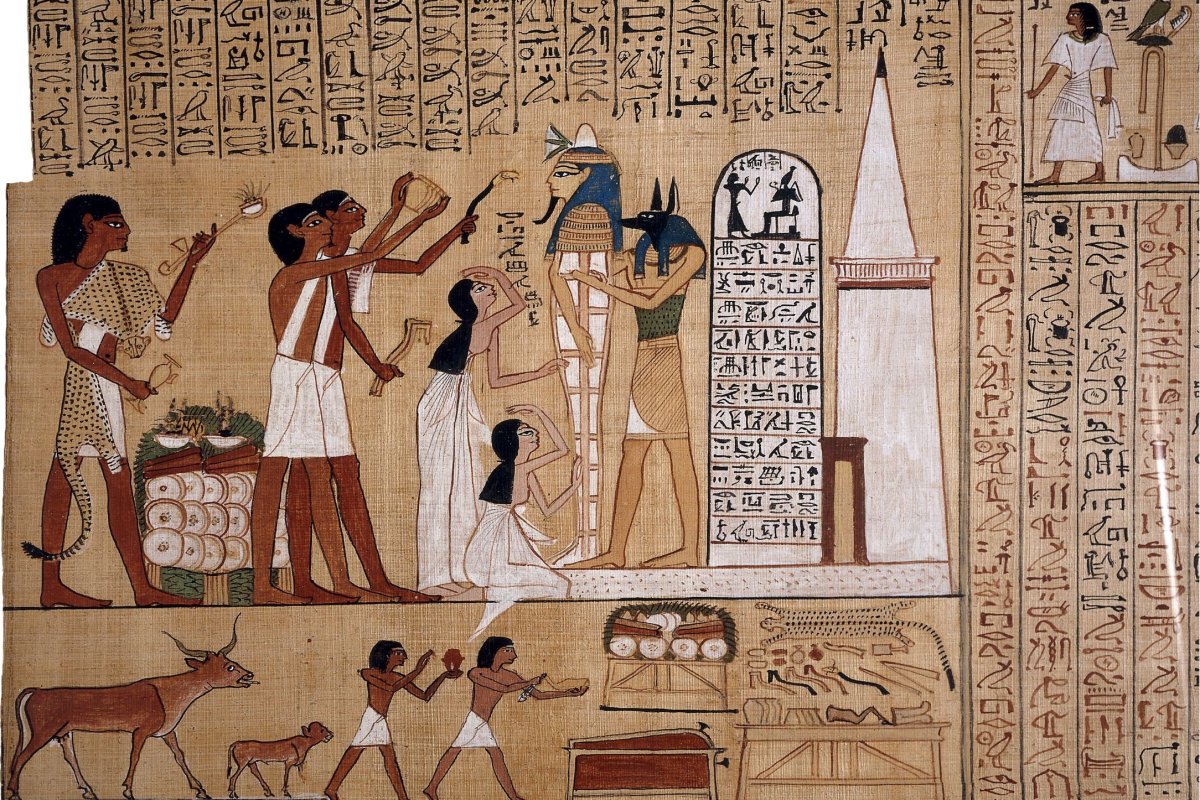
    • [It was] common in the world of Mesopotamia that when you created an idol you would have this opening of the mouth ceremony where the god would then infuse the idol with his spirit, so that the idol could function as a proper representation of the god… Not just a symbol. A living entity that represented the god that was in the idol… We are living, breathing representations of God… Humans were intended to carry his Spirit in everything that they do. To represent him faithfully as temples of his Spirit.” – Dr. Brittany Kim
    • Read Ephesians 2:19-22 (NRSVue)
      • [19] So then, you are no longer strangers and aliens, but you are fellow citizens with the saints and also members of the household of God, [20] built upon the foundation of the apostles and prophets, with Christ Jesus himself as the cornerstone; [21] in him the whole structure is joined together and grows into a holy temple in the Lord, [22] in whom you also are built together spiritually into a dwelling place for God.
    • This is Paul’s 4th analogy within the context of ch. 3 (milk, dirt; foundation).
      • The Church is an organic whole… One who would break this unity would desecrate a sacred place.” – Orthodox Study Bible
    • Referring to Corinthians as a temple was also in response to the prominent temples of the city like the Temple cult of Aphrodite atop the Acrocorinth.
  • Verse 18 can be cross-referenced with 1 Corinthians 1:18 (1 Corinthians 3:18, 21).
    • Unclear who’s addressed here, but Paul is warning them to be responsible.
  • Paul is quoting Job 5:13 and Psalm 94:11 back-to-back (1 Corinthians 3:19-20)
  • What does “all things are yours” mean (1 Corinthians 3:21-23)?
    • [Christians] are heirs of all things-heirs of the ministries of all those who faithfully promote the gospel, and also of everything over which God and Christ hold sovereign rule, namely, all those things that the philosophers of this world claim to have mastered by their wisdom.” –  NIV Study Bible
  • Apollos, Cephas, and Paul are co-workers working towards a common purpose as they collaborate with God (1 Corinthians 3:22).
    • Cephas is generally believed to be the Apostle Peter (1 Corinthians 3:22).

Why It Matters

  • The church is the sum of many opposing parts put together for the same purpose.
  • God is building his temple to dwell among us and we, God’s people, are that temple.

Power Text

  • Avoid conformity and division, so that above all you can build unity as fellow workers.
  • God is building his temple through the people of God. He causes the growth, but the community of Jesus’ followers participates with God in that work.” – Andrew Morrison

Outro

  • Our aim is to co-labor with God in the earthly and remain with God in the eternal.
    • Mature Christians answer God’s call, humbly submit to his way, and exercise faith knowing that God will do what he said he would do.

Final Thoughts

I think this message was good and more teaching, than preaching. For me, I’ve always felt like a teacher more than a preacher and all of my messages I’ve done seem to reflect that. Leaning into the context and culture, more than the emotions and heart of a message.

What also is a thought that has burrowed in my mind lately is and probably began around the time I was on paternity leave was if I was actually a pastor. I’m not ordained, I just volunteered to help and teaching was one of the areas to help. This church I teach at is a non-denominational church, so it has more in common with corporate America than traditional liturgical Christianity.

That thought began to bother me in this season of reflection and continues to bother me today. Do I need someone to ordain me and say I’m a pastor? Do I just need to step up where there’s a need? To this day I still avoid the pastor title because I don’t really believe it myself. It’s sort of like calling yourself a professional athlete without being apart of a professional team and instead playing sports on the local level. Is that legit? I still don’t know. With that, Godspeed and Jesus bless.

Footnotes

  1. https://en.wikipedia.org/wiki/Opening_of_the_mouth_ceremony

1 Corinthians: Cross Wisdom | 1-19-2025

Updated: 4/14/2026

Sermon Prep

This message holds a special spot in my heart simply because of the season of life I was in as a new Dad. I was fresh off of my paternity leave, which ended on January 5th and I returned to work the next day. The prep for this sermon also began on January 6th and I chipped away at it slowly for two weeks. If I remember right I was nervous coming back and spent extra time prepping this message. Not because I was nervous about the content like my last message on Bathsheba and Uriah, but I was nervous about being rusty preaching-wise.

Everything was flipped upside down in a good way with becoming a Dad, so it felt like the teaching muscles were tight from inactivity. Learning how to be a parent with my Glory those first few months up in the doorless loft of her parent’s house was a special time. We had our own little nook to figure out how to raise our little girl. As per usual, I put aside any spare time at work or at home to write this message.

At work, the excuse was my infamous office hour, which really meant that because I was the best person in the department I had the freedom to do what I wanted with that final hour of the day. It was a luxury that really only my peer Simon who sat next to me knew about, but a freedom I earned with a lot of hardwork and grit to be at the top of the department. With all that said, my sermon notes are below and the sermon on YouTube here.

Sermon Notes

Opening Line

  • Bo Eason former NFL QB and CA family celebrity connections sharing worldly wisdom.

Intro

  • Jumping off of Andrew’s message last week, we’re going to learn about what unites us.

Main Point

  • Now there’s worldly wisdom, but Christians are united by true wisdom.
  • The cross of Christ is true wisdom in a world filled with fools.

Fool’s Talk | 1 Corinthians 1:18-31 (NRSVue)

[18] For the message about the cross is foolishness to those who are perishing, but to us who are being saved it is the power of God. [19] For it is written, “I will destroy the wisdom of the wise, and the discernment of the discerning I will thwart.” [20] Where is the one who is wise? Where is the scholar? Where is the debater of this age? Has not God made foolish the wisdom of the world? [21] For since, in the wisdom of God, the world did not know God through wisdom, God decided, through the foolishness of the proclamation, to save those who believe. [22] For Jews ask for signs and Greeks desire wisdom, [23] but we proclaim Christ crucified, a stumbling block to Jews and foolishness to gentiles, [24] but to those who are the called, both Jews and Greeks, Christ the power of God and the wisdom of God. [25] For God’s foolishness is wiser than human wisdom, and God’s weakness is stronger than human strength. [26] Consider your own call, brothers and sisters: not many of you were wise by human standards, not many were powerful, not many were of noble birth. [27] But God chose what is foolish in the world to shame the wise; God chose what is weak in the world to shame the strong; [28] God chose what is low and despised in the world, things that are not, to abolish things that are, [29] so that no one might boast in the presence of God. [30] In contrast, God is why you are in Christ Jesus, who became for us wisdom from God, and righteousness and sanctification and redemption, [31] in order that, as it is written, “Let the one who boasts, boast in the Lord.

  • Paul was in his ministry prime as this letter was 20 years after his conversion.
  • God is beyond time so we’re saved, being saved, and will be saved (1 Corinthians 1:18).
    • It is a mark of them that perish not to recognize the things which lead to salvation.” – St. John Chrysostom, Homilies on First Corinthians
  • Paul paraphrases Isaiah 29:14 (1 Corinthians 1:19).
    • Corinth was known as a melting pot and often called a mother to many cultures.
    • Aelius Aristides once said that on every street in Corinth one met a so-called wise man, who had his own solution to humanity’s problems.
  • Scholar = expert in Mosaic law; debater of this age = Greek Sophists (1 Corinthians 1:20).
  • To those that request a sign, the Church offers one: the Cross! The Cross is to be adored, for wherever the sign may be, there Jesus will be” (1 Corinthians 1:22).
  • [Jews] expected a triumphant, political Messiah [;Greeks/Romans believed] “it was unthinkable that [a crucified] criminal could be the world’s Savior” (1 Corinthians 1:23).
  • Calling is used here as God the Spirit guiding us to trust him (1 Corinthians 1:24-26).
    • εὐγενής (eugenēs) refers to… being born into nobility, wealth, or power with an emphasis on the privileges and benefits [of] that position” (1 Corinthians 1:26).
  • Do not let the wise boast in their wisdom; do not let the mighty boast in their might; do not let the wealthy boast in their wealth; but let those who boast boast in this, that they understand and know me, that I am the Lord; I act with steadfast love, justice, and righteousness in the earth, for in these things I delight, says the Lord.” (Jeremiah 9:23b-24 NRSVue)
    • See 1 Samuel 2:1-10, and Luke 1:46-55. “Jeremiah calls upon the wise, the strong, and the wealthy not to trust in their resources but in their knowledge of the true God-and so to boast in the Lord. Paul addresses the same three areas of human pride.” (1 Corinthians 1:26-31).
    • See 1 Corinthians 2:14-16. The Greek words psychikos (ψυχικὸς) and pneumatikos (πνευματικῶς) Paul uses to contrast the natural and the spiritual.
    • God the Spirit is often associated with power and wisdom. The Gospel can only be revealed by the Spirit himself.

Why It Matters

  • The word fool is mentioned 6 times; wise is mentioned 13 times (1 Corinthians 1:18-31).
  • As Os Guinness lays out in his book, Fool’s Talk, that there’s 3 types of fools in the world:
    • Fool King -> Jesus (Isaiah 53)
    • Fools for Christ -> The Foolish (1 Corinthians 4:10)
    • Fool of Proverbs -> The Wise (Psalm 14:1)
  • Corinth needed to hear that in complete humility, Christ was crucified and resurrected.
  • In a world full of wisdom, it’s us fools for Christ that know God’s free grace saves us from our sins.
  • By humility and faith we can accept this free grace.

Power Text

  • We need to trust in God’s resurrection power.
    • EX: family, marriage, politics; work.
  • Human wisdom isolates others, yet the wisdom of the cross unifies all people.
    • Death is the great equalizer, yet so too is the cross of Christ.
  • Unity brings belonging, yet division brings loneliness.
    • I’ve discovered the more spiritual a person becomes, the less denominational that person becomes. The less divisive that person becomes.” – Skip Heitzig

Outro

  • Only God’s power can stop the woes of the world and bring us together.
    • There is a loneliness that only God can fill… and the cross is the answer.” – Billy Graham, 1974
  • Just like it was 50 years ago, life is lonely without the living God.
    • EX: Julie loving Heidi.
  • You can either cling to Christ trusting him or tell him to piss off out of your own wisdom. Those are the choices.

Final Thoughts

This new year literally brought a new me and that bled into changing my sermon studying and sermon structure. First off, I utilized a lot of quotes from the NET Bible Full Notes Edition and the Orthodox Study Bible to round out this message. I would’ve used quotes from the Ignatius Catholic Study Bible, but someone stole it from my porch when it got delivered. I was pretty salty about that, but of all the things to steal I hope at least they read that Bible.

Too many quotes to be fair if I’m being objective about my sermon notes, but I think what I did quote was quality stuff. My coloring scheme I used here stuck with the rest of my sermons moving forward. I to this day still use blue for quotes outside of the Bible and green for quotes within the Bible. Anything from me isn’t highlighted.

Looking back at it over a year later with my 18 month-old sleeping upstairs as I write this blogpost, in my mind this message aged really well. I jotted down feedback as I like to after each message to improve my craft and this one was received strongly by Reunion Church. The ending given Heidi and Julie were having another medical episode at this time was quite emotional and as you can see above compared to my outline, I spoke from the heart.

For context, Julie’s daughter Heidi had been battling one thing after another due to complications from her cerebral palsy and that month was no different. I used Heidi and Julie as my Gospel analogy, which everyone at church really resonated with once we gathered for Table Talks. Heidi might be home now as she passed away later on in 2025, but here at Reunion Church she was apart of our home. With that, Godspeed and Jesus bless.

How To Celebrate Halloween

Photo Cred: (1) | Updated: 11-1-2020

Like most days in the year, Halloween is a day filled with contentious debate. Although this isn’t necessarily everybody who finds the day controversial, but rather Christians who have quite the beef with this day in particular. Yet when examined further, we find that these assumptions about this day of the dead remain buried by the fact that it’s simply not pagan (2). For instance, it’s origins are steeped in the traditions of French and Irish Christians that mixed their cultures with other cultures into the melting pot that is America.

Regardless, a more important question comes up when these holidays within our respective cultures arrive to be celebrated once again. How should we celebrate these holidays? As Christians or believers of other faiths, how should we approach the holidays? More specifically, how should we approach Halloween?

Earlier this month, I was talking with a friend over the phone about Halloween and how it’s okay to celebrate it as Christians. We discussed a lot beyond that, but I’ll just share what I talked with him about on how to approach Halloween. What we centered our conversation on was three key questions.

What is Christian?

The first question is what is Christian? With this question, I wanted to guide the dialogue to the Bible and how Christians have always approached holidays respectively. This first question can be done within any respective religion as well.

For Christians, a key biblical text is Colossians 2:8-23 and how because of the substance of Christ’s sacrifice these cultural celebrations are now merely symbolic if anything to the believer. They went from days of religious repetition to righteous remembrance. We are not obligated to repeat these traditions, but rather we now get to remember what these traditions mean to the Christian faith.

On Christmas, we get to celebrate the birth of Jesus. On Resurrection Sunday, we get to remember how Jesus rose on the third day after paying the debt of sin with his death. Again, look at Colossians 2:14-17 one more time: “having cancelled out the certificate of debt consisting of decrees against us, which was hostile to us; and He has taken it out of the way, having nailed it to the cross. When He had disarmed the rulers and authorities, He made a public display of them, having triumphed over them through Him. Therefore no one is to act as your judge in regard to food or drink or in respect to a festival or a new moon or a Sabbath day- things which are a mere shadow of what is to come; but the substance belongs to Christ.” From a biblical vantage point, it matters more why we celebrate holidays than how we celebrate holidays. With that in mind, how we celebrate still matters and that ties into the second question. But for now, always ask yourself why before you ask yourself how.

What is Cultural?

The second question is what is cultural? For this one, we focused a lot on the nitty-gritty of how we celebrate holidays. I’ll just bring up one point we discussed during this second question. When it comes to how we celebrate, is there a way to know what’s worth celebrating?

In my favorite passage in the Bible for ministry, Paul writes that we should “examine everything carefully; hold fast to that which is good; abstain from every form of evil (3).” In other words: test everything, embrace good, and avoid evil. Now let’s apply that filter to Halloween.

With all of these customs and traditions, we just can’t celebrate everything. I mean, there’s some pretty dark activity done on Halloween and some great fun too. Does that mean we stop celebrating Halloween because bad stuff is done on that day? No, you just don’t do the bad stuff. Let me explain.

Traditionally every October 31st, kids and parents go door-to-door to collect candy in costume as they say “trick-or-treat” to their neighbors. Has this always been the tradition though? No, not at all.

The costumes are originally a French Christian tradition to honor those who have died, the date is relatively new compared to other holidays, and the involvement of parents is in direct response to the Black Halloween of 1933. This was when teenage boys caused so much vandalism nationwide in America in response to the Great Depression that cities considered banning the holiday altogether before giving it a family-friendly revamp (4). So the Halloween you know today is not even historically accurate.

Truthfully, the modern celebration of Halloween is just like Coca-Cola. The original was way more dangerous and fun, but now it’s a watered-down cash grab that has brainwashed you into thinking it’s good because you have so much nostalgia for it. Put in simple terms, All Hallows’ Eve is now just a hollow shell of its former self.

So now what? Well, celebrate it. It’s a great custom that brings communities and families together. If we’re being honest, is there anything remotely morally reprehensible about a kid dressing up as their favorite superhero and collecting candy? Not in the slightest.

But if you want to go holier than thou, then what if a kid in remembrance of Chadwick Boseman dresses up as Black Panther to honor one of those who has gone before us and who in fact was a Christian too. That’s faithfully sticking to the roots of Halloween. On the other hand, the standard celebration usually has some adult woman laced up in a slutty cat costume in the hopes of getting some action with her toxic ex at a party that looks like a high school reunion, but with more botox and booze. Then again, to each their own.

At the end of the day, reject all of the bad done on Halloween or any day for that matter and embrace the good. Learn about the holiday, adopt the customs that are good, and then avoid the bad. You can even choose not to celebrate altogether which is totally fine too, but that leads into the final question.

What is Convicting?

Lastly, what is convicting? After all of this information and knowledge has been discussed, it’s still your choice whether or not you are comfortable celebrating any holiday. Convictions are not meant to be advertised to all, but they are meant to be respected when in the company of others who know of said convictions.

In 1 Corinthians chapter 8, Paul dissects the idea of liberty into two compatible halves: knowledge and love. We all have varying degrees of knowledge and love that combines into your current convictions. That’s why every conviction is different from person-to person. Some of us eat meat and some of us don’t. But what matters most is being aware of your convictions and when aware of other people’s convictions, being the better person and honoring their commitments to a conviction as well.

Paul points this out when he writes: “But food will not commend us to God; we are neither the worse if we do not eat, nor the better if we do eat. But take care that this liberty of yours does not somehow become a stumbling block to the weak. For if someone sees you, who have knowledge, dining in an idol’s temple, will not his conscience, if he is weak, be strengthened to eat things sacrificed to idols? For through your knowledge he who is weak is ruined, the brother for whose sake Christ died. And so, by sinning against the brethren and wounding their conscience when it is weak, you sin against Christ (5).” If you want your convictions to be valued, then you must value the convictions of others. This value is found in the active balance of knowledge and love.

Without love your conviction is prideful and without knowledge your conviction is pointless. Therefore, find the balance between what you know and what you love. For the Christian, this love is Christ. For the non-Christian, it’s anything but Christ. If you as a Christian have a conviction that is not Christ-centered, then you have bastardized your own behaviors and beliefs.

When we were nearing the end of our conversation, we ironically pointed out our different convictions of food. My great friend is convicted about eating pork, while I am a simp for lime pork street tacos. With that knowledge in mind, I can now love my friend by not eating pork around them. If my friend doesn’t eat meat, then I don’t need to either when I’m with them for their sake. What divides us should never get in the way of what unites us.

I have the conviction to take time every Halloween to read up on the Protestant Reformation because the anniversary just so happens to land on the very same day. It’s a tradition I’ve made for myself and I will repeat it every year. Then again, I do also enjoy spending time with others doing more traditional Halloween customs. Either way, I choose to celebrate Halloween. With that, Godspeed and Jesus bless.

Footnotes

  1. Free stock photos · Pexels
  2. https://youtu.be/fu-5BmAzbrU
  3. 1 Thessalonians 5:21-22 (NASB)
  4. https://www.history.com/news/halloween-haunted-house-great-depression
  5. 1 Corinthians 8:8-12 (NASB)