1 Corinthians: A Resurrection Hope Part 2 | 6-1-2025

Updated: 5/3/2026

Sermon Prep

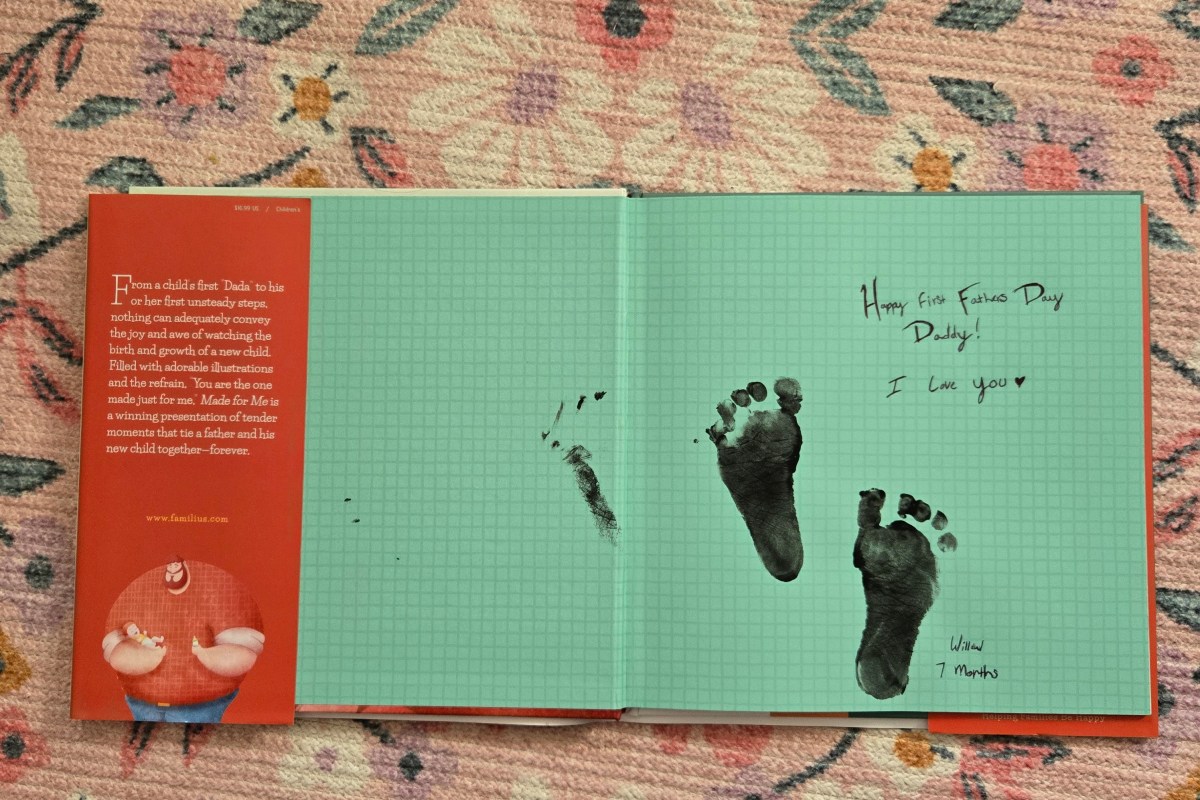
Like the previous post, the prep for this message was very thorough because I had weeks to get those sermons ready. With that, I approached both as one message in two halves and this second half focused on the hope we as Christians have in the resurrection. I was also researching and writing my book, so I knew I wanted to tie 1st Clement into this duology somehow deciding it’d be best here. I couldn’t find a good picture from this timeframe, so I added a picture of Part of my first Father’s Day which was a couple weeks later in June.

Another new thing I began doing with this message moving forward was including an opening prayer and I actually quoted 1st Clement in that prayer below. I think it’s a good practice to pray into a sermon and sets the tone that God is using me to speak to someone today. I am the tool that God uses to speak through and to others during the sermon, so I shouldn’t think of my role as anything other than that.

Sadly, most people who preach like me are self-centered and make the message about them. By praying first, it sets my heart and the hearts I believe of the congregation right to hear the word of God. On that note, here’s the YouTube recording and my sermon notes below:

Sermon Notes

Opening Prayer

  • God your name alone “is the source of all creation.” Would you speak through me, in spite of me, and beyond me. Make your dwelling within us as you teach us today. Amen. – 1st Clement 59:1

Intro

  • What if you knew what would be said about you in the future? -> Mrs Lyons prediction

Main Point

  • Last week we learned there’s many things to hope for, but we have a resurrection hope.
  • That theme continues in Part 2, along with what we do here on Earth impacts eternity.

A Resurrection Hope Part 2 | 1 Corinthians 15:34-58 (NRSVue)

[34] Sober up, as you rightly ought to, and sin no more, for some people have no knowledge of God. I say this to your shame. [35] But someone will ask, “How are the dead raised? With what kind of body do they come?” [36] Fool! What you sow does not come to life unless it dies. [37] And as for what you sow, you do not sow the body that is to be but a bare seed, perhaps of wheat or of some other grain. [38] But God gives it a body as he has chosen and to each kind of seed its own body. [39] Not all flesh is alike, but there is one flesh for humans, another for animals, another for birds, and another for fish. [40] There are both heavenly bodies and earthly bodies, but the glory of the heavenly is one thing, and that of the earthly is another. [41] There is one glory of the sun and another glory of the moon and another glory of the stars; indeed, star differs from star in glory. [42] So it is with the resurrection of the dead. What is sown is perishable; what is raised is imperishable. [43] It is sown in dishonor; it is raised in glory. It is sown in weakness; it is raised in power. [44] It is sown a physical body; it is raised a spiritual body. If there is a physical body, there is also a spiritual body. [45] Thus it is written, “The first man, Adam, became a living being”; the last Adam became a life-giving spirit. [46] But it is not the spiritual that is first but the physical and then the spiritual. [47] The first man was from the earth, made of dust; the second man is from heaven. [48] As one of dust, so are those who are of the dust, and as one of heaven, so are those who are of heaven. [49] Just as we have borne the image of the one of dust, we will also bear the image of the one of heaven. [50] What I am saying, brothers and sisters, is this: flesh and blood cannot inherit the kingdom of God, nor does the perishable inherit the imperishable. [51] Look, I will tell you a mystery! We will not all die, but we will all be changed, [52] in a moment, in the twinkling of an eye, at the last trumpet. For the trumpet will sound, and the dead will be raised imperishable, and we will be changed. [53] For this perishable body must put on imperishability, and this mortal body must put on immortality. [54] When this perishable body puts on imperishability and this mortal body puts on immortality, then the saying that is written will be fulfilled: “Death has been swallowed up in victory.” [55] “Where, O death, is your victory? Where, O death, is your sting?” [56] The sting of death is sin, and the power of sin is the law. [57] But thanks be to God, who gives us the victory through our Lord Jesus Christ. [58] Therefore, my beloved brothers and sisters, be steadfast, immovable, always excelling in the work of the Lord because you know that in the Lord your labor is not in vain.

  • The Corinthians, as we’ve mentioned in previous messages in this series, had a very low view of their bodies and didn’t think about the eternal consequences of earthly choices.
  • Allusions to creation (i.e. seeds, animals, birds, fish, stars; dust) | 1 Corinthians 15:36-49
  • The image of God is a title and to “be human is to image God.” (Michael Heiser, Unseen Realm) | 1 Corinthians 15:49
    • As imagers of God, that title has been distorted in sin and will be restored too.
  • Like 1 Corinthians chapters 1-3, Paul returns to the theme of comparing the natural (Greek: psychikos) and the spiritual (Greek: pneumatikos). | 1 Corinthians 15:44, 51-52
    • Like a cup casting a shadow, so the natural body is a shadow of the spiritual body.
    • To understand the resurrection, we need to understand creation and its restoration. Our bodies have a continuous purpose and yet change in eternity.
  • We are born mortal; we then become sinful. Thus does death “sting” us before we die. Being a Christian is more than having one’s sins forgiven or being good; it is being alive. The law is not sinful, but it exposes sin. And, since it does not provide the power to obey it, it increases sinfulness in unchanged humans.” (Orthodox Study Bible) | 1 Corinthians 15:56
  • Christ’s resurrection is our motivation to do “the work of the Lord.” | 1 Corinthians 15:58

Why It Matters

  • If I find in myself a desire which no experience in this world can satisfy, the most probable explanation is that I was made for another world.” – C. S. Lewis, Mere Christianity
  • Life isn’t meaningless since you were made for the earthly and the eternal.
    • Have an ancient faith, not an 1800s one (i.e. Christian Science, JWs, LDS, rapture).

Power Text

  • What happened after Paul’s letters to Corinth? Did they do “the work of the Lord?

Take up the letter of the blessed Paul the apostle. What first did he write to you at the beginning of his gospel? Truthfully, he wrote to you in the Spirit about himself and Cephas and Apollos, because even then you had engaged in partisan strife. But that partisanship brought less sin to you, for you joined with reputable apostles and with a man approved by them. But now consider who has perverted you, and has lessened the respect due to your well-known love for fellow believers. It is shameful, beloved, extremely shameful and unworthy of your conduct in Christ, that it should be reported that the well-established and ancient church of the Corinthians, because of one or two people, is rebelling against the presbyters. And this report has reached not only to us, but even to those who have different allegiances from us, so that even blasphemies are brought upon the name of the Lord because of your foolishness, and you cause danger for yourselves.” – 1st Clement 47:1-7

  • The Apostolic Fathers were the 2nd generation of Christians taught by the apostles.
    • EX: George Lucas (Star Wars) and Dave Filoni (Clone Wars)
  • High probability (80-90%) that 1st Clement was written by Clement of Rome.
  • Don’t stop doing “the work of the Lord,” but continue to obey the Great Commission.

Outro

  • The disciples didn’t die for a lie, so why do you live as if the resurrection isn’t true?
    • Jesus believed you were worth dying for on the cross, but do you believe that your life is worth living for Jesus? Do you believe that all of this will be restored?
  • If you love Jesus, you will obey him. He created all things and he will restore all things.

Final Thoughts

Watching this one again just reminds me of the headache that this recording gave me when I saw how bad the video contrast was edited in post. At the time, we had someone who was eager and willing to help with our video but they lacked that editors eye for video. Because of that they were too eager to try to balance the color and messing with the lighting in post so much so that I look like an unholy ghost in this one.

It’s not a big deal, but at the time I was incredibly frustrated and tried not to say anything because they’re just a volunteer. Someone new to video editing doesn’t know that less is more or how to weigh how much time should be invested in a project. Knowing that and if this extra effort is worth it matters way more than trying to perfect a sermon video that will only get maybe 50 views online. Again, rookie mistakes and totally forgivable.

The feedback and Table Talks that followed for this teaching though were great. Lots of questions about the rapture, what resources did the Corinthians have, and other related topics from my message. In fact, I included the rapture in a list of wacky beliefs and was taken aback by how many people didn’t know that the rapture isn’t a Christian concept. They just had no idea and thought that was something all Christians believed, which was crazy for me to learn after the message was over.

My in-laws were so that’s always nice to have them there, especially since my wife wasn’t because she was sick. It’s always weird for me to go to church when she’s not feeling well, so having some family there was a welcome surprise. I think she stayed home with our daughter, while I went and preached this Sunday.

On the Tuesday after this message, the family I mentioned that eventually left our church permanently made their exit and attended for the last time that Sunday. Some weren’t surprised and honestly a little happy that the stick-in-the-mud husband was gone, but even with the constant disagreements over the years I never want anyone to leave when we’re not united. Leaving on bad terms is bad for everyone involved and isn’t what Christians should be doing.

In spite of how much they sometimes annoyed me with their complaints and incessant issues, I still love them and wanted them to at the least talk with us before they left for good. But instead the wife texted our lead pastor’s wife and that was it. We never got a chance to say goodbye and end on good terms.

Another open wound on a broken heart for me. So for me, it was a mixed reaction reflecting on this because that Sunday went fantastic and yet that Tuesday was infuriating. I hate when we break up the Body of Christ over stupid stuff. With that, Godspeed and Jesus bless.


2 Timothy: Avoid Deception, Embrace Completion | 4-21-2024

Updated: 11/8/2024

Sermon Prep

So unlike the majority of sermons I’ve uploaded onto the blog here, this one was never preached by me. In fact, the teaching pastor of our church shared this message last minute instead for me. God had other plans this Sunday.

On this Sunday morning, my wife Glory woke up and had a lot of blood like more than a period. When you’re pregnant 15 weeks that means one of two things: a miscarriage or a UTI. It could be other things certainly, but we’re not medical experts so for us that’s what we assumed in the moment.

Our urgent care opened at 8am that morning, so we rushed to go there and figure out what the hell was going on. We were both in a huge panic that day and I was emotionally distraught. I was so angry with God that we got our hopes up to be parents and then he ripped our child away before we could ever meet her.

Before we left to the hospital, I quickly typed up my handwritten notes so that Andrew the teaching pastor could preach using them to cover for me. I would’ve loved to preach this sermon since I had a large focus on my relationship with my Dad, but God’s will won out. Here’s the notes for the untaugt message:

Sermon Notes

Opening Line

  • My Dad is built different.
    • Knows deception, yet fell in love with truth.

Intro

  • The apple doesn’t fall far from the tree.
    • Latter-Day Saint summers meeting with missionaries.
    • Ministry verse = 1 Thessalonians 5:16-22

Transition To Main Point

  • Like my Dad with me, Paul encourages Timothy in the same way.

Main Point

  • Avoid deception, embrace completion.
    • Let’s read how Paul does just that.
  • 2 Timothy 3:10-13 | Persecution vs Deception
    • Paul alludes to the past to remind Timothy.
      • See Acts 11:19-16:13 (reference only).
    • Persecution is a reality, not a fantasy.
      • Definition: Hostility towards a type of people.
    • Deception is easy to allow and hard to avoid.
      • We would rather be deceived by comfortable lies than confronted by unpleasant truths.
  • 2 Timothy 3:14-17 | The Sacred Scriptures
    • Paul encourages Timothy to pursue completion.
      • See Philippians 1:6 and Colossians 2:9-10 (read 1 passage aloud).
    • God and his scripture guides us to completion.
    • We need to trust Jesus through the spiritual journey into completion and escape the deception that we know better than God.
  • 2 Timothy 4:1-5 | Timothy’s Great Commission
    • Paul demands Timothy to stay committed.
      • See 1 Corinthians 15:58 (read passage aloud).
    • We love self-deception more than finding completion in God. We like to be fooled.
    • We need to avoid deception, embrace completion.

Why This Matters

  • Everyone wants a purpose in life, yet no one wants the painful path to get there.
    • See Matthew 7:13-14 (read passage aloud).
  • Following Jesus on the spiritual journey and finding life’s purpose is difficult.
  • Are you on the narrow road or the wide road? Where are you on the spiritual journey?

Final Thoughts

When we got to the hospital we were scrambling to get someone to see us. Glory and I really thought this was it. She had a miscarriage and we lost our baby, but God was doing a work in my heart that morning.

As we were waiting for results from tests for hours and I mean hours, I was wrestling in my heart with God. Hating him for taking our daughter, yet God pressed me and made me consider if I had made our unborn daughter an idol above him. Was she my god? Did I value her above everything else and the answer was yes I did.

It was a revelation that I needed and I apologized to God for elevating someone above him. I recentered and had to humble myself before God for my idolatry. Trusting that God will make all things good and that he is good, whether or not our daughter is born. My faith matured in a big way that day.

After nearly 7 hours at the hospital we were discharged and everything worked out, even though we never found out what happened to Glory. Our daughter was okay and healthy, Glory was healthy as well, along with me having a newfound trust in God’s goodness. Through life’s highs and lows, God is good and is the constant we can all completely rely on through it all. With that, Godspeed and Jesus bless.

What are the Christian Essentials?

Photo Cred: (1) | Updated: 5/27/2019

Through the years of Christian development and especially in recent times, there has been a dwindling of understanding concerning what exactly makes someone a follower of Christ. What is a Christian really? What does someone need to believe and do in order to adopt such a distinct worldview like Christianity? What separates a Christian from a Latter-Day Saint or a Muslim? With all of these questions in mind, let’s look at what others have laid out as the Essentials of Christianity and see if it is a biblical understanding of what makes someone a Christian.

Most sources you find will list out 5 to 7 Essentials that must be affirmed in order to be a Christian. For instance, gotquestions.org says that there are 7 Essentials (2), yet the Gospel Coalition has up to 20 Essentials (3)! Specifically, 10 Essential beliefs and 10 Essential behaviors as written by Kevin DeYoung, respectfully. But are there truly this many Essentials or are we misunderstanding what an Essential actually is in Christianity? I think we should start by identifying what an Essential is before pinpointing how many Essentials there are and what they actually entail.

An Essential is a fundamental core value, whether a deed or doctrine, that if removed from the other fundamental core values of said belief system would completely cause that belief system to collapse on itself. Islam, for example, has the 5 Pillars of Islam (3) that indicate the basic tenets of the faith that make someone a Muslim. These would be the Islamic Essentials. These 5 Pillars of Islam include the Shahada (Profession of Faith), the Salat (Daily Five Prayers), the Zakat (Giving of Alms), the Saum (Fasting of Ramadan), and the Hajj (Pilgrimage to Mecca). If a Muslim does not affirm the Shahada, the other 4 Pillars are useless. If a Muslim does not affirm all 5 Pillars, then their Islamic belief should be called into question for either heresy or ignorance.

Now can or does Christianity have a small list of criteria that distinguishes Christians from other belief systems? Yes and for Christians there are even less Essentials than Islam. In fact, I would argue that Christianity has only 4 Essentials. Not 5 Essentials, not 7 Essentials, and certainly not 20 Essentials.

These 4 Essentials are the Nature of God, the Hypostatic Union of Christ, the Gospel, and the Inspiration of Scripture. Let me explain each one individually in further detail below and show why there are only 4 Essentials at the root of Christianity. I refer to them as the “Four Cornerstones of Christianity,” but we will stick to the Christian Essentials for simplicity sake. First of the Christian Essentials is the Nature of God.

1) The Nature of God

The nature of God is comprised of 2 unique beliefs: Monotheism and Trinitarianism. The belief of Monotheism affirms God’s unique oneness and the idea that there is only one God (5), while Trinitarianism affirms God’s tri-unity as three persons, yet one being (6). As Dr. Michael Brown would put it, God is “complex in His unity” (7) and this truth is best known as the doctrine of the Trinity. Now the Christian Essential regarding the nature of God also includes His divine attributes as He is omnibenevolent (all-loving), omnipotent (all-powerful), omnipresent (all-enveloping), and omniscient (all-knowing). God is eternal, immaterial, non-contingent, non-physical, personal, and uncaused. I believe St. Anselm of Canterbury sums up God’s divine essence best when he concludes in his Ontological Argument the following:

“Therefore, if that than which nothing greater can be conceived exists in the understanding alone, the very being than which nothing greater can be conceived is one than which a greater can be conceived. But obviously this is impossible. Hence there is no doubt that there exists a being than which nothing greater can be conceived, and it exists both in the understanding and in reality (8).

Suffice to say, Christians believe God to be indescribable in His grand majesty and He is beyond human comprehension, yet He is near to all who seek Him with sincere hearts. He is the one true, triune God and His presence is near to our souls. But how does God, a being beyond definition, interact with His Creation? How could God bridge the gap between finite minds and His infinite mind? Well, that leads us to the second Christian Essential: the Hypostatic Union of Christ.

2) The Hypostatic Union of Christ

The hypostatic union of Christ is similarly divided into 2 distinct sub-Essentials: that Jesus is both fully God (9) and fully man (10). Hypostatic originally means “personal,” so the hypostatic union of Christ really means the personal union of Christ. In this case, the personal union of two natures within the person that is Jesus.

At certain points in time (11), Jesus adopted a second nature and that would be His human nature. This was for the sole purpose of bridging the gap between Creator and Creation. As the ultimate mediator, Jesus inhabits the best of these two natures. He is both the only good God and the only sinless man. He is the mediating messiah who has taken the task of healing the world from the sin in the Garden of Eden and is at the same time the ultimate human ambassador for the holy Godhead (12).

If His deity is denied, then you find yourself aligned with cults that deviated from Christianity like the Latter Day Saints, Jehovah Witnesses, and large portions of the Church of God Movement. These cults most likely came from early historical heresies like adoptionism, arianism, nestorianism, and the like. If His humanity is denied, then you find yourself conforming to some heretical views such as docetism, apollinarianism, eutychianism, and other deviations of the Hypostatic Union (13). Needless to say, Scripture is quite clear that Jesus is both fully God and fully man.

If Jesus was not fully man, then He could not be the unblemished sacrifice that atoned for the sins of the world. If Jesus was not fully God, then He could not be the Messiah that the Old Testament proclaims will enter the world and save it from itself. Jesus fully inhabits both natures and if we do not believe this Essential, then Christianity collapses as a worldview. Jesus is one person with two different natures that are in complete harmony. These two natures are not contradictory, but complementary. Understanding the Hypostatic Union is the second Essential of Christianity and the next Essential is the Gospel.

3) The Gospel

The Gospel is grounded both in the historical reliability of the physical resurrection of Jesus from the dead back to life (14), along with the theological understanding that salvation is by God’s grace and not of works because of Christ’s atonement on the Cross (15). We will observe the biblical and theological side of the Gospel, before going into the historicity of the resurrection of Jesus.

Now there are many quick ways to understand the Gospel, so we will observe the two most common explanations that reveal what the Gospel message is and why it is an Essential in Christianity. When it comes to understanding the message of the Gospel, Scripture paints the best picture. The most common Scriptural guide in understanding the Gospel is the infamous Romans Road. It goes as follows:

The Romans Road

  • Romans 3:23 | Everyone has sinned and is fallen.
  • Romans 6:23b | Sin leads to death and therefore everyone who has sinned will die.
  • Romans 5:8 | God gives grace and Jesus pays our sin debt.
  • Romans 10:9 | Salvation to all who confess that Jesus is Lord and believe that God raised Him from the dead.
  • Romans 10:13 | Whoever calls on the Lord will be saved.
  • Romans 5:1 | We are justified by faith and now have peace with God.
  • Romans 8:1 | We are no longer condemned to Hell for our sin.
  • Romans 8:38-39 | Nothing can takeaway our salvation because it is sealed by the love of God.

Now the Romans Road is a great resource to use in sharing the Gospel, but not all of us can memorize or remember that many passages of Scripture on the spot. So how do we explain the Gospel in a shorter and more straightforward way? Here is how I share the Gospel whenever I present it to people: 

The 4-Point Gospel Message

  • Creation | God created everything and it was good.
  • Condemnation | Adam sinned and we inherit his sin debt now that everything is bad.
  • Propitiation | Jesus atoned and paid our sin debt, which causes those who repent and believe to be free from sin’s consequences.
  • Salvation | We receive new life in Christ and enjoy living for the Lord.

Still too complex? Try this simplified version of my way of sharing the Gospel instead. In all honesty, I use the Abridged 4-point Gospel Message more often because more people can understand it. Anyways, here it is:

The Abridged 4-Point Gospel Message

  • Creation | God made everything good.
  • Condemnation | We made everything bad.
  • Propitiation | Jesus has made everything better, so now we should believe in what He did and put all our trust in Him.
  • Salvation | Enjoy new life with Christ.

Because the Gospel in it’s biblical and theological sense is so simple to comprehend, as it should be, we will move onto the historicity of the resurrection since it carries so much weight in the defense of Christianity. For another Scriptural explanation of the Gospel in the form of a video, I would refer you to David Wood’s great YouTube video called “What is the Gospel?” (16). Bottom line: when it comes to the Gospel, keep it Scriptural and simple. That’s what Jesus did and that’s we will continue to do as Christians.

Paul the Apostle once said that if Christ did not rise from the dead, then our faith is in vain (17). If we cannot defend this claim, then our faith is in jeopardy. When it comes to defending the resurrection of Jesus, there are many approaches to take and ways to go about supporting this quintessential truth. Some might use extra-biblical sources or manuscript evidence, but I like to keep this just as simple as a Gospel presentation and use basic logic. I have a three point argument called “The Resurrection Argument From Reason” that concludes the resurrection of Jesus to be the most logical explanation of the historical evidence. This argument goes as follows:

The Resurrection Argument From Reason

  • The empty tomb of Jesus is due to either the apparent death theory, the conspiracy theory, the displaced theory, the hallucination theory, or the resurrection theory.
  • Based off of the evidence, it is not due to the apparent death theory, the conspiracy theory, the displaced theory, or the hallucination theory.
  • Therefore, it is due to the resurrection theory.

Now this is a very short argument that is inspired by analytic philosopher William Lane Craig and his “A Case for the Historicity of Jesus’ Resurrection” argument, as well as the contributions of New Testament scholar Gary Habermas. For more information regarding the resurrection of Jesus, I would point you to both William Lane Craig’s book, On Guard, where his previously mentioned argument can be found and to the book, Did the Resurrection Really Happen?, which is the written version of the third and final debate between Gary Habermas and former atheist Antony Flew concerning the resurrection. Last of the Essentials is the Divine Inspiration of Scripture.

4) The Divine Inspiration of Scripture

The inspiration of Scripture is the final Essential and it is the root belief that guides the idea of the inerrancy of Scripture. For those unfamiliar, the inerrancy of Scripture is the idea that all that God says to be true is true. At the same time, this final Essential gives us Christians the other three Essentials. In order to understand biblical inerrancy, we must properly understand biblical inspiration. If the Bible was not divinely inspired, then why should we believe the Bible to be inerrant as the infallible Word of God?

The idea of inspiration can be traced far back in history to the Israelites and their beloved fondness for the Torah, as it was the very Word of God that inspired Moses to write those first five books of the Bible. It was the Law that the Hebrews lived by and this was the start of the canon of Scripture. Since then, that understanding of the holy canon of Scripture now includes the entirety of the Old and New Testaments. Once belief in the inspiration of Scripture is established, we can then conclude the inerrancy of Scripture.

We believe the Bible to be God’s inerrant Word for a number of reasons. When it comes to presenting said reasons the Bible must be divinely inspired, I have both an argument and an acronym from Charlie Campbell (18) that will aid in remembering key reasons to believe the Bible to be the divinely inspired and inerrant Word of God. First, we’ll observe my own argument for the inerrancy of Scripture below:

The Inerrancy of Scripture Argument

  • The inerrancy of Scripture is due to either chance, divine inspiration, or human manipulation.
  • It is not due to chance or human manipulation.
  • Therefore, it is due to divine inspiration.

With this in mind, the divine inspiration of the Bible logically infers the inerrancy of God’s Word. If God was behind the scenes guiding the process of developing the canon of Scripture, then why can we not conclude that it is without error in its truth claims? But can we empirically prove that because the Bible is inspired, that it is also inerrant in its truth claims? Using Campbell’s M.A.P.S. acronym, we can do just that. The M.A.P.S. acronym goes as follows:

  • M = Manuscript Evidence
  • A = Authors’ Forthrightness About Failures
  • P = Persecution Endured By The Early Christians
  • S = Son of God’s View of Scripture

In short, we Christians believe the Bible to be God’s inspired Word because Jesus believed it was and not the other way around. Because we believe it is inspired by God, we also believe it to be God’s inerrant Word. We support this claim with the M.A.P.S. method of providing evidence. Our understanding of the other three Essentials hinges on our understanding of this final Essential.

Like the above picture, the Essentials of Christianity all work together and uphold the very essence of what Christianity is as a whole. Everything is built off of these four key pillars of our faith. If you remove one pillar, the whole worldview collapses.

Therefore, just as a Muslim has the 5 Pillars of Islam, we too have the 4 Pillars of Christianity. When you understand the foundation for Christianity, then you will understand the Christian faith. When you understand why you believe what you believe, then defending what you believe is that much easier. With that, Godspeed and Jesus bless!

Footnotes

  1. The Four Posts of Avila, Spain (1566) by Francisco de Arellano
  2. https://www.gotquestions.org/essentials-Christian-faith.html
  3. https://blogs.thegospelcoalition.org/kevindeyoung/2013/09/12/what-are-the-essentials-of-the-christian-faith/
  4. https://www.khanacademy.org/humanities/world-history/medieval-times/islam-intro/a/the-five-pillars-of-islam
  5. Deuteronomy 6:4, Isaiah 43:10-13, 1 Corinthians 8:4b-6, Galatians 3:20; 1 Timothy 2:5
  6. Genesis 1:26, 3:22-23, 11:7, Isaiah 6:8, Matthew 3:16-17, 28:19-20; 2 Corinthians 13:14
  7. The Real Kosher Jesus (P. 134-135). See also Answering Jewish Objections to Jesus Vol. 2: Theological Objections (P. 3-14) by Michael Brown for a theological understanding of the Christian Trinity in response to Orthodox Judaism, along with The Forgotten Trinity by James White for an exegetical understanding.
  8. https://www.princeton.edu/~grosen/puc/phi203/ontological.html
  9. John 1:1-3, 10:30; 20:28-31
  10. John 1:14, Philippians 2:5-11; Hebrews 2:14-18
  11. Genesis 14:17-20, 16:7-14, 18:1-33, 22:11-18,  32:24-30, Exodus 24:9-11, Joshua 5:13-15, Judges 6:11-25, Daniel 3:23-28; John 1:14-18
  12. In his book Biblical Doctrine: A Systematic Summary of Bible Truth, John MacArthur & co. make the following statement regarding Jesus being an ambassador or messenger of the Godhead: “When the biblical account associates “the angel of the LORD” with a theophany, “messenger” might provide a better translation than “angel,” because this title denotes the function or office of the individual, not his nature. In addition, the Scripture speaks of him [the angel of the LORD] as actually being God. He bears the name “LORD,” he speaks as God, and he displays divine attributes and authority. Most significantly, however, he receives worship (Matt. 2:2, 11, 14:33, 28:9, 17). Given what John 1:18 says about the Son-that “no one has ever seen God; the only God, who is at the Father’s side, he has made him known” -the appearances of God in the Old Testament must have been the Son, not the Father. The phrase “made him known” in Greek (exégeomai) is the word from which we derive the verb exegete and its cognate noun, exegesis. Literally, the Son of God “exegeted” the Father to mankind (P. 241).”
  13. http://coldcasechristianity.com/2014/historic-heresies-related-to-the-nature-of-jesus/
  14. John 2:19-22, 1 Corinthians 15:1-22; Galatians 1:6-9
  15. John 14:6, Acts 4:12; Ephesians 2:8-9
  16. https://www.youtube.com/watch?v=0maL4cQ8zuU
  17. 1 Corinthians 15:13-14
  18. Scrolls & Stones: Compelling Evidence the Bible Can Be Trusted (P. 93). See also The Canon of Scripture by F. F. Bruce and From God to Us: How We Got Our Bible by Norman Geisler & William E. Nix for more information on biblical inspiration and biblical inerrancy.