John: The Shepherd and His Sheep | 8-16-26

Updated: 8/16/2026

Sermon Prep

This was a tough month for me. Work ever since being diagnosed with MS in May hasn’t quite felt the same because I don’t feel the same. Feel the need to take a nap like nothing else and lack a lot of the drive that has gotten me this point in my life. More mentally foggy than ever and on top of that my work quota became even tougher to achieve. Very stressful season and yet still had to preach this Sunday sermon.

In fact, this year so far has felt a bit foggy and it’s harder for me to remember it because its flown by so fast. Feel like I blinked and months just disappeared from my memory. Then again, it could be that since my health scare in late February and the other medical problems my family has had this year it hasn’t necessarily felt like a smell the roses sort of year and more of a remembering that there’s roses to smell once you slow down a bit.

But God knows I need to slow down, so in his perfect timing he assigned me to teach this section of scripture in mid-August when there’s plenty of other things I’d rather get done. Do even more at my high velocity job that’s just getting busier, finish my long-gestating book, manage my home, stay connected to community and family, along with numerous other things I cared about more than God. Just being honest here and that blur of unmet expectations just weighs on me like a gargantuan boulder of responsibilities most days. Life’s busy and I allowed it to get that way.

Then again, at the beginning of the month it was slow and good. My Glory and I celebrated our golden anniversary in southern Colorado which was a much needed break from it all. Those two days really helped me catch my breath for a bit and be in the right place spiritually to share this message like I did last week. I didn’t dedicate as much time as I’d prefer, but at this point I’ve taught almost a hundred sermons and the workflow is so much easier to enter and exit in a timely fashion when focused on the task at hand. Certain rabbit holes just aren’t worth the extra research required.

In any event, the prep was not so much rushed as it was delayed largely on my recent and uncharacteristic lack of time management lately. Usually, I have these built out and nearly complete with a week to spare. This one was in that shape by late Friday night, so that I could properly enjoy Sabbath with my family. Not my greatest prep but efficient enough to get the job done, while spinning the rest of my life’s plates. With that, here’s the YouTube recording of this message and the notes below:

Sermon Notes

Intro

  • Story of Mr. Garcia whistling so loud his son Sam heard him almost a mile away.

Main Point

  • The sheep know their shepherd because they hear the Word and listen to him.

The Shepherd and His Sheep | John 10 (NRSVue)

[1] “Very truly, I tell you, anyone who does not enter the sheepfold by the gate but climbs in by another way is a thief and a bandit. [2] The one who enters by the gate is the shepherd of the sheep. [3] The gatekeeper opens the gate for him, and the sheep hear his voice. He calls his own sheep by name and leads them out. [4] When he has brought out all his own, he goes ahead of them, and the sheep follow him because they know his voice. [5] They will not follow a stranger, but they will run from him because they do not know the voice of strangers.” [6] Jesus used this figure of speech with them, but they did not understand what he was saying to them. [7] So again Jesus said to them, “Very truly, I tell you, I am the gate for the sheep. [8] All who came before me are thieves and bandits, but the sheep did not listen to them. [9] I am the gate. Whoever enters by me will be saved and will come in and go out and find pasture. [10] The thief comes only to steal and kill and destroy. I came that they may have life and have it abundantly. [11] “I am the good shepherd. The good shepherd lays down his life for the sheep. [12] The hired hand, who is not the shepherd and does not own the sheep, sees the wolf coming and leaves the sheep and runs away, and the wolf snatches them and scatters them. [13] The hired hand runs away because a hired hand does not care for the sheep. [14] I am the good shepherd. I know my own, and my own know me, [15] just as the Father knows me, and I know the Father. And I lay down my life for the sheep. [16] I have other sheep that do not belong to this fold. I must bring them also, and they will listen to my voice. So there will be one flock, one shepherd. [17] For this reason the Father loves me, because I lay down my life in order to take it up again. [18] No one takes it from me, but I lay it down of my own accord. I have power to lay it down, and I have power to take it up again. I have received this command from my Father.” [19] Again the Jews were divided because of these words. [20] Many of them were saying, “He has a demon and is out of his mind. Why listen to him?” [21] Others were saying, “These are not the words of one who has a demon. Can a demon open the eyes of the blind?

  • The shepherd symbolized the OT ANE concept of “a royal caretaker of God’s people.” – NIV Study Bible (2011)
    • God is the Shepherd of Israel, while Israel’s leaders were false shepherds.
      • Pastor = shepherd in Latin, so Israel’s leaders were false pastors.
  • 2 of 7 “I am” statements: the sheepgate (John 10:1-10) and shepherd (John 10:11-18).
  • The sheepfold Jesus mentions would’ve been a courtyard in front of a house (John 10:1).
    • Different flocks were separated in sheepfold; gatekeeper is here for story sake.
    • The “other sheep” that join the flock are Gentile/non-Jewish Christians.
  • Throughout this text, Jesus alludes to his atonement for our sin (John 10:11, 17-18).
    • Jesus is our substitute, inviting us to participate in his victory over death and sin.
  • The hired hand had every reason to go, yet the shepherd had to stay (John 10:12-13).
  • The Jews reference the man born blind who was healed right before this (John 10:21).

[22] At that time the Festival of the Dedication took place in Jerusalem. It was winter, [23] and Jesus was walking in the temple, in the portico of Solomon. [24] So the Jews gathered around him and said to him, “How long will you keep us in suspense? If you are the Messiah, tell us plainly.” [25] Jesus answered, “I have told you, and you do not believe. The works that I do in my Father’s name testify to me, [26] but you do not believe because you do not belong to my sheep. [27] My sheep hear my voice. I know them, and they follow me. [28] I give them eternal life, and they will never perish. No one will snatch them out of my hand. [29] My Father, in regard to what he has given me, is greater than all, and no one can snatch them out of the Father’s hand. [30] The Father and I are one.” [31] The Jews took up stones again to stone him. [32] Jesus replied, “I have shown you many good works from the Father. For which of these are you going to stone me?” [33] The Jews answered, “It is not for a good work that we are going to stone you but for blasphemy, because you, though only a human, are making yourself God.” [34] Jesus answered, “Is it not written in your law, ‘I said, you are gods’? [35] If those to whom the word of God came were called ‘gods’—and the scripture cannot be annulled— [36] can you say that the one whom the Father has sanctified and sent into the world is blaspheming because I said, ‘I am God’s Son’? [37] If I am not doing the works of my Father, then do not believe me. [38] But if I do them, even though you do not believe me, believe the works, so that you may know and understand that the Father is in me and I am in the Father.” [39] Then they tried to arrest him again, but he escaped from their hands.

  • Festival of Dedication = Hanukkah (winter); warmer in the portico (John 10:22-23).
    • Pastors (i.e. Israel’s leaders) were honored during this Festival of Lights.
  • God’s people are the sheep, whether Gentile or Jewish which he saves (John 10:25-29).
  • Clear Messianic claim given God is not human and he’s one being (John 10:30-33).
    • Under the Mosaic Law, claiming to be God was blasphemy (Leviticus 24:16).
    • Jews began preparing the judgment for blasphemy, which was the death penalty.
  • Jesus appeals to Psalm 82:6 doubling down on his fully divine nature (John 10:34-38).
    • He claimed that he’s Lord of the divine council and greater than the sons of God.
  • Jesus escaped easily because he didn’t stand out looking unremarkable (John 10:39).
  • Many believed what Jesus did and said because of John the Baptist (John 10:40-42).

Why It Matters

  • We sheep know the shepherd because we hear the Word himself and listen to him.
    • As you walk the Way, God’s voice will be easier to discern over your own.

Power Text

[3] For the Lord is a great God and a great King above all gods. [4] In his hand are the depths of the earth; the heights of the mountains are his also. [5] The sea is his, for he made it, and the dry land, which his hands have formed. [6] O come, let us worship and bow down; let us kneel before the Lord, our Maker! [7] For he is our God, and we are the people of his pasture and the sheep of his hand. O that today you would listen to his voice! – Psalm 95:3-7 (NRSVue)

Outro

  • Do you hear the Word? Do you “believe the works” and listen to the shepherd?

Final Thoughts

Like I usually tell the fellow teachers at church, my method and style of sermons leaves a lot of unknowns baked into the final product. I don’t quite know what I’m going to say or what the Holy Spirit himself will guide me to emphasize until the sermon has been shared. Will I go off on tangents or stick to the broad bullet points? To be honest, I’m never quite too sure until I’m there in the moment. I try to let the Lord lead and just see what happens with the congregation.

This style preference keeps my messages in particular somewhat unpredictable and improvisational without going off the rails entirely either. It’s not perfect and sometimes it sucks because the material deserved a different approach more suited to it. Regardless, I think in this case under these circumstances it was a fine message with lots of fun moments sprinkled throughout I never considered mentioning in the prep stage. With that, Godspeed and Jesus bless.


BLESS: Listen | 7-24-2022

Photo Cred: (1) | Updated: 1/19/2024

Sermon Prep

Taught this one less then 2 weeks from my wedding day. Like the past few sermons from the summer of 2022, nothing mattered except my wonderful wife-to-be for me. Lost in the rush of young love and the hustle of planning our so close, yet so far wedding day.

Looking back on these final days pre-marriage, my emotional and mental state was a flurry of mixed things. Highs and lows all at once. After nearly a month of not journaling, I wrote to God some of my thoughts after a panic-attack I had in my room that night. This was the Friday before this sermon:

“I feel so immensely alone tonight. I’m writing this after getting home late and breaking down in tears. I cried for over an hour. Something triggered me after the movie with Glory’s siblings. Just seeing the history and love there made me feel the way I do now. Lonely. Sad. Tired. All the changes that have stripped me of control. The absolute exhaustion of this phase in my life. The lack of order. The rapid-fire nature of this time provides me no time to breathe. To be still. To rest in the arms of God. I want to be held. I need it. A break. A true sabbath for my weary soul. I want to be proud of the work I do at my job again. Haven’t felt that in months. I want to be proud of my efforts in ministry. I’ve let a lot of people down there. Proud of my progress in the gym. Feeling useless and weak there. I don’t eat consistently or sleep consistently. It’s always too little. For someone who has so many good things happening, I still feel alone and isolated. Overwhelmed and afraid. I should be happy, but I’m sad. My mentality doesn’t match the mood. I wake up with anxiety. Always behind on something and running late. Not completing things. Ready for the chaos to end. I need Jesus. Hold me.”

If you’re curious, I write a bit dramatically like my Dad. Observing the world more like a stage play, while others view it as a series of projects to accomplish. Regardless, those emotions and thoughts were a grand summary of this season. Bad and good. Excited and exhausted. Anticipating what’s next and yet anxious of it too.

From doing last-minute prep for the wedding to helping spearhead the block party event our church ran for hundreds of people in the neighborhood, it was just a busy time for me. So much so that I think this sermon suffered for it. Not the worst yet not the best message I’ve given either. Anyways, here’s my notes for this one:

Sermon Notes

Opening Line

  • Tonight, we’ll continue our series BLESS.
  • Have you ever gone to someone for help, but they just weren’t listening?

Intro

  • Doctor not listening about my hernia.
  • The opposite of listening isn’t speaking, it’s waiting to speak.
  • We all have issues listening (i.e. music).
  • This is called Mondegreen moments.

Transition To Main Point

  • Everyone has a story. They just need someone to listen. When we listen to people’s story, we then can share Christ.
  • The gospel is an engaged gospel. People are engaged when they are heard.

Main Point

“Now Peter and John were going up to the temple at the hour of prayer, the ninth hour. And a man lame from birth was being carried, whom they laid daily at the gate of the temple that is called the Beautiful Gate to ask alms of those entering the temple. Seeing Peter and John about to go into the temple, he asked to receive alms. And Peter directed his gaze at him, as did John, and said, “Look at us.” And he fixed his attention on them, expecting to receive something from them.

But Peter said,“I have no silver and gold, but what I do have I give to you. In the name of Jesus Christ of Nazareth, rise up and walk!” And he took him by the right hand and raised him up, and immediately his feet and ankles were made strong. And leaping up, he stood and began to walk, and entered the temple with them, walking and leaping and praising God. And all the people saw him walking and praising God, and recognized him as the one who sat at the Beautiful Gate of the temple, asking for alms. And they were filled with wonder and amazement at what had happened to him…But many of those who had heard the word believed, and the number of the men came to about five thousand.”

Acts 3:1-10, 4:4 (ESV)

Why It Matters

  • Two areas to listen: the places (4 P’s) and the person (4 H’s).
  • 4 H’s: History, Heart, Habits; Hurts
  • 4 P’s: Pain, Pennies, Power; Parties
  • Listen to people, ask the 4 H’s and analyze the 4 P’s.
  • People will only respond if they feel heard.

Final Thoughts

Half-baked is how I’d define this sermon. Not an outright disaster, but not my best. Then again, it’s just a bad day at the office. Every job and person with responsibility has them. With that, Godspeed and Jesus bless.

Footnotes

  1. https://www.pexels.com/

Philippians: I Can’t Do All Things | 7-3-2022

Photo Cred: (1) | Updated: 5/26/2023

Sermon Prep

Last time I mentioned that life was so busy leading up to my wedding that I had only journaled twice in-between sermons. Well since late-June of 2022 up until the day of this sermon, I journaled nothing. I was doing the final weeks of prep before my USS Nationals show on June 25th in New Hampshire and that last minute training ate up a good chunk of my time. Of course the upcoming wedding ate up the rest, so with the little time post-competition I penned this message.

My final placing was 2nd to last for that show. I beat one guy in the Open Men MW (198-) class and gave arguably my worst Strongman performance ever in competition zeroing 3 of the 5 events. It was quite the dud of a showing on my part and I wasn’t even in very good shape. I showed up weighing 13lbs underweight with an incredibly lackluster strength physique going into my toughest show ever and yet I loved it.

My then-fiancée, Glory, traveled and supported me there. Which made the competition more about enjoying the show than just trying to win it. This experience in retrospect I think had a strong effect on this message in that I truly can’t do all things. I can’t win everything I try and I can’t do everything on my own, but we’ll get to why in the notes section. Speaking of which, here were the notes for this sermon:

Sermon Notes

Opening Line

  • Tonight, we’ll be in Philippians 4:10-23.
  • What should be our mindset on giving/receiving?

Intro

  • Read Philippians 4:10-23.
  • Mom’s mental breakdown grieving Grandma Rachel.

Transition To Main Point

  • To express gratitude to God for us all supporting each other, while also carefully highlighting some important Christian aspects of giving and receiving.

Main Point

Six Themes on Gifting (4:10-20)

  • Gratitude (4:10) -> “I rejoiced in the Lord greatly that now at length you have received your concern for me. You were indeed concerned for me, but had no opportunity.”
  • Contentment (4:11-13) -> “Not that I am speaking of being in need, for I have learned in whatever situation I am to be content. I know how to be brought low, and I know how to abound. In any and every circumstance, I have learned the secret of facing plenty and hunger, abundance and need. I can do all things through him who strengthens me.”
  • Partnership (4:14-16) -> “Yet it was kind of you to share my trouble. And you Philippians yourselves know that in the beginning of the gospel, when I left Macedonia, no church entered into partnership with me in giving and receiving, except you only. Even in Thessalonica you sent me help for my needs once and again.”
  • Fruitfulness (4:17) -> “Not that I seek the gift, but I seek the fruit that increases to your credit.”
  • Worship (4:18) -> “I have received full payment, and more. I am well supplied, having received from Epaphroditus the gifts you sent, a fragrant offering, a sacrifice acceptable and pleasing to God.”
  • Faith (4:19-20) -> “And my God will supply every need of yours according to his riches in glory in Christ Jesus. To our God and Father be glory forever and ever. Amen.”

Goodbye For Now (4:21-23)

  • “Greet every saint in Christ Jesus. The brothers who are with me greet you. All the saints greet you, especially those of Caesar’s household. The grace of the Lord Jesus Christ be with your spirit.”

Why It Matters

  • Gratitude + Contentment (materials needs)
  • Partnership + Fruitfulness (social needs)
  • Worship + Faith (spiritual needs)

Explain the 1st + 2nd Mountain Concept

“All their lives they’ve been taking economics classes or living in a culture that teaches that human beings pursue self-interest-money, power, fame. But suddenly they are not interested in what other people tell them to want… The world tells them to be a good consumer, but they want to be the one consumed-by a moral cause. The world tells them to want independence, but they want interdependence-to be enmeshed in a web of warm relationships. The world tells them to want individual freedom, but they want intimacy, responsibility, and commitment. The world wants them to climb the ladder and pursue success, but they want to be a person for others… They’ve gone from self-centered to other-centered.”

David Brooks, The Second Mountain
  • The Christian life is other-centered, not self-centered. We die to self to help someone else. It’s a giving mindset.
  • Give to your neighbors, the church, your community, and even people you hate.
  • I can’t do all things, therefore God gives. You can’t do all things, likewise God gives. In all things, be giving to others as God has given to you.

Final Thoughts

As you can tell, I was reading The Second Mountain by David Brooks during the summer of 2022 and started reading it in New Hampshire during USS Nationals. It had a big impact on me and especially this message I shared with Reunion Church. If there’s one thing you can extract from my life, I’m not afraid to leverage the culture for the sake of Christ.

Call it more of a Pauline approach to be culture-centered than say Peter who was incredibly church-centered. Both have their merits and all Christians take after either one or the other. I just prefer using the culture of my time to communicate Christ to all people. With that said, Godspeed and Jesus bless.

Footnotes

  1. https://www.pexels.com/

Philippians: How to Enlighten the World | 5-22-2022

Photo Cred: (1) | Updated: 1/13/2023

Sermon Prep

The month of May in 2022 was madness. Truly, one of those jam-packed months where there’s always something to do and that has to be done right now. The only real break from it all was when Glory flew out with me to meet my family in Texas. Even then, it wasn’t really a break as she’s trying to present her best self and I’m struggling family time with her time as my wife-to-be. Regardless, here’s my notes:

Sermon Notes

Opening Line

  • As we continue Philippians, turn to 2:12-18.
  • What should be our mindset with obedience?

Intro

  • Read Philippians 2:12-18
  • Working out salvation (high school, college).

Transition To Main Point

  • To encourage you to go from finding out salvation to working out salvation by God’s grace, so that you can shine bright in a dark world.

Main Point

Find Out vs Work Out: “Therefore, my beloved, as you have always obeyed, so now, not only as in my presence but much more in my absence, work out your own salvation with fear and trembling, for it is God who works in you, both to will and to work for his good pleasure.”

Philippians 2:12-13
  • “as you have always obeyed” = consistent character and healthy growth
  • “work out your own salvation” = both individually and mutually. Universal, communal; personal faith.
  • Ephesians 4:14-16 + Colossians 2:4, 8
  • “with fear and trembling” = awe-based fear is an awareness of God’s holiness and our lack of it. Humility in the face of God’s holiness.
  • “God who works in you” = we can be obedient because God empowers us. The Holy Spirit himself guides us to obedience.
  • “for his good pleasure.” = our ultimate aim is to glorify God’s name.
  • God creates, we cultivate. He instructs, then invites. Physical order to spiritual order.

Imagers of God: “Do all things without grumbling or disputing, that you may be blameless and innocent, children of God without blemish in the midst of a crooked and twisted generation, among whom you shine as lights in the world, holding fast to the word of life, so that in the day of Christ I may be proud that I did not run in vain or labor in vain.”

Philippians 2:14-16
  • “all things without grumbling or disputing” = no exceptions, do everything without having an attitude and arguing
  • “blameless and innocent” = As imagers of God, your image and intent matters.
  • “children of God” = belonging, chosen; loved. That’s what defines us.
  • “without blemish” = unrepentant recurring sin
  • “in the midst of a crooked and twisted generation” = Psalm 1:1-2 + John 17:16-18
  • “shine as lights in the world” = Matthew 5:14-16
  • “holding fast to the word of life” = Bible
  • “may be proud that I did not run in vain or labor in vain.” = Paul had disciplemaker in mind

Rejoice Over Sacrifice: “Even if I am poured out as a drink offering upon the sacrificial offering of your faith, I am glad and rejoice with you all. Likewise you also should be glad and rejoice with me.”

Philippians 2:17-18
  • “drink offering upon the sacrificial offering of your faith” = celebration/sacrifice in OT
  • “I am glad and rejoice with you all. Likewise you also should be glad and rejoice with me.” = Romans 12:15

Why It Matters

  • Faith is progressive, not passive. One milestone to the next by way of obedience to the way of Jesus.
  • The farther one goes in faith, the brighter they enlighten the world around them.
  • New believers = find out, mature believers = work out.
  • Don’t just observe, but obey too. Rise + shine.

Final Thoughts

Looking back, I think that busyness got the best of me here. This sermon turned out fine. It did its job, but I think it was my presentation that was lacking. That lack of energy effected this one. Then again, it’s just a sermon. The Holy Spirit can use tired, weak men like me to do incredible things. I’m just a chipped-up vessel meant to honor him and all he desires.

Footnotes

  1. https://www.pexels.com/

Philippians: A Prayer for the People | 4-10-2022

Photo Cred: (1) | Updated: 1/12/2023

Sermon Prep

This was Reunion Church‘s real first foray into preaching through a book in the Bible. As this is our teaching pastor’s favorite epistle from Paul and a more inspiring book, it was the perfect book for us to start in Philippians. It was also our first-time basing our sermons around the outlines in a Bible commentary, which took a minute for me to be completely sold on it. I just had a hard time at first preaching a sermon I felt like someone else already did, but I got over it once this series got going.

What also stands out from this sermon timeframe in particular is I was just past one month of dating my now-wife Glory and man was I in love. I tried to look back and see if I journaled anything during this period of time, but found nothing. I was living in the moment and really didn’t make time to journal at all because I just had her on my mind all the time.

What’s also interesting was that I knew I wanted to marry her way early on into the relationship. So as Resurrection Sunday was fast approaching, which is the day I did propose I was just dying to ask her to marry me every moment we were together. I had a plan to propose at 3 months of dating on June 4th and started ring shopping, but yeah I couldn’t wait. I proposed with no ring and all the hope in the world that she would say yes, which of course she did.

But before any of that happened and before that life-changing day just one week later, I preached this sermon on a simple Sunday. Not knowing what was next or that my life would change forever in a week. We were just living and loving every moment together with the joy of the Lord. So on that simple Sunday, here’s what I shared:

Sermon Notes

Opening Line

  • As we continue Philippians, turn to 1:9-11.
  • What should be our mindset long-term?

Intro

  • Pray Philippians 1:9-11 over Reunion Church.
  • Intercede = to go between the needs of others.
  • Story of [close friend] at court.

Transition To Main Point

  • Paul’s Prayer is a trio: petition, purpose; praise.
  • Philippians 1:9, 1:10-11a, 1:11b

Main Point

To Petition: “And it is my prayer that your love may abound more and more, with knowledge and all discernment”

Philippians 1:9
  • Knowledge of God leads to limitless love.
  • Love is active, not static. Unending.
  • Love in action is informed + understanding.
  • Know what’s right, then know what’s best.

To Purpose: “so that you may approve what is excellent, and so be pure and blameless for the day of Christ, filled with the fruit of righteousness that comes through Jesus Christ”

Philippians 1:10-11a
  • Test everything to find what’s better, then what’s best (1:10a).
  • Jesus’ return in the future defines how we prepare ourselves in the now (1:10b).
  • Jesus returning is a moment we joyfully anticipate (1:10c).
  • Since we’re right with God, we should live rightly (1:11a).

To Praise: “to the glory and praise of God.”

Philippians 1:11b
  • To honor God is our highest aim.
  • Our end goal is to extol God, which means to upwardly raise his name.

Why It Matters

  • Our mindset determines our measures for loving people. With the right loving mindset, methods + motives become clearly defined.
  • Intercede for the sake of others in your care. Pray for people you know to carry on in faith.
  • Change your perspective. How are you producing a right life? Is a good life just about you?
  • Your impact is etched into the fabric of eternity. In knowing the big picture, life isn’t puzzling.
  • Life is a collective pursuit. A mass migration towards meaning. Worship God in the joy of every earthly thing.
  • We’re united in life together no matter how you split us up.

Final Thoughts

As I look back at this message 9 months after the fact, it’s strange which things stand out to me. I remember really only the intro and outro, which I think resonated well with the audience. I sort of brought the house down in my close and open with a very personal story of interceding for a close friend who I’m omitting given it was a child-custody battle in court. It’s their business, not ours so I reserve that right to protect their privacy.

I think the layout of the structure was good from a verse-by-verse approach and I distinctly remember that I felt brilliant for my last few lines of my outro. I love when I can pack-a-punch verbally in saying something super short, but incredibly powerful. That level of word efficiency is what I aspire for in anything I write. To hear more thoughts on this one, check out the Reunion Church podcast episode where Andrew and I talk all about it. With that said, Godspeed and Jesus bless.

Footnotes

  1. https://www.pexels.com/

The Cosmo-Quattro Argument

Photo Cred: (1) | Updated: 5/27/2019

Rather than writing on something currently on my mind, I just wanted to upload a response I gave a couple years ago on a Facebook group to someone who posted a meme about theism. The post revolved around how theists cannot provide adequate answers to support their belief in God. I don’t remember which group on Facebook it was, but I think off the top of my head it was either Atheist Beings, Atheism Uncensored, or Atheism United. Either way, I wrote this particular response on Google Docs as well and have just kept it over the years in my Google Drive. So with minor adjustments for clarity and conciseness, here is my response:

Okay I’m back. Sorry for the delay, I had a long day at work and then after work I was busy for quite some time. Finally have a little time to sit down and write back to you all. In a previous comment, I said that I would lay out the Change Argument and William Lane Craig’s Kalam-Cosmological Argument for those who are following this particular thread. First let me start with Dr. Craig’s argument and then proceed with the Change Argument:

The Kalam-Cosmological Argument (Source: On Guard by William Lane Craig)

1) Whatever begins to exist has a cause.

2) The universe began to exist.

3) Therefore, the universe has a cause.

Now this argument is airtight in its premises. The logic likewise flows as follows and is simple in its presentation. The conclusion is that this universe has a cause. Simple enough. Now let’s take this one step further with the Change Argument:

The Change Argument (Source: www.peterkreeft.com)

1) The material world we know is a world of change.

2) When something comes to be in a certain state, such as mature size, that state cannot bring itself into being.

3) Other things must be involved.

4) Nothing can give itself what it does not have, and the changing thing cannot have now, already, what it will come to have then.

5) Nothing changes itself.

6) No matter how many things there are in the series, each one needs something outside itself to actualize its potentiality for change.

7) The universe is the sum total of all these moving things, however many there are.

8) The whole universe is in the process of change.

9) But change in any being requires an outside force to actualize it.

10) Therefore, there is some force outside (in addition to) the universe, some real being transcendent to the universe. This is one of the things meant by “God.”

11) Briefly, if there is nothing outside the material universe, then there is nothing that can cause the universe to change.

12) But it does change.

13) Therefore there must be something in addition to the material universe.

14) But the universe is the sum total of all matter, space and time. These three things depend on each other.

15) Therefore this being outside the universe is outside matter, space and time. It is not a changing thing; it is the unchanging Source of change.

With Craig’s argument and Plantinga’s argument in mind, we can conclude a series of things:

  1. The universe has a cause.
  2. This cause logically must be immaterial, spaceless, and timeless.
  3. It cannot change because it is the unchanging source of change.
  4. Therefore, the cause of the universe is changeless, immaterial, space-less, and timeless.

Adding these figures together we move onto the next argument that reasonably follows: The Teleological Argument. It is the argument that Christopher Hitchens considered the greatest argument for the existence of God. Even today, many atheists consider it to be the most formidable argument. The argument goes as follows:

The Teleological Argument (Source: On Guard by William Lane Craig)

1) The fine-tuning of the universe is due to either physical necessity, chance, or design.

2) It is not due to physical necessity or chance.

3) Therefore, it is due to design.

Gathering our conclusions together, let’s now attribute factors to this mysterious first-cause. In order for something to be the first-cause it must fit this specific criteria that we have just observed together:

  1. The universe cannot cause itself into existence nor be the first cause (See: The Kalam-Cosmological Argument).
  2. The first-cause of the universe must be immaterial, space-less, and timeless (See: The Change Argument).
  3. The first-cause of the universe must be changeless (See: The Change Argument).
  4. The first-cause of the universe must be the designer of the universe (See: The Teleological Argument).
  5. Thus, the most reasonable and logical explanation based off of the evidence is that this first-cause must be and is God.

Lastly, in the Greater Than Argument I argue that God must be multi-personal due to Him being beyond our limits as the first-cause of the universe. My argument goes like this:

The Greater Than Argument

1) Every human is a single person.

2) God is greater than a human.

3) Since God is greater than a human, He therefore must be multi-personal.

4) The Christian Trinity is the best explanation of His multi-personal nature.

5) Therefore, God is a tri-unity of persons, yet remains one nature.

From this lengthy and exhaustive breakdown, we can also conclude that this first-cause (i.e. God) is indeed personal and is a transcendent creative mind. Just as a painter creates a painting with a specific purpose in mind, God must have personally caused and created the universe with a specific purpose in His mind. What purpose did God have in making the universe?

In the Judeo-Christian worldview, God caused and created the universe for His own glory. In other words, everything was caused and created for the glory of God. In Revelation 4:11, it says “Worthy are You, our Lord and our God, to receive glory and honor and power; for you created all things, and by your will they existed and were created.”

Branching off of this, why should we glorify God? Well He made us and that should be enough reason to glorify Him. We are in eternal gratitude that God would want and will for us to exist because He desired for us to glorify Him by tending to the Earth in response to His love towards us (2). It’s a relationship that God desires from us because it’s in that relationship that those who choose to love Him back are glorifying Him to the fullest extent. As the Gospel of John writes, “We love because He first loved us (3)” and that’s why in the Judeo-Christian worldview, we desire to love everyone equally because Christ loved us first.

But before this can take place, everyone must first repent of their sin. The very thing that separated this relationship God and mankind once had together is blemished by our own sin. Yet, God (the Father) so loved the world (humanity) that He gave His only begotten Son (the Christ) that whosoever believes in Him shall not perish, but have eternal life.

To conclude, you must repent and believe in God, so that you can now determine to glorify God in all that you do. The ultimate aim in Christianity is to know God, to be known by God, and to make God known. With that, Godspeed and Jesus bless.
Footnotes

  1. Free stock photos · Pexels
  2. Genesis 1:26-31
  3. 1 John 4:19
  4. Disclaimer

The Book That Made Your World: Review and Summary Part 2

Photo Cred: (1) | Updated: 5/27/2019

*Note: this is the final installment of a 2-part series on The Book That Made Your World by Vishal Mangalwadi. If you have not read Part 1, go here.*

books-reading-series-narnia-159778

Chapters 10 – 11: Language & Literature | Photo Cred: (2)

The Bible also changed the way the West developed both our language and our literature as time went on. For instance, due to the efforts of several key missionaries like William Carey, Joshua Marshman, and William Ward, India finally had a national language, instead of hundreds of languages and their nuances that were dependent on their geographical or demographic state.

When it came to literature, the Bible has influenced countless writers varying from William Shakespeare to even the immigrants on the Mayflower that sailed to find home in the New World. This is largely due to it having a ring of truth that other famous works of literature simply lacked. Compared to the Iliad or the many poems of Rabindranath Tagore in his work Gitanjali, the Bible resonates because it stands the test of time as true. The Book of books forever changed the way we communicate through whatever medium we choose to do so. It defined how we tell stories because it is the collection of stories that together tell one, ultimate story. The story of God and His plan to save us from ourselves.

pexels-photo-256262

Chapters 12 – 13: Education & Science | Photo Cred: (3)

In light of this, there was also the profound effect that the Bible had on both the development of the university system and on the scientific method as a whole. As history shows, a good portion of cathedrals and monasteries became universities as Christians at the time believed that we ought to relearn our knowledge of nature. A knowledge that supposedly Adam and Eve had before the Fall as they daily walked with God. Even modern day universities were founded by Christians like Cambridge, Harvard, Oxford, Princeton, and even Yale.

In regards to science, a firm belief in the Bible and God was the very cornerstone of the study in general. John Lennox, professor of mathematics at Oxford University, once said concerning the debate over science and religion that “far from belief in god hindering science, it was the motor that drove it.” At first, science was referred to as natural philosophy and natural history as it branched out from theology. This is because “the scientific perspective flowered in Europe as an outworking of medieval biblical theology nurtured by the Church. Theologians pursued science for biblical reasons” (P. 223).

Francis Oakley has taken the time to observe and validate this claim between the laws of nature (science) and its origin in a Bible-believing culture in his essay entitled Christian Theology and Newtonian Science: The Rise of the Concept of the Laws of Nature (The American Society of Church History, 1961). Later Mangalwadi asserts that “science was born in the university-an institution invented by the church (P. 229).” Some notable founders of science who were also Christians include Isaac Newton, Galileo Galilei, Nicolaus Copernicus, Robert Boyle, Albertus Magnus, Francis Bacon, and many more as pointed out by Elaine Howard Ecklund in her book Science vs Religion: What Scientists Really Think (2010).

JW_engraving_600

Chapter 14: Morality | Photo Cred: (4)

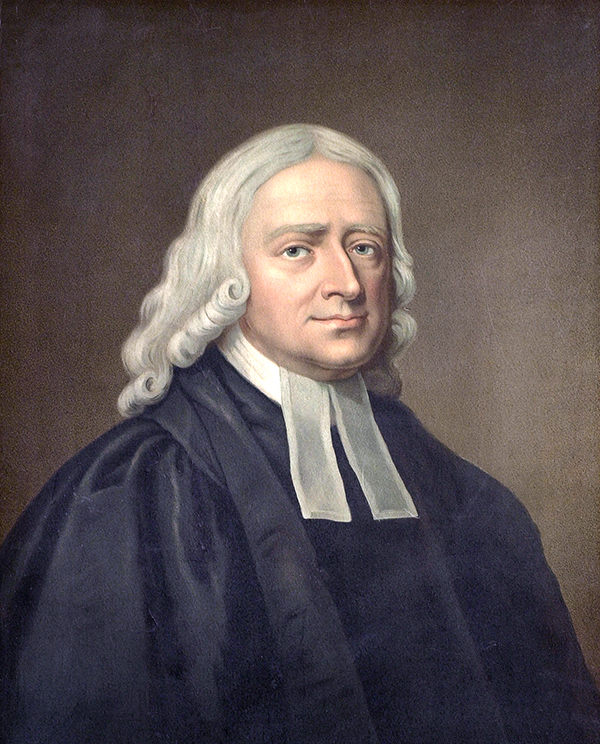
Morality is another way in which the Bible sculpted the Western way of living, in that there was a return to a more civilized society every time a movement was led by the Holy Spirit and not by the hearsay of men. One notable time that Mangalwadi points out is John Wesley and his impact on England as a socially active preacher. Reminding people that there is a moral law written on the tablet of our hearts. This effect can also be seen when comparing Holland and India in the way the Bible’s influence, or the lack thereof, helped shape these two very different countries.

family-outdoor-happy-happiness-160994

Chapter 15: Family | Photo Cred: (5)

In this day and age, the idea of family is under serious investigation and scrutiny in the West. This is due to the rise in the LGBT+ movement that preaches that all sexual expressions of love are love. That no matter the combination of sexual partners, it still counts as equal to the original idea of what a family looks like.

In the Christian worldview, the monogamous family structure is central to what is directly taught in Scripture. Because of this model of the ideal family structure of one man and one woman in a mutually consensual relationship raising the next generation, the West thrived. As the culture carried on this idea generation by generation, they could rightly live in light of the original intent of God’s grand design. The Bible gave Western society a firm foundation to build a better world and that foundation was a proper understanding of the most functional family structure: the monogamous family.

clasped-hands-comfort-hands-people-45842

Chapter 16: Compassion | Photo Cred: (6)

Shifting his focus, Mangalwadi then pinpoints another key in the difference between those places that are influenced by the Bible and those that are not with the fact that compassion is an essential outpouring of Christian living. Unlike America for example, India has the karmic belief that the needy do not need to be helped because they have received what they sowed. Justice has had its way and the best thing is to let the needy sort out their karmic threads on their own without the aid of the more fortunate.

Yet Christ taught numerously that we ought to love our neighbor as ourselves, to help the poor, to serve the downtrodden, and to not neglect the needs of the weakest links in our own societies. Compassion is a key outpouring of God’s Word penetrating the hearts of humans as they live out what Christ taught. It is for this reason that Christians have made the most homeless shelters, hospitals, and orphanages than any other religious system in history by a long shot.

cyrus-mccormick-1

Chapter 17: Wealth | Photo Cred: (7)

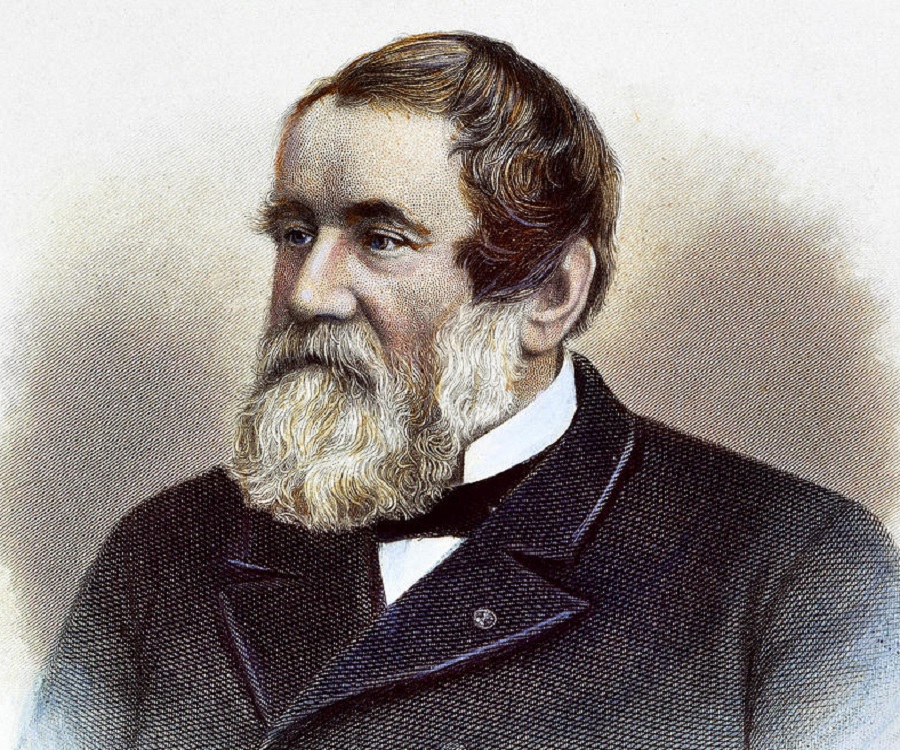
Concerning wealth, Mangalwadi argues that capitalism is a direct result of the Bible’s influence on the West in the economic sense. He believes that because of this influence, it created brilliant inventors like Cyrus McCormick who would go one to revolutionize the way farmers tended to their crops with the invention of horse-driven reapers . Mangalwadi argues that his influences of both growing up in a home that had strong Protestant influences such as John Calvin and his Puritan upbringing made McCormick the man that history knows him as now. Later on in his life, McCormick continued to influence the world by promoting the Bible in the local newspapers and when he changed the name of the Presbyterian Theological Seminary in Chicago to the now McCormick Seminary. True wealth stems from true wisdom and true wisdom is rooted in true worship unto the triune God.

Later on in the chapter, Mangalwadi makes the statement that “ambition is good, but it becomes greed when separated from moral absolutes (P. 321).” The idea of a free market economy and saving wealth for later, instead of either hiding it or throwing it away on quick pleasures was unheard of in these older days. Greed was far more commonplace as the rich would hide their wealth, instead of redistributing it back into the free market. As Ayn Rand would say and Mangalwadi would agree, “happiness is that state of consciousness which proceeds from the achievement of one’s values.” This specific chapter covers a lot of other ground too like foreign markets and the history of capitalism in the West, but you will have to read the book yourself to find Mangalwadi’s argument on the relation between the Bible and its influence in those areas as well.

Huguenot_Monument

Chapters 18 – 20: Liberty, Missions, & the Future | Photo Cred: (8)

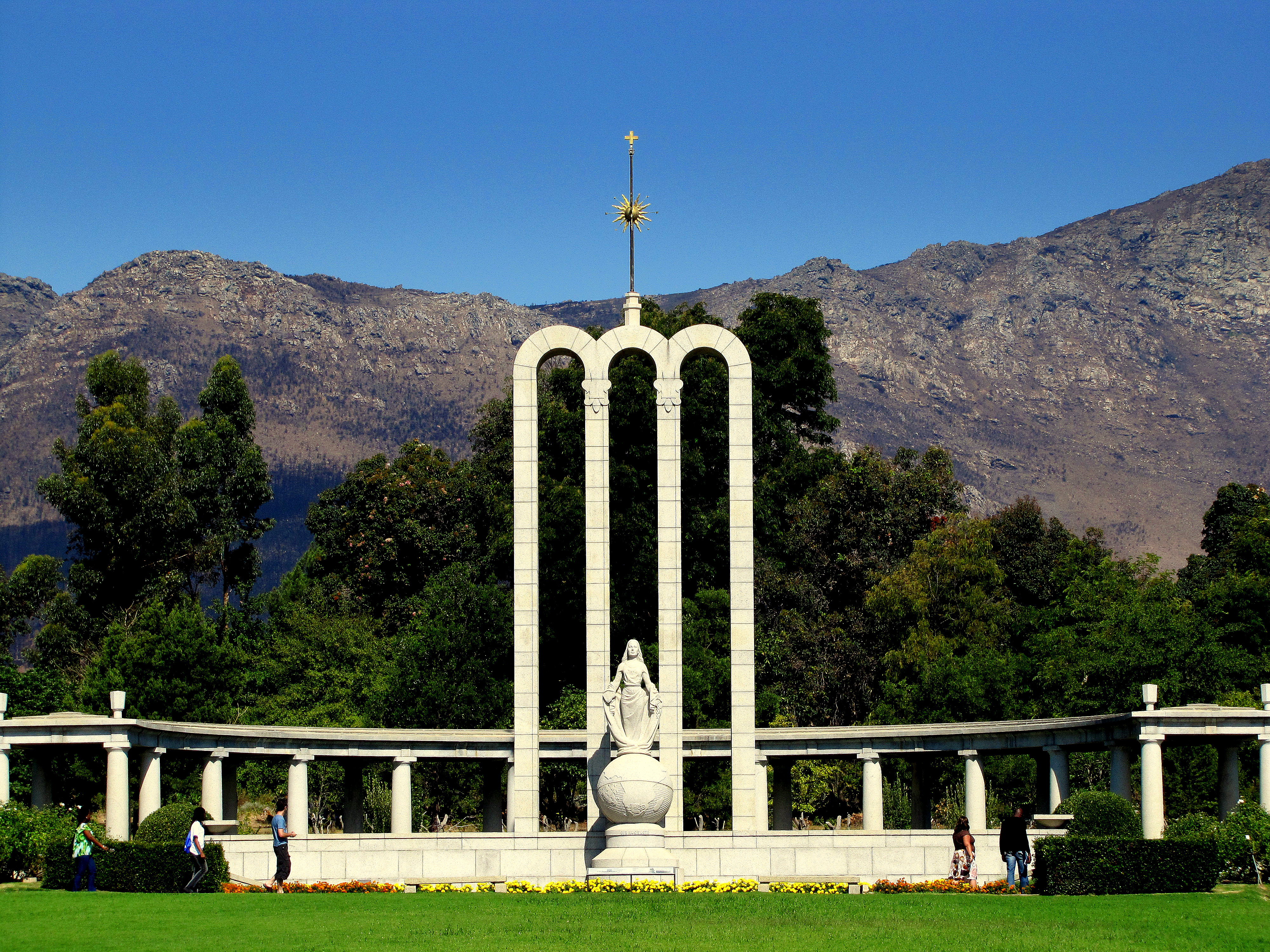
Jumping off of the free market section of the book, Mangalwadi ends by highlighting a few other key places that the Bible has influenced: the idea of liberty, Christian missions, and what lies ahead in the future. On the biblical idea of liberty, Mangalwadi makes the case that only the Bible could drive people like the Huguenots (French Calvinists) to construct the Huguenot monument in South Africa to commemorate their newfound freedom from the Wars of Religion where the strong woman holds a Bible firmly in her left hand. There is a reason Plato’s Republic and Aristotle’s Politics didn’t stir the hearts of the downtrodden to keep fighting for freedom. Only the Bible could invoke this sense of longing to be free like Adam and Eve once were in the garden of Eden.

On the subject of missions, Mangalwadi tells the story of how the introduction of the Gospel of John revolutionized an extremely remote tribe called the Hmars who lived in the dense forests that rest on the border between Myanmar (Burma) and India. The effect of missions work such as that done for the Hmars tribe is evidence of the effect that the Gospel can radically change even the most primal tribes of people and turn them into much more civilized people with the tools necessary to keep up with an ever changing world.  

Finally, the book ends with where the West is going now that these biblical principles are being abandoned in favor of other more tolerant worldviews. A direction that, if continued, could lead to a social and spiritual decay that we cannot recover from in the near future. Mangalwadi ends with an urgency to remind people of how the West was built in the first place. On the very spine of the Christian Scriptures leading and guiding us from darkness into light.

In summary, the Bible is the most influential book of all time and Mangalwadi does a pretty good job of showcasing that in his book. There is a lot of good information in this book and it’s worth the read for any who are curious on the Bible’s impact on history. Suffice to say, the Bible is the book that made your world. With that, Godspeed and Jesus bless!

Footnotes

  1. https://en.wikipedia.org/wiki/Vishal_Mangalwadi
  2. www.pexels.com
  3. www.pexels.com
  4. https://sites.smu.edu/cdm/bridwell/jwl/
  5. www.pexels.com
  6. www.pexels.com
  7. https://www.thefamouspeople.com/profiles/cyrus-mccormick-6675.php
  8. https://en.wikipedia.org
  9. Disclaimer


The Greater Than Argument

Photo Cred: (1) | Updated: 5/27/2019

A while back I wrote an argument for the doctrine of the Trinity called The Lovely Trinity Argument (2) and it was okay in retrospect. After further study and improvement in philosophical argumentation, I have a second argument for the doctrine of the Trinity. This new argument is called The Greater Than Argument. The argument goes as follows:

The Greater Than Argument

  1. Every human is a single person.
  2. God is greater than a human.
  3. Since God is greater than a human, He therefore must be multi-personal.
  4. The Christian Trinity is the best explanation of God’s multi-personal nature.
  5. Therefore, God is a tri-unity of persons, yet remains one nature.

Now this argument is meant to be presented after belief in God is philosophically proven. This can be done by showing the person that you are talking to any number of arguments for the existence of God. In the spirit of my argument, I think the Kalam-Cosmological Argument (3) makes the most sense as a foundation to then build off of and further understand who God logically must be if they exist. Although, one could just as easily use Norris Clarke’s World as an Interacting Whole Argument (4) or Peter Kreeft’s version of The Change Argument (5) first proposed by Thomas Aquinas in his famous Five Ways collection of philosophical arguments.

On the flip side, I also have an alternative version that is simply called The Alternate Greater Than Argument. This alternate version is more so meant to be used in broader contexts for those who don’t believe in God. The Alternate Greater Than Argument goes as follows:

The Alternate Greater Than Argument

  1. Every human is a single person.
  2. If God exists, then they would have to be greater than a human.
  3. If real, God would be multi-personal.
  4. The Christian Trinity is the best explanation of both God’s existence and His multi-personal nature.
  5. Therefore, God is a tri-unity of persons, yet remains one nature.

The basic concept for the Greater Than Argument was inspired by Alvin Plantinga’s philosophical work as a whole and a YouTube video from InspiringPhilosophy (6). I’d highly recommend those resources, along with James White’s book called The Forgotten Trinity. Both arguments have the exact same conclusion and start with the same first premise. Where they differ is in their next three premises, in order to get to the same conclusion.

It’s probably not going to become the most groundbreaking development in defense of the doctrine of the Trinity, but I would say it is a vast improvement over my first argument. Not only in its more focused nature, but also for the fact that it is a third of the length of that first argument (i.e. 15 point argument vs. 5 point argument). So the use of The Greater Than Argument or The Alternate Greater Than Argument in discussion will be far easier to defend in a dialogue, rather than The Lovely Trinity Argument because of said reasons mentioned above. Since the argument is shorter and more to the point, you can invest more time supporting the Christian worldview and get to a Gospel presentation sooner in conversation with others.

You may find it useful to use or might figure out a better way of defending the doctrine of the Trinity. Regardless, I hope it helps you out in some way. With that, Godspeed and Jesus bless!

Footnotes

  1. Free stock photos · Pexels
  2. https://chriscribariblog.com/2016/01/
  3. https://www.youtube.com/watch?v=6CulBuMCLg0
  4. http://www.peterkreeft.com/topics-more/20_arguments-gods-existence.htm#8
  5. http://www.peterkreeft.com/topics-more/20_arguments-gods-existence.htm#1
  6. https://www.youtube.com/watch?v=0G2S5ziDcO0

Christian Reconstructionism Examined

Photo Cred: (1) | Updated: 5/27/2019

As of late, I have noticed a strange phenomenon growing in the political climate. It’s one that concerns me because of its implications on American society and Christianity as a whole. That phenomenon is the Christian Right and its underlying belief by some within the movement in an ideology called Christian Reconstructionism. Before addressing the movement, let me properly define it and then get into why Christian Reconstructionism is a dangerous ideology that should not be upheld by Christians or those on any political platform.

6157kb7Jk-L._UX250_
R. J. Rushdoony | 1916 – 2001

Christian Reconstructionism is a theonomic movement that really began in the early twentieth century by a man named R. J. Rushdoony and flourished during the 1980s in American politics as it seeped into the Republican Party as a major driving force (2). They are similar to a political action committee (i.e. a PAC or Super PAC), but instead of primarily using money to influence the political process they twist Scripture to push their ideology. Rushdoony’s philosophy of Christian Reconstructionism was largely influenced by the fact that his family were victims in the Armenian Genocide of 1915 and his strong resistance to the New Deal proposed by Franklin D. Roosevelt in the 1930’s, which led him to creating this new form of Christian political involvement.

The basic philosophy of Christian Reconstructionism is the idea that any given nation must be run as a theocracy by Christians and only for Christians. Just to be clear, let me define a few terms before moving forward. A theocracy is a form of government where a nation is ruled by the divine order of some type of deity. A theonomy is how a theocracy is run by any given governing institution in power. The difference between the two terms would be “what it is” versus “how it is” from what I could gather online. A couple examples of theocratic government include, the Catholic Church in the Middle Ages and Islam in the Middle East.

So, why is this scary? Why is this such a problem that people still have this mentality, albeit only a small minority? Well, let’s quickly look at those two examples for a refresher on the negative side effects to a theocratic government.

Church
Source: https://strangenotions.com/is-the-catholic-church-a-force-for-good/

When it came to the Catholic Church, they essentially ruled Europe during the Medieval Ages and had complete control up until both the Reformation and later the Enlightenment that flipped the world upside down. As PBS put it, “the church reinforced the political authority of the states, and the states reinforced the authority of the church (3).” What this meant was that they worked together to enforce law. The government enforced the law of the land, while the Catholic Church enforced the law of the LORD. If one broke either law, then they broke both forms of law. Thus, they would not only receive punishment in this life, but also in the life to come afterwards.

Because of this political snare, the common people were apart of the faith in fear of the tyranny that loomed above them. If they did not believe in the Catholic faith, then they were subjected to torture or even death like those that were implemented during the Spanish Inquisition. This fear drove the commoner to live in utter submission to whatever the government said. Likewise, the government lived in utter submission to whatever the Catholic Church said because in those days, spiritual concerns superseded material matters.

Regarding Islam in the Middle East, it is much more extreme when compared to the Catholic Church not only by the length of time, but also by the amount of torture inflicted onto non-believers throughout history. These modern methods include, but are not limited to forcing LGBT+ persons to jump off of buildings to their death, genital mutilation of women, stoning, and so on. The goal for both of these theocratic governments was to sustain control over the region by whatever means necessary. For the purposes of this blog-post, I’ll leave further information regarding these theocratic forms of government up to you to research on your own.

Going back to where we started, this is what a theocratic government would look like if the Christian Reconstructionist had their way and why it is a danger to the American way of life. Under theocratic rule, every American would have to be Christian or suffer the severe consequences for believing otherwise. Not only that, but a very specific type of Christian that upholds certain beliefs like rejecting antinomianism (opposite of legalism), upholding presuppositionalism (opposite of evidentialism), and affirming postmillennialism to name a few.

progressive-revelation
Source: https://www.gotquestions.org/progressive-revelation.html

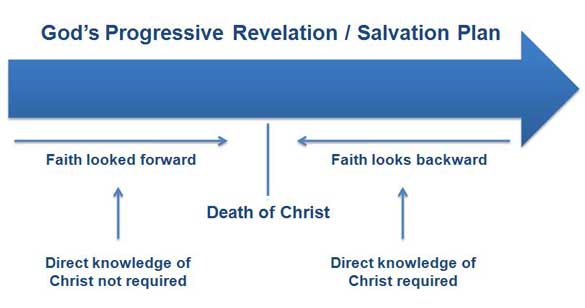
The Torah, the first 5 books of the Bible, would become the new rule of law and it would be barbaric to say the least in its application to 21st century civilization. Things such as interracial marriage, individual autonomy, and even modern women’s rights would be abolished. In other words, the philosophy of Christian Reconstructionism reapplying the Old Testament Law as the new law in American society is the equivalent of reapplying the use of horses instead of modern-day subways for transportation. They had their use and importance in history, but their need in today’s society is no longer applicable as the world has advanced beyond that phase of human civilization (4).

At the time, the Old Testament Law was amazing when compared to the horrific cultures that surrounded the region. Other nearby nations like the Hittites and the Canaanites were absolutely wicked, so God commanded the Israelites to live differently in almost every way than these other cultures lived. This is why the Old Testament Law existed in the first place: to fulfill the Hebrew’s part of the Old Covenant. If the Israelites obeyed God, then they would be blessed beyond belief under this covenant. If they didn’t keep the covenant, then they would receive the repercussions of their actions in full (5).

Fast-forward to the times of Christ when the Old Covenant is turned obsolete as Jesus introduces the New Covenant not just with the Hebrews, but with all of mankind (6). Hence, the Christian Reconstructionist’s major selling points on their particular philosophy are in direct conflict with crucial biblical truths in Scripture. The Old Covenant is no longer necessary and yet the Christian Reconstructionist advocates the reintroduction of the old way of relating to God.

As history can attest, when the political and the spiritual are unnaturally bent into a particular agenda we all lose. When it comes to Christian Reconstructionism, this just happens to be one of many attempts to do just that. Forcing someone to live a certain way in spite of their convictions in order to show them what you believe is a better way is not loving, but tyranny. In the name of freedom, there must be flexibility. In the specific case of Americans, what could be better than each and every one of us freely doing as we will to do, without infringing on the dignity innate in others. Sharing ideas rather than controlling them to fit within certain boundaries that favor one sect, while simultaneously oppressing another.

So what is the solution to a theonomous culture? Well, there are only two other options: a heteronomous culture (totalitarianism) and an autonomous culture (libertarianism). For the sake of brevity, America began as a theonomous culture with the mutual belief in the natural law of God giving us unalienable human rights, but has overtime become an autonomous culture where the rights of the individual matter more than the rights of the collective group. Act, believe, and think how you want, but without stepping on the toes of another person’s freedom to do the same.

As I noted earlier, American politics and Christian Reconstructionism are simply not compatible. The movement would only cause more harm than help in the grand scheme of things. When choosing between compromise and extremism in the game of politics, compromise is always the better way out. Compromise is the reason that we as Americans can proudly say that we freely pursue life, liberty, and the pursuit of happiness. With that, Godspeed and Jesus bless!

Footnotes

  1. Free stock photos · Pexels
  2. http://www.religioustolerance.org/reconstr3.htm
  3. http://www.pbs.org/godinamerica/people/catholic-church.html
  4. The idea that I am referring to in this section of my blog-post is called progressive revelation. It is a common concept in both Christianity and Islam. Read more about it here.
  5. Deuteronomy 30:15-20
  6. Luke 22:20

The Book That Made Your World: Review and Summary Part 1

Photo Cred: (1) | Updated: 5/27/2019

This blog-post was commissioned by Marjorie Wall-Hofer who is a member of my former church called Peace Mennonite Community Church (2). This will be different than other blog-posts in that I will be reviewing and summarizing a book called The Book That Made Your World by Vishal Mangalwadi (3). To be honest, I had never heard of him or his oddly titled book beforehand, but I went for it and thoroughly enjoyed it for the most part. There were a few minor issues I had with the book, but they are too minut to mention every single one in detail.

Primarily, my issues with the book were either grammatical spelling errors (i.e. “bcome” vs. “become”) or jumps in logic to unproven conclusions. Yet, those issues were brief and were my only nitpicks with the book itself. There was also the fact that it reads like an encyclopedia of information as it goes from subject to subject like a textbook of sorts. Then again, I guess there was no way around that problem either considering the subject matter in the first place.

Mangalwadi’s The Book That Made Your World is a very informative take on the Bible’s influence in twenty key areas of the human experience like the origins of science to the concept of compassion in the face of utter barbarism in the early first century. Its aim was to show how the Bible has shaped the West in some of the most profound ways imaginable, even in some ways unexpectedly. In that respect, the book succeeds. Although it does tend to lack the artistic appeal of more expressive writers.

Related image

Chapter 1: The West Without Its Soul | Photo Cred: (4)

The book begins with how the Bible was crucial in the conceptual development of the human soul. Comparing both Johann Sebastian Bach and Kurt Cobain from Nirvana, we see a stark contrast in their lives and striking similarities. Bach’s biblical upbringing versus Cobain’s Buddhism, which led to his belief in Nihilism later in life.

For Bach, his worldview produced some of the most celebrated classical music of all time that gave a sense of hope to its audience as they admired the art of his compositions. For Cobain, his worldview led to producing music that bears nothing meaningful or worthwhile in substance. The soul can express itself best through music and music allows us to see into the souls of one another. The Bible shapes our souls into redeemed wretches, while its absence allows our souls to rot in utter decay. On the one hand, everlasting life and on the other a life that left too soon.

Related image

Chapter 2: Service | Photo Cred: (5)

The next chapter focuses on the biblical value of service when compared to other worldviews. Drawing from his own experiences growing up in India, Mangalwadi explains how someone who lives out the statutes of the Bible in a real-world way will see their whole outlook on life change as they do less for themselves and more for others in the name of Christ. While others worry about getting to the other side where the grass is always greener, Christ compels His followers to seek out those whose grass is not so green and to help them flourish as they soak in the love of the Son. The world promotes self-love for our own good, but Christ commands selfless love as we serve others for the greater good.

Image result for journey

Chapters 3 – 4: Quest and Self | Photo Cred: (6)

Mangalwadi continues into more particular ways in which the Bible has influenced and helped make the modern West by going into the quest of life, along with our role in that quest as free creatures. The Bible helped give humans the ultimate quest in life: to be known by God, to know God, and to make God known. In the same respect, it also gives us a true sense of self as we now know that we are neither equal to God nor to a dog, but rather exist in the middle of the spiritual and the natural.

We are free creatures that create like our Creator and yet are the cherry on top of Creation itself. He asserts that “I am a creative creature” and a free one at that too as we journey on our unique quests into the unknown reaches of what truly makes us human. As we draw close to God, we at the same token draw close to a proper understanding of ourselves in light of His light: the Word of God.

Image result for george lemaitre

Chapters 5 – 6: Humanity and Rationality | Photo Cred: (7)

From here, Mangalwadi touches on our humanity and rationality as self-conscious beings. When it comes to humanity in particular, the Bible was the very spark that ignited the Renaissance, along with the reintroduced idea of human dignity. Even in the most cruel cases of people living in rejection to God in history, our human dignity cannot be erased from the human consciousness. It remains an ever-present element in our lives as a mark that we were made for more.

For rationality, the greatest movements post-11th Century Europe all involved in some shape or form a strong emphasis on learning, especially through reading and writing. This can be traced back to Augustine, Boethius, William Tyndale, and other brights that sought to bring the truths of Scripture to the commoners who lived in ignorance. It was people like these who brought about new generations of free thinkers that could now test the claims of the corrupt and powerful.

Image result for lateen sail

Chapters 7: Technology | Photo Cred: (8)

When it came to the advancements of technology throughout the ages, notable scholar Ernst Benz clearly pinpoints the four key ways that a Judeo-Christian worldview helped the development of technology on a worldwide scale. His reasoning is summarized below by Mangalwadi:

“First, the Bible emphasized intelligent craftsmanship in the world’s design. Second, the Bible suggested that human beings participate in divine workmanship by being good artisans themselves. Third, the Bible taught that we follow divine example when we use the physical universe for righteous ends. And fourth, the Bible challenged the West to use time wisely, because each moment is a valuable, one-time opportunity (P. 97).”

In short, most of the most important inventions of the last several centuries can be attributed to a Biblical worldview that fueled the passion of many inventors over time. These inventions include the lateen sail, the wheeled plow, the horse as a tool in the workforce, the water mill, the windmill, the crank, the wheelbarrow, the flywheel, the pipe organ, the mechanical clock, eyeglasses, and dozens of other inventions that are the basis of Western technological advancements.

avengers

Chapter 8: Heroism | Photo Cred: (9)

The idea of a hero has changed as the culture in Western society has transformed with the passing of time. The classical hero exemplified the traits that would be expected of the Greco-Roman mentality and that meant powerful leverage over others, whether politically, militarily, or any other barbaric means necessary to control those beneath you. The medieval hero was the next idea of heroism and they sought glory, skill, prowess, loyalty, generosity, and courtesy. This eventually led to what is known as religious chivalry and this was basically the equivalent of placing a spiritual mask onto a sinful practice.

That is, fighting for the LORD would guarantee salvation, which was a lie. This idea has evolved into what is known today and what I like to call “good-person salvation.” The idea that because someone “lives a good life” and is a “good person,” that they will inherit eternal life in Heaven. As this idea flourished over the years, it was the Reformers of the 15th and 16th centuries who brought back the idea of true heroism. A heroism based off of Christ himself and His selfless sacrifice for his enemies. This is the backbone behind what most people refer to in Western society as a real hero: someone who is sacrificial, loving, true, and giving to those in need.

Image result for reformation

Chapter 9: Revolution | Photo Cred: (10)

A true revolution is one that either goes back to the way things were or changes the culture into something better. The Protestant Reformation was one of the most influential revolutions because it did both. This revolution was different in a sense from other revolutions because it started from the top and worked its way down.

Starting in universities and growing in pubs all across Europe, this revolution stood firmly on God’s Word as its source of reform. The reformers consisted of a team of ragtag “heretics” who just wanted the Word to be the final say in the World, even greater than the Pope. The result of the revolution? Two Bible translations for the commoner, the Geneva and the KJV, along with the most powerful force in any society: an informed public.

Well that’s just half of my review and summary of The Book That Made Your World! Stay tuned for Part 2 and the rest of my thoughts on this book. With that, Godspeed and Jesus bless!

Footnotes

  1. https://www.facebook.com/VishaMangalwadi
  2. http://peace-mennonite.org/
  3. http://amzn.to/2wlAnCZ
  4. http://movies.ndtv.com/photos/forever-27-kurt-cobain-would-have-been-46-yesterday-10981
  5. http://www.nlb.gov.sg/sure/a-good-deed-goes-a-long-way/
  6. https://rgyan.com/blogs/omens-while-starting-for-a-destination/
  7. http://thelibertariancatholic.com/raising-your-child-with-the-bible-you-may-be-raising-an-atheist/
  8. https://hhswhi.wikispaces.com/Lateen+sail
  9. Captain America: Civil War (2016)
  10.  https://thecompassmagazine.com/adventism/reformation-and-the-remnant-a-review