Photo Cred: (1) | Updated: 6-17-2026
This is a substack my brother-in-law, Bradford Ruiz-Austin, wrote and I figured it would be cool to add here too. We originally talked a few months ago about having him post on my blog and this topic came up for both of us in different ways. This is his take on the concept of multi-cultural marriage. Below are all of his thoughts, but I did edit some sentences for grammar only. With that, here’s his post:
–
Multi-cultural marriage in God’s intended multi-cultural church. On Loving Day, Shephelah and the work God has always intended for his people.
“For he is our peace, who made both groups one and tore down the dividing wall of hostility.” (Ephesians 2:14 CSB)
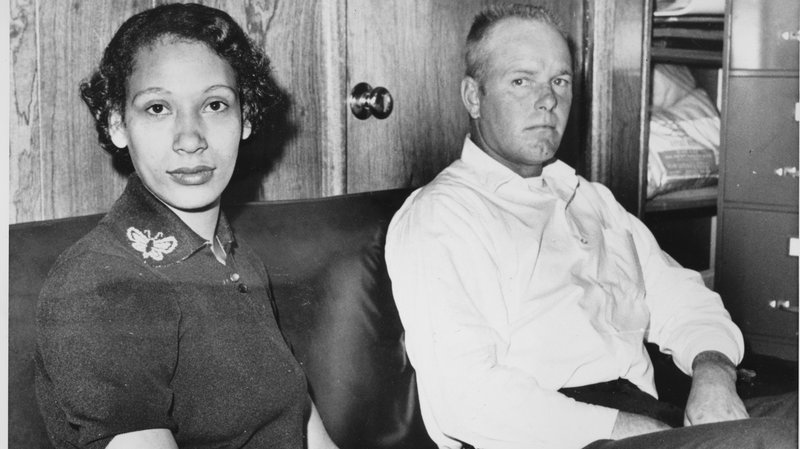
This year I celebrate 10 years of marriage. And for the unfamiliar, today is Loving Day, a national holiday marked as the celebration of the 1967 US Supreme Court decision in the case of Loving v. Virginia to allow Richard Perry Loving, a white male, to marry Mildred Delores Jeter, an African and Native American woman, striking down laws banning interracial marriage throughout the whole country. I’m a millennial, a young one at that, 1967 is well before my birth year.
My paternal grandparents were married in 1963, my grandfather an American citizen, stationed in the Philippines, he met and married my grandmother, a Filipino woman. Until this ruling, depending on where they moved in the States at the time, it could’ve been seen as illegal, with every possibility to lead to their arrest, just like the Lovings had to face.
And so I celebrate that 59 years ago, somebody was willing to fight for them, for all of us, so that today I could be married to the love of my life. And that we’re celebrating 10 years of marital bliss, in no small part, thanks to their efforts. My wife and I are an interracial couple, a multicultural marriage (and yes, our kids are beautiful).
In the first testament (the Old Testament as many would call it), this was also “illegal”. It was a sin for the people of God, the Israelites, to marry a foreign person (see Deuteronomy 7 (yes, I know I gave you a specific chapter unlike usual if you’re used to reading my stuff, you’re welcome)), but (for the “Bereans” in the room) that was a different scenario. It had nothing to do with race or ethnicity, it was about religious and cultural purity to their laws. Yet even in its “frowned upon” state, it occurs multiple times in the OT, in a beautiful way. Moses and Zipporah, Rahab and Salmon, Ruth and Boaz.
These are some key figures we’re probably all familiar with (well you might not know Salmon off the top of your head, but you’ve probably heard how both Rahab and Ruth, foreign women to the Israelites, end up in the lineage of the Christ, Jesus). Think back to the story of Ruth. Not in the stereo-typical women’s conference way, but in the ground- breaking-faithfulness-and-boldness way. Ruth abandoned her family and tradition in pursuit of what she discovered to be true: the God of Israel, the community of her family even just of her mother-in-law. A multicultural marriage in a culture that would have likely quickly cast them out if they weren’t all busy “doing what was right in their own eyes” in those times.
Besides the fact that we’re separated by thousands of miles and years, Ruth feels so different because I can’t even manage to leave behind the things I know I don’t need anymore, let alone everything. Over the past 10 years, I’ve had a hard enough time letting go of some of the things I’ve culturally grown up with that I don’t even see the need for (or possibly agree with). For example, my family of origin, especially my extended family, have always had a tendency to passionately argue about topics they agree on. They could be saying the same thing, sometimes even the same way, and take turns back and forth yelling about it. That’s just how my family runs. It’s in our blood, it’s the culture of who we are.
Now don’t get me wrong, I love my parents, and there are plenty of things to appreciate them for, and to carry on. And (just like all of us) there are things I should throw off. The truth is, sometimes I still find myself raising my voice or talking more intensely about something I entirely agree with my wife about. I get that from my mom’s side. But more often I find that while my wife and I did grow up in different cultures, we have so much more (and are consistently adding more daily/weekly/monthly/yearly) in common, than we did in our “separate” cultural identities. There’s a shared space that I wasn’t originally aware of, and I found its roots all the way back in the allocation of the land to the Israelites:
“Resume your journey and go to the hill country of the Amorites and their neighbors in the Arabah, the hill country, the Judean foothills, the Negev and the sea coast — to the land of the Canaanites and to Lebanon as far as the great river, the Euphrates River. See, I have set the land before you. Enter and take possession of the land the LORD swore to give to your ancestors Abraham, Isaac, and Jacob and their future descendants.’” (Deuteronomy 1:7-8 CSB)
If you didn’t find it there, don’t worry, I’ve only within the past year or two learned about it, because it doesn’t sound that exciting all on its own. But it’s one of my favorite biblical truths I’ve recently encountered: להָפֵשְּהַ, Shephelah. Translated here as “the Judean Foothills“. Geography doesn’t usually fascinate me, but in this case it does.
If you still don’t quite get it, that’s okay. But this Shephelah (the Judean Foothills) has become such a beautiful picture to me because I’ve come to see how it’s a geographical example of the reality that God always intended for the world, with all of its various cultures and peoples, to worship him together.
So now that we’re oriented, the thing that is so beautiful to me about the Shephelah is that the highway from Egypt to Assyria passes through the promised land, right in this spot. Two ancient super powers of culture and prestige, them best way to get from one to another was to travel through a land with a people unlike any of the others. In a polytheistic world, they were a monotheistic culture. In a world of getting ahead, they were looking out for one another. They were a light to the world, a “city” set on the (foot)hills. And you can see Babylon off to the East as well; the image of the Shephelah seems to persist through the rise and fall of every empire, regime change, and oppressive culture throughout the whole history of the Bible.
This was no mistake; it was divinely ordained intentionally. The Shephelah was a calling, it wasn’t just a location. It was a calling to serve the one true God, it was a calling to love your neighbor as yourself, it was a calling to care for the foreigner, the orphan, the widow, and to show others how to do the same. It was a calling to have the same law for the Israelite and the immigrant alike.
God directly placed his people in the middle of the path, in the one spot, that every empire from North to South and East to West had to walk through. It was a geographical mission statement. And Ruth, the Moabitess, and Boaz the Israelite, a descendant of Judah, meet in this exact geography, both spiritually and physically. And they live the mission statement.
Boaz had no need to fulfill the role of kinsmen-redeemer for Ruth, it wasn’t of direct benefit to him. In fact, we know from their story, that it was potentially jeopardizing to his own lineage, that’s why he even has the opportunity in the first place. But this man knew his calling. He lived on mission enough to recognize the widow(s) that were right there beside him, and that he had the capacity to do something about it. So he made a way for them.
Then consider Ruth, who had no need to leave behind everything to follow her mother-in-law (I’d insert a stereotypical mother-in-law joke here, but I’ve got nothing. I’m glad to have her in my life and for who she is!). By all accounts, she wasn’t even tied into this new family all that deeply by time or blood. Trauma bonded? Sure. But that wasn’t enough to keep Orpah around (who, by the way, was no less important than Ruth. She listened to exactly what her mother-in-law asked of her, and left weeping, honoring her by her obedience to the plain request as it was given to her).
No, Ruth also understood the mission. She caught the vision. The opportunity for something greater by merging, adding, learning, living together in this new community. One formed by faith, not just by blood. A wall of reasons not to be with each other, a law that even forbade it; they saw in each other something more than the trials they’d faced already or would ahead of them.
It’s not documented, but I’m sure they had arguments, whether they were yelling about things they actually agreed with each other on (again, guilty as charged!), or quietly giving each other the cold shoulder when they didn’t align. Whether they had passions about where they came from, what they had been given that they wanted to pass down to their children, or not to force their children to experience, they each had a past.
Two histories, two cultures. Made one in the divine covenant of marriage. The walls had come down between them, they had the opportunity to become something new. Parts of this culture, bits of that upbringing, centralized in one new marriage. The multicultural marriage that eventually led to David, eventually led to Jesus: a blessing to all the world. A picture to me today.
They didn’t erase their history, they combined it. They didn’t lose their identities, they found it. They saw the grand design. And a chance to השם קידוש, (Kiddush Hashem: “hallow the name“). And in some strange way, separated in time, place, and circumstance, my marriage has the same opportunity. Not the same people groups, but sharing the same purpose. It was always God’s intentional design for Israel, and is still his intended design for his people in his church, to be multicultural. Every tribe, every tongue, every nation.
So happy 10th Loving Day to you, my wonderful wife, Rachel. May our marriage this year continue to grow in the ways you already see the world, an opportunity to love the needy around us, an opportunity to serve God in faithfulness. And may it be so for you too, my fellow Christian.
–
I love having others write on my blog and share their own thoughts. Even though this is my blog, it’s fun to have guests come along and show new insights in life and theology. Thanks again Brad for posting and here’s to many more years of multi-cultural marriage! With that, Godspeed and Jesus bless.


