Loving Day | Bradford Ruiz-Austin

Photo Cred: (1) | Updated: 6-17-2026

This is a substack my brother-in-law, Bradford Ruiz-Austin, wrote and I figured it would be cool to add here too. We originally talked a few months ago about having him post on my blog and this topic came up for both of us in different ways. This is his take on the concept of multi-cultural marriage. Below are all of his thoughts, but I did edit some sentences for grammar only. With that, here’s his post:

Multi-cultural marriage in God’s intended multi-cultural church. On Loving Day, Shephelah and the work God has always intended for his people.

For he is our peace, who made both groups one and tore down the dividing wall of hostility.” (Ephesians 2:14 CSB)

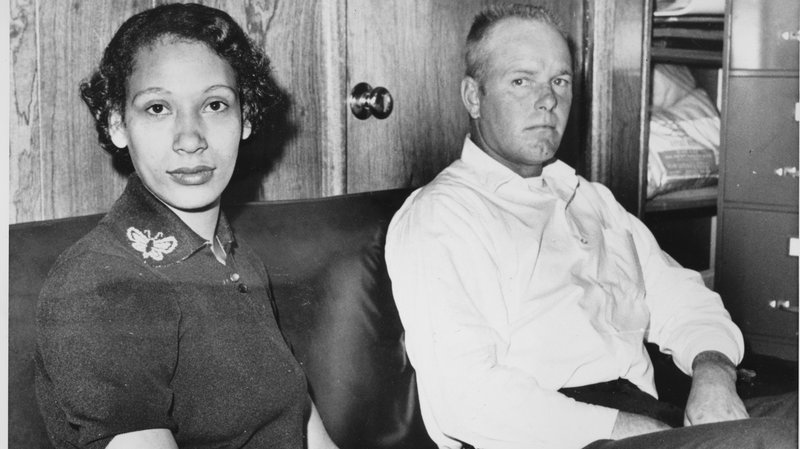
This year I celebrate 10 years of marriage. And for the unfamiliar, today is Loving Day, a national holiday marked as the celebration of the 1967 US Supreme Court decision in the case of Loving v. Virginia to allow Richard Perry Loving, a white male, to marry Mildred Delores Jeter, an African and Native American woman, striking down laws banning interracial marriage throughout the whole country. I’m a millennial, a young one at that, 1967 is well before my birth year.

My paternal grandparents were married in 1963, my grandfather an American citizen, stationed in the Philippines, he met and married my grandmother, a Filipino woman. Until this ruling, depending on where they moved in the States at the time, it could’ve been seen as illegal, with every possibility to lead to their arrest, just like the Lovings had to face.

And so I celebrate that 59 years ago, somebody was willing to fight for them, for all of us, so that today I could be married to the love of my life. And that we’re celebrating 10 years of marital bliss, in no small part, thanks to their efforts. My wife and I are an interracial couple, a multicultural marriage (and yes, our kids are beautiful).

In the first testament (the Old Testament as many would call it), this was also “illegal”. It was a sin for the people of God, the Israelites, to marry a foreign person (see Deuteronomy 7 (yes, I know I gave you a specific chapter unlike usual if you’re used to reading my stuff, you’re welcome)), but (for the “Bereans” in the room) that was a different scenario. It had nothing to do with race or ethnicity, it was about religious and cultural purity to their laws. Yet even in its “frowned upon” state, it occurs multiple times in the OT, in a beautiful way. Moses and Zipporah, Rahab and Salmon, Ruth and Boaz.

These are some key figures we’re probably all familiar with (well you might not know Salmon off the top of your head, but you’ve probably heard how both Rahab and Ruth, foreign women to the Israelites, end up in the lineage of the Christ, Jesus). Think back to the story of Ruth. Not in the stereo-typical women’s conference way, but in the ground- breaking-faithfulness-and-boldness way. Ruth abandoned her family and tradition in pursuit of what she discovered to be true: the God of Israel, the community of her family even just of her mother-in-law. A multicultural marriage in a culture that would have likely quickly cast them out if they weren’t all busy “doing what was right in their own eyes” in those times.

Besides the fact that we’re separated by thousands of miles and years, Ruth feels so different because I can’t even manage to leave behind the things I know I don’t need anymore, let alone everything. Over the past 10 years, I’ve had a hard enough time letting go of some of the things I’ve culturally grown up with that I don’t even see the need for (or possibly agree with). For example, my family of origin, especially my extended family, have always had a tendency to passionately argue about topics they agree on. They could be saying the same thing, sometimes even the same way, and take turns back and forth yelling about it. That’s just how my family runs. It’s in our blood, it’s the culture of who we are.

Now don’t get me wrong, I love my parents, and there are plenty of things to appreciate them for, and to carry on. And (just like all of us) there are things I should throw off. The truth is, sometimes I still find myself raising my voice or talking more intensely about something I entirely agree with my wife about. I get that from my mom’s side. But more often I find that while my wife and I did grow up in different cultures, we have so much more (and are consistently adding more daily/weekly/monthly/yearly) in common, than we did in our “separate” cultural identities. There’s a shared space that I wasn’t originally aware of, and I found its roots all the way back in the allocation of the land to the Israelites:

Resume your journey and go to the hill country of the Amorites and their neighbors in the Arabah, the hill country, the Judean foothills, the Negev and the sea coast — to the land of the Canaanites and to Lebanon as far as the great river, the Euphrates River. See, I have set the land before you. Enter and take possession of the land the LORD swore to give to your ancestors Abraham, Isaac, and Jacob and their future descendants.’” (Deuteronomy 1:7-8 CSB)

If you didn’t find it there, don’t worry, I’ve only within the past year or two learned about it, because it doesn’t sound that exciting all on its own. But it’s one of my favorite biblical truths I’ve recently encountered: להָפֵשְּהַ, Shephelah. Translated here as “the Judean Foothills“. Geography doesn’t usually fascinate me, but in this case it does.

If you still don’t quite get it, that’s okay. But this Shephelah (the Judean Foothills) has become such a beautiful picture to me because I’ve come to see how it’s a geographical example of the reality that God always intended for the world, with all of its various cultures and peoples, to worship him together.

So now that we’re oriented, the thing that is so beautiful to me about the Shephelah is that the highway from Egypt to Assyria passes through the promised land, right in this spot. Two ancient super powers of culture and prestige, them best way to get from one to another was to travel through a land with a people unlike any of the others. In a polytheistic world, they were a monotheistic culture. In a world of getting ahead, they were looking out for one another. They were a light to the world, a “city” set on the (foot)hills. And you can see Babylon off to the East as well; the image of the Shephelah seems to persist through the rise and fall of every empire, regime change, and oppressive culture throughout the whole history of the Bible.

This was no mistake; it was divinely ordained intentionally. The Shephelah was a calling, it wasn’t just a location. It was a calling to serve the one true God, it was a calling to love your neighbor as yourself, it was a calling to care for the foreigner, the orphan, the widow, and to show others how to do the same. It was a calling to have the same law for the Israelite and the immigrant alike.

God directly placed his people in the middle of the path, in the one spot, that every empire from North to South and East to West had to walk through. It was a geographical mission statement. And Ruth, the Moabitess, and Boaz the Israelite, a descendant of Judah, meet in this exact geography, both spiritually and physically. And they live the mission statement.

Boaz had no need to fulfill the role of kinsmen-redeemer for Ruth, it wasn’t of direct benefit to him. In fact, we know from their story, that it was potentially jeopardizing to his own lineage, that’s why he even has the opportunity in the first place. But this man knew his calling. He lived on mission enough to recognize the widow(s) that were right there beside him, and that he had the capacity to do something about it. So he made a way for them.

Then consider Ruth, who had no need to leave behind everything to follow her mother-in-law (I’d insert a stereotypical mother-in-law joke here, but I’ve got nothing. I’m glad to have her in my life and for who she is!). By all accounts, she wasn’t even tied into this new family all that deeply by time or blood. Trauma bonded? Sure. But that wasn’t enough to keep Orpah around (who, by the way, was no less important than Ruth. She listened to exactly what her mother-in-law asked of her, and left weeping, honoring her by her obedience to the plain request as it was given to her).

No, Ruth also understood the mission. She caught the vision. The opportunity for something greater by merging, adding, learning, living together in this new community. One formed by faith, not just by blood. A wall of reasons not to be with each other, a law that even forbade it; they saw in each other something more than the trials they’d faced already or would ahead of them.

It’s not documented, but I’m sure they had arguments, whether they were yelling about things they actually agreed with each other on (again, guilty as charged!), or quietly giving each other the cold shoulder when they didn’t align. Whether they had passions about where they came from, what they had been given that they wanted to pass down to their children, or not to force their children to experience, they each had a past.

Two histories, two cultures. Made one in the divine covenant of marriage. The walls had come down between them, they had the opportunity to become something new. Parts of this culture, bits of that upbringing, centralized in one new marriage. The multicultural marriage that eventually led to David, eventually led to Jesus: a blessing to all the world. A picture to me today.

They didn’t erase their history, they combined it. They didn’t lose their identities, they found it. They saw the grand design. And a chance to השם קידוש, (Kiddush Hashem: “hallow the name“). And in some strange way, separated in time, place, and circumstance, my marriage has the same opportunity. Not the same people groups, but sharing the same purpose. It was always God’s intentional design for Israel, and is still his intended design for his people in his church, to be multicultural. Every tribe, every tongue, every nation.

So happy 10th Loving Day to you, my wonderful wife, Rachel. May our marriage this year continue to grow in the ways you already see the world, an opportunity to love the needy around us, an opportunity to serve God in faithfulness. And may it be so for you too, my fellow Christian.

I love having others write on my blog and share their own thoughts. Even though this is my blog, it’s fun to have guests come along and show new insights in life and theology. Thanks again Brad for posting and here’s to many more years of multi-cultural marriage! With that, Godspeed and Jesus bless.

Ecclesiastes: Wisdom in a Meaningless World | 11-6-2022

Photo Cred: (1) | Updated: 7/21/2024

Sermon Prep

I’m usually not one for the charismatic wing of Christianity, but on October 31st of 2022 I journaled a prophetic dream I had the night of the 30th. I’ve had dreams from God like this before, but very rarely. Maybe less then a handful of times in my life where I see what will happen and yet it feels like déjà vu all at the same time.

In this dream, here’s what I remembered and jotted down on Halloween morning:

“Had a beautiful dream this past night. Glory and I were in a hospital. She was in the bed restfully watching me cradle our newborn daughter, Willow. I was standing and rocking her to sleep. As I did that, I sang her a lullaby. It went like this:

My Willow bee, my Willow tree.

Dancing in the wind with me.

Then the dream abruptly ended. It felt so real. I can’t wait to dance with my Willow.”

Fast forward to now and my wife is nearly 28 weeks pregnant with our baby girl who is due October 17th. It’s almost to the day that God gave me that initial dream 2 years ago. It’s so strange seeing how things have played out so far and we cannot wait to meet our baby Willow.

In the everyday of this season, we had immediate big changes in life too. On November 1st, we signed for our very own apartment for just the two of us. We didn’t mind having my best friend Daniel be our roommate, but we needed our own space for our own family and found one.

It’s ironic posting this given the nature of the world right now and how foolish everything seems. I remember this was one of those messages where I felt foolish for trying to tell everyone what wisdom was in life. What would a guy like me know about wisdom when I haven’t wised up myself? Regardless, here’s the notes I had for this one below.

Sermon Notes

Opening Line

  • CFS story of terrible writer succeeding
  • Dropped out to help youth group; gave up
  • The fool prospered, but the upright lost

Intro

  • Read Psalm 92 out loud together

Transition to Main Point

  • What’s wisdom in a meaningless world?

Main Point

  • 1) God has a design for everything
  • Read Ecclesiastes 10:2
  • There’s a right and wrong way to life.
  • Read Ecclesiastes 7:12
  • “Privilege isn’t money, it’s info.” – Nathan Smith
  • Wisdom is knowing God’s design and living well within that way of life.
  • 2) Sin leads to brokenness/meaninglessness
  • Read Ecclesiastes 7:29
  • All people have chosen evil over good.
  • Read Ecclesiastes 9:11-12
  • No good you do can overcome an evil world.
  • 3) The Gospel is the answer
  • Read Ecclesiastes 9:13-16
  • This passage parallels the life of Jesus.
  • Wisdom is a person and we trust him.
  • 4) The Gospel allows us to recover and pursue God’s wise design
  • Read Ecclesiastes 8:12-13, 15
  • Evil will have its end eventually, so live well within God’s wise design.

Why It Matters

  • The Gospel is our guide to a good life.
  • For those of you who don’t know it:
  • 1) God made everything good.
  • 2) We made everything bad.
  • 3) Jesus has made and will make everything better.
  • 4) Now we believe in what Jesus did and trust him with what he’s going to do for our best.
  • In order to live by God’s wise design, we have to accept the Gospel.
  • Once accepted, you’ll find the right way and a wise life.

Final Thoughts

Conceptually, I see what I was going for here. The ingredients are there for something interesting, yet the mixture is a bad batch. I often do that when I don’t know what I’m talking about, I go broad with the vague concept and only reach a few. But if I went specific with the idea and really lean into the applicability of it, then many would have been reached by this message.

Like with any communication, universal appeal is found in the specific reveal. Again, I just wasn’t at a spiritual maturity to share this message and provide that specific reveal of truth. With that, Godspeed and Jesus bless.

Footnotes

  1. Community College of Aurora, Lowry Campus

Philippians: I Can’t Do All Things | 7-3-2022

Photo Cred: (1) | Updated: 5/26/2023

Sermon Prep

Last time I mentioned that life was so busy leading up to my wedding that I had only journaled twice in-between sermons. Well since late-June of 2022 up until the day of this sermon, I journaled nothing. I was doing the final weeks of prep before my USS Nationals show on June 25th in New Hampshire and that last minute training ate up a good chunk of my time. Of course the upcoming wedding ate up the rest, so with the little time post-competition I penned this message.

My final placing was 2nd to last for that show. I beat one guy in the Open Men MW (198-) class and gave arguably my worst Strongman performance ever in competition zeroing 3 of the 5 events. It was quite the dud of a showing on my part and I wasn’t even in very good shape. I showed up weighing 13lbs underweight with an incredibly lackluster strength physique going into my toughest show ever and yet I loved it.

My then-fiancée, Glory, traveled and supported me there. Which made the competition more about enjoying the show than just trying to win it. This experience in retrospect I think had a strong effect on this message in that I truly can’t do all things. I can’t win everything I try and I can’t do everything on my own, but we’ll get to why in the notes section. Speaking of which, here were the notes for this sermon:

Sermon Notes

Opening Line

  • Tonight, we’ll be in Philippians 4:10-23.
  • What should be our mindset on giving/receiving?

Intro

  • Read Philippians 4:10-23.
  • Mom’s mental breakdown grieving Grandma Rachel.

Transition To Main Point

  • To express gratitude to God for us all supporting each other, while also carefully highlighting some important Christian aspects of giving and receiving.

Main Point

Six Themes on Gifting (4:10-20)

  • Gratitude (4:10) -> “I rejoiced in the Lord greatly that now at length you have received your concern for me. You were indeed concerned for me, but had no opportunity.”
  • Contentment (4:11-13) -> “Not that I am speaking of being in need, for I have learned in whatever situation I am to be content. I know how to be brought low, and I know how to abound. In any and every circumstance, I have learned the secret of facing plenty and hunger, abundance and need. I can do all things through him who strengthens me.”
  • Partnership (4:14-16) -> “Yet it was kind of you to share my trouble. And you Philippians yourselves know that in the beginning of the gospel, when I left Macedonia, no church entered into partnership with me in giving and receiving, except you only. Even in Thessalonica you sent me help for my needs once and again.”
  • Fruitfulness (4:17) -> “Not that I seek the gift, but I seek the fruit that increases to your credit.”
  • Worship (4:18) -> “I have received full payment, and more. I am well supplied, having received from Epaphroditus the gifts you sent, a fragrant offering, a sacrifice acceptable and pleasing to God.”
  • Faith (4:19-20) -> “And my God will supply every need of yours according to his riches in glory in Christ Jesus. To our God and Father be glory forever and ever. Amen.”

Goodbye For Now (4:21-23)

  • “Greet every saint in Christ Jesus. The brothers who are with me greet you. All the saints greet you, especially those of Caesar’s household. The grace of the Lord Jesus Christ be with your spirit.”

Why It Matters

  • Gratitude + Contentment (materials needs)
  • Partnership + Fruitfulness (social needs)
  • Worship + Faith (spiritual needs)

Explain the 1st + 2nd Mountain Concept

“All their lives they’ve been taking economics classes or living in a culture that teaches that human beings pursue self-interest-money, power, fame. But suddenly they are not interested in what other people tell them to want… The world tells them to be a good consumer, but they want to be the one consumed-by a moral cause. The world tells them to want independence, but they want interdependence-to be enmeshed in a web of warm relationships. The world tells them to want individual freedom, but they want intimacy, responsibility, and commitment. The world wants them to climb the ladder and pursue success, but they want to be a person for others… They’ve gone from self-centered to other-centered.”

David Brooks, The Second Mountain
  • The Christian life is other-centered, not self-centered. We die to self to help someone else. It’s a giving mindset.
  • Give to your neighbors, the church, your community, and even people you hate.
  • I can’t do all things, therefore God gives. You can’t do all things, likewise God gives. In all things, be giving to others as God has given to you.

Final Thoughts

As you can tell, I was reading The Second Mountain by David Brooks during the summer of 2022 and started reading it in New Hampshire during USS Nationals. It had a big impact on me and especially this message I shared with Reunion Church. If there’s one thing you can extract from my life, I’m not afraid to leverage the culture for the sake of Christ.

Call it more of a Pauline approach to be culture-centered than say Peter who was incredibly church-centered. Both have their merits and all Christians take after either one or the other. I just prefer using the culture of my time to communicate Christ to all people. With that said, Godspeed and Jesus bless.

Footnotes

  1. https://www.pexels.com/

Philippians: How to Enlighten the World | 5-22-2022

Photo Cred: (1) | Updated: 1/13/2023

Sermon Prep

The month of May in 2022 was madness. Truly, one of those jam-packed months where there’s always something to do and that has to be done right now. The only real break from it all was when Glory flew out with me to meet my family in Texas. Even then, it wasn’t really a break as she’s trying to present her best self and I’m struggling family time with her time as my wife-to-be. Regardless, here’s my notes:

Sermon Notes

Opening Line

  • As we continue Philippians, turn to 2:12-18.
  • What should be our mindset with obedience?

Intro

  • Read Philippians 2:12-18
  • Working out salvation (high school, college).

Transition To Main Point

  • To encourage you to go from finding out salvation to working out salvation by God’s grace, so that you can shine bright in a dark world.

Main Point

Find Out vs Work Out: “Therefore, my beloved, as you have always obeyed, so now, not only as in my presence but much more in my absence, work out your own salvation with fear and trembling, for it is God who works in you, both to will and to work for his good pleasure.”

Philippians 2:12-13
  • “as you have always obeyed” = consistent character and healthy growth
  • “work out your own salvation” = both individually and mutually. Universal, communal; personal faith.
  • Ephesians 4:14-16 + Colossians 2:4, 8
  • “with fear and trembling” = awe-based fear is an awareness of God’s holiness and our lack of it. Humility in the face of God’s holiness.
  • “God who works in you” = we can be obedient because God empowers us. The Holy Spirit himself guides us to obedience.
  • “for his good pleasure.” = our ultimate aim is to glorify God’s name.
  • God creates, we cultivate. He instructs, then invites. Physical order to spiritual order.

Imagers of God: “Do all things without grumbling or disputing, that you may be blameless and innocent, children of God without blemish in the midst of a crooked and twisted generation, among whom you shine as lights in the world, holding fast to the word of life, so that in the day of Christ I may be proud that I did not run in vain or labor in vain.”

Philippians 2:14-16
  • “all things without grumbling or disputing” = no exceptions, do everything without having an attitude and arguing
  • “blameless and innocent” = As imagers of God, your image and intent matters.
  • “children of God” = belonging, chosen; loved. That’s what defines us.
  • “without blemish” = unrepentant recurring sin
  • “in the midst of a crooked and twisted generation” = Psalm 1:1-2 + John 17:16-18
  • “shine as lights in the world” = Matthew 5:14-16
  • “holding fast to the word of life” = Bible
  • “may be proud that I did not run in vain or labor in vain.” = Paul had disciplemaker in mind

Rejoice Over Sacrifice: “Even if I am poured out as a drink offering upon the sacrificial offering of your faith, I am glad and rejoice with you all. Likewise you also should be glad and rejoice with me.”

Philippians 2:17-18
  • “drink offering upon the sacrificial offering of your faith” = celebration/sacrifice in OT
  • “I am glad and rejoice with you all. Likewise you also should be glad and rejoice with me.” = Romans 12:15

Why It Matters

  • Faith is progressive, not passive. One milestone to the next by way of obedience to the way of Jesus.
  • The farther one goes in faith, the brighter they enlighten the world around them.
  • New believers = find out, mature believers = work out.
  • Don’t just observe, but obey too. Rise + shine.

Final Thoughts

Looking back, I think that busyness got the best of me here. This sermon turned out fine. It did its job, but I think it was my presentation that was lacking. That lack of energy effected this one. Then again, it’s just a sermon. The Holy Spirit can use tired, weak men like me to do incredible things. I’m just a chipped-up vessel meant to honor him and all he desires.

Footnotes

  1. https://www.pexels.com/

Philippians: A Prayer for the People | 4-10-2022

Photo Cred: (1) | Updated: 1/12/2023

Sermon Prep

This was Reunion Church‘s real first foray into preaching through a book in the Bible. As this is our teaching pastor’s favorite epistle from Paul and a more inspiring book, it was the perfect book for us to start in Philippians. It was also our first-time basing our sermons around the outlines in a Bible commentary, which took a minute for me to be completely sold on it. I just had a hard time at first preaching a sermon I felt like someone else already did, but I got over it once this series got going.

What also stands out from this sermon timeframe in particular is I was just past one month of dating my now-wife Glory and man was I in love. I tried to look back and see if I journaled anything during this period of time, but found nothing. I was living in the moment and really didn’t make time to journal at all because I just had her on my mind all the time.

What’s also interesting was that I knew I wanted to marry her way early on into the relationship. So as Resurrection Sunday was fast approaching, which is the day I did propose I was just dying to ask her to marry me every moment we were together. I had a plan to propose at 3 months of dating on June 4th and started ring shopping, but yeah I couldn’t wait. I proposed with no ring and all the hope in the world that she would say yes, which of course she did.

But before any of that happened and before that life-changing day just one week later, I preached this sermon on a simple Sunday. Not knowing what was next or that my life would change forever in a week. We were just living and loving every moment together with the joy of the Lord. So on that simple Sunday, here’s what I shared:

Sermon Notes

Opening Line

  • As we continue Philippians, turn to 1:9-11.
  • What should be our mindset long-term?

Intro

  • Pray Philippians 1:9-11 over Reunion Church.
  • Intercede = to go between the needs of others.
  • Story of [close friend] at court.

Transition To Main Point

  • Paul’s Prayer is a trio: petition, purpose; praise.
  • Philippians 1:9, 1:10-11a, 1:11b

Main Point

To Petition: “And it is my prayer that your love may abound more and more, with knowledge and all discernment”

Philippians 1:9
  • Knowledge of God leads to limitless love.
  • Love is active, not static. Unending.
  • Love in action is informed + understanding.
  • Know what’s right, then know what’s best.

To Purpose: “so that you may approve what is excellent, and so be pure and blameless for the day of Christ, filled with the fruit of righteousness that comes through Jesus Christ”

Philippians 1:10-11a
  • Test everything to find what’s better, then what’s best (1:10a).
  • Jesus’ return in the future defines how we prepare ourselves in the now (1:10b).
  • Jesus returning is a moment we joyfully anticipate (1:10c).
  • Since we’re right with God, we should live rightly (1:11a).

To Praise: “to the glory and praise of God.”

Philippians 1:11b
  • To honor God is our highest aim.
  • Our end goal is to extol God, which means to upwardly raise his name.

Why It Matters

  • Our mindset determines our measures for loving people. With the right loving mindset, methods + motives become clearly defined.
  • Intercede for the sake of others in your care. Pray for people you know to carry on in faith.
  • Change your perspective. How are you producing a right life? Is a good life just about you?
  • Your impact is etched into the fabric of eternity. In knowing the big picture, life isn’t puzzling.
  • Life is a collective pursuit. A mass migration towards meaning. Worship God in the joy of every earthly thing.
  • We’re united in life together no matter how you split us up.

Final Thoughts

As I look back at this message 9 months after the fact, it’s strange which things stand out to me. I remember really only the intro and outro, which I think resonated well with the audience. I sort of brought the house down in my close and open with a very personal story of interceding for a close friend who I’m omitting given it was a child-custody battle in court. It’s their business, not ours so I reserve that right to protect their privacy.

I think the layout of the structure was good from a verse-by-verse approach and I distinctly remember that I felt brilliant for my last few lines of my outro. I love when I can pack-a-punch verbally in saying something super short, but incredibly powerful. That level of word efficiency is what I aspire for in anything I write. To hear more thoughts on this one, check out the Reunion Church podcast episode where Andrew and I talk all about it. With that said, Godspeed and Jesus bless.

Footnotes

  1. https://www.pexels.com/

Reunion Values: We Train and Send Out Excellent Leaders | 3-6-2022

Photo Cred: (1) | Updated: 9/3/2022

Sermon Prep

In early March, I was flying on a kite. I just had my first date on the 4th with my future wife. I had been recently promoted at work. I’ve never felt more fit in the gym training for USS Nationals, which was a Strongman show in June. Nothing could be better.

That positivity and sense of peace really poured into everything I did. Especially here with this sermon. It was a less personal teaching and more knowledgeable about the discipleship process we do at Reunion Church. Not necessarily the most invigorating, pulse-pounding message yet one that’s needed to balance those ones out too.

I can’t recall the prep all that much given I was feeling so good. All I could think about was my girlfriend. So this prep felt like a breeze and went well. Anyways, here’s my notes from that message:

Sermon Notes

Opening

  • Reunion Values -> the why behind the what
  • Tonight, we’ll continue w/ Value 6.

Intro

  • What is an excellent leader?
  • Like who? Any examples?
  • Cory teaching creative content role:
  1. He selected me based on potential
  2. He schooled me in his own process
  3. He sent me out to make it on my own

Transition To Main Point

  • Jesus trains and sends out excellent leaders. To create legacy is to build leaders.
  • His Leadership Process:
  1. Chose Peter (Luke 5:1-11)
  2. Chose the 12 (Luke 6:12-16)
  3. Sent the 12 (Luke 9:1-6)
  4. Sent the 70 (Luke 10:1-3)

[Jesus] had started his ministry by exposing some curious converts to the nature of ministry. This was the four-month come and see period. It was followed by the ten-month come and follow me training period, when those curious converts became established disciples. The third phase of training, come and be with me, was a twenty-month segment when those established disciples were transformed into equipped laborers.

Bill Hull,  Jesus Christ, Disciplemaker (P. 198-199)

Main Point

  • Like Jesus exemplified, we too must train and send out excellent leaders.
  • Why? Because life with God is a shared experience, not selfish enlightenment.
  • Jesus led his disciples, so that they could eventually lead their own.
  • How? Be led by a personal teacher and then lead a teachable person. That’s it.

Why It Matters

  • Jesus led personally and leads us to persons who need his care.
  • He could do everything himself, but he invites us into the process (i.e. Adam, Moses; Jonah).
  • Don’t just call for change, be the change.

Final Thoughts

For some reason, I remember more about the success of the small group that followed this sermon than the actual sermon. I loved learning under Hannah Morrison and how she navigates the small group setting. I hope she knows just how good she is at small groups and being a leader who can teach us.

As far as my preaching performance, it was good. Nothing extraordinary, yet that’s alright. Sometimes after the last one being deeply touching, the next doesn’t need to be that way.

We’re not here to play heartstrings, but submit to God’s word for us today. I’m just the translator in that process. With that, Godspeed and Jesus bless.

Footnotes

  1. https://www.pexels.com/

Reunion Values: We Want People to Belong Before They Believe | 3-13-2022

Photo Cred: (1) | Updated: 9/3/2022

Sermon Prep

This of the 3 sermons I taught on Reunion Church‘s values, was the most difficult to pen. I really didn’t like that I couldn’t match theme and text. Meaning, I just couldn’t for some reason or another connect the two when the other sermons were so seamless. The pieces were present, but it still puzzled me.

Usually when a disconnect like that happens, it throws me off in the performance of preaching. If I don’t quite get it, neither will the audience. The orator has to understand first and I just didn’t give my self enough time. Preaching back-to-back weeks is tough, especially when you’re unsure of what the layout needs to look like. Either way, here’s the notes of what I ultimately shared:

Sermon Notes

Opening

  • Reunion Values -> the why behind the what
  • Tonight, we’ll end our series w/ Value 7

Intro

  • Where did you belong in high school?
  • Kyle Story
  1. Alone and sat by himself.
  2. Befriended him at lunch.
  3. Created belonging with his own group.
  4. Developed trust to share my faith.

Transition To Main Point

  • Like Kyle and I, Jesus created belonging before people believed.
  • Belonging changes hearts, belief cements the change.
  • Belonging is the group assurance that you can be your authentic self.

From that city many of the Samaritans believed in him because of the word of the woman who testified, “He told me all things that I have done.” So when the Samaritans came to Jesus, they were asking him to stay with them; and he stayed there two days. Many more believed because of his word; and they were saying to the woman, “It is no longer because of what you said that we believe, for we have heard for ourselves and know that this one is indeed the savior of the world.”

John 4:39-42

Main Point

  • Jesus invites us to belong before we believe.
  • Here at Reunion Church, we do the same.
  • We want all people to belong here, even before they believe in what we do here.

Why It Matters

  • A lot of church world is believe, then belong.
  • This is just putting the cart before the horse.

Information and choice doesn’t transform a person. People transform based on where they find their identity.

Jessie Cruickshank

Where you find your identity is where you belong. Where do you belong? Let’s pray.

Final Thoughts

I can be very critical of myself and my own work. In my heart, I know this isn’t the worst sermon in the world. It gets the job done. But I do obsess over how to craft the best message when I’m preparing and speaking.

When it’s not up to my high bar, I’m a little disappointed. Yet my performance isn’t why people tune in and hear the message in the first place. They need and desire God. I just need to step aside and allow that to happen. With that, Godspeed and Jesus bless.

Footnotes

  1. https://www.pexels.com/

Reunion Values: We Befriend and Uplift Those the Rest of the World Has Given Up On | 1-30-2022

Photo Cred: (1) | Updated: 9/3/2022

Sermon Prep

Re-reading old journal entries of mine during this month, I was going through a lot. I was tired and exhausted from the pace of life. My mind was bogged down and muddled.

I had a well-earned promotion coming up at work. The end of the fiscal year was within 30 days, so I had my best month-to-date in January. Producing 3x my average sales performance, which was astounding but grueling.

I was trying the dating scene going back-and-forth on the various apps trying to find connection. It didn’t really work. A couple conversations, but nothing beyond that. I was also mustering the courage to ask out my now wife on a date, but wasn’t ready yet.

Ministry was tiring too. We had survived the holidays and were moving into the slow season of church. My body ached too from training for USS Nationals, which is one of the biggest Strongman shows of the year. All-in-all, I was worn out.

I remember that David Margosian was almost too sick to teach the first value in our sermon series (2), so I began prep for it. I think he had a cold or something. At the last second, he said he was good to go and taught but I had already worked some things out. I took those ideas and scattered them throughout this message and other messages in the series.

Ideas like “Church isn’t just 4 walls per se, but is with those we walk with day-to-day.” or even the simpler “Jesus always went after the willing, not the worthy.” There were a lot of interesting, but untapped concepts from those notes. I especially liked this one:

The Kingdom of God is a people, not a place… Artificial growth is committees, but organic growth is communities… Too many of us are focused on ministries and not the mission of Jesus. We would rather have a comfortable life, instead of a life that crafts godly character.

That was all from that incomplete sermon and more, but that’s how it goes sometimes. Focusing on this though, I really enjoyed the prep because it was similar to our first value as a church. So I took those previous concepts and tweaked them for our second church value, which is the one I taught on this night (3). Here’s what I actually taught and my notes for this sermon:

Sermon Notes

Opening

  • Reunion Values -> the why behind what we do
  • Tonight, we’ll continue w/ Value 2

Intro

  • Therapy day is the one time a month I engage with my feelings because I’m a robot.
  • Therapy -> First Memories
  • Jack (One-ear, Transformers, etc.)

Transition To Main Point

  • Everyone is an outsider somewhere, but not when we’re with God.
  • For every group that excludes, God’s always including you.
  • No matter where you go, you will always be a child of God.

We are children, perhaps, at the very moment when we know that it is as children that God loves us- not because we have deserved his love and not in spite of our undeserving; not because we try and not because we recognize the futility of our trying; but simply because he has chosen to love us. We are children because he is our father… before we loved him, he loved us.

Frederick Buechner, The Magnificent Defeat (P. 135)

Matthew 9:36-38 (ESV) + Mark 10:13-16 [small groups]

When he saw the crowds, he had compassion for them, because they were harassed and helpless, like sheep without a shepherd. Then he said to his disciples, “The harvest is plentiful, but the laborers are few; therefore pray earnestly to the Lord of the harvest to send out laborers into his harvest.”

Matthew 9:36-38

Main Point

  • 2nd Value = We befriend and uplift those the rest of the world has given up on.
  • Jesus befriends and uplifts outsiders that the world gave up. We dare to care for those outsiders.
  • Find the people that don’t belong anywhere and include them in your life somewhere.

Why It Matters

  • If Jesus in his greatest loving act brought you in when no one would, then the least you can do is befriend the lonely and uplift the unloved.
  • Jesus saw everyone and we need to see them too.

Transition Out

  • I’m thinking about a lot of friends who used to be alone, but I could go on-and-on about that.
  • Who can you befriend and uplift?
  • Find them and friend them.
  • This is what Jesus did and does.
  • Do likewise.

Final Thoughts

This was personal for me. I really believe in this value whether or not I’m apart of this local church. It means something. To be there for the destitute. The downtrodden. The outcast.

I think that conviction was conveyed in the delivery of this sermon. I recall the emotions I felt from the audience in the room. They had a visceral connection to the message I believe because of God’s great love for them. Shining through every letter of this sermon.

I hope they still know they’re loved. I know I need the reminder every now and again. To hear more thoughts, check out the Reunion Church podcast episode where Andrew and I talk about this message. With that, Godspeed and Jesus bless.

Footnotes

  1. https://www.pexels.com/
  2. https://youtu.be/H-wNCQScPws

Grace Talk: Who is the Holy Spirit? | 10-17-2021

Photo Cred: (1) | Updated: 12/23/2021

For a guy like me who is wired to love those heady knowledge-based sermons, this was a tough one to crack and figure out. As a part of the Grace Talk series from Reunion Church, this message was geared towards the role of the Holy Spirit in the grace process itself. How is the Holy Spirit himself involved in how we access grace? What does that relationship look like? This sermon was meant to answer those sorts of questions before we went into our hour of small groups.

Although from that premise, it should’ve been straight forward and yet when it comes to the topic of the Holy Spirit it’s never straight forward. In hindsight, it was good that I taught this one because I’ve done a lot of digging into this subject several times on this blog. Like one of my more popular posts on the Christian Essentials from a while back. Either way, over the years I’ve chipped away at the mystery that is God and all encompasses that reality.

Sermon Prep

For this sermon and for the sake of my audience, I had to take the most complicated idea in Christian thought which is the nature of God and break it down into a 15min message. Ha, no pressure. It’s not like making a mistake mid-message could lead the congregation to believing in blasphemy or heresy if I messed up. No big deal, right?

So how did I pull this off? Well, I flipped and paged through several super useful resources. A few of those being multiple key books:

  1. Forgotten God by Francis Chan
  2. Systematic Theology 2nd Edition by Wayne Grudem
  3. Know What You Believe by Paul E. Little
  4. Biblical Doctrine by John MacArthur & Richard Mayhue
  5. Christian Theology 6th Edition by Alistair McGrath
  6. The Mystery of the Trinity by Vern S. Poythress
  7. Essential Truths of the Christian Faith by R. C. Sproul
  8. The Forgotten Trinity by James White

Now that’s not even mentioning my online research either, but we don’t have time to discuss every footnote in my sermon. The point is I binged on understanding the Holy Spirit, so that my audience could get some key soundbites about him for the Sunday night discussion. My aim was to condense hours of prayer and study into key truths that could be shared in seconds.

I think I did fairly well, but the outcome is always up to God and his audience. I’m just the temporary bridge between both when I’m up there. Regardless of all of that background, here’s what I eventually came up with that night jotted down in my sermon journal:

Sermon Notes

Intro

  • Recap last week
  • Focus on who is the Holy Spirit and how he initiates grace.

Fax Machine Story

  • New job at Staples
  • Fax bank info to boss
  • Sandy prints floor plans for Texas Longhorns
  • Jake faxes info for me.
  • No matter how much I tried, I just couldn’t get it.

The Trinity Explained

  • God’s nature is similar to a fax machine.
    • If you think you know everything about God, then you probably don’t know much.
  • Here’s what we know (2):

1) God is three persons.

2) Each person is fully God.

3) There is one God.

  • God is greater than us in every way.
    • Here’s a quote of God describing himself:

“For as the heavens are higher than the earth, so are my ways higher than your ways and my thoughts than your thoughts (3).”

  • Even though God is beyond us in scope, the Spirit of God is the soul of the church.

“The fact that the Spirit indwells all believers, and provides the ground of our supernatural unity, results in true Christian fellowship-a sharing that knows no bounds (4).” – James White

  • God’s triune nature is the mystery of unity. Likewise, the church is the same.

Car Story

  • When it comes to money, I’m a hard-core saver and hate spending money.
  • Ben knows how to do the work, so that the car runs smoothly.
  • Like Ben when it comes to cars, God the Spirit does the work because he knows best and we just enjoy the benefits of grace.

The Holy Spirit Powers Grace

  • To understand the Holy Spirit, it’s best to know what he does.
  • In the grace process God the Father compels us to fascination (i.e. Head + Wonder), God the Son compels us to compassion (i.e. Heart + Will), and God the Spirit compels us to action (i.e. Hands + Works).
  • Grace is powered by the Spirit of God and leads to spiritual formation in our lives.

“Through the Holy Spirit we come to know Christ, and by the Holy Spirit’s power we live and grow in Christ, in the service of the king and in the fellowship of his church (5).” – Paul E. Little

  • Unlike the law where people hide behind veils of shame, God the Spirit gives us all of his grace all the time.
  • Because God does the work, he cares more about who we are and where we are in relation to his grace.

“We focus on what God wants us to do and forget the kind of people he wants us to be (6).” – Francis Chan

  • For Christians, where we are in relation to God’s grace matters most.
  • For Non-Christians, who you are matters most to God because he doesn’t know you yet.

Outro

  • All it takes is faith and humility to access all of the Spirit of God’s grace.
  • All it takes is humility and faith to know God and be known by him.

Final Thoughts

Given what had to be covered and the extensive work put into this one, I’m quite proud of the results. For more of my thoughts on this message, make sure to check out the Reunion Church Podcast on YouTube. With that said, Godspeed and Jesus bless.

Footnotes

  1. https://www.pexels.com/
  2. Systematic Theology 2nd Edition, P. 273
  3. Isaiah 55:9 (ESV)
  4. The Forgotten Trinity, P. 151
  5. Know What You Believe, P. 128
  6. Forgotten God, P. 148

The Thief and the Cross

Photo Cred: (1) | Updated: 4/10/2020

In light of Good Friday and Resurrection Sunday, I wanted to take some time to write about the thief on the cross. By thief on the cross, I am referring to one of the two thieves that were crucified with Jesus. One became a believer, while the other did not. So for now, any references to the thief on the cross are towards the thief that became a believer.

Why Were People Crucified?

Bart-d-ehrman-2012-wikipedia
Bart D. Ehrman, PhD | James A. Gray Distinguished Professor University of North Carolina at Chapel Hill

This thief on the cross is an interesting figure in the historical account of the crucifixion of Jesus, but is often overlooked in the grand scheme of things. He most likely would have been a Jewish man due to a number of factors like his belief in one God (2) and his familiarity with the teachings of Jesus about the kingdom of Heaven (3), along with his punishment. Bart Ehrman, a New Testament scholar, points out the uniqueness of the crucifixion and why only a certain group of people would receive this form of punishment when he writes

Crucifixion was reserved for special cases. But there were lots of special cases. Two of the most common were low-life criminals and enemies of the state. These are two very different matters – they are not the same thing… This was especially the case – I reiterate – for enemies of the state. Rare exceptions might be made for low-life criminals – escaped slaves, horse thieves, general riff-raff who did not matter to anyone in power (4).”

In other words, the two thieves were most likely crucified for either stealing something very valuable like horses as their names would suggest or for being insurgents that were sworn enemies of the state. Regardless of why they were hung in the first place, these two men died alongside Jesus and witnessed His final moments before His death. This will be the bedrock for the rest of this blog-post moving forward.

Artistic Depictions of Christ’s Crucifixion

This slideshow requires JavaScript.


What is also of note is how artists depict where the three men are in different works of art. For instance, Peter Paul Rubens and Titian seem to have placed the thief on the cross to the right of Christ, while the proud thief is to His left. This deliberate creative choice of putting the thief on the cross beside the right hand of God is significant.

In both Judaism and Christianity, to be on the right hand of God was a sign of God’s “ruler-ship, authority, sovereignty, blessing, and strength and is significant in Scripture (5).” We can see this in many places in the Bible such as Psalm 110:1b where it says “Sit at my right hand, until I make your enemies your footstool.” To be fair, there are other works of art like Rembrandt van Rijn’s Christ Crucified between the Two Thieves: The Three Crosses (6) that appears indifferent to where each thief is in the picture and is rightly so focused on Christ Himself.

Likewise, James the brother of Jesus once wrote “But he gives more grace. Therefore it says, “God opposes the proud, but gives grace to the humble.” Submit yourselves therefore to God. Resist the devil, and he will flee from you. Draw near to God, and he will draw near to you (7).” It would seem that in the spirit of this passage and the current state of the thief on the cross, that Rubens and Titian visually depicted what was spiritually taking place inside this thief’s soul. That as the thief on the cross was up there next to Jesus, his heart and mind were radically changed. A series of events that brought this man to a point of understanding.

Things like Jesus asking for the forgiveness of His executioners (8), soldiers dividing His garments by way of casting lots, and those passing by railing blasphemous statements towards Christ in a taunting way (9) all occurred before the thief on the cross had a change of heart. In the Gospel of Matthew (10), it even records both thieves mocking Jesus until a certain point where only the proud thief is left to mock Jesus. Sometime between both thieves mutually mocking Jesus and the proud thief continuing to mock Jesus, was there a sharp change in attitude from the thief on the cross.

A Change of Heart

What happened so suddenly that a thief dying on a cross would suddenly have a complete change in how he perceived Jesus? I’d argue it is a combination of moments, but for now we will only focus in on one aspect. What Jesus said and how He acted during this whole ordeal.

Gamelin2_t01
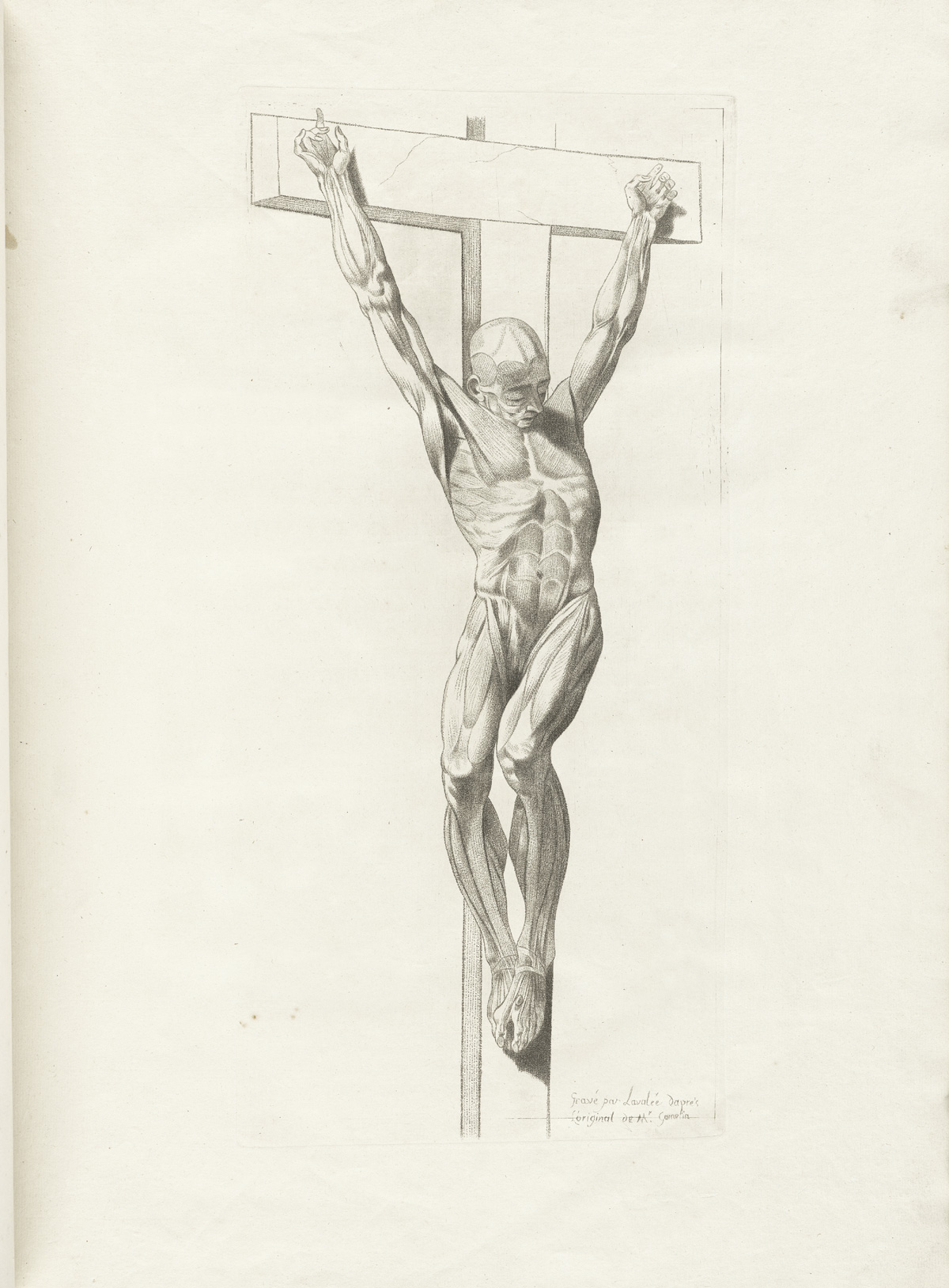
Anatomical Crucifixion Sketch | Jacques Gamelin, 1779 (12)

Just for a little more context, their punishment by way of crucifixion was not so nice. In fact, it was one of, if not the most painful form of torture at that time. According to Maslen and Mitchell’s article written in the Journal of the Royal Society of Medicine (11), crucifixion had many cruel ways of ending one’s life.

Some of those causes of death may have been, but are not limited to acidosis, arrhythmia plus asphyxia, cardiac rupture, hypovolemic shock, and so on. Death by crucifixion was a brutal, yet extremely prolonged way to die. For some, they died in a matter of hours. For others, they died in a matter of days.

I believe of the three events that took place before the thief on the cross had a change of heart, the moment of Jesus forgiving His executioners had the most impact on the thief. Christ’s response showed the thief a direct contrast to the way He lived His own life. A seed of regret was planted.

Jesus forgave those that were killing Him. The two thieves probably hated those that were crucifying them. Jesus was known as an exorcist and a teacher who wanted to help the poor and sick. The two thieves were most likely men that spent the majority of their lives only helping themselves.

As if the name was any indication, these thieves were probably selfish. Christ was selfless. The thieves died for crimes they committed. Jesus died for crimes we committed. For the thief on the cross and from his perspective, this man was different in almost every single way from him and the other thief. They deserved this death, but Jesus didn’t.

This strong distinction between a thief and the giver of eternal life is a drastic black-and-white difference. One died for taking that which was someone else’s, while the other died for giving all that He had for others. This I believe is what changed the thief on the cross from mocking Jesus to defending Him in front of everyone.

By everyone, I mean everyone. Gentiles and Jews. Pharisees and Roman soldiers. Family, friends, neighbors, and so on. Everyone there at the crucifixion knew of or had heard of these three crucified men and were probably shocked watching the thief on the cross have a change of heart. A thief for the first time encountering something he had never seen before: unlimited love in response to unbridled hate. The love of God in reaction to the darkest of human deeds. The Gospel happening before his very eyes.

The short story of the thief on the cross ends in a profound way. Luke chronicles the rest of that story when he writes

But the other rebuked him, saying, “Do you not fear God, since you are under the same sentence of condemnation? And we indeed justly, for we are receiving the due reward for our deeds; but this man has done nothing wrong.” And he said, “Jesus, remember me when you come in your kingdom” And he said to him, “Truly, I say to you, today you shall be with me in paradise (13).””

In response to the thief’s change of heart and his humble demeanor, God gives Him grace. A grace that surpasses all understanding. This is the thief and the cross. With that, Godspeed and Jesus bless.

Footnotes

  1. https://www.pexels.com/
  2. Luke 23:40
  3. Luke 23:42
  4. https://ehrmanblog.org/why-romans-crucified-people/
  5. http://www.patheos.com/blogs/christiancrier/2015/06/13/what-does-the-right-hand-symbolize-or-mean-in-the-bible/
  6. https://www.metmuseum.org/toah/works-of-art/41.1.31/
  7. James 4:6-8b
  8. Luke 23:34
  9. Luke 23:35-37
  10. Matthew 27:44
  11. https://www.ncbi.nlm.nih.gov/pmc/articles/PMC1420788/
  12. https://www.nlm.nih.gov/exhibition/historicalanatomies/gamelin_home.html
  13. Luke 23:40-43