Old Age

Photo Cred: (1) | Updated: 2/17/2022

Here is a poem that I wrote on February 15th, 2022. It was inspired by my fear of growing old.

All the world’s a stage.

Old age is its own birdcage.

Actors ready for their part to play.

Speaking lines, but nothing to say.

The show starts with the casting call.

Not you sir, but someone big and tall.

Not you mam, but someone we can catcall.

They’re staged like pretty dolls in a dance hall.

From here the rehearsals begin for this cast.

Practicing until emotion is first and thought is last.

Knowing only caricatures of humans long since past.

Continuing practice for their unending live broadcast.

In the hustle for youth we neglect the long trek to truth.

We’re perverted like the family in that one film Dogtooth.

Our chase for dried-out fountains of youth causes God’s ruth.

Caving to pressure like Lincoln’s skull meeting John Wilkes Booth.

But isn’t pretending not to age avoiding ultimate assuage?

That this farce of unblemished deity deprives souls of sage?

For so long I thought becoming old was itself sin’s final rage.

Now I see that it’s a return to form before we turn the last page.

With that. Godspeed and Jesus bless.

Footnotes

  1. Free stock photos · Pexels

Grace Talk: Who is the Holy Spirit? | 10-17-2021

Photo Cred: (1) | Updated: 12/23/2021

For a guy like me who is wired to love those heady knowledge-based sermons, this was a tough one to crack and figure out. As a part of the Grace Talk series from Reunion Church, this message was geared towards the role of the Holy Spirit in the grace process itself. How is the Holy Spirit himself involved in how we access grace? What does that relationship look like? This sermon was meant to answer those sorts of questions before we went into our hour of small groups.

Although from that premise, it should’ve been straight forward and yet when it comes to the topic of the Holy Spirit it’s never straight forward. In hindsight, it was good that I taught this one because I’ve done a lot of digging into this subject several times on this blog. Like one of my more popular posts on the Christian Essentials from a while back. Either way, over the years I’ve chipped away at the mystery that is God and all encompasses that reality.

Sermon Prep

For this sermon and for the sake of my audience, I had to take the most complicated idea in Christian thought which is the nature of God and break it down into a 15min message. Ha, no pressure. It’s not like making a mistake mid-message could lead the congregation to believing in blasphemy or heresy if I messed up. No big deal, right?

So how did I pull this off? Well, I flipped and paged through several super useful resources. A few of those being multiple key books:

  1. Forgotten God by Francis Chan
  2. Systematic Theology 2nd Edition by Wayne Grudem
  3. Know What You Believe by Paul E. Little
  4. Biblical Doctrine by John MacArthur & Richard Mayhue
  5. Christian Theology 6th Edition by Alistair McGrath
  6. The Mystery of the Trinity by Vern S. Poythress
  7. Essential Truths of the Christian Faith by R. C. Sproul
  8. The Forgotten Trinity by James White

Now that’s not even mentioning my online research either, but we don’t have time to discuss every footnote in my sermon. The point is I binged on understanding the Holy Spirit, so that my audience could get some key soundbites about him for the Sunday night discussion. My aim was to condense hours of prayer and study into key truths that could be shared in seconds.

I think I did fairly well, but the outcome is always up to God and his audience. I’m just the temporary bridge between both when I’m up there. Regardless of all of that background, here’s what I eventually came up with that night jotted down in my sermon journal:

Sermon Notes

Intro

  • Recap last week
  • Focus on who is the Holy Spirit and how he initiates grace.

Fax Machine Story

  • New job at Staples
  • Fax bank info to boss
  • Sandy prints floor plans for Texas Longhorns
  • Jake faxes info for me.
  • No matter how much I tried, I just couldn’t get it.

The Trinity Explained

  • God’s nature is similar to a fax machine.
    • If you think you know everything about God, then you probably don’t know much.
  • Here’s what we know (2):

1) God is three persons.

2) Each person is fully God.

3) There is one God.

  • God is greater than us in every way.
    • Here’s a quote of God describing himself:

“For as the heavens are higher than the earth, so are my ways higher than your ways and my thoughts than your thoughts (3).”

  • Even though God is beyond us in scope, the Spirit of God is the soul of the church.

“The fact that the Spirit indwells all believers, and provides the ground of our supernatural unity, results in true Christian fellowship-a sharing that knows no bounds (4).” – James White

  • God’s triune nature is the mystery of unity. Likewise, the church is the same.

Car Story

  • When it comes to money, I’m a hard-core saver and hate spending money.
  • Ben knows how to do the work, so that the car runs smoothly.
  • Like Ben when it comes to cars, God the Spirit does the work because he knows best and we just enjoy the benefits of grace.

The Holy Spirit Powers Grace

  • To understand the Holy Spirit, it’s best to know what he does.
  • In the grace process God the Father compels us to fascination (i.e. Head + Wonder), God the Son compels us to compassion (i.e. Heart + Will), and God the Spirit compels us to action (i.e. Hands + Works).
  • Grace is powered by the Spirit of God and leads to spiritual formation in our lives.

“Through the Holy Spirit we come to know Christ, and by the Holy Spirit’s power we live and grow in Christ, in the service of the king and in the fellowship of his church (5).” – Paul E. Little

  • Unlike the law where people hide behind veils of shame, God the Spirit gives us all of his grace all the time.
  • Because God does the work, he cares more about who we are and where we are in relation to his grace.

“We focus on what God wants us to do and forget the kind of people he wants us to be (6).” – Francis Chan

  • For Christians, where we are in relation to God’s grace matters most.
  • For Non-Christians, who you are matters most to God because he doesn’t know you yet.

Outro

  • All it takes is faith and humility to access all of the Spirit of God’s grace.
  • All it takes is humility and faith to know God and be known by him.

Final Thoughts

Given what had to be covered and the extensive work put into this one, I’m quite proud of the results. For more of my thoughts on this message, make sure to check out the Reunion Church Podcast on YouTube. With that said, Godspeed and Jesus bless.

Footnotes

  1. https://www.pexels.com/
  2. Systematic Theology 2nd Edition, P. 273
  3. Isaiah 55:9 (ESV)
  4. The Forgotten Trinity, P. 151
  5. Know What You Believe, P. 128
  6. Forgotten God, P. 148

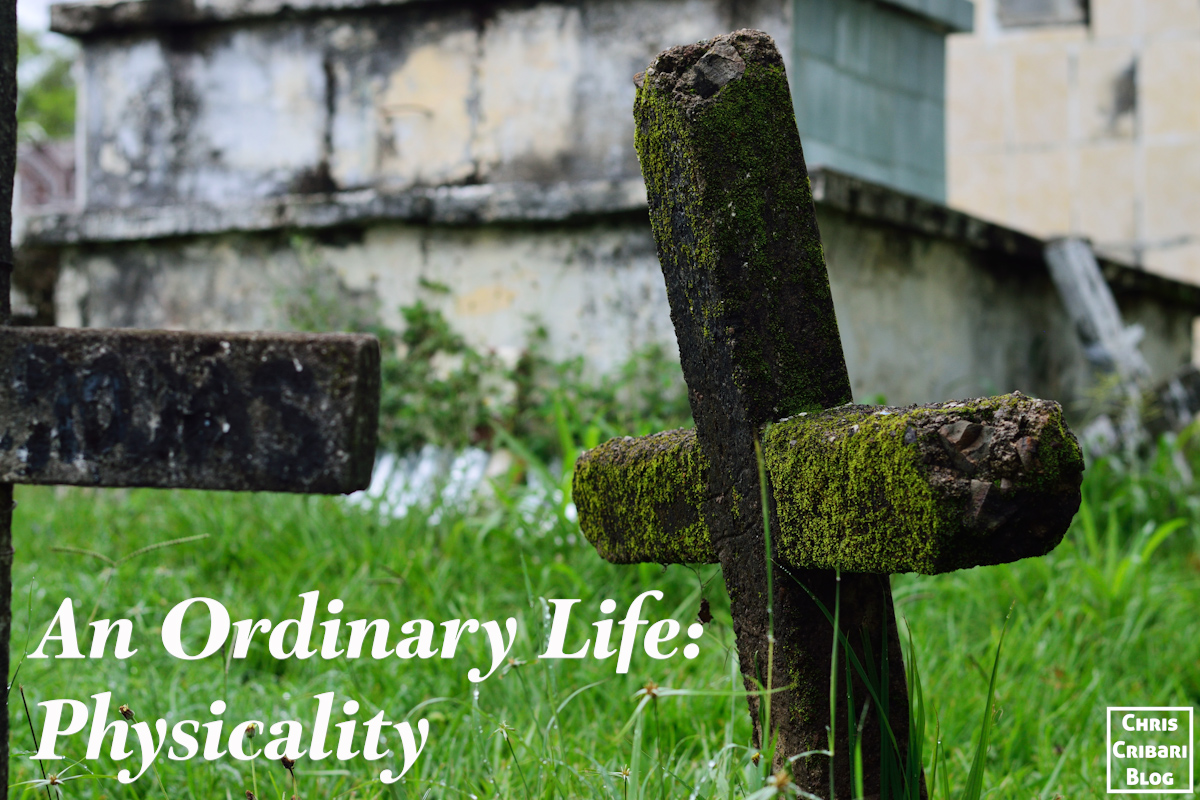
An Ordinary Life: Physicality | 8-22-2021

Photo Cred: (1) | Updated: 11/25/2021

So this sermon was a part of a series called An Ordinary Life based on the book Sensing Jesus by Zack Eswine for Reunion Church during the summer of 2021. This was a series focused on how to live simply within the mundane and enjoy the extraordinary in the ordinary moments of life. I think this was a great first series for our church and it really resonated with the community.

I recall during this time I was feeling fairly burned out and tired from the church planting process, but wanted to still deliver a great sermon. What added to my nerves was the fact that I hadn’t preached a sermon in a church in almost 2 years given the pandemic. I was meant to give this message on the 8th of August, but Pastor Andrew and Pastor David had returned from a retreat so they shared on the 15th of August.

Also only 3 other leaders showed up on the 8th, so I didn’t share the message on that night. I honestly felt pretty down that no one showed up and that hurt, especially when you’ve invested so much time to give a valuable message. If I’m being really honest, I cried on the way home. For some reason, when I’m attuned to God’s will I find myself very emotional.

Sermon Prep

Then again, this message was difficult to get a grasp on what to share exactly. The chapter I was sharing and recapping was about 35 pages of dense material. The author writes with a very poetic power that hits all the keys of the heart. Trying to faithfully adapt his work in a 90min small group discussion is incredibly strenuous.

Either way, I prepped ahead of time and with the extra 2 week gap had even more time to tweak the message for the people of God to hear exactly what they needed. If you feel immense pressure to deliver, then I’d say you’re in the right place because you can only rely on God. In your own strength, your sermon is shit. Without the power of the Holy Spirit himself guiding every word, point, and pause the message will not be what they need in that moment. The fear of God fuels great sermons and this one was no different.

We had a good group that night and I think this was one of my better sermons. I got to lean into my strengths as a teacher, which is simplifying complicated concepts. I love expositing complicated ideas in a way that clicks with your average person. It’s challenging, but rewarding in the same respect.

Going back through my notes, I had so many for this message. Explaining how we’re made for a period of time among physical things is a hard idea to get across since it’s so abstract. It’s one of those ideas that needs a lot of padding and stories to pass onto others. Here’s what I had in my sermon journal:

Sermon Notes

Intro

  • Recap last week
  • To live an ordinary life is to know that we are made for a period of time among physical things.
  • As Zack Eswine writes,

“Faith, hope, and love-the matters of our souls-are tried, learned, and lived in close physical proximity to created persons and things within the limits of certain times and places (P. 173).”

  • Read Acts 17:24-26
  1. Limited doesn’t mean less than

“The ministry with its leaders and neighbors is boundaried and limited… But boundaried does not mean inferior (P. 174).”

  • Jerry McFarland’s Monday Night Study.
  • Read 3 John 2
  • How has a physical limitation led to an unlikely opportunity?
  1. A place is a people
  • Read 1 John 1:1-3

“We sensibly minister the gospel of Jesus to ordinary persons in their particular places (P. 177).”

  • How is a place a part of a person’s identity? Why does that matter?
  1. All matter affects the mind
  • Read 2 Timothy 1:3-5

“Bodily senses accompany our interior lives. At times, they can adorn our souls with treasures and at times litter them with trash (P. 177).”

  • What physical thing reminds you of a good memory? What makes you remember? A sound? A vibe?
  1. The boundaries of physical touch
  • Jesus touched everyone in ministry to heal, not to harm.
  • Read Mark 10:14-16
  • What are your physical touch boundaries? 
    • i.e. children, friends, relationships, etc.
  1. Should Christians cuss or swear?
  • Necessary + True
  • Context + Culture (Where + Who)

Outro

  • Final thoughts

Categories to Cuss

  1. Emoting through tragedy or great pain
  2. To shock or surprise
  3. Ordinary communication

“We religious must learn to recognize our own kind of cussing. Religious cussing often does not involve foul four-letter words (P. 204).”

“Language… always comes in the form of resistance or repentance or mixtures of the two (P. 205).”

Final Thoughts

At the end of the day, this was a good one. A long message, absolutely and yet a really good discussion from everyone involved. To get more insight into my thoughts on this message, watch this sermon recap I do every week for my church. Also, for more insights into my thoughts on cussing and swearing as Christians, watch this topical podcast episode. With that, Godspeed and Jesus bless.

Footnotes

  1. https://www.pexels.com/
  2. https://reunionchurchcc.com/
  3. https://youtu.be/-yrOkwSAyOk
  4. https://youtu.be/lKzzXLYRjd4

Entangled

Photo Cred: (1) | Updated: 11/25/2021

Here is a poem that I wrote on June 2nd, 2019 that was inspired by a period of time in my life in 2016.

The itsy-bitsy spider climbed up the water spout.

Down came all the rain and washed the spider out.

I don’t know about you, but my life feels like a drought.

How will I make it through when I’m emotionally In-N-Out?

I could draw an S.O.S. or scream out loud mayday.

This life has been nuts and yet when’s my PayDay?

I committed and persisted, yet my life just found a way.

As if all of the build-up of promises never even had a say.

Watching them succeed has me craving to feed greed.

Are these desires and dreams of mine a need?

Among the grass, I’m the new invasive weed.

Outside I look fine, but inside I just bleed.

I say a lot that life is pain,

But God is our only joy.

Is my cute quote in vain?

Is God the imagination of a boy?

I’m a broken city invaded with shame,

Like when the ancient troops took Troy.

I’m a small bug in a spider’s web: entangled.

A dropout loaded with debt: strangled.

Like dried-up roadkill: mangled.

Hung over the edge: dangled.

But then I always remember.

That cold night in December.

When I left the Colorado Film School.

Hit the brakes hard and let the tires cool.

I gave up my childhood dreams

To join someone else’s new team.

I exchanged libraries for sanctuaries.

My anxieties could crush my capillaries.

Out came the beaming sun and dried up all the rain.

So then the itsy-bitsy spider climbed up the spout again.

I had so much to gain and in the end it was all my own vain.

Always thought I was Abel, but I’m just Cain with all his disdain.

Footnotes

  1. Free stock photos · Pexels

The September Sessions

Photo Cred: (1) | Updated: 9/20/2021

It’s been 3 days since I returned from my sabbatical. I was gone from September 1st through September 17th and learned a lot in that time. I figured out so many ideas in that timeframe, but I’ll just cover some highlights.

Sabbatical Reflections

First of all, being able to reconnect and live life with my family in another state was amazing. Getting the opportunity to spend over 2 weeks on vacation was tremendous. I’ve never done that before. It’s the longest vacation I’ve ever had.

I spent half the time with my sister’s family and then the latter half with my brother’s family. Investing in the people I care about most with the joy that comes from joking around to the more personal conversations you can only have with those you trust. It’s an experience overall that I will never forget. These moments have made permanent marks in my memory.

Then again, my favorite aspect of this sabbatical on that front was just seeing how my family has transformed in just 5 months since I last saw them. How their kids have grown up and are beginning to discover themselves at differing stages of life. For some, learning how to obey or trust is their biggest challenge in life. For others, learning how to do fractions or play football. In it all, I see how I encountered those challenges at those ages and hope in some way they learned how to overcome their challenges better with me being there.

Yet believe it or not, this wasn’t a vacation primarily. In fact, I left with a goal and things to do away from the restrictions of everyday life back in Colorado. This was a writing trip and my focus day-in and day-out was to work on a project I’ve had for over 6 years.

New Book

I’m writing a book. I’ve attempted to finish this book at multiple points, but the timing was never right to finish or even work on it. Too much change. Too many things I needed to go through before explaining to you. It’s what this blog has been building up to this entire time.

Sure, I started this blog in June of 2015 with some thoughts I doodled on a notepad during a flight from my uncle’s wedding in Cabo San Lucas in May of that year. But that wasn’t all that was going on at the time. What began in 2015 was a young 18 year old man deconstructing from faith. This book is about that story.

The story of how I chipped away and crushed the unstable foundations of a fake faith. A worldview that could barely see beyond the borders of modern American Christianity. A faith worth leaving for something better. My hope is that this story is ready and published in 2022. Stay tuned for updates on that front in the months to come on this blog.

New Blog Posts

With that said, I will still write on this blog. I’ve got two recent sermons I’ll translate and post here, along with new content as well. For now, here’s some insight into my plan for this blog:

  • Oct. 15th – Dawn + Joe’s Wedding
  • Nov. 30th – Book Update
  • Dec. 15th – An Ordinary Life: Physicality

For the time being, the book is my main priority and writing here will be less frequent until I’m done. I’m not going to stop writing here. I did just post a poem called Likes For Lust, which addresses how I’m processing issues like the Ravi Zacharias scandal. Outside of that, I’m bunkering down for the foreseeable future to get this done. It has to get done. It’s why I started this whole website in the first place. With that, Godspeed and Jesus bless.

Footnotes

  1. Free stock photos · Pexels

Likes For Lust

Photo Cred: (1) | Updated: 9/5/2021

What’s the world like for women?

What’s it like living among the men?

Everywhere evil is being done to God’s daughters.

Murder she wrote would indicate this is man’s slaughter.

They’re meant to be without blemishes, but we’re the rotters.

If they want to get ahead,

Then they’ve got to give head.

When they’re done, they’re dead.

No purpose, just pleasure instead.

This is the reality of every woman worldwide.

Vultures picking apart the deceased inside.

Crows to corpses, we defy those that died.

We throw stones and wonder why they’re so emotional,

Little did we know that those stones hit only the personal.

It doesn’t matter if it’s Ghandi or Ravi,

Women are always the victim of somebody.

Exit stage left and maybe we can end the tragedy.

We shame their sexuality for public protection.

If this was a courtroom, there should be objections.

We strip their dignity for some short-term satisfaction.

We like to lust, yet they dread all the social notifications.

We say love is lust, but honestly we just love to lust.

From a desire for them to lie with us, we lie for trust.

The currency of man is exchanging beauty for rust.

But God knows you and can redeem beauty from ash.

His standards challenge the heaping strongholds of trash.

Who is the man that forgave the woman caught in adultery?

The one who gave the woman at the well back her human dignity?

It’s the same man that drew sins in sand for the men screaming blasphemy.

In the beginning, women were made co-equals to rule Creation.

It’s here when man failed to protect that sin began its infestation.

Hand-in-hand and rib-to-rib, man and woman were made to live.

When sin was found out, instead of owning it man chose to give.

It was the man of the house who failed his own spouse.

He could have taken responsibility, but his ego refuses.

Now men spit out a theology that espouses excuses.

I suppose my words will not sway opinions of disdain.

Then again, pearls before swine is quite simply vain.

With that, Godspeed and Jesus bless.

Footnotes

  1. Free stock photos · Pexels

Greatness

Photo Cred: (1) | Updated: 1/30/2021

What is greatness?

Is it being blameless?

Aimless or even famous?

What’s the basis of greatness?

Some say that it’s to be a world famous celebrity.

A person who actualizes into their own manifest destiny.

Etching their earthly impact onto the past pages of history.

And yet how will these crude crusades actually impact eternity?

When the dust finally settles, will we look at what we did apologetically?

For most of us, we’re not brave enough to reconsider our self-made legacy.

Is the cost of fame always the same?

Lurking in our own shadows of shame?

In the hope that someone knows our name?

Who do we blame for what we willingly became?

If this is our ultimate aim, then this is a fixed game.

These fickle aspirations we all have are ironically tame.

Let’s go back and reflect on what greatness is to God.

Have you considered the idea that greatness is a mutual fraud?

That you can go to any side of the world and find this sin abroad?

The lie that whatever you do must be followed by applause is odd.

This is the human mirage.

Our own self-harm sabotage.

To believe we need an entourage,

Is the most dangerous type of barrage.

So then what is the answer to what is great?

How do we end the debate and no longer fixate?

Since when did we define where we draw the line?

If not us, then how do we find out God’s grand design?

I think it lies at the purpose of our ancestors in the garden,

Prior to being cast into the wilderness of an untamed arden.

What was their purpose before sin sowed its seed into the soul?

What was greatness to God before our hearts corrupted into coal?

As Zack Eswine in his book puts it in extensive literary poetry,

“Heroic moments have as their aim the recovery of the ordinary (2).”

That is, what we deam ordinary is in actuality the God-given extraordinary.

The way to make a global difference starts when we embrace our own locality.

As imagers of God our title assumes responsibility.

Both to our Earth and its creatures, along with all of humanity.

Greatness is ultimately the pursuit of cultivating God’s creativity.

Why else would Jesus dwell among us for 30 years before starting his ministry?

Could it be that greatness is defined by an example of Eden-like mundane activity?

A life well lived that is needed, but not known beyond a town in the vastness of our galaxy.

With that, Godspeed and Jesus bless.

Footnotes

  1. Free stock photos · Pexels
  2. Sensing Jesus, P. 48

Trump Is King Saul

Photo Cred: (1) | Updated: 1-20-2021

There are a lot of parallels made about Trump. Even more so within the American Christian community. From Cyrus the Great (2) to Nebuchadnezzar (3), some Christians associated with the current conservative political movement or the Republican party have made such comparisons. I’ve even read of a few people making the bold statement that Trump is just like King David because they’re both flawed leaders that God is using for divine means to an end (4).

I’m not here to talk about those obviously wrong parallels. I think of all the comparisons that could be made, Trump is most like King Saul. Let’s see why that’s more likely the case from a character perspective.

But before I do that, let’s clarify something. Comparing anyone to any figure in the Bible is just an exercise in identifying who someone is like, not who they are in reality. For instance, I could make the case that I’m a parallel to Joseph in Genesis. We are known for our analytical intellect, God speaks to us in dreams, and we both have autism (5).

With that said, it’s just a comparison to aid in our understanding and not a pinpoint accurate psychological look into who someone truly is in real life. This is a common and normal exercise, so now I’m simply applying it to President Trump. With all of that said, who was King Saul?

Who Was King Saul?

Saul under the Influence of the Evil Spirit by William Wetmore Story | 1865

For the sake of time, I’ll paraphrase Saul’s story. In other words, this is the highlight reel and doesn’t cover everything we know about the guy. Here’s the gist of what happened.

At this point in history, Israel was ruled by way of a kritarchy which is a nation run by judges. After years of mixed results and finally with the failure of the prophet Samuel’s own two sons, the people of Israel demanded a new form of leadership like the neighboring nations. They wanted to be ruled by a king.

So Samuel went to God in prayer and asked what to do for the Israelites. Here in 1 Samuel 8:7, we have God’s response: “Listen to the voice of the people in regard to all that they say to you, for they have not rejected you, but they have rejected me from being king over them.”

Like God had instructed, Samuel informs the people of Israel on how things are going to change under this new leadership style. He will take their children and use them for his own means to fulfill economic, political, and even war purposes. He will take the best of everything in the land for those most loyal to him and enslave the people under his rule. Lastly, when the people realize they have made a mistake God will not save them from the collateral consequences of their collective choice.

As time went on, Saul quickly went from a promising first king to a tyrant that threw out all of the traditions of his own people for personal gain. He made promises before God and others, but broke them with little remorse. He cast out anyone that questioned or threatened his power. He even hunted the man God chose to replace him which was David and his own son Jonathan who chose to obey God, rather than his unruly father.

History now knows that Saul was the king of compromise. Saul was a people-pleaser, but God was never pleased with him. David did become king of Israel and gave God the glory, yet Saul was always wondering who would give glory to him.

In the end, Saul had no faith in God and his lies only led to loss. Our response to conflict reveals our character and Saul will forever be known as a coward. The promising king was now just a man whose promises meant nothing.

Who Is President Trump?

President Donald Trump via axios.com

Now look at the Trump presidency and how it ended. The parallels speak for themselves. It began with a lot of promise for some people. He claimed to end abortion, build a wall, and fix the economy so that everyone would benefit. Whatever you think of those issues for yourself or any other issues for that matter, there are people who saw this outcome as extremely positive in 2016.

Actually, even a few as life-changing on par with the reactions that the Black American community had for Obama during the election of 2008. Like usual, both figures failed to deliver and live up to the hype. Although, for Trump his term ended with the shameful storming of the US capitol by his most ardent fans in a sad attempt to overturn the election. They took the bait of a lie that led to the death of 5 imagers of God, which is horrific for all involved.

Like an incel on OnlyFans, some Christians have crawled in lust to worship Trump and it’s shameful. Your ignorance doesn’t prove his innocence. In fact, it’s the opposite. It’s the blind eye of the Church that has built up the ego of a man who craves the adoration of all. Several of those who voted for him were so focused on winning for once that they never considered what would honestly happen if he had won the presidency. Well, now we know.

Now can I criticize a public figure like Trump and be consistent as a Christian? Absolutely. Do I need to remove the plank in my eye before telling someone else to remove the speck in their eye? Of course. As I like to tell people, I’m a shit-show of a human being and need God to save me on-the-daily because I’m the worst. In humility, I admit I’m a failure and sin more often than anyone will ever know.

God gives grace to the humble and I’m glad he does because that’s all we can give him. We must approach God in humility and faith, if we want to be in his good graces. The problem is that Trump lacks the spine to be humble before God and his faith is a farce.

His actions have spoken for him in that regard. He doesn’t fear God because he’s too afraid of the god that is his own graven image. That’s disgusting and it’s even more so when we consider that some of us supported such crass behavior in our leadership that claimed to follow Jesus.

We as Christians should be the first to publicly oppose a political leader in sin and the last to publicly support anyone in politics. Our gaze should be fixed on the Kingdom of God, not our own kingdom that was never a nation under God. Participate in the present and that includes politics, but remember to remain focused on the future for that is where we will find rest under the sovereignty of Jesus as king. With that, Godspeed and Jesus bless.

Footnotes

  1. www.pbs.org
  2. https://www.vox.com/identities/2018/3/5/16796892/trump-cyrus-christian-right-bible-cbn-evangelical-propaganda
  3. https://communalnews.com/king-nebuchadnezzar-and-president-donald-trump/
  4. http://www.sfltimes.com/opinion/looking-to-the-bible-to-justify-allegiance-to-a-flawed-leader
  5. For more on this theory see Samuel J. Levine’s book, Was Yosef on the Spectrum?

The Scale of Faith: Evidence + Experience

Photo Cred: (1) | Updated: 11-18-2020

About a year ago when I worked at Staples, I had a conversation on faith that was fantastic with one of the coworkers on my sales team. It was one of those moments you pray for and ask God for the awareness to know when one of those moments is happening. As Christians, we call this discernment. The ability to be sensitive to the Holy Spirit and what he is doing in the present.

Oddly enough, this conversation was initiated by her when she rolled by my desk and asked a few questions about my faith. This was pretty common because she did this with everyone as an extrovert and loved chatting with everybody on the team, but the subject of our conversation was brand new. It was something we never talked about before and I was very excited to have this conversation because I’m always waiting for these moments to happen.

Unlike most people, I have a different motivation for why I go to work. It’s not for money or the type of work I’m doing necessarily, but rather comes down to a very simple question: what spiritually needs to be done here? That’s my motivation that guides everything I do at work and in life overall. Every day and every moment guided by that simple question. On this day during this moment, I knew what spiritually needed to be done. I needed to answer her question, but not the one she was asking.

When someone is searching their own soul, they tend to discover holes within their worldview. For my coworker, this hole within her worldview was related to her experience with Christianity as a person who grew up Catholic. Her being a Hispanic American that grew up within the family’s strong Catholic tradition lends credence to the idea that maybe her faith wasn’t genuine. Maybe this routine of rituals never actually meant a real relationship with God himself. Maybe the faith she thought she had with its rules and regulations never materialized in her adulthood into something real.

The Conversation

The conversation started with her asking, “You’re religious, right?” and I said yes. She then asked if I was Christian or Catholic. I said I was both, which compelled her to ask how I could be both. I replied that my theology is predominantly Catholic, but my convictions are predominantly Protestant. For instance, my theology is inspired by the Jesuit school of thought called Molinism, but I align a lot with the Anabaptist movement as well. I’m a clear mix of these two different sides of Christianity after studying both for myself.

This answer seemed to resolve her surface-level questions, but now it was my turn. I asked “You’re Catholic, right?” and she said yes. She explained that she grew up Catholic, but doesn’t practice the faith like her family does. I followed up with my next question, “Why not?” and that’s when the real questions came to the surface.

Here she shared how the showy stuff never clicked with her, but that she knows that there must be something like God because she has experienced him growing up. She heard that I was Christian and just wanted to know if what she experienced was real. This is a question we should all ask ourselves. Is what I’m experiencing God or is this something else?

The Scale of Faith

I don’t remember everything that I shared with her, but I do remember the crux of my point. Essentially, faith in God is a scale that’s balancing between evidence and experience. In general, the Christian life is a strange combination of undeniable evidences and unexplainable experiences.

Like my former coworker, we too experience things that we cannot explain and yet know intuitively that this must be God. Likewise, we also observe and measure things in life that logically lead us to God. We all in one way or another experience God and have evidence that God exists in our reality. The key is finding the balance between these two components for a healthy Christian faith.

An Evident God

When we focus too much on evidence, we drown in the rabbithole of not knowing enough. Put simply, you will never know enough about God or be able to define him anymore than he has defined himself for us. As King Solomon put it, “there is nothing new under the sun (2).” There is no secret knowledge that remains undiscovered about God that we can find.

He has intentionally given us all we need to know about him and yet leaves it hidden for us to discover for ourselves. Many avenues in fact from history to mathematics or philosophy and science, but none of them leads to the full knowledge of God. If we knew everything there is to know about God, then he wouldn’t be God. Like any person you come across in life, you will never know everything about them and the same can be said of God.

Then again, faith requires evidence. It’s demanded by our minds trying to make sense of the unknown in the best way that we can, so this doesn’t mean we throw out logic and reason. Instead, this just means we search until we find the edge of knowing God and admire the mystery that stands before us. When we know God and are known by him, then we will know who we are and what we were made to do.

The God Experience

With experience, we find ourselves in the murky waters of the abstract and what has been felt in the fleeting memories of our unique moments with God. It’s not meant to be explained because these moments are to be lived in and felt with all our being. It’s the knowledge of being there that counts and not the incalculable details of the moment.

Why do some dream of Jesus and immediately become Christian, despite every reason to remain a part of their current faith? We don’t know and that’s because it’s not our experience to explain. It’s not our story to tell, but their honor to tell it as a critical piece to the unfinished puzzle that is their life in Christ. These experiences with God are once-in-a-lifetime and at the same respect unforgettable.

Conclusion

Her experience could very well have been God. She didn’t need to doubt it per se because only she would know if it was genuinely a God moment. With discernment, I believe what she shared was a God moment and affirmed it as such to her by the end of our talk.

What I left her with was a challenge: “You seem to know what it’s like to experience God, but is God evident in your life? Before you write off God or your faith from your childhood, look at it again and see if there’s anything to your faith. Could this really be true? You experienced it, so now it’s time to find out if there’s evidence.” Our boss walked by and that’s when we got back to work, but I still hope to this day that she takes the time to reevaluate her faith.

Was the experience truly God or something she made up? Could God be evident in her life? If Jesus is a real person, then is what he said true? Those are questions that only she can answer for herself.

I can’t change minds, but I can compliment critical thinking with the best case for the Christian faith. That case starts when we examine the scale of faith to see if evidence and experience meet at the cross of Christ. With that, Godspeed and Jesus bless.

Footnotes
  1. Free stock photos · Pexels
  2. Ecclesiastes 1:9 (NASB)

Moses: From Man To Myth | 1-29-2020

Photo Cred: (1) | Updated: 5/25/2020

[This was a sermon I gave to the youth group at my local church when serving there as a youth leader. It was about 25 minutes and was focused on helping students understand the person of Moses for a series called fresh start.]

Introduction

For the past three weeks, we have been studying this idea of a fresh start. With Adam, redemption. With Noah, a rescue mission. Then with Abraham, reality and reason in conflict. Now with Moses, we’re going to see how God brings revolution after reconstructing a man on the run.

But tonight we’re going to see how Moses had the right motive matched up with the wrong move. He had the right idea, but the wrong execution of it. Go to that first passage in Exodus 2:11-15.

The Motive | Exodus 2:11-15

Now a little context after we’ve just read the text. Moses was born Hebrew, but raised Egyptian. When he was a baby, he was adopted by the royal Egyptian family after he was hidden by his biological mother. This was because there was a decree to kill all male Jewish babies in fear they might grow up to resist Pharaoh by joining opposing nations and becoming free from enslavement. Also, Moses’ biological mother was the nurse whose job it was to take care of him in the Pharaoh’s palace.

With this in mind, Moses was born into Jewish royalty since he was an ancestor of Abraham and raised in Egyptian royalty for the first part of his life. He was a bridge to two worlds. A man torn between two different men’s legacies in his life: Abraham and Pharaoh. God called Abraham to be the founder of the nation of Israel, while Pharaoh was hellbent on their annihilation.

Years later here in Exodus 2:11-15, we see these two motives in conflict. His desire to free his people or to submit to the authority of his step family that ruled the nation. Next, we see his decision. His motivation throughout this whole story is to save his people. He chose freedom over fear. Yet, he went about it the wrong way. 

As a step-son of Pharaoh, he had the authority to order the Egyptian to stand down and stop beating the fellow Jewish slave. He could’ve commanded him to let the slave get back to work, but he chose the fast road to justice and killed the Egyptian instead. Burying him in the sand of the desert and then makes a run for it once he realizes that news of what he did has spread throughout the land. He had better options and chose poorly. Peace is for the patient and this is a quality that Moses has always lacked.

Needless to say, once Pharoah finds out and Moses escapes to hide from his warrant for his death. He chose the quickest solution to fighting injustice and ended up bringing even more consequences then there needed to be in the first place. When we try to fight injustice with what appears to be the easiest solution, we can actually end up bringing more harm than there was before. Because of what Moses did, the very people he was trying to save ended up staying enslaved for even longer in Egypt. 

The Mission | Exodus 2:25, 3:10

Moses is on the run, Pharaoh is even more brutal to the Hebrew people than before, and now God is going to initiate his next move through all of this by giving Moses his mission. We just saw his motivation, but now God is going to give Moses a clear mission to save the Hebrew the way God had always planned. Let’s read Exodus 2:25 and Exodus 3:10.

In life, I usually think I know what I’m doing next. How to make the next move. How to get where I want to go next, but God always has other plans and a better way of getting where we need to go.

For instance, I thought I was going to become a filmmaker who would dominate that industry. But God gave me a series of simple jobs, so that I could pursue serving others in my community by becoming a writer to advance our understanding of God. I had motivation and a mission, but God made it even better.

Likewise, Moses will save his people and this mission will eventually inspire a movement that will influence generations to come. But first, how did Moses free the Hebrews? How did God execute this mission he tasked Moses with here in these two verses?

Well, here’s the brief version of the story. God sends Moses to Egypt to speak with Pharaoh. Pharaoh said no, Moses tried again. Same thing like last time. This goes on a couple times until Pharaoh’s son dies and finally lets the Hebrew people go. From there, Moses leads the Hebrew people on their long journey to the promised land.

The Movement | Exodus 13:3

Jump to today, Moses is the figure of several movements in history. For example, Harriet Tubman was often called Moses because she freed slaves in America. Also, Superman has been compared to Moses in the way that he was born and other parallels within that story.

Just like them, you have two legacies you can choose from in your life right now. You can either go through the motions or be apart of the movement of God. You decide. Let’s pray and go to small groups.

This was my last sermon taught while serving in the youth group of my church. My best sermon? No, but I enjoyed the process of making it and wrapping up this series created by the new leadership for our youth group. Given during a time of change in leadership when I was stepping away as a new team was stepping up to take charge for the forseeable future.

Are they ready? Not even close to ready, let alone qualified. But neither were we when we started the youth group 3 years ago. They may not be qualified, but God has called them and if receptive to the leading of the Spirit will do great things in ministry. With that, Godspeed and Jesus bless.

Footnotes

  1.  Free stock photos · Pexels