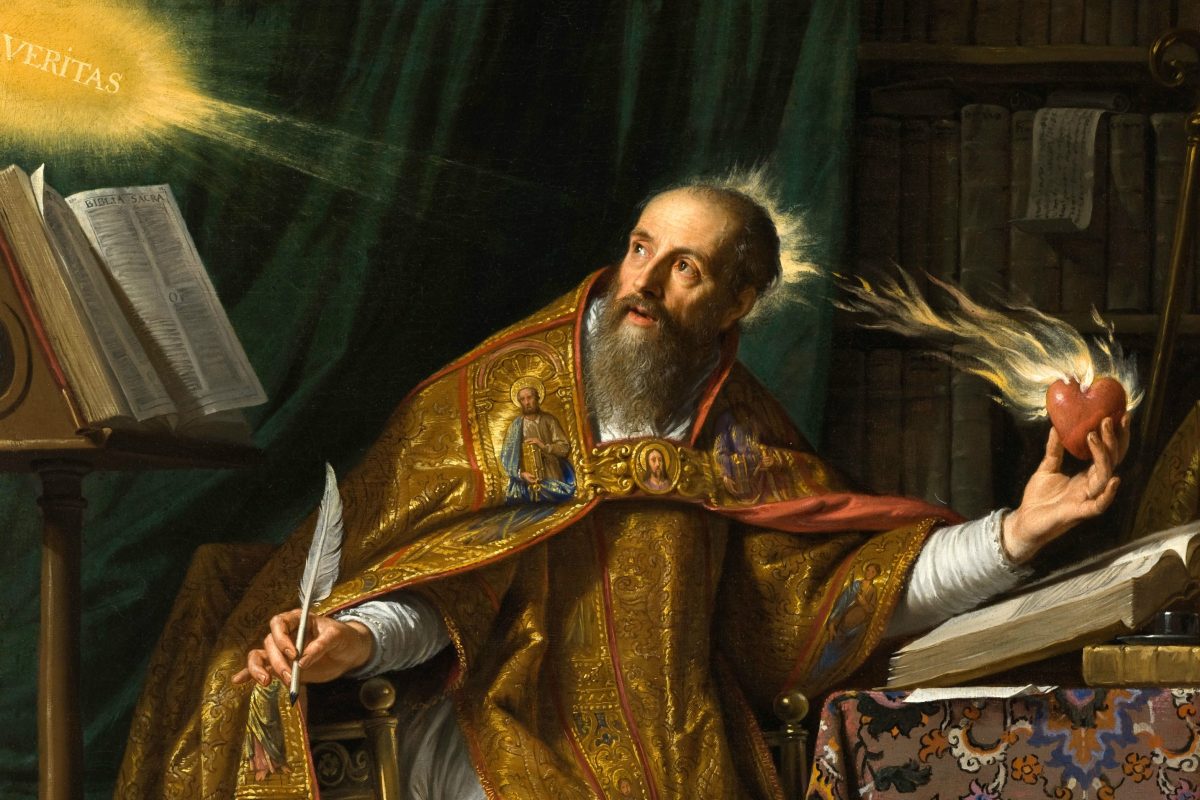
Genesis: Game of Sons | 12-14-2025

Photo Cred: (1) | Updated: 5/16/2026

Sermon Prep

When it comes to my job, December is a whiplash of emotions. The first half is insanely busy trying to wrap the year up before the holidays hit and then the second half could not be more dead. I was also stressed about finishing the Joseph outline and gearing up for holiday travel, which didn’t help me either in prepping this sermon.

With all the end of year stresses, I just didn’t feel very prepared beforehand for this teaching even though it was done in time. I think the vibe this month was tense compared to all the heaviness of the Fall where everyone seemed to be going through something awful. That build up of emotions and nerve-racking situations can still have an effect on you even after those things are long gone.

The body keeps the score whether wins or losses. In spite of all that, the sermon was completed and turned out alright. Below is the notes and here is the YouTube recording:

Sermon Notes

Opening Prayer

  • Father God, lead us this morning as we search the scriptures. Thank you for your Son whose sacrifice is our salvation. Dwell with us, Holy Spirit, as you teach us today. Amen.

Intro

  • Story of love triangle in 3rd grade between Austin, Marissa, and I.

Main Point

  • Communities fracture under favoritism, while envy corrodes churches and families.

Game of Sons | Genesis 29:1-30:24 (NRSVue)

[1] Then Jacob went on his journey and came to the land of the people of the east.

  • Jacob traveled to Haran (i.e. Turkey) to escape Esau and found a well (Genesis 29:1-10).
    • Jacob’s mother Rebekah is from Haran, so these men were likely her relatives.
      • They’re waiting for Rachel to arrive with Laban’s flock to water the sheep.

[11] Then Jacob kissed Rachel and wept aloud. [12] And Jacob told Rachel that he was her father’s kinsman and that he was Rebekah’s son, and she ran and told her father. [13] When Laban heard the news about his sister’s son Jacob, he ran to meet him; he embraced him and kissed him and brought him to his house. Jacob told Laban all these things, [14] and Laban said to him, “Surely you are my bone and my flesh!” And he stayed with him a month. [15] Then Laban said to Jacob, “Because you are my kinsman, should you therefore serve me for nothing? Tell me, what shall your wages be?” [16] Now Laban had two daughters; the name of the elder was Leah, and the name of the younger was Rachel. [17] Leah’s eyes were weak, but Rachel was graceful and beautiful. [18] Jacob loved Rachel, so he said, “I will serve you seven years for your younger daughter Rachel.” [19] Laban said, “It is better that I give her to you than that I should give her to any other man; stay with me.” [20] So Jacob served seven years for Rachel, and they seemed to him but a few days because of his love for her.” 

  • Being a kinsman guaranteed Jacob was protected and had privileges (Genesis 29:12).
    • Explains why Jacob could negotiate wages. Also, traveling solo was risky and odd.
  • my bone and my flesh” is covenant language throughout OT (Genesis 2:23, Hosea 2:16).
  • Erebu marriage = when adopted heir (i.e. Jacob) marries adopter’s daughter (i.e. Laban).
  • Leah’s eyes refer to her subtle beauty, while Rachel had striking beauty (Genesis 29:17).
    • Given the culture and desert life, a woman’s eyes were their most visible feature.

[21] Then Jacob said to Laban, “Give me my wife that I may go in to her, for my time is completed.” [22] So Laban gathered together all the people of the place and made a feast. [23] But in the evening he took his daughter Leah and brought her to Jacob, and he went in to her. [24] (Laban gave his maid Zilpah to his daughter Leah to be her maid.) [25] When morning came, it was Leah! And Jacob said to Laban, “What is this you have done to me? Did I not serve with you for Rachel? Why then have you deceived me?” [26] Laban said, “This is not done in our country—giving the younger before the firstborn. [27] Complete the week of this one, and we will give you the other also in return for serving me another seven years.” [28] Jacob did so and completed her week; then Laban gave him his daughter Rachel as a wife. [29] (Laban gave his maid Bilhah to his daughter Rachel to be her maid.) [30] So Jacob went in to Rachel also, and he loved Rachel more than Leah. He served Laban for another seven years. [31] When the Lord saw that Leah was unloved, he opened her womb, but Rachel was barren.” 

  • A disguised Jacob deceived Isaac in the dark; now Jacob is deceived in the dark by Laban.
  • Leah’s sons have names that foreshadow Jacob’s deathbed blessing (Genesis 29:32-35).
    • Reuben (affliction), Simeon (hated), Levi (third son); Judah (I will praise the Lord).
    • Reuben, Simeon; Levi (disqualified) vs Judah in Genesis 49 (brothers shall praise).

[1] When Rachel saw that she bore Jacob no children, she envied her sister, and she said to Jacob, “Give me children, or I shall die!” [2] Jacob became very angry with Rachel and said, “Am I in the place of God, who has withheld from you the fruit of the womb?” [3] Then she said, “Here is my maid Bilhah; go in to her, that she may bear upon my knees and that I too may have children through her.” [4] So she gave him her maid Bilhah as a wife, and Jacob went in to her. [5] And Bilhah conceived and bore Jacob a son. [6] Then Rachel said, “God has judged me and has also heard my voice and given me a son”; therefore she named him Dan. [7] Rachel’s maid Bilhah conceived again and bore Jacob a second son. [8] Then Rachel said, “With mighty wrestlings I have wrestled with my sister and have prevailed,” so she named him Naphtali. [9] When Leah saw that she had ceased bearing children, she took her maid Zilpah and gave her to Jacob as a wife. [10] Then Leah’s maid Zilpah bore Jacob a son. [11] And Leah said, “Good fortune!” So she named him Gad. [12] Leah’s maid Zilpah bore Jacob a second son. [13] And Leah said, “Happy am I! For the women will call me happy,” so she named him Asher.

  • For ANE women, your status was derived from covenant connections to the patriarch.
    • Bearing sons for the patriarch guaranteed a greater status than those who didn’t.
  • Like Sarai in Genesis 16, Leah/Rachel use ANE law: slaves bear children for barren wives.

[14] In the days of wheat harvest Reuben went and found mandrakes in the field and brought them to his mother Leah. Then Rachel said to Leah, “Please give me some of your son’s mandrakes.” [15] But she said to her, “Is it a small matter that you have taken away my husband? Would you take away my son’s mandrakes also?” Rachel said, “Then he may lie with you tonight for your son’s mandrakes.” [16] When Jacob came from the field in the evening, Leah went out to meet him and said, “You must come in to me, for I have hired you with my son’s mandrakes.” So he lay with her that night. [17] And God heeded Leah, and she conceived and bore Jacob a fifth son. [18] Leah said, “God has given me my hire because I gave my maid to my husband,” so she named him Issachar. [19] And Leah conceived again, and she bore Jacob a sixth son. [20] Then Leah said, “God has endowed me with a good gift; now my husband will honor me, because I have borne him six sons,” so she named him Zebulun. [21] Afterwards she bore a daughter and named her Dinah. [22] Then God remembered Rachel, and God heeded her and opened her womb. [23] She conceived and bore a son and said, “God has taken away my reproach,” [24] and she named him Joseph, saying, “May the Lord add to me another son!”

  • Mandrakes = toxic plant with man-shaped roots used for fertility charms or love potions.
  • Leah and Rachel’s attitude towards God changes as they thank him for giving them sons.

Why It Matters

  • God still works through generational sin, family failures, and even sibling rivalries.
    • God sees the unloved. He chooses the least of these to do the greatest.

Power Text

God judged it better to bring good out of evil than not to permit any evil to exist.” – Augustine of Hippo, Enchiridion on Faith, Hope, and Love, §27, trans. J. F. Shaw, in Nicene and Post-Nicene Fathers, First Series, vol. 3, ed. Philip Schaff (Peabody, MA: Hendrickson Publishers, 1994), 245.

Outro

  • Identify the Leah-type in your life: someone unseen. Practice hearing vs hurting them.

Final Thoughts

The delivery was shaky, but okay. I was going to open my sermon with story about one of my brothers and I, but at the last second opted to tell a different story. That other story has much higher emotions, so I think those impacted how I delivered this message even though I didn’t tell it. In fact, I was nervous the whole lead up to this message because I was afraid to tell that story.

This sermon is solid though and even if I didn’t think my delivery ws good, the content was good. It flowed well notes-wise and I did what I was supposed to do: preach the word. With that, Godspeed and Jesus bless.

Footnotes

  1. https://en.wikipedia.org/wiki/Augustine_of_Hippo

The Problem With Evil Is You | 12-4-2019

Photo Cred: (1) | Updated: 5/24/2020

[This was a sermon I gave to the youth group at my local church when serving there as a youth leader. It was about 25 minutes and was focused on helping students understand the problem of evil.]

Introduction

Tonight could go a lot of ways given what we’re talking about, which is the problem of evil. In a minute, we are going to play a clip of a philosopher who studied genocide for multiple years. Now after the video I will preach the remaining amount of time on the logical response to evil, then we will do a Q&A with three additional leaders on stage to talk about the emotional response to evil.

But there’s a catch because you decide which of our two videos we are going to watch. Option 1: we watch a 4 minute video and I teach 15 minutes. Option 2: we watch a 10 minute video and I teach only 10 minutes. But whichever way option you choose, we’ll do for you. So what will it be? Which option do you choose?

[Like most nights in ministry, especially in youth ministry, things don’t go according to plan. This entire introduction was scrapped because we left our projector at another location and couldn’t play either video. In response, I summarized the basic idea of what Clay Jones was conveying about Adam & Eve, along with the general problem of evil. I was going to share one of two clips from an interview that was done by Cameron Bertuzzi from Capturing Christianity with Jones, but God had other plans.]

1) Why are we responsible for what Adam & Eve did?

Based off of the video, we can gather a couple things about who we are as people. First, the problem with evil started a long time ago. It started with the first people and since then has spread like a disease to everyone else. This is what a lot of people refer to as generational sin or in other words “the sins of our fathers.”. But how does that work exactly? How did we inherit something that someone else did?

Let me explain by telling you about my family tree. In my family, we have a generational sin that everyone suffers from and that is addiction. On my Dad’s side of the family, we have my Great-Grandad who was a violent alcoholic. Then he had my Grandad who became a stoic workaholic because of the physical abuse he suffered as a kid. Next was my Dad who returned to the bottle, drugs, and the like because he grew up with a father who didn’t know how to show affection.

Same story is on my Mom’s side of the family too. Her Grandad was murdered by his own sons because they didn’t like that he was a violent alcoholic who physically abused their mom. Next my Mom’s parents also became addicted to alcohol and drugs, which is apart of the reason my Mom has to take medication for seizures because they abused substances during the pregnancy. If you take my Dad’s substance abuse and my Mom’s seizures, you get me who has the same problems because of their decisions and the decisions of the family before them.

That’s generational sin, in that when faced with the opportunity for self-actualization you instead choose self-destruction. Instead of finding an escape, you choose to live in the comfort of excuses. Like my family, all people are born evil because of the evil that’s been done before them.

This is how sin is inherited. By being a bandwagon following other examples and by blood we are naturally inclined to evil. At the end of the day, the problem with evil is you. The problem is me. The problem with evil is all of us because no one is good. We have both inherited sin and have a strong interest in it too. This is the cycle of sin.

2) If God is so good, then why is there so much evil in the world?

Wait a minute. How do you know I’m not good? What determines what’s good? God? Are you kidding me? Give me a break! If God is so good, then why is there so much evil and pain in the world?

Great question! Let’s answer that real quick, but first let me ask you a question. If God is so evil, then why is there so much good?

You see, the question whichever way you raise it implies that God and evil cannot both exist. That it’s impossible for God and evil to exist. Yet science proves God exists (i.e. the Big Bang Model and Evolution), along with all of us knowing that evil and good exist as well. It’s obvious. There’s evil and good everywhere!

[When sharing this message, I do remember expanding on this idea that evil and good are evident by sharing a few examples of these things existing.]

We don’t need to look very far to find any of these three variables. But the question remains: what is the ultimate standard that tells us what is evil or good? To put it simply, there’s only four options: nature, myself, society, and God.

First, let’s start with nature. In the animal kingdom and the natural world, everything is less than humans because we are the top of the food chain. We are the true kings of the world and no other species can top us because we are more evolved to be the fittest species to survive. So why should we find our standard of right and wrong from something that is beneath us? Therefore, nature is not our standard to measure good and evil.

What about myself? Am I the standard of what determines what is good or evil? I mean, you-do-you right? Whatever is true to you is true! But what if my truth contradicts your truth? Your truth is that lying is wrong, but my truth is that lying is right. Whose standard is correct if it’s between each other? Do I have absolute authority over everyone else who thinks they have absolute authority? No, so that’s not it either.

Wait, but what about society? Surely there is a society that has it all figured out! Not exactly because then how do we know which society is right? If there is a specific society, then what happens when it dies like all other societies have in history?

During WWII, we saw this problem in a really obvious way. Americans enslaved and tortured the Japanese, but weren’t okay with the Germans doing the same to the Polish and Jews. Yet the Germans weren’t okay with the Japanese enslaving and torturing the Chinese, even though they did the exact same thing. But then the Japanese felt the same way towards Americans because of what they did to them. Which society is right in that situation? Which society has the authority to say what is right or wrong? None of them if it’s all relative.

Now from the process of elimination, we know that God is the standard of what is right or wrong. He determines what is good or evil. Why is that? Because he created all things (Genesis 1:1), he made each and every one of us for a reason (Genesis 1:26-28), and he has established every society for our good (Romans 13:1). At the end of the day, God is the standard that shows us what’s right or wrong.

Conclusion

God in the beginning created everything from chaos and brought it into order. Then we took what was in order and made it chaotic. Now Jesus has offered to bring us out of chaos and into order, but the decision is yours to make. You can stay in the comfort of your own chaos or join God on the journey to order. That’s up to you because God doesn’t cause chaos, but he does allow us to do so.

God cannot be held responsible for a choice you and I make. If we want to sin, then we can and if we want to follow him, then we can do that as well. Like a parent whose kid decided to get in trouble at school, God isn’t responsible for your choices. In the end, you are responsible and that’s why God is good, yet we are the problem of evil.

[In retrospect, this concluding part was switched up to flow better in-person. Here it’s too rigid and comes off as brute, rather than loving. When sharing this message, I was much more tonally aware of the audience and adjusted to the nights circumstances.]

Now what you’ve just heard is a brief logical response to the problem of evil, but now we are going into a Q&A to talk about the emotional response to the problem of evil. If we could, can our three pre-selected leaders come up to the stage? Alright, let’s get to our first question.

Similar to my sermon about Job during the summer of 2019, I too wrestled to give a succinct response to such a weighty issue. The problem of evil and suffering. How do you approach that? How do you explain to students this extremely complicated problem without being confusing? In my case I attempted it and was not happy with the end result. It’s just a tough thing to understand, let alone explain to someone else.

Despite my mixed feelings about the sermon, the students seemed to engage quite well and the Q&A was very successful as I moderated while a few leaders answered questions I posed to challenge them. The best part was they were answering on the spot and had no prep ahead of time because I wanted them to speak from the heart, instead of their head. Ironic that they ended up giving better responses to the problem of evil then me during my message!

I was very proud of them and thank God for their willingness to jump into any ministry moment with joy. If I remember correctly, it was Mackenzie, Trevor, and another new leader who had only just started to lead with us. With that, Godspeed and Jesus bless.

Footnotes

  1.  Free stock photos · Pexels