
Genesis: Our Father’s Blessing | 3-15-26

Photo Cred: (1) | Updated: 5/18/2026

Sermon Prep

I shared this message after our annual family vacation, but had prepped the vast majority of it weeks ahead of time. I did add and tweak a lot Saturday night after returning from vacation that enhanced the message, but about 80% was already done if not more before vacation. Given the subject matter, I think this was a well-oiled machine of a message by the time I got up there to teach. On that note, here are my notes down below and the YouTube recording here.

Sermon Notes

Opening Prayer

  • Father God, lead us this morning as we search the scriptures. Thank you for your Son whose sacrifice is our salvation. Dwell with us, Holy Spirit, as you teach us today. Amen.

Intro

  • Conversation with Grandad in 2021 and how he reacted to what Papa said about him.

Main Point

  • The words of our fathers can define our futures whether we want them to or not.
    • We’ve all been defined by our dads, but in Christ we have a new destiny.

Our Father’s Blessing | Genesis 48-49:28 (NRSVue)

  • Joseph hears Jacob is ill and takes his sons to him to be blessed (Genesis 48:1-2).
  • God blessed Jacob at Luz and said he would be fruitful in Canaan (Genesis 48:3-4).

[5] Therefore your two sons, who were born to you in the land of Egypt before I came to you in Egypt, are now mine; Ephraim and Manasseh shall be mine, just as Reuben and Simeon are. [6] As for the offspring born to you after them, they shall be yours. They shall be recorded under the names of their brothers with regard to their inheritance.

  • Jacob adopts Joseph’s sons as direct heirs, so they become 2 of the 12 tribes of Israel.

[8] When Israel saw Joseph’s sons, he said, “Who are these?” [9] Joseph said to his father, “They are my sons, whom God has given me here.” And he said, “Bring them to me, please, that I may bless them.” [10] Now the eyes of Israel were dim with age, and he could not see well. So Joseph brought them near him, and he kissed them and embraced them. [11] Israel said to Joseph, “I did not expect to see your face, and here God has let me see your children also.” [12] Then Joseph removed them from his father’s knees, and he bowed himself with his face to the earth. [13] Joseph took them both, Ephraim in his right hand toward Israel’s left and Manasseh in his left hand toward Israel’s right, and brought them near him. [14] But Israel stretched out his right hand and laid it on the head of Ephraim, who was the younger, and his left hand on the head of Manasseh, crossing his hands, for Manasseh was the firstborn. [15] He blessed Joseph and said, “The God before whom my ancestors Abraham and Isaac walked, the God who has been my shepherd all my life to this day, [16] the angel who has redeemed me from all harm, bless the boys, and in them let my name be perpetuated and the name of my ancestors Abraham and Isaac, and let them grow into a multitude on the earth.” [17] When Joseph saw that his father laid his right hand on the head of Ephraim, it displeased him, so he took his father’s hand, to remove it from Ephraim’s head to Manasseh’s head. [18] Joseph said to his father, “Not so, my father! Since this one is the firstborn, put your right hand on his head.” [19] But his father refused and said, “I know, my son, I know; he also shall become a people, and he also shall be great. Nevertheless his younger brother shall be greater than he, and his offspring shall become a multitude of nations.” [20a] So he blessed them that day, saying, “By you Israel will invoke blessings, saying, ‘God make you like Ephraim and like Manasseh.’”

  • Jacob’s dim eyes links to Isaac having dim eyes blessing Esau and Jacob. He behaved deceptively as the youngest, but now Jacob publicly blesses Ephraim the youngest.
  • The right hand in the ANE represented a greater blessing. The firstborn son always got double the inheritance and led the extended family performing priest duties for them.
  • מַשְׁכִּיל / שִׂכֵּל (sikel/maskil) — “He guided his hands knowingly/wisely.” Jacob purposely crosses his arms to bless the younger Ephraim as an action of divine decree.
  • Manasseh (making to forget) and Ephraim’s (fruitful) names foreshadows their futures.
  • Jacob says God will return them home giving Joseph an extra portion (Genesis 48:21-22).
    • Shechem = shoulder/mountain ridge; City of Shechem. Also foreshadows Exodus.

[3] Reuben, you are my firstborn, my might and the first fruits of my vigor, excelling in rank and excelling in power. [4] Unstable as water, you shall no longer excel because you went up onto your father’s bed; then you defiled it—you went up onto my couch!

  • Reuben loses birthright since he slept with Bilhah after Rachel’s death (Genesis 35:22).

[8] Judah, your brothers shall praise you; your hand shall be on the neck of your enemies; your father’s sons shall bow down before you. [9] Judah is a lion’s whelp; from the prey, my son, you have gone up. He crouches down, he stretches out like a lion, like a lioness—who dares rouse him up? [10] The scepter shall not depart from Judah, nor the ruler’s staff from between his feet, until tribute comes to him, and the obedience of the peoples is his. [11] Binding his foal to the vine and his donkey’s colt to the choice vine, he washes his garments in wine and his robe in the blood of grapes; [12] his eyes are darker than wine and his teeth whiter than milk.

  • Jacob splits the birthright between Joseph, Judah; Levi (resources vs royalty vs religion).
  • Messianic prophecy that foreshadows the Son of God and Son of Man (Genesis 49:8-12).
    • Jesus is the blessing for the whole world (Genesis 12:3 → Galatians 3:16, 21-29).

[22] Joseph is a fruitful bough, a fruitful bough by a spring; his branches run over the wall. [23] The archers fiercely attacked him; they shot at him and pressed him hard. [24] Yet his bow remained taut, and his arms were made agile by the hands of the Mighty One of Jacob, by the name of the Shepherd, the Rock of Israel, [25] by the God of your father, who will help you, by the Almighty who will bless you with blessings of heaven above, blessings of the deep that lies beneath, blessings of the breasts and of the womb.[26] The blessings of your father are stronger than the blessings of the eternal mountains, the bounties of the everlasting hills; may they be on the head of Joseph, on the brow of him who was set apart from his brothers. [27] Benjamin is a ravenous wolf, in the morning devouring the prey and at evening dividing the spoil.

  • Benjamin’s blessing refers to King Saul, Mordecai; Paul for their all-in, wolf-like ferocity.
    • King Saul’s military might, Mordecai’s political prowess, and Paul’s pastoral reach. 

Why It Matters

  • The blessing Jacob gives to each of his sons as heirs is a tribal blessing oracle that not only describes their character, but foreshadows their own future and their tribe’s future.
    • As heirs of Christ, we now live in the reality of God’s grace and love for us.

Power Text

[4] But when the goodness and loving kindness of God our Savior appeared, [5] he saved us, not because of any works of righteousness that we had done, but according to his mercy, through the water of rebirth and renewal by the Holy Spirit. [6] This Spirit he poured out on us richly through Jesus Christ our Savior, [7] so that, having been justified by his grace, we might become heirs according to the hope of eternal life.” (Titus 3:4-7)

Outro

  • Christians have been grafted into God’s family and enjoy the whole world’s blessing.
    • In spite of our own failures and our fathers, in Christ our fate has changed.
  • How have your father’s words defined you? How are you defined by God the Father?

Final Thoughts

The reception was good and delivery was as well. I also ad-libbed some things I cut out from prior research I did on this text, which I think just made it better. Overall, some pretty good preaching and a solid sermon in my opinion. With that, Godspeed and Jesus bless.

Footnotes

  1. https://www.theguardian.com/world/2017/sep/20/campers-in-israel-warned-after-series-of-wolf-attacks

Genesis: Game of Sons | 12-14-2025

Photo Cred: (1) | Updated: 5/16/2026

Sermon Prep

When it comes to my job, December is a whiplash of emotions. The first half is insanely busy trying to wrap the year up before the holidays hit and then the second half could not be more dead. I was also stressed about finishing the Joseph outline and gearing up for holiday travel, which didn’t help me either in prepping this sermon.

With all the end of year stresses, I just didn’t feel very prepared beforehand for this teaching even though it was done in time. I think the vibe this month was tense compared to all the heaviness of the Fall where everyone seemed to be going through something awful. That build up of emotions and nerve-racking situations can still have an effect on you even after those things are long gone.

The body keeps the score whether wins or losses. In spite of all that, the sermon was completed and turned out alright. Below is the notes and here is the YouTube recording:

Sermon Notes

Opening Prayer

  • Father God, lead us this morning as we search the scriptures. Thank you for your Son whose sacrifice is our salvation. Dwell with us, Holy Spirit, as you teach us today. Amen.

Intro

  • Story of love triangle in 3rd grade between Austin, Marissa, and I.

Main Point

  • Communities fracture under favoritism, while envy corrodes churches and families.

Game of Sons | Genesis 29:1-30:24 (NRSVue)

[1] Then Jacob went on his journey and came to the land of the people of the east.

  • Jacob traveled to Haran (i.e. Turkey) to escape Esau and found a well (Genesis 29:1-10).
    • Jacob’s mother Rebekah is from Haran, so these men were likely her relatives.
      • They’re waiting for Rachel to arrive with Laban’s flock to water the sheep.

[11] Then Jacob kissed Rachel and wept aloud. [12] And Jacob told Rachel that he was her father’s kinsman and that he was Rebekah’s son, and she ran and told her father. [13] When Laban heard the news about his sister’s son Jacob, he ran to meet him; he embraced him and kissed him and brought him to his house. Jacob told Laban all these things, [14] and Laban said to him, “Surely you are my bone and my flesh!” And he stayed with him a month. [15] Then Laban said to Jacob, “Because you are my kinsman, should you therefore serve me for nothing? Tell me, what shall your wages be?” [16] Now Laban had two daughters; the name of the elder was Leah, and the name of the younger was Rachel. [17] Leah’s eyes were weak, but Rachel was graceful and beautiful. [18] Jacob loved Rachel, so he said, “I will serve you seven years for your younger daughter Rachel.” [19] Laban said, “It is better that I give her to you than that I should give her to any other man; stay with me.” [20] So Jacob served seven years for Rachel, and they seemed to him but a few days because of his love for her.” 

  • Being a kinsman guaranteed Jacob was protected and had privileges (Genesis 29:12).
    • Explains why Jacob could negotiate wages. Also, traveling solo was risky and odd.
  • my bone and my flesh” is covenant language throughout OT (Genesis 2:23, Hosea 2:16).
  • Erebu marriage = when adopted heir (i.e. Jacob) marries adopter’s daughter (i.e. Laban).
  • Leah’s eyes refer to her subtle beauty, while Rachel had striking beauty (Genesis 29:17).
    • Given the culture and desert life, a woman’s eyes were their most visible feature.

[21] Then Jacob said to Laban, “Give me my wife that I may go in to her, for my time is completed.” [22] So Laban gathered together all the people of the place and made a feast. [23] But in the evening he took his daughter Leah and brought her to Jacob, and he went in to her. [24] (Laban gave his maid Zilpah to his daughter Leah to be her maid.) [25] When morning came, it was Leah! And Jacob said to Laban, “What is this you have done to me? Did I not serve with you for Rachel? Why then have you deceived me?” [26] Laban said, “This is not done in our country—giving the younger before the firstborn. [27] Complete the week of this one, and we will give you the other also in return for serving me another seven years.” [28] Jacob did so and completed her week; then Laban gave him his daughter Rachel as a wife. [29] (Laban gave his maid Bilhah to his daughter Rachel to be her maid.) [30] So Jacob went in to Rachel also, and he loved Rachel more than Leah. He served Laban for another seven years. [31] When the Lord saw that Leah was unloved, he opened her womb, but Rachel was barren.” 

  • A disguised Jacob deceived Isaac in the dark; now Jacob is deceived in the dark by Laban.
  • Leah’s sons have names that foreshadow Jacob’s deathbed blessing (Genesis 29:32-35).
    • Reuben (affliction), Simeon (hated), Levi (third son); Judah (I will praise the Lord).
    • Reuben, Simeon; Levi (disqualified) vs Judah in Genesis 49 (brothers shall praise).

[1] When Rachel saw that she bore Jacob no children, she envied her sister, and she said to Jacob, “Give me children, or I shall die!” [2] Jacob became very angry with Rachel and said, “Am I in the place of God, who has withheld from you the fruit of the womb?” [3] Then she said, “Here is my maid Bilhah; go in to her, that she may bear upon my knees and that I too may have children through her.” [4] So she gave him her maid Bilhah as a wife, and Jacob went in to her. [5] And Bilhah conceived and bore Jacob a son. [6] Then Rachel said, “God has judged me and has also heard my voice and given me a son”; therefore she named him Dan. [7] Rachel’s maid Bilhah conceived again and bore Jacob a second son. [8] Then Rachel said, “With mighty wrestlings I have wrestled with my sister and have prevailed,” so she named him Naphtali. [9] When Leah saw that she had ceased bearing children, she took her maid Zilpah and gave her to Jacob as a wife. [10] Then Leah’s maid Zilpah bore Jacob a son. [11] And Leah said, “Good fortune!” So she named him Gad. [12] Leah’s maid Zilpah bore Jacob a second son. [13] And Leah said, “Happy am I! For the women will call me happy,” so she named him Asher.

  • For ANE women, your status was derived from covenant connections to the patriarch.
    • Bearing sons for the patriarch guaranteed a greater status than those who didn’t.
  • Like Sarai in Genesis 16, Leah/Rachel use ANE law: slaves bear children for barren wives.

[14] In the days of wheat harvest Reuben went and found mandrakes in the field and brought them to his mother Leah. Then Rachel said to Leah, “Please give me some of your son’s mandrakes.” [15] But she said to her, “Is it a small matter that you have taken away my husband? Would you take away my son’s mandrakes also?” Rachel said, “Then he may lie with you tonight for your son’s mandrakes.” [16] When Jacob came from the field in the evening, Leah went out to meet him and said, “You must come in to me, for I have hired you with my son’s mandrakes.” So he lay with her that night. [17] And God heeded Leah, and she conceived and bore Jacob a fifth son. [18] Leah said, “God has given me my hire because I gave my maid to my husband,” so she named him Issachar. [19] And Leah conceived again, and she bore Jacob a sixth son. [20] Then Leah said, “God has endowed me with a good gift; now my husband will honor me, because I have borne him six sons,” so she named him Zebulun. [21] Afterwards she bore a daughter and named her Dinah. [22] Then God remembered Rachel, and God heeded her and opened her womb. [23] She conceived and bore a son and said, “God has taken away my reproach,” [24] and she named him Joseph, saying, “May the Lord add to me another son!”

  • Mandrakes = toxic plant with man-shaped roots used for fertility charms or love potions.
  • Leah and Rachel’s attitude towards God changes as they thank him for giving them sons.

Why It Matters

  • God still works through generational sin, family failures, and even sibling rivalries.
    • God sees the unloved. He chooses the least of these to do the greatest.

Power Text

God judged it better to bring good out of evil than not to permit any evil to exist.” – Augustine of Hippo, Enchiridion on Faith, Hope, and Love, §27, trans. J. F. Shaw, in Nicene and Post-Nicene Fathers, First Series, vol. 3, ed. Philip Schaff (Peabody, MA: Hendrickson Publishers, 1994), 245.

Outro

  • Identify the Leah-type in your life: someone unseen. Practice hearing vs hurting them.

Final Thoughts

The delivery was shaky, but okay. I was going to open my sermon with story about one of my brothers and I, but at the last second opted to tell a different story. That other story has much higher emotions, so I think those impacted how I delivered this message even though I didn’t tell it. In fact, I was nervous the whole lead up to this message because I was afraid to tell that story.

This sermon is solid though and even if I didn’t think my delivery ws good, the content was good. It flowed well notes-wise and I did what I was supposed to do: preach the word. With that, Godspeed and Jesus bless.

Footnotes
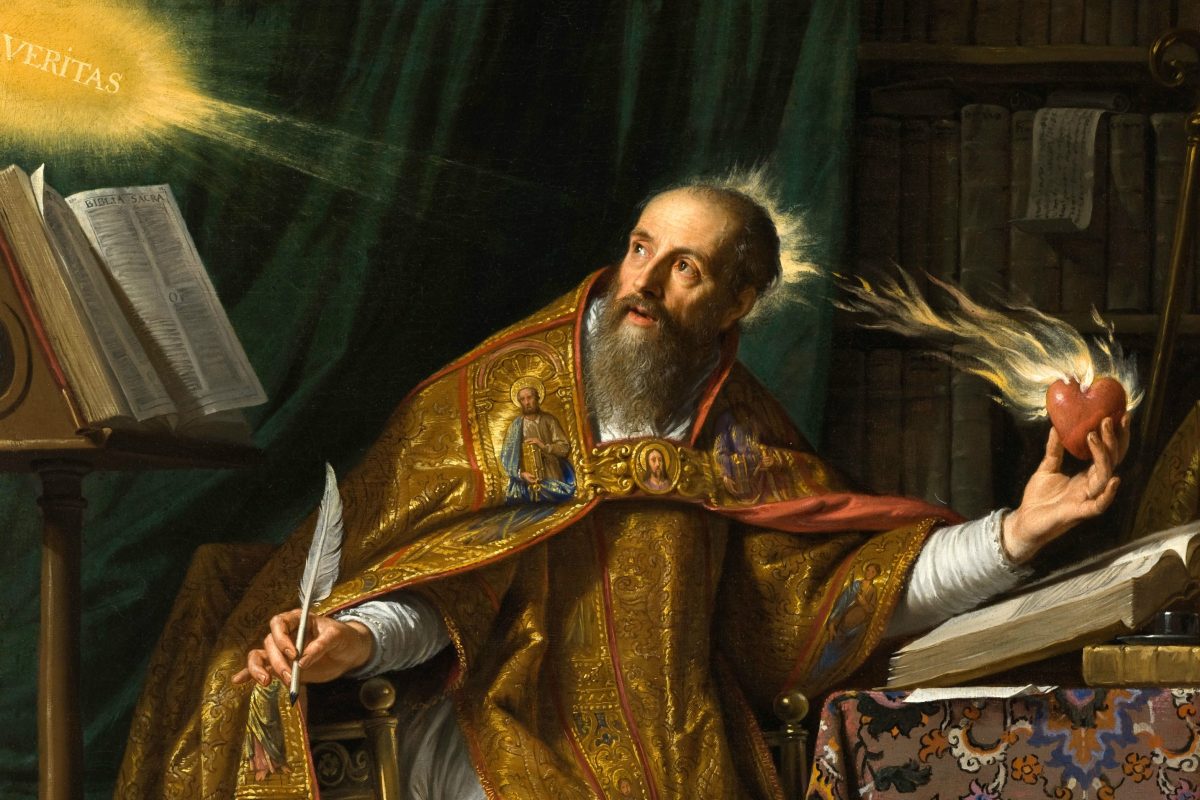
  1. https://en.wikipedia.org/wiki/Augustine_of_Hippo