Genesis: Game of Sons | 12-14-2025

Photo Cred: (1) | Updated: 5/16/2026

Sermon Prep

When it comes to my job, December is a whiplash of emotions. The first half is insanely busy trying to wrap the year up before the holidays hit and then the second half could not be more dead. I was also stressed about finishing the Joseph outline and gearing up for holiday travel, which didn’t help me either in prepping this sermon.

With all the end of year stresses, I just didn’t feel very prepared beforehand for this teaching even though it was done in time. I think the vibe this month was tense compared to all the heaviness of the Fall where everyone seemed to be going through something awful. That build up of emotions and nerve-racking situations can still have an effect on you even after those things are long gone.

The body keeps the score whether wins or losses. In spite of all that, the sermon was completed and turned out alright. Below is the notes and here is the YouTube recording:

Sermon Notes

Opening Prayer

  • Father God, lead us this morning as we search the scriptures. Thank you for your Son whose sacrifice is our salvation. Dwell with us, Holy Spirit, as you teach us today. Amen.

Intro

  • Story of love triangle in 3rd grade between Austin, Marissa, and I.

Main Point

  • Communities fracture under favoritism, while envy corrodes churches and families.

Game of Sons | Genesis 29:1-30:24 (NRSVue)

[1] Then Jacob went on his journey and came to the land of the people of the east.

  • Jacob traveled to Haran (i.e. Turkey) to escape Esau and found a well (Genesis 29:1-10).
    • Jacob’s mother Rebekah is from Haran, so these men were likely her relatives.
      • They’re waiting for Rachel to arrive with Laban’s flock to water the sheep.

[11] Then Jacob kissed Rachel and wept aloud. [12] And Jacob told Rachel that he was her father’s kinsman and that he was Rebekah’s son, and she ran and told her father. [13] When Laban heard the news about his sister’s son Jacob, he ran to meet him; he embraced him and kissed him and brought him to his house. Jacob told Laban all these things, [14] and Laban said to him, “Surely you are my bone and my flesh!” And he stayed with him a month. [15] Then Laban said to Jacob, “Because you are my kinsman, should you therefore serve me for nothing? Tell me, what shall your wages be?” [16] Now Laban had two daughters; the name of the elder was Leah, and the name of the younger was Rachel. [17] Leah’s eyes were weak, but Rachel was graceful and beautiful. [18] Jacob loved Rachel, so he said, “I will serve you seven years for your younger daughter Rachel.” [19] Laban said, “It is better that I give her to you than that I should give her to any other man; stay with me.” [20] So Jacob served seven years for Rachel, and they seemed to him but a few days because of his love for her.” 

  • Being a kinsman guaranteed Jacob was protected and had privileges (Genesis 29:12).
    • Explains why Jacob could negotiate wages. Also, traveling solo was risky and odd.
  • my bone and my flesh” is covenant language throughout OT (Genesis 2:23, Hosea 2:16).
  • Erebu marriage = when adopted heir (i.e. Jacob) marries adopter’s daughter (i.e. Laban).
  • Leah’s eyes refer to her subtle beauty, while Rachel had striking beauty (Genesis 29:17).
    • Given the culture and desert life, a woman’s eyes were their most visible feature.

[21] Then Jacob said to Laban, “Give me my wife that I may go in to her, for my time is completed.” [22] So Laban gathered together all the people of the place and made a feast. [23] But in the evening he took his daughter Leah and brought her to Jacob, and he went in to her. [24] (Laban gave his maid Zilpah to his daughter Leah to be her maid.) [25] When morning came, it was Leah! And Jacob said to Laban, “What is this you have done to me? Did I not serve with you for Rachel? Why then have you deceived me?” [26] Laban said, “This is not done in our country—giving the younger before the firstborn. [27] Complete the week of this one, and we will give you the other also in return for serving me another seven years.” [28] Jacob did so and completed her week; then Laban gave him his daughter Rachel as a wife. [29] (Laban gave his maid Bilhah to his daughter Rachel to be her maid.) [30] So Jacob went in to Rachel also, and he loved Rachel more than Leah. He served Laban for another seven years. [31] When the Lord saw that Leah was unloved, he opened her womb, but Rachel was barren.” 

  • A disguised Jacob deceived Isaac in the dark; now Jacob is deceived in the dark by Laban.
  • Leah’s sons have names that foreshadow Jacob’s deathbed blessing (Genesis 29:32-35).
    • Reuben (affliction), Simeon (hated), Levi (third son); Judah (I will praise the Lord).
    • Reuben, Simeon; Levi (disqualified) vs Judah in Genesis 49 (brothers shall praise).

[1] When Rachel saw that she bore Jacob no children, she envied her sister, and she said to Jacob, “Give me children, or I shall die!” [2] Jacob became very angry with Rachel and said, “Am I in the place of God, who has withheld from you the fruit of the womb?” [3] Then she said, “Here is my maid Bilhah; go in to her, that she may bear upon my knees and that I too may have children through her.” [4] So she gave him her maid Bilhah as a wife, and Jacob went in to her. [5] And Bilhah conceived and bore Jacob a son. [6] Then Rachel said, “God has judged me and has also heard my voice and given me a son”; therefore she named him Dan. [7] Rachel’s maid Bilhah conceived again and bore Jacob a second son. [8] Then Rachel said, “With mighty wrestlings I have wrestled with my sister and have prevailed,” so she named him Naphtali. [9] When Leah saw that she had ceased bearing children, she took her maid Zilpah and gave her to Jacob as a wife. [10] Then Leah’s maid Zilpah bore Jacob a son. [11] And Leah said, “Good fortune!” So she named him Gad. [12] Leah’s maid Zilpah bore Jacob a second son. [13] And Leah said, “Happy am I! For the women will call me happy,” so she named him Asher.

  • For ANE women, your status was derived from covenant connections to the patriarch.
    • Bearing sons for the patriarch guaranteed a greater status than those who didn’t.
  • Like Sarai in Genesis 16, Leah/Rachel use ANE law: slaves bear children for barren wives.

[14] In the days of wheat harvest Reuben went and found mandrakes in the field and brought them to his mother Leah. Then Rachel said to Leah, “Please give me some of your son’s mandrakes.” [15] But she said to her, “Is it a small matter that you have taken away my husband? Would you take away my son’s mandrakes also?” Rachel said, “Then he may lie with you tonight for your son’s mandrakes.” [16] When Jacob came from the field in the evening, Leah went out to meet him and said, “You must come in to me, for I have hired you with my son’s mandrakes.” So he lay with her that night. [17] And God heeded Leah, and she conceived and bore Jacob a fifth son. [18] Leah said, “God has given me my hire because I gave my maid to my husband,” so she named him Issachar. [19] And Leah conceived again, and she bore Jacob a sixth son. [20] Then Leah said, “God has endowed me with a good gift; now my husband will honor me, because I have borne him six sons,” so she named him Zebulun. [21] Afterwards she bore a daughter and named her Dinah. [22] Then God remembered Rachel, and God heeded her and opened her womb. [23] She conceived and bore a son and said, “God has taken away my reproach,” [24] and she named him Joseph, saying, “May the Lord add to me another son!”

  • Mandrakes = toxic plant with man-shaped roots used for fertility charms or love potions.
  • Leah and Rachel’s attitude towards God changes as they thank him for giving them sons.

Why It Matters

  • God still works through generational sin, family failures, and even sibling rivalries.
    • God sees the unloved. He chooses the least of these to do the greatest.

Power Text

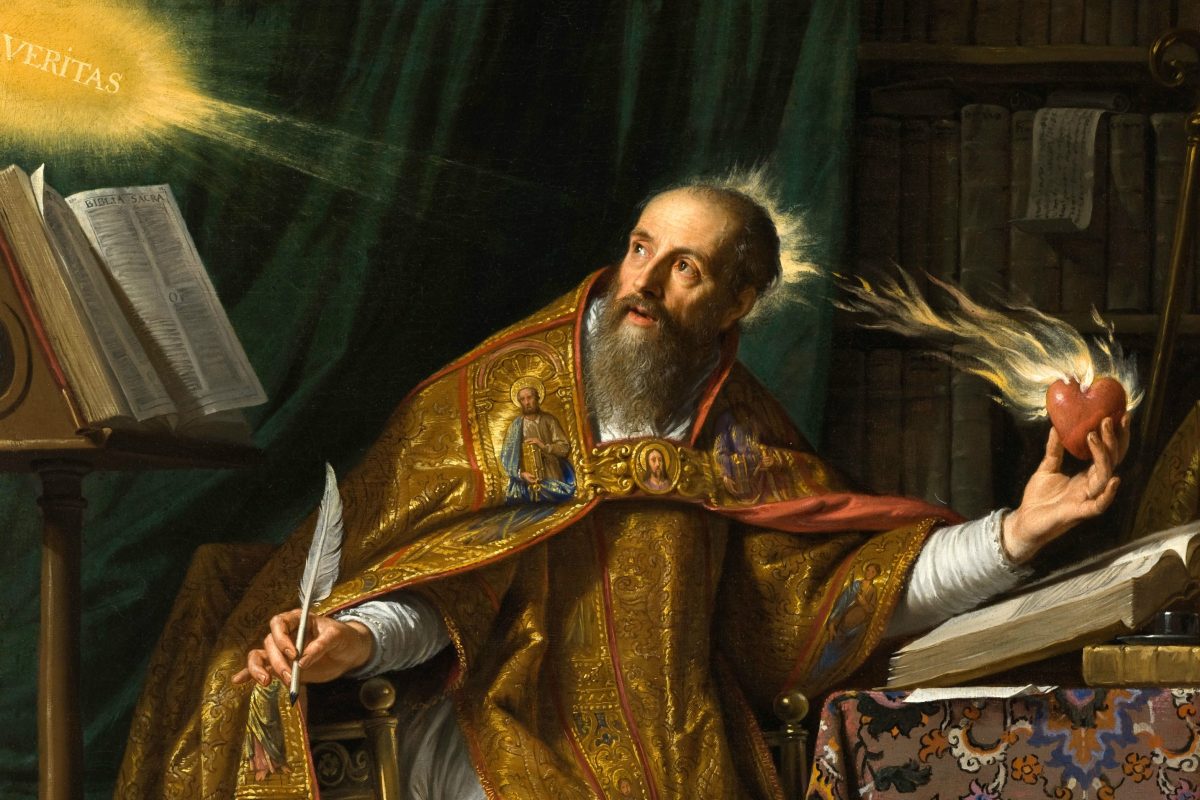
God judged it better to bring good out of evil than not to permit any evil to exist.” – Augustine of Hippo, Enchiridion on Faith, Hope, and Love, §27, trans. J. F. Shaw, in Nicene and Post-Nicene Fathers, First Series, vol. 3, ed. Philip Schaff (Peabody, MA: Hendrickson Publishers, 1994), 245.

Outro

  • Identify the Leah-type in your life: someone unseen. Practice hearing vs hurting them.

Final Thoughts

The delivery was shaky, but okay. I was going to open my sermon with story about one of my brothers and I, but at the last second opted to tell a different story. That other story has much higher emotions, so I think those impacted how I delivered this message even though I didn’t tell it. In fact, I was nervous the whole lead up to this message because I was afraid to tell that story.

This sermon is solid though and even if I didn’t think my delivery ws good, the content was good. It flowed well notes-wise and I did what I was supposed to do: preach the word. With that, Godspeed and Jesus bless.

Footnotes

  1. https://en.wikipedia.org/wiki/Augustine_of_Hippo

The Book That Made Your World: Review and Summary Part 1

Photo Cred: (1) | Updated: 5/27/2019

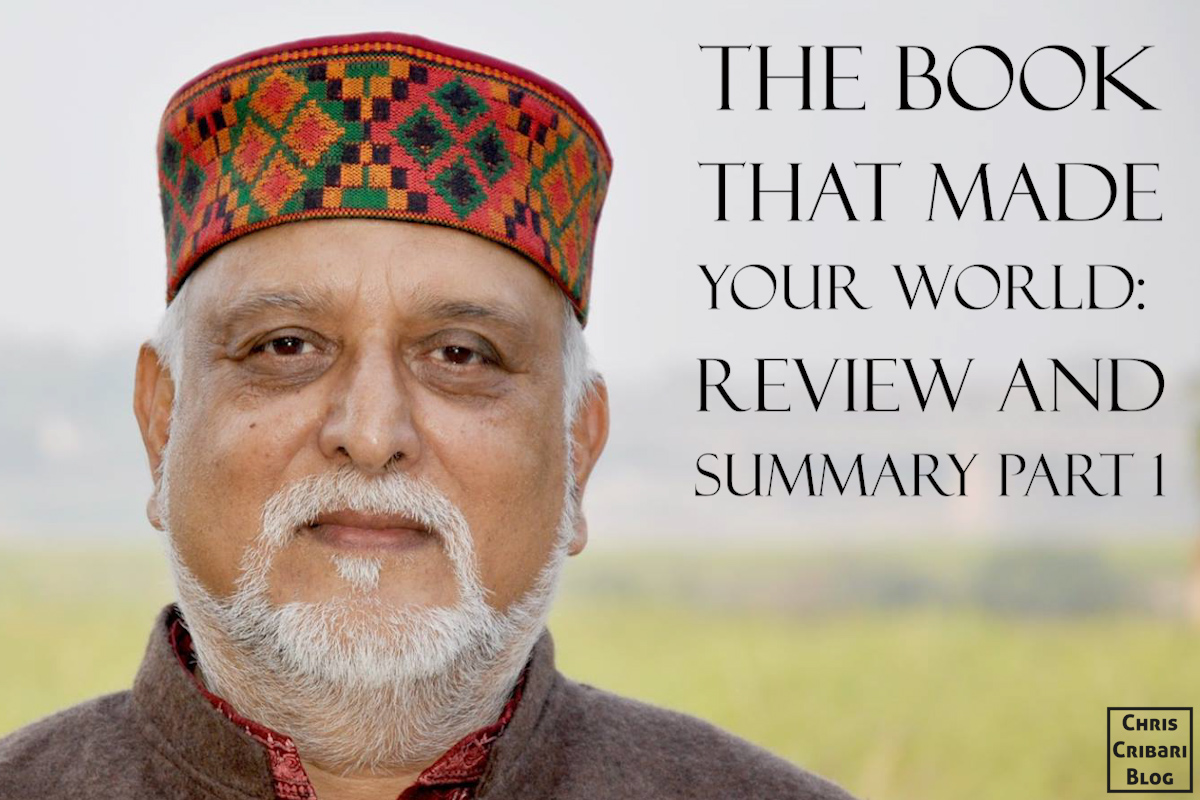
This blog-post was commissioned by Marjorie Wall-Hofer who is a member of my former church called Peace Mennonite Community Church (2). This will be different than other blog-posts in that I will be reviewing and summarizing a book called The Book That Made Your World by Vishal Mangalwadi (3). To be honest, I had never heard of him or his oddly titled book beforehand, but I went for it and thoroughly enjoyed it for the most part. There were a few minor issues I had with the book, but they are too minut to mention every single one in detail.

Primarily, my issues with the book were either grammatical spelling errors (i.e. “bcome” vs. “become”) or jumps in logic to unproven conclusions. Yet, those issues were brief and were my only nitpicks with the book itself. There was also the fact that it reads like an encyclopedia of information as it goes from subject to subject like a textbook of sorts. Then again, I guess there was no way around that problem either considering the subject matter in the first place.

Mangalwadi’s The Book That Made Your World is a very informative take on the Bible’s influence in twenty key areas of the human experience like the origins of science to the concept of compassion in the face of utter barbarism in the early first century. Its aim was to show how the Bible has shaped the West in some of the most profound ways imaginable, even in some ways unexpectedly. In that respect, the book succeeds. Although it does tend to lack the artistic appeal of more expressive writers.

Related image

Chapter 1: The West Without Its Soul | Photo Cred: (4)

The book begins with how the Bible was crucial in the conceptual development of the human soul. Comparing both Johann Sebastian Bach and Kurt Cobain from Nirvana, we see a stark contrast in their lives and striking similarities. Bach’s biblical upbringing versus Cobain’s Buddhism, which led to his belief in Nihilism later in life.

For Bach, his worldview produced some of the most celebrated classical music of all time that gave a sense of hope to its audience as they admired the art of his compositions. For Cobain, his worldview led to producing music that bears nothing meaningful or worthwhile in substance. The soul can express itself best through music and music allows us to see into the souls of one another. The Bible shapes our souls into redeemed wretches, while its absence allows our souls to rot in utter decay. On the one hand, everlasting life and on the other a life that left too soon.

Related image

Chapter 2: Service | Photo Cred: (5)

The next chapter focuses on the biblical value of service when compared to other worldviews. Drawing from his own experiences growing up in India, Mangalwadi explains how someone who lives out the statutes of the Bible in a real-world way will see their whole outlook on life change as they do less for themselves and more for others in the name of Christ. While others worry about getting to the other side where the grass is always greener, Christ compels His followers to seek out those whose grass is not so green and to help them flourish as they soak in the love of the Son. The world promotes self-love for our own good, but Christ commands selfless love as we serve others for the greater good.

Image result for journey

Chapters 3 – 4: Quest and Self | Photo Cred: (6)

Mangalwadi continues into more particular ways in which the Bible has influenced and helped make the modern West by going into the quest of life, along with our role in that quest as free creatures. The Bible helped give humans the ultimate quest in life: to be known by God, to know God, and to make God known. In the same respect, it also gives us a true sense of self as we now know that we are neither equal to God nor to a dog, but rather exist in the middle of the spiritual and the natural.

We are free creatures that create like our Creator and yet are the cherry on top of Creation itself. He asserts that “I am a creative creature” and a free one at that too as we journey on our unique quests into the unknown reaches of what truly makes us human. As we draw close to God, we at the same token draw close to a proper understanding of ourselves in light of His light: the Word of God.

Image result for george lemaitre

Chapters 5 – 6: Humanity and Rationality | Photo Cred: (7)

From here, Mangalwadi touches on our humanity and rationality as self-conscious beings. When it comes to humanity in particular, the Bible was the very spark that ignited the Renaissance, along with the reintroduced idea of human dignity. Even in the most cruel cases of people living in rejection to God in history, our human dignity cannot be erased from the human consciousness. It remains an ever-present element in our lives as a mark that we were made for more.

For rationality, the greatest movements post-11th Century Europe all involved in some shape or form a strong emphasis on learning, especially through reading and writing. This can be traced back to Augustine, Boethius, William Tyndale, and other brights that sought to bring the truths of Scripture to the commoners who lived in ignorance. It was people like these who brought about new generations of free thinkers that could now test the claims of the corrupt and powerful.

Image result for lateen sail

Chapters 7: Technology | Photo Cred: (8)

When it came to the advancements of technology throughout the ages, notable scholar Ernst Benz clearly pinpoints the four key ways that a Judeo-Christian worldview helped the development of technology on a worldwide scale. His reasoning is summarized below by Mangalwadi:

“First, the Bible emphasized intelligent craftsmanship in the world’s design. Second, the Bible suggested that human beings participate in divine workmanship by being good artisans themselves. Third, the Bible taught that we follow divine example when we use the physical universe for righteous ends. And fourth, the Bible challenged the West to use time wisely, because each moment is a valuable, one-time opportunity (P. 97).”

In short, most of the most important inventions of the last several centuries can be attributed to a Biblical worldview that fueled the passion of many inventors over time. These inventions include the lateen sail, the wheeled plow, the horse as a tool in the workforce, the water mill, the windmill, the crank, the wheelbarrow, the flywheel, the pipe organ, the mechanical clock, eyeglasses, and dozens of other inventions that are the basis of Western technological advancements.

avengers

Chapter 8: Heroism | Photo Cred: (9)

The idea of a hero has changed as the culture in Western society has transformed with the passing of time. The classical hero exemplified the traits that would be expected of the Greco-Roman mentality and that meant powerful leverage over others, whether politically, militarily, or any other barbaric means necessary to control those beneath you. The medieval hero was the next idea of heroism and they sought glory, skill, prowess, loyalty, generosity, and courtesy. This eventually led to what is known as religious chivalry and this was basically the equivalent of placing a spiritual mask onto a sinful practice.

That is, fighting for the LORD would guarantee salvation, which was a lie. This idea has evolved into what is known today and what I like to call “good-person salvation.” The idea that because someone “lives a good life” and is a “good person,” that they will inherit eternal life in Heaven. As this idea flourished over the years, it was the Reformers of the 15th and 16th centuries who brought back the idea of true heroism. A heroism based off of Christ himself and His selfless sacrifice for his enemies. This is the backbone behind what most people refer to in Western society as a real hero: someone who is sacrificial, loving, true, and giving to those in need.

Image result for reformation

Chapter 9: Revolution | Photo Cred: (10)

A true revolution is one that either goes back to the way things were or changes the culture into something better. The Protestant Reformation was one of the most influential revolutions because it did both. This revolution was different in a sense from other revolutions because it started from the top and worked its way down.

Starting in universities and growing in pubs all across Europe, this revolution stood firmly on God’s Word as its source of reform. The reformers consisted of a team of ragtag “heretics” who just wanted the Word to be the final say in the World, even greater than the Pope. The result of the revolution? Two Bible translations for the commoner, the Geneva and the KJV, along with the most powerful force in any society: an informed public.

Well that’s just half of my review and summary of The Book That Made Your World! Stay tuned for Part 2 and the rest of my thoughts on this book. With that, Godspeed and Jesus bless!

Footnotes

  1. https://www.facebook.com/VishaMangalwadi
  2. http://peace-mennonite.org/
  3. http://amzn.to/2wlAnCZ
  4. http://movies.ndtv.com/photos/forever-27-kurt-cobain-would-have-been-46-yesterday-10981
  5. http://www.nlb.gov.sg/sure/a-good-deed-goes-a-long-way/
  6. https://rgyan.com/blogs/omens-while-starting-for-a-destination/
  7. http://thelibertariancatholic.com/raising-your-child-with-the-bible-you-may-be-raising-an-atheist/
  8. https://hhswhi.wikispaces.com/Lateen+sail
  9. Captain America: Civil War (2016)
  10.  https://thecompassmagazine.com/adventism/reformation-and-the-remnant-a-review