Genesis: Game of Sons | 12-14-2025

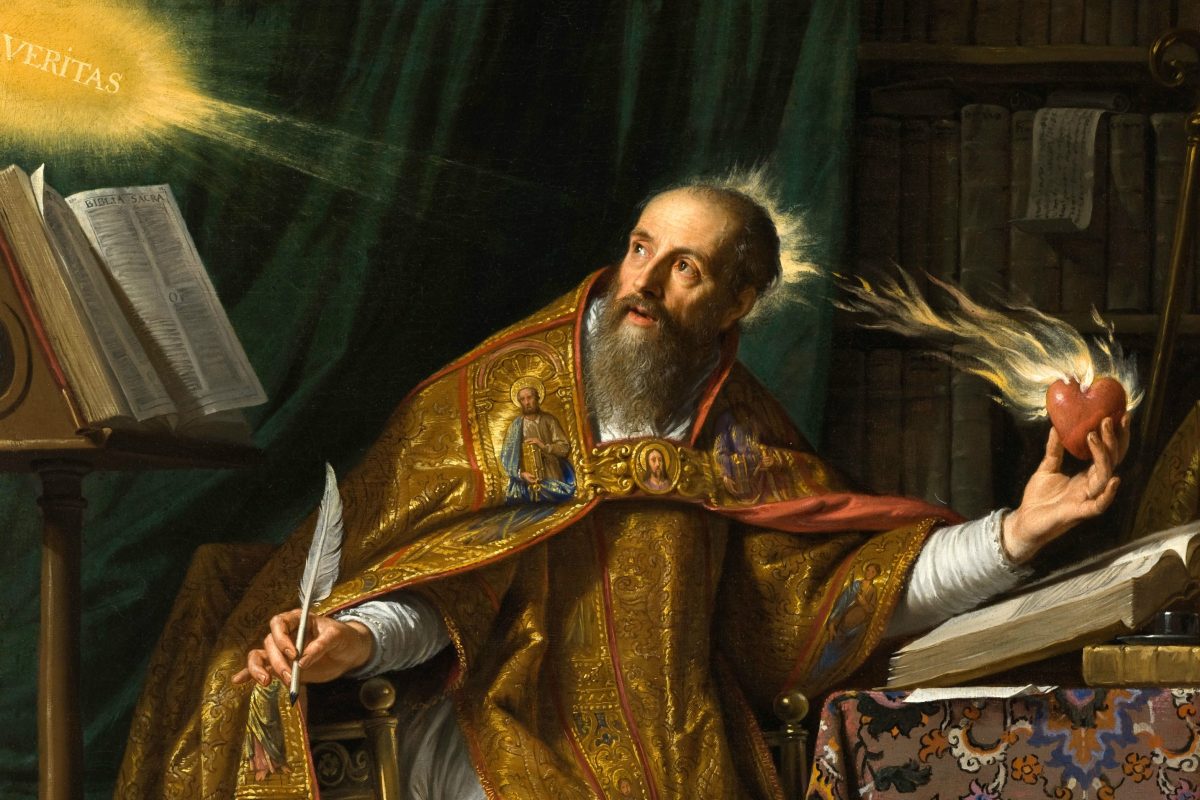
Photo Cred: (1) | Updated: 5/16/2026

Sermon Prep

When it comes to my job, December is a whiplash of emotions. The first half is insanely busy trying to wrap the year up before the holidays hit and then the second half could not be more dead. I was also stressed about finishing the Joseph outline and gearing up for holiday travel, which didn’t help me either in prepping this sermon.

With all the end of year stresses, I just didn’t feel very prepared beforehand for this teaching even though it was done in time. I think the vibe this month was tense compared to all the heaviness of the Fall where everyone seemed to be going through something awful. That build up of emotions and nerve-racking situations can still have an effect on you even after those things are long gone.

The body keeps the score whether wins or losses. In spite of all that, the sermon was completed and turned out alright. Below is the notes and here is the YouTube recording:

Sermon Notes

Opening Prayer

  • Father God, lead us this morning as we search the scriptures. Thank you for your Son whose sacrifice is our salvation. Dwell with us, Holy Spirit, as you teach us today. Amen.

Intro

  • Story of love triangle in 3rd grade between Austin, Marissa, and I.

Main Point

  • Communities fracture under favoritism, while envy corrodes churches and families.

Game of Sons | Genesis 29:1-30:24 (NRSVue)

[1] Then Jacob went on his journey and came to the land of the people of the east.

  • Jacob traveled to Haran (i.e. Turkey) to escape Esau and found a well (Genesis 29:1-10).
    • Jacob’s mother Rebekah is from Haran, so these men were likely her relatives.
      • They’re waiting for Rachel to arrive with Laban’s flock to water the sheep.

[11] Then Jacob kissed Rachel and wept aloud. [12] And Jacob told Rachel that he was her father’s kinsman and that he was Rebekah’s son, and she ran and told her father. [13] When Laban heard the news about his sister’s son Jacob, he ran to meet him; he embraced him and kissed him and brought him to his house. Jacob told Laban all these things, [14] and Laban said to him, “Surely you are my bone and my flesh!” And he stayed with him a month. [15] Then Laban said to Jacob, “Because you are my kinsman, should you therefore serve me for nothing? Tell me, what shall your wages be?” [16] Now Laban had two daughters; the name of the elder was Leah, and the name of the younger was Rachel. [17] Leah’s eyes were weak, but Rachel was graceful and beautiful. [18] Jacob loved Rachel, so he said, “I will serve you seven years for your younger daughter Rachel.” [19] Laban said, “It is better that I give her to you than that I should give her to any other man; stay with me.” [20] So Jacob served seven years for Rachel, and they seemed to him but a few days because of his love for her.” 

  • Being a kinsman guaranteed Jacob was protected and had privileges (Genesis 29:12).
    • Explains why Jacob could negotiate wages. Also, traveling solo was risky and odd.
  • my bone and my flesh” is covenant language throughout OT (Genesis 2:23, Hosea 2:16).
  • Erebu marriage = when adopted heir (i.e. Jacob) marries adopter’s daughter (i.e. Laban).
  • Leah’s eyes refer to her subtle beauty, while Rachel had striking beauty (Genesis 29:17).
    • Given the culture and desert life, a woman’s eyes were their most visible feature.

[21] Then Jacob said to Laban, “Give me my wife that I may go in to her, for my time is completed.” [22] So Laban gathered together all the people of the place and made a feast. [23] But in the evening he took his daughter Leah and brought her to Jacob, and he went in to her. [24] (Laban gave his maid Zilpah to his daughter Leah to be her maid.) [25] When morning came, it was Leah! And Jacob said to Laban, “What is this you have done to me? Did I not serve with you for Rachel? Why then have you deceived me?” [26] Laban said, “This is not done in our country—giving the younger before the firstborn. [27] Complete the week of this one, and we will give you the other also in return for serving me another seven years.” [28] Jacob did so and completed her week; then Laban gave him his daughter Rachel as a wife. [29] (Laban gave his maid Bilhah to his daughter Rachel to be her maid.) [30] So Jacob went in to Rachel also, and he loved Rachel more than Leah. He served Laban for another seven years. [31] When the Lord saw that Leah was unloved, he opened her womb, but Rachel was barren.” 

  • A disguised Jacob deceived Isaac in the dark; now Jacob is deceived in the dark by Laban.
  • Leah’s sons have names that foreshadow Jacob’s deathbed blessing (Genesis 29:32-35).
    • Reuben (affliction), Simeon (hated), Levi (third son); Judah (I will praise the Lord).
    • Reuben, Simeon; Levi (disqualified) vs Judah in Genesis 49 (brothers shall praise).

[1] When Rachel saw that she bore Jacob no children, she envied her sister, and she said to Jacob, “Give me children, or I shall die!” [2] Jacob became very angry with Rachel and said, “Am I in the place of God, who has withheld from you the fruit of the womb?” [3] Then she said, “Here is my maid Bilhah; go in to her, that she may bear upon my knees and that I too may have children through her.” [4] So she gave him her maid Bilhah as a wife, and Jacob went in to her. [5] And Bilhah conceived and bore Jacob a son. [6] Then Rachel said, “God has judged me and has also heard my voice and given me a son”; therefore she named him Dan. [7] Rachel’s maid Bilhah conceived again and bore Jacob a second son. [8] Then Rachel said, “With mighty wrestlings I have wrestled with my sister and have prevailed,” so she named him Naphtali. [9] When Leah saw that she had ceased bearing children, she took her maid Zilpah and gave her to Jacob as a wife. [10] Then Leah’s maid Zilpah bore Jacob a son. [11] And Leah said, “Good fortune!” So she named him Gad. [12] Leah’s maid Zilpah bore Jacob a second son. [13] And Leah said, “Happy am I! For the women will call me happy,” so she named him Asher.

  • For ANE women, your status was derived from covenant connections to the patriarch.
    • Bearing sons for the patriarch guaranteed a greater status than those who didn’t.
  • Like Sarai in Genesis 16, Leah/Rachel use ANE law: slaves bear children for barren wives.

[14] In the days of wheat harvest Reuben went and found mandrakes in the field and brought them to his mother Leah. Then Rachel said to Leah, “Please give me some of your son’s mandrakes.” [15] But she said to her, “Is it a small matter that you have taken away my husband? Would you take away my son’s mandrakes also?” Rachel said, “Then he may lie with you tonight for your son’s mandrakes.” [16] When Jacob came from the field in the evening, Leah went out to meet him and said, “You must come in to me, for I have hired you with my son’s mandrakes.” So he lay with her that night. [17] And God heeded Leah, and she conceived and bore Jacob a fifth son. [18] Leah said, “God has given me my hire because I gave my maid to my husband,” so she named him Issachar. [19] And Leah conceived again, and she bore Jacob a sixth son. [20] Then Leah said, “God has endowed me with a good gift; now my husband will honor me, because I have borne him six sons,” so she named him Zebulun. [21] Afterwards she bore a daughter and named her Dinah. [22] Then God remembered Rachel, and God heeded her and opened her womb. [23] She conceived and bore a son and said, “God has taken away my reproach,” [24] and she named him Joseph, saying, “May the Lord add to me another son!”

  • Mandrakes = toxic plant with man-shaped roots used for fertility charms or love potions.
  • Leah and Rachel’s attitude towards God changes as they thank him for giving them sons.

Why It Matters

  • God still works through generational sin, family failures, and even sibling rivalries.
    • God sees the unloved. He chooses the least of these to do the greatest.

Power Text

God judged it better to bring good out of evil than not to permit any evil to exist.” – Augustine of Hippo, Enchiridion on Faith, Hope, and Love, §27, trans. J. F. Shaw, in Nicene and Post-Nicene Fathers, First Series, vol. 3, ed. Philip Schaff (Peabody, MA: Hendrickson Publishers, 1994), 245.

Outro

  • Identify the Leah-type in your life: someone unseen. Practice hearing vs hurting them.

Final Thoughts

The delivery was shaky, but okay. I was going to open my sermon with story about one of my brothers and I, but at the last second opted to tell a different story. That other story has much higher emotions, so I think those impacted how I delivered this message even though I didn’t tell it. In fact, I was nervous the whole lead up to this message because I was afraid to tell that story.

This sermon is solid though and even if I didn’t think my delivery ws good, the content was good. It flowed well notes-wise and I did what I was supposed to do: preach the word. With that, Godspeed and Jesus bless.

Footnotes

  1. https://en.wikipedia.org/wiki/Augustine_of_Hippo

2 Samuel: God Brings Victory | 9-15-2024

Updated: 11/12/2024

Sermon Prep

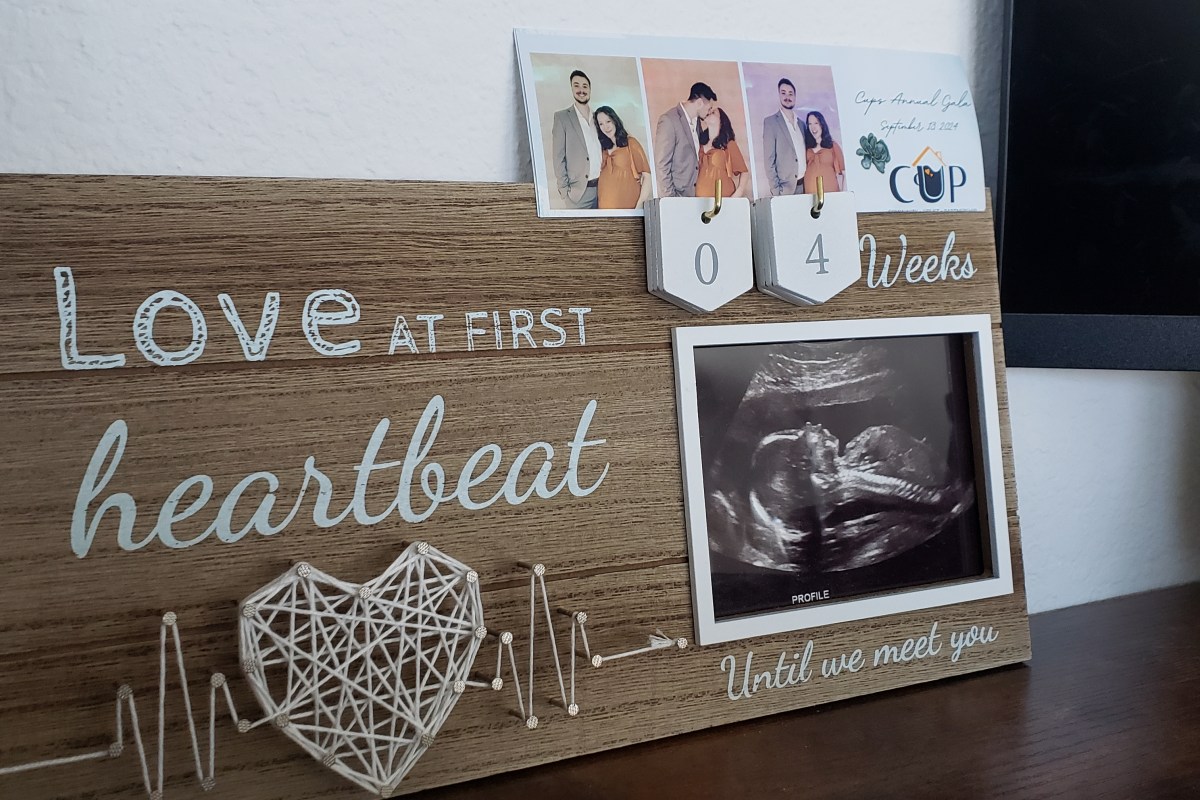
We were 4 weeks out from the expected due date for our daughter Willow. Like I mentioned in my previous post, I had prepped these 3 sermons as an unofficial trilogy before I went out on paternity leave. Of the 3, this was the one where it was just a sermon.

I didn’t have any personal favoritism like with the story of Mephibosheth and didn’t have a heavy weight of responsibility on my shoulders like with the story of Bathsheba and Uriah. So if anything, the prep here was the easiest in that I relied a lot on the notes of our teaching pastor who always maps out the series we’re in at a high level and go from there. Speaking of notes, here’s those below and the recorded sermon as well.

Sermon Notes

Opening Line

  • Have you ever joined an organization only to now realize that you’re in deep conflict?

Intro

  • Explain dinosaurs in the Congo and work acquisition, along with church conflicts.

Main Point

  • You can trust in God’s guidance and strength in conflicting times.
  • Let’s see how David was at the center of a power vacuum and yet relied on God’s power.

A King’s Covenant

  • Read 2 Samuel 5 aloud.
  • David is crowned king over all of Israel, thus ending the civil war (2 Samuel 5:1-5).
    • Like the American Reconstruction era, it takes time to repair a divided nation.
  • “we are your bone and your flesh” alludes to Genesis 2:23 → Hosea 2:16 → Ephesians 5:28-32
    • Progressive revelation is the slow reveal of God’s plan as humans advance.
  • David is great because God is with him and David relies on God (2 Samuel 5:6-12, 8:15).
    • The Jebusites try to provoke David, so then David taunts back (2 Samuel 5:6-8).
  • For as great a leader he was, David shows his weakness with women (2 Samuel 5:13-16).
  • Trusting God and his guidance, David defeats the Philistines (2 Samuel 5:17-25).

A King’s Victory

  • Read 2 Samuel 10 aloud.
  • Once again, David wants to show the lovingkindness of God (2 Samuel 10:1-2a).
    • Nahash (Serpent → Eden Test) was kind to David in the wilderness (1 Samuel 12).
  • Hanun is threatened by bad counsel and shames David’s servants (2 Samuel 10:2b-5).
  • The Ammonites lose this fight and Hadadezer’s men surrender (2 Samuel 10:6-19).

A King’s Pride

  • Read 2 Samuel 12:26-31 aloud.
  • Joab captures Rabbah, yet David isn’t at war because of his affair (2 Samuel 12:26-31).

Why This Matters

  • David relied on God’s power and guidance to deliver him through his battles.

Power Text

  • Read Psalm 144:1-2 aloud.
  • It’s God who resolves conflict and brings victory, not us and our own efforts. 

Outro

  • Trust in God’s power to overcome the battles and struggles that you face.

Final Thoughts

My wife Glory had her baby shower right after church, so my Mom and Sister were in town for that event. It was a special service since I got to preach and they got to be there for that as well. This was a fine message that got the job done. Nothing controversial or unique that made it stand out and that’s certainly okay sometimes.

What’s often the case is that most sermons are serviceable. They’re not all hall of fame messages, but rather simple and straightforward. In the day and age of outrage, simple sermons are a great antidote. With that, Godspeed and Jesus bless.

2 Samuel: David and Mephibosheth | 9-8-2024

Updated: 11/11/2024

Sermon Prep

September of 2024 was our last month as just spouses and not parents. It was a fun month where we got to see our friends, Taylor and Emma, get married and go to their wedding in the mountains. Starting the journey we started back a few years ago of falling in love. That’s actually where this great photo of us comes from when one of their photographers snapped a picture of us during the ceremony prayer.

Given my time at church in leadership and work was coming to a close before my paternity leave, I began prepping these messages way ahead of time. In fact, this message I started working on in early August of this year. For one, early onset “baby brain” was taking effect where I just had a harder time thinking and staying motivated. As we were approaching the 36 week point, the reality of our daughter being born was fast approaching too so in the event she was born early I was prepared sermon-wise.

Since there was a big gap between the last 3 messages of 2024 and my sermon in June on David and Goliath, I treated it as an unofficial trilogy covering the first years of King David’s reign. Of the 3, I had the most personal interest in this one because for me it’s David at his absolute best. His most messianic if you will of what a foreshadow of Jesus looks like in a kingly figure.

I think that unbridled enthusiasm just enhanced all the extensive prep I did here. I also began adjusting my sermon format by introducing highlights to certain parts of my sermon notes. Blue is for quotes of other people, green is for Scripture sections, red is for Scripture citations, and yellow is for recurring themes.

For the sake of blogpost space, I left out the Scripture sections but the citations of what was read are still here. I’ve only just started that again, but that’s where the color shows up here. Below are the notes for this message and linked here is the sermon too.

Sermon Notes

Opening Line

  • We all know someone that brings nothing to the table, yet we invite them anyway.

Intro

  • Explain Silence (2016) and how Kichijiro represents our relationship to Jesus.

Main Point

  • Jesus is merciful and kind, therefore he invites you to dine and reign with him.
  • David also invited someone to the table, but first here’s the historical context.

Historical Context

  • During the civil war, King Eshbaal was Israel’s 2nd king reigning for 2 years, while King David was Judah’s 1st king reigning for 7.5 years (2 Samuel 2:8-11).
    • Eshbaal (Baal exists) Ish-bosheth (man of shame) “is an intentional scribal alteration” as noted by John Bright (i.e. Hosea 2:16).
    • Merib-Baal (Baal is advocate) Mephibosheth (he scatters shame).
  • Abner was King Saul’s cousin, Ish-bosheth’s uncle, and their army commander.
    • Abner was assassinated by Joab as revenge for Abner killing Joab’s brother, but David didn’t know this plan. Abner was with David (2 Samuel 2:12-32, 3:8, 26-30).

Mephibosheth’s Suffering

  • Read 2 Samuel 4 aloud.
  • Baanah and Rechab as Gibeonites saw a way to impress David (2 Samuel 4:1-3).
  • Mephibosheth was crippled because of moral suffering as his nurse was fleeing from the Philistines fearing they would kill him (1 Samuel 31:1-6, 2 Samuel 4:4).
    • Types of suffering:
      • Moral suffering is humans hurting humans.
      • Natural suffering is creation hurting humans.
      • Universal suffering is the death of the body and soul.
  • They were secret, selfish, and swift to sin (2 Samuel 4:6-8). We act that way too.
  • David’s furious that they would defy God’s covenant with Saul (2 Samuel 4:9-12).

David’s Kindness

  • Read 2 Samuel 9 aloud.
  • David became king over all of Israel when Ish-bosheth died (2 Samuel 5:1-5).
  • Lo-debar means no thing, so a town in the middle of nowhere (2 Samuel 9:4-5).
    • Mephibosheth was hiding from King David because it was common for a new ruler to clean house and kill all survivors of the previous monarchy.
  • In complete humility, Mephibosheth falls on his face like a dog might “lay down” and entrusts himself to the service of King David as a slave (2 Samuel 9:6-8).
    • Saul had a tenth of Israel’s assets, so David gave back to Mephibosheth and his family what they lost from Israel’s civil war (1 Samuel 8:10-18).
  • Honoring his covenant to Jonathan, David invites Mephibosheth to his table.
    • This incredible gesture was culturally taboo and was a sign to everyone that Mephibosheth was grafted in with David’s reign (2 Samuel 9:11b-13).
  • David continued to care for Mephibosheth (2 Samuel 16:1-4, 19:24-30, 21:1-9).

Why This Matters

  • Mephibosheth goes from hiding far away in the outskirts of nowhere to now being dignified and esteemed as a regular member seated at the King’s table.
    • “We might say we find David at his best… What’s being expressed here is the covenant love of God.” – Alistair Begg

Power Text

  • Read Revelation 3:20-21 aloud.
  • Because Jesus loves you, he wants you to dine and reign with him forever.
    • “The most important thing that happens between God and the human soul is to love and to be loved.” – Kallistos Katafygiotis, The Philokalia

Outro

  • Read Luke 22:26b-30 aloud.
  • Life is about proximity with Jesus, whether you’re close to him or far away on your own.
  • Jesus invites you to a kingdom life, even when you bring nothing to the table and don’t deserve it.
  • It’s your choice: live in the middle of nowhere or take a seat at the table.

Final Thoughts

This is one of my personal favorite sermons to teach. There’s just so much I love here that speaks volumes both to the people involved and thematically as it points to what the messiah will be like when he arrives. How can you not get excited about God’s grace and his lovingkindness towards us. With that, Godspeed and Jesus bless.