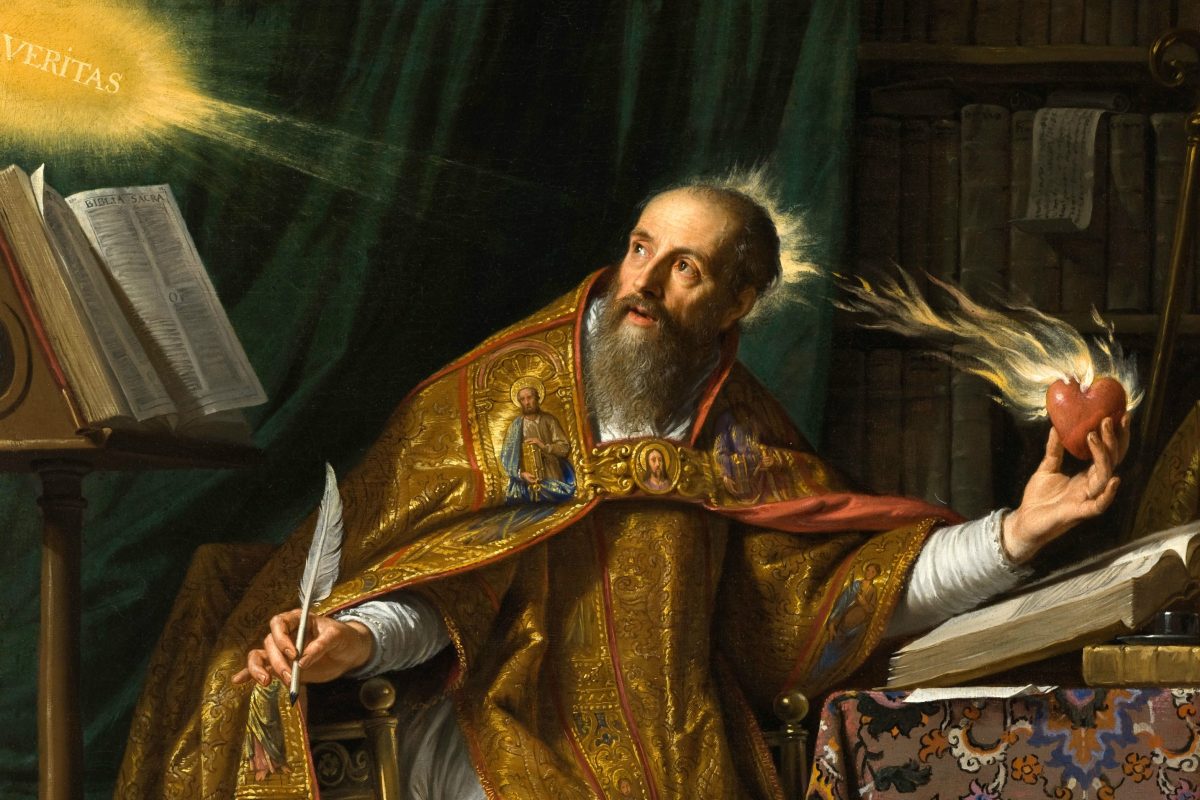
Genesis: Game of Sons | 12-14-2025

Photo Cred: (1) | Updated: 5/16/2026

Sermon Prep

When it comes to my job, December is a whiplash of emotions. The first half is insanely busy trying to wrap the year up before the holidays hit and then the second half could not be more dead. I was also stressed about finishing the Joseph outline and gearing up for holiday travel, which didn’t help me either in prepping this sermon.

With all the end of year stresses, I just didn’t feel very prepared beforehand for this teaching even though it was done in time. I think the vibe this month was tense compared to all the heaviness of the Fall where everyone seemed to be going through something awful. That build up of emotions and nerve-racking situations can still have an effect on you even after those things are long gone.

The body keeps the score whether wins or losses. In spite of all that, the sermon was completed and turned out alright. Below is the notes and here is the YouTube recording:

Sermon Notes

Opening Prayer

  • Father God, lead us this morning as we search the scriptures. Thank you for your Son whose sacrifice is our salvation. Dwell with us, Holy Spirit, as you teach us today. Amen.

Intro

  • Story of love triangle in 3rd grade between Austin, Marissa, and I.

Main Point

  • Communities fracture under favoritism, while envy corrodes churches and families.

Game of Sons | Genesis 29:1-30:24 (NRSVue)

[1] Then Jacob went on his journey and came to the land of the people of the east.

  • Jacob traveled to Haran (i.e. Turkey) to escape Esau and found a well (Genesis 29:1-10).
    • Jacob’s mother Rebekah is from Haran, so these men were likely her relatives.
      • They’re waiting for Rachel to arrive with Laban’s flock to water the sheep.

[11] Then Jacob kissed Rachel and wept aloud. [12] And Jacob told Rachel that he was her father’s kinsman and that he was Rebekah’s son, and she ran and told her father. [13] When Laban heard the news about his sister’s son Jacob, he ran to meet him; he embraced him and kissed him and brought him to his house. Jacob told Laban all these things, [14] and Laban said to him, “Surely you are my bone and my flesh!” And he stayed with him a month. [15] Then Laban said to Jacob, “Because you are my kinsman, should you therefore serve me for nothing? Tell me, what shall your wages be?” [16] Now Laban had two daughters; the name of the elder was Leah, and the name of the younger was Rachel. [17] Leah’s eyes were weak, but Rachel was graceful and beautiful. [18] Jacob loved Rachel, so he said, “I will serve you seven years for your younger daughter Rachel.” [19] Laban said, “It is better that I give her to you than that I should give her to any other man; stay with me.” [20] So Jacob served seven years for Rachel, and they seemed to him but a few days because of his love for her.” 

  • Being a kinsman guaranteed Jacob was protected and had privileges (Genesis 29:12).
    • Explains why Jacob could negotiate wages. Also, traveling solo was risky and odd.
  • my bone and my flesh” is covenant language throughout OT (Genesis 2:23, Hosea 2:16).
  • Erebu marriage = when adopted heir (i.e. Jacob) marries adopter’s daughter (i.e. Laban).
  • Leah’s eyes refer to her subtle beauty, while Rachel had striking beauty (Genesis 29:17).
    • Given the culture and desert life, a woman’s eyes were their most visible feature.

[21] Then Jacob said to Laban, “Give me my wife that I may go in to her, for my time is completed.” [22] So Laban gathered together all the people of the place and made a feast. [23] But in the evening he took his daughter Leah and brought her to Jacob, and he went in to her. [24] (Laban gave his maid Zilpah to his daughter Leah to be her maid.) [25] When morning came, it was Leah! And Jacob said to Laban, “What is this you have done to me? Did I not serve with you for Rachel? Why then have you deceived me?” [26] Laban said, “This is not done in our country—giving the younger before the firstborn. [27] Complete the week of this one, and we will give you the other also in return for serving me another seven years.” [28] Jacob did so and completed her week; then Laban gave him his daughter Rachel as a wife. [29] (Laban gave his maid Bilhah to his daughter Rachel to be her maid.) [30] So Jacob went in to Rachel also, and he loved Rachel more than Leah. He served Laban for another seven years. [31] When the Lord saw that Leah was unloved, he opened her womb, but Rachel was barren.” 

  • A disguised Jacob deceived Isaac in the dark; now Jacob is deceived in the dark by Laban.
  • Leah’s sons have names that foreshadow Jacob’s deathbed blessing (Genesis 29:32-35).
    • Reuben (affliction), Simeon (hated), Levi (third son); Judah (I will praise the Lord).
    • Reuben, Simeon; Levi (disqualified) vs Judah in Genesis 49 (brothers shall praise).

[1] When Rachel saw that she bore Jacob no children, she envied her sister, and she said to Jacob, “Give me children, or I shall die!” [2] Jacob became very angry with Rachel and said, “Am I in the place of God, who has withheld from you the fruit of the womb?” [3] Then she said, “Here is my maid Bilhah; go in to her, that she may bear upon my knees and that I too may have children through her.” [4] So she gave him her maid Bilhah as a wife, and Jacob went in to her. [5] And Bilhah conceived and bore Jacob a son. [6] Then Rachel said, “God has judged me and has also heard my voice and given me a son”; therefore she named him Dan. [7] Rachel’s maid Bilhah conceived again and bore Jacob a second son. [8] Then Rachel said, “With mighty wrestlings I have wrestled with my sister and have prevailed,” so she named him Naphtali. [9] When Leah saw that she had ceased bearing children, she took her maid Zilpah and gave her to Jacob as a wife. [10] Then Leah’s maid Zilpah bore Jacob a son. [11] And Leah said, “Good fortune!” So she named him Gad. [12] Leah’s maid Zilpah bore Jacob a second son. [13] And Leah said, “Happy am I! For the women will call me happy,” so she named him Asher.

  • For ANE women, your status was derived from covenant connections to the patriarch.
    • Bearing sons for the patriarch guaranteed a greater status than those who didn’t.
  • Like Sarai in Genesis 16, Leah/Rachel use ANE law: slaves bear children for barren wives.

[14] In the days of wheat harvest Reuben went and found mandrakes in the field and brought them to his mother Leah. Then Rachel said to Leah, “Please give me some of your son’s mandrakes.” [15] But she said to her, “Is it a small matter that you have taken away my husband? Would you take away my son’s mandrakes also?” Rachel said, “Then he may lie with you tonight for your son’s mandrakes.” [16] When Jacob came from the field in the evening, Leah went out to meet him and said, “You must come in to me, for I have hired you with my son’s mandrakes.” So he lay with her that night. [17] And God heeded Leah, and she conceived and bore Jacob a fifth son. [18] Leah said, “God has given me my hire because I gave my maid to my husband,” so she named him Issachar. [19] And Leah conceived again, and she bore Jacob a sixth son. [20] Then Leah said, “God has endowed me with a good gift; now my husband will honor me, because I have borne him six sons,” so she named him Zebulun. [21] Afterwards she bore a daughter and named her Dinah. [22] Then God remembered Rachel, and God heeded her and opened her womb. [23] She conceived and bore a son and said, “God has taken away my reproach,” [24] and she named him Joseph, saying, “May the Lord add to me another son!”

  • Mandrakes = toxic plant with man-shaped roots used for fertility charms or love potions.
  • Leah and Rachel’s attitude towards God changes as they thank him for giving them sons.

Why It Matters

  • God still works through generational sin, family failures, and even sibling rivalries.
    • God sees the unloved. He chooses the least of these to do the greatest.

Power Text

God judged it better to bring good out of evil than not to permit any evil to exist.” – Augustine of Hippo, Enchiridion on Faith, Hope, and Love, §27, trans. J. F. Shaw, in Nicene and Post-Nicene Fathers, First Series, vol. 3, ed. Philip Schaff (Peabody, MA: Hendrickson Publishers, 1994), 245.

Outro

  • Identify the Leah-type in your life: someone unseen. Practice hearing vs hurting them.

Final Thoughts

The delivery was shaky, but okay. I was going to open my sermon with story about one of my brothers and I, but at the last second opted to tell a different story. That other story has much higher emotions, so I think those impacted how I delivered this message even though I didn’t tell it. In fact, I was nervous the whole lead up to this message because I was afraid to tell that story.

This sermon is solid though and even if I didn’t think my delivery ws good, the content was good. It flowed well notes-wise and I did what I was supposed to do: preach the word. With that, Godspeed and Jesus bless.

Footnotes

  1. https://en.wikipedia.org/wiki/Augustine_of_Hippo

Matthew: Finding Rest | 10-12-25

Updated: 5/13/2026

Sermon Prep

October 2025 was a much better month for my family, but still a struggle for the church at large. Like last year, we flew out my Mom from Texas to Colorado to see us for a small trip. This time it was to celebrate our daughter’s first birthday, which was really special.

Given my Dad and older brother flew out for different reasons in September, we felt bad that my mom missed out on seeing us here in Colorado. I love being able to bless her and do that, so I think longterm it might become an annual tradition for us to do that in the Fall for her.

As for our church, things were still difficult. After Heidi’s funeral, a couple from our church had an ER visit and surgery for their son, which really put them under financially. Also the father whose wife and kids ran away from him in September turned himself into a mental health facility. This was due to an intervention made by one of our pastors who spotted that he was debating suicide after a difficult conversation and brought him to the facility for help.

All this to say, the hard times continued and other members in our church wrestled with their own workloads in life as well. The mood was still heavy amongst us. With all of this stress, we needed rest.

That’s where this sermon came in where at the last minute once again this year I learned I was teaching Friday around 1pm before the Sunday I taught this message. It was another break in-between sermon series and the teaching schedule got scrambled, hence the sermon prep situation. Given everything going on, I was encouraged by one of our pastors to teach on something related to rest and trust.

That nudge reminded me of Matthew 11:28-29, which is famous for being the only text in the Bible where God describes his own heart. I also was reminded of J. P. Moreland’s underrated book, Finding Quiet, which inspired the title of this message for me. As I prayed all throughout Friday until late that night, I struggled to find a central theme that also properly exegeted that passage in Matthew.

The temptation for teachers is to pick an idea, then find a passage that may support it. Even worse, some teachers will go so far as to bend the Bible to fit said preconceived idea. When it comes to topical teachings, I’m aware of that easy temptation and try my best to veer away from texts I’m not familiar with because of that very trap.

Since I’ve taught this passage before in previous sermons, along with having read Gentle and Lowly by Dane C. Ortland, I was quite familiar with this for a teaching that needed to be ready quickly. It was a quick turnaround, but I did get the sermon done on time. Below are the notes from that teaching and here is the YouTube recording.

Sermon Notes

Opening Prayer

  • Father God, lead us this morning as we search the scriptures. Thank you for your Son whose sacrifice is our salvation. Would you speak through me, in spite of me, and beyond me. May you, Holy Spirit, dwell within us as you teach us today. Amen.

Intro

  • Explain how difficult the last month has been for Reunion Church at large.

Main Point

  • In Christ, we can find rest when we’re tired and strength when we’re ready to toil again.

Finding Rest | Matthew 11:28-12:13 (NRSVue)

[28] “Come to me, all you who are weary and are carrying heavy burdens, and I will give you rest. [29] Take my yoke upon you, and learn from me, for I am gentle and humble in heart, and you will find rest for your souls. [30] For my yoke is easy, and my burden is light.” [1] At that time Jesus went through the grain fields on the Sabbath; his disciples were hungry, and they began to pluck heads of grain and to eat. [2] When the Pharisees saw it, they said to him, “Look, your disciples are doing what is not lawful to do on the Sabbath.” [3] He said to them, “Have you not read what David did when he and his companions were hungry? [4] How he entered the house of God, and they ate the bread of the Presence, which it was not lawful for him or his companions to eat, but only for the priests? [5] Or have you not read in the law that on the Sabbath the priests in the temple break the Sabbath and yet are guiltless? [6] I tell you, something greater than the temple is here. [7] But if you had known what this means, ‘I desire mercy and not sacrifice,’ you would not have condemned the guiltless. [8] For the Son of Man is lord of the Sabbath.” [9] He left that place and entered their synagogue; [10] a man was there with a withered hand, and they asked him, “Is it lawful to cure on the Sabbath?” so that they might accuse him. [11] He said to them, “Suppose one of you has only one sheep and it falls into a pit on the Sabbath; will you not lay hold of it and lift it out? [12] How much more valuable is a human being than a sheep! So it is lawful to do good on the Sabbath.” [13] Then he said to the man, “Stretch out your hand.” He stretched it out, and it was restored, as sound as the other.

  • The Sabbath was the Jewish day of rest from Saturday evening to Sunday evening.
  • Jesus identifies Sirach 24:19-22, which describes Wisdom as himself (Matthew 11:28).
    • Augustine of Hippo, an African Church Father, agrees saying that “the Wisdom by which all things were made cannot itself have been made. It is eternal, as the Father is eternal; and this Wisdom is none other than the Son of God.” –  Augustine of Hippo, On the Trinity, 7.2–3, in Nicene and Post-Nicene Fathers, First Series, vol. 3, ed. Philip Schaff (Buffalo, NY: Christian Literature Publishing Co., 1887), 122.
  • The very center or essence of God is that he is gentle and lowly (Matthew 11:29).
    • God is open and available to all who need rest from the worries of this world.
      • A yoke was a wooden crosspiece for cattle to plow soil or carry goods.
        • God wants to carry your cares and give you rest (1 Peter 5:6-7).
  • Bread of the Presence was for priests, but communion is for Christians (Matthew 12:4).
    • Each Sabbath, 12 fresh loaves of bread were to be set on a table in the Holy Place (Ex 25:30; Lev 24:5-9). The old loaves were eaten by the priests.” –   NIV Study Bible, Fully Revised Edition (Grand Rapids; Zondervan, 2020), 1662, note on Matthew 12:4.
  • Quoting Hosea 6:6, Jesus proves he and his disciples are more obedient (Matthew 12:7). 
  • Claiming to have lordship over Law and Sabbath, Jesus implies he’s God (Matthew 12:8).
  • Jesus’ argument shows that humans are beyond just being animals (Matthew 12:12).

Why It Matters

  • It’s ok to take a break and rest while on the spiritual journey. Retreat is necessary.
  • Retreat in the context of the spiritual life is an extended time apart for the purpose of being with God and giving God our full and undivided attention” –  Ruth Haley Barton, Invitation to Retreat: The Gift and Necessity of Time Away with God (Downers Grove, IL: InterVarsity Press, 2018), 4

[1] Ahab told Jezebel all that Elijah had done and how he had killed all the prophets with the sword. [2] Then Jezebel sent a messenger to Elijah, saying, “So may the gods do to me and more also, if I do not make your life like the life of one of them by this time tomorrow.” [3] Then he was afraid; he got up and fled for his life and came to Beer-sheba, which belongs to Judah; he left his servant there. [4] But he himself went a day’s journey into the wilderness and came and sat down under a solitary broom tree. He asked that he might die, “It is enough; now, O Lord, take away my life, for I am no better than my ancestors.” [5] Then he lay down under the broom tree and fell asleep. Suddenly an angel touched him and said to him, “Get up and eat.” [6] He looked, and there at his head was a cake baked on hot stones and a jar of water. He ate and drank and lay down again. [7] The angel of the Lord came a second time, touched him, and said, “Get up and eat, or the journey will be too much for you.” [8] He got up and ate and drank; then he went in the strength of that food forty days and forty nights to Horeb the mount of God.” –  1 Kings 19:1-8 (NRSVue)

  • Sometimes the best thing for you to do is to eat, sleep, and trust God (1 Kings 19:5-8).
    • The bread and water is a foreshadow of Christian communion (1 Kings 19:6).
  • Our Sabbath rest is rooted in the reality of God’s grace and the work that he has done.

Power Text

  • But to rest and find strength in Christ when we Sabbath isn’t always solo, but communal.

[11] Therefore encourage one another and build up each other, as indeed you are doing. [12] But we appeal to you, brothers and sisters, to respect those who labor among you and have charge of you in the Lord and admonish you; [13] esteem them very highly in love because of their work. Be at peace among yourselves. [14] And we urge you, brothers and sisters, to admonish the idlers, encourage the fainthearted, help the weak, be patient with all of them.” –  1 Thessalonians 5:11-14 (NRSVue)

  • Just as the spiritual journey isn’t a path we walk alone, we don’t always retreat alone.

Outro

  • Today some of us are feeling defeated and exhausted by the weight of our own world.
    • For those of you that are in a low in life, find rest and strength in Jesus Christ.
    • For those of you that are at a highpoint, accompany and build up the lowly.
  • It’s okay to accept God’s invitation to retreat and renew our souls in his strength.
    • Just don’t allow a retreat to mold and sour into a spiritual resignation.
      • We may be temporarily tired, but we will toil and work again.

[36] When [Jesus] saw the crowds, he had compassion for them because they were harassed and helpless, like sheep without a shepherd. [37] Then he said to his disciples, “The harvest is plentiful, but the laborers are few; [38] therefore ask the Lord of the harvest to send out laborers into his harvest.”” –  Matthew 9:36-38 (NRSVue)

Final Thoughts

In spite of the circumstances that led to this message being produced in such a short window of time, the feedback was great. It seemed to resonate with a few people and was exactly what our church needed. I love how even in the mad dash of a situation like this one God can still use it for his means and ends.

We had our leader meeting afterwards and I heard even more good reception there too, which was nice. Lesson learned: when in doubt on how something might get done, trust God. With that, Godspeed and Jesus bless.